
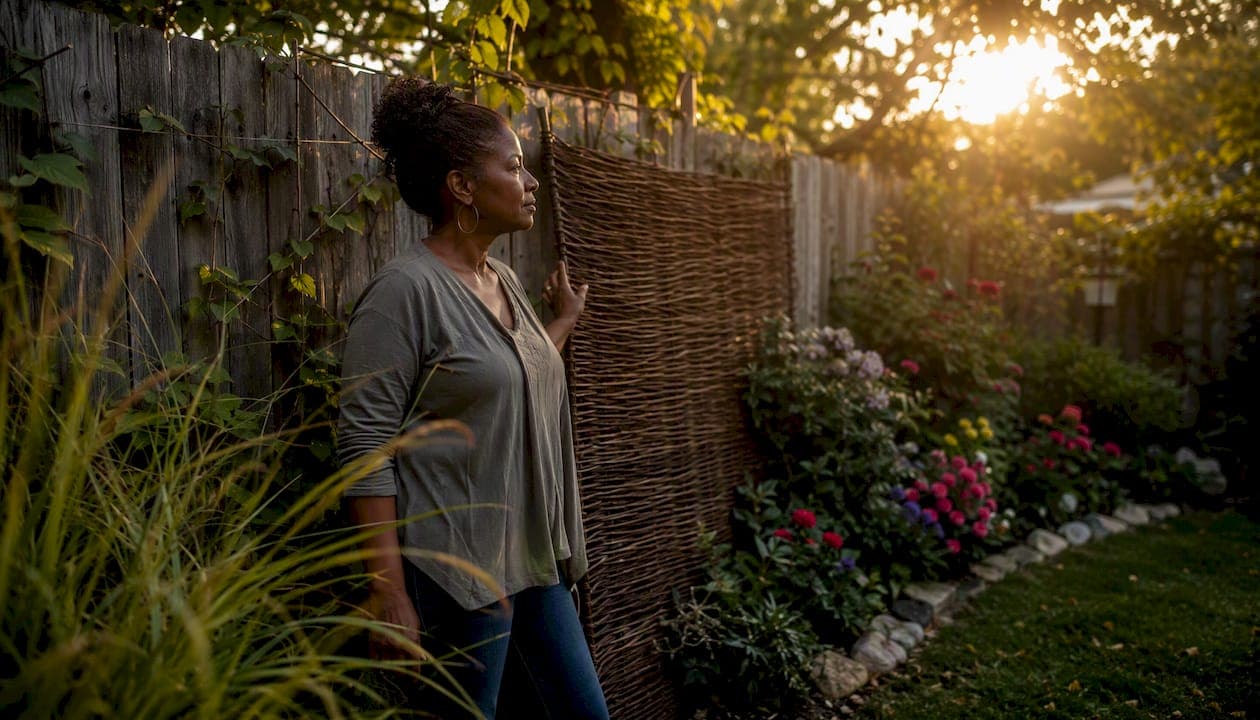
The fastest ways to enhance home privacy combine same-day interior fixes, targeted window treatments, and layered landscape screening. You do not need to rebuild your yard or replace your windows to feel less exposed. Start with these right now:
- Move your furniture or desk away from direct sightlines through street-facing windows. This costs nothing and works immediately.
- Add a tall planter or freestanding screen on your patio or porch to block a neighbor's view at ground level.
- Apply a privacy film sample to one ground-floor window and test it for two weeks before committing to a full install.
- Set light timers on interior lamps to simulate occupancy when you are away.
- Install a roller shade on any window that feels exposed at night.
These five steps cover the fastest wins. The sections below go deeper on each category, with cost ranges, plant timelines, and guidance on when professional installation pays off.
Table of Contents
- What are the best low-cost privacy fixes you can do today?
- Which plants give you the fastest privacy screening?
- What are your best options for fences, pergolas, and privacy screens?
- Which window treatments give you the best privacy without losing daylight?
- How do you layer solutions for all-day, year-round privacy?
- What does each privacy solution actually cost, and how long does it take?
- How do lighting, cameras, and smart-home habits protect your privacy?
- What does the research say about film performance and occupancy deterrence?
- Vetted product and service recommendations
- Key Takeaways
- The privacy approach that actually works for most homeowners
- Southmiamitint brings professional window film directly to your home
What are the best low-cost privacy fixes you can do today?
Interior layout adjustments are the most underrated first step. Repositioning a sofa, desk, or dining table so it sits out of a direct street sightline takes ten minutes and costs nothing. Most homeowners skip this and go straight to buying products.
After layout, add temporary outdoor screens. Freestanding bamboo or fabric privacy panels run $30–$80 at most home improvement stores and can be repositioned as your needs change. Pair them with tall planters (ornamental grasses, arborvitae in pots) to soften the look.

For windows, static-cling frosted film is a good test before you invest in a permanent install. A single window kit costs $10–$20 and peels off cleanly. It gives you a realistic preview of how much light you keep and how much visibility you block.
Interior roller shades are the right call for nighttime exposure. Reflective window films work well during the day, but once interior lights are on after dark, the effect reverses and you become more visible from outside. A blackout or light-filtering roller shade solves that gap.
Pro Tip: Try any temporary solution for two to four weeks before committing to permanent landscaping or a professional film install. Your sightline problems often look different after you live with a test fix.
Which plants give you the fastest privacy screening?
Plant-based screening works across three time horizons. Knowing which category fits your timeline saves you from planting something that takes a decade to do its job.
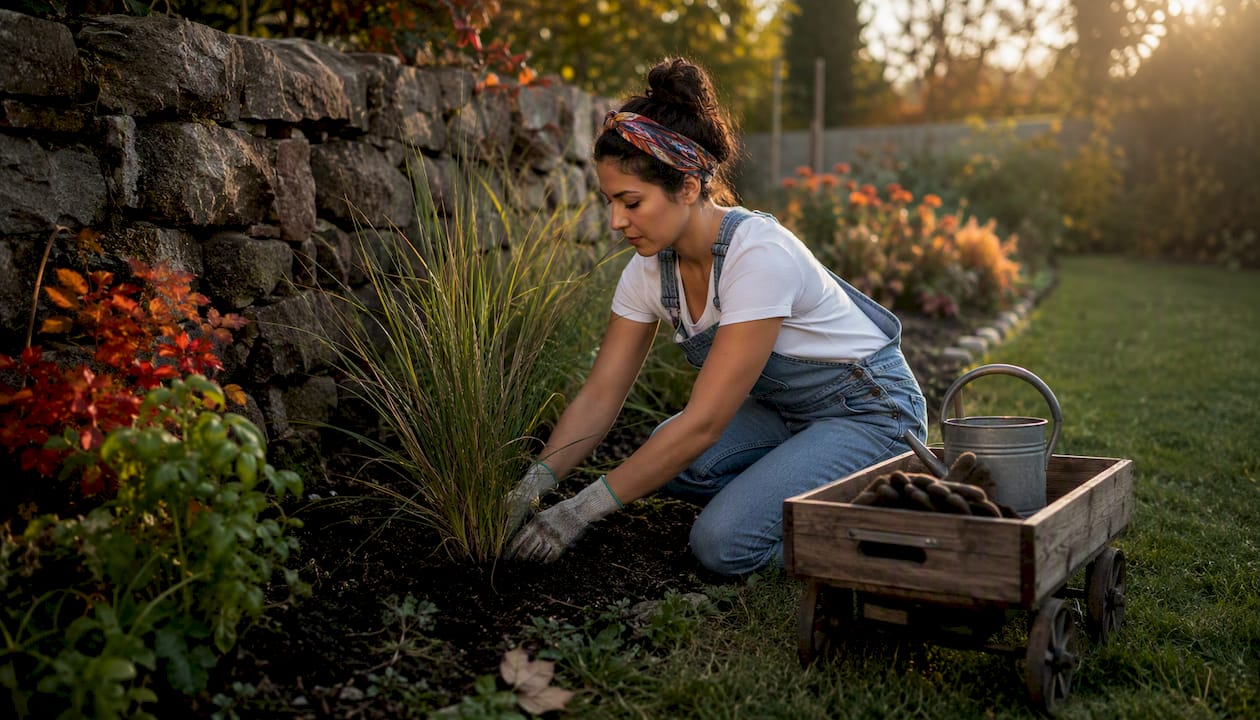
Short-term (same season to 12 months): Tall ornamental grasses like Miscanthus or Pampas grass reach 6–10 feet in a single growing season. Annual sunflowers planted in a dense row can hit 8 feet by midsummer. These are not permanent solutions, but they buy time while slower plants establish.
Medium-term (1–3 years): Clumping bamboo (non-invasive varieties like Fargesia) reaches 10–15 feet within two to three years and works well in narrow side yards. Leyland cypress and Green Giant arborvitae are the most popular fast-growing evergreen hedges in the US, adding 3–5 feet per year under good conditions. Space them 5–6 feet apart for a solid screen within two growing seasons.
Long-term (3–7 years): Wax myrtle, podocarpus, and Clusia (especially popular in South Florida for its salt and drought tolerance) mature into dense, tall hedges that need minimal maintenance once established. These are the backbone of a permanent privacy screen.
Staggered layers outperform a single-row hedge at every stage. A low border shrub (2–3 feet), a mid-level hedge (5–8 feet), and a tall vertical element (10+ feet) block sightlines at multiple heights simultaneously.
| Plant | Mature Height | Growth Rate | Spacing | Maintenance |
|---|---|---|---|---|
| Green Giant Arborvitae | 30–40 ft | 3–5 ft/year | 5–6 ft apart | Low |
| Clumping Bamboo (Fargesia) | 10–15 ft | 2–3 ft/year | 3–5 ft apart | Low |
| Clusia (Clusia rosea) | 15 ft | 1–2 ft/year | 4–6 ft apart | Low–Medium |
| Wax Myrtle | 10–20 ft | 3–4 ft/year | 4–5 ft apart | Low |
| Pampas Grass | 6–10 ft | Full height in 1 season | 6–8 ft apart | Medium |
Pro Tip: Underplant your hedge row with a dense low shrub like dwarf viburnum or liriope. It closes the gap at knee-to-waist height that most single-species hedges leave open for years.
What are your best options for fences, pergolas, and privacy screens?
Hardscape structures deliver privacy immediately, which is their main advantage over plants. A 6-foot wood privacy fence installed on a Monday blocks your neighbor's view by Tuesday. The trade-off is cost, permits, and the risk of looking like a fortress if you do not soften the design.
- Wood privacy fence: Most popular option. Cedar and pressure-treated pine are durable in humid climates. Expect $15–$30 per linear foot installed. Needs staining or sealing every 2–3 years.
- Vinyl fence: Higher upfront cost ($20–$40 per linear foot) but virtually no maintenance. Holds up well in coastal and humid environments.
- Metal (aluminum or steel) fence: Better for decorative or partial privacy. Lattice-top metal panels add height without a solid-wall feel.
- Lattice or trellis panels: Ideal for growing climbing plants (jasmine, bougainvillea). Provides partial privacy immediately and improves as plants fill in.
- Pergola with side screens: A pergola with retractable fabric panels or fixed louvered sides creates a private outdoor room without a full fence. Cost ranges from $3,000–$10,000 depending on size and materials.
- Freestanding decorative panels: Powder-coated metal or composite wood panels cost $100–$400 per panel and require no permits in most jurisdictions.
Before you build anything permanent, check your local zoning code and HOA rules. Most US municipalities cap residential fence height at 6 feet in rear yards and 4 feet in front yards, though exceptions exist. A quick call to your city's building department or a search on your county's permit portal takes 15 minutes and prevents a costly removal order.
| Structure | Typical Cost | Privacy Level | Durability | Maintenance |
|---|---|---|---|---|
| Wood privacy fence | $15–$30/linear ft | High | 15–20 years | Medium |
| Vinyl fence | $20–$40/linear ft | High | 25 years | Low |
| Lattice/trellis | $5–$15/linear ft | Low–Medium | 10–15 years | Low–Medium |
| Pergola with screens | $3,000–$10,000 | Medium–High | 15 years | Low–Medium |
| Freestanding panels | $100–$400/panel | Medium | 10–20 years | Low |
Pro Tip: A partial fence (4 feet) combined with a dense hedge planted immediately behind it gives you the aesthetic of a garden boundary while the plants grow to full screening height. It looks intentional from day one.
Which window treatments give you the best privacy without losing daylight?
Privacy window film is the best single option for daytime privacy in rooms where you want natural light. It obscures street-level views, reduces heat gain, and cuts UV exposure without darkening the room the way blinds or curtains do. The limitation: once your interior lights are on after dark, most reflective films lose their one-way effect. Pair film with a roller shade for complete 24-hour coverage.
Film types worth knowing
Reflective/solar-control films work by creating a mirror effect on the exterior surface during daylight. They are the most effective for daytime privacy in living rooms, home offices, and street-facing bedrooms. Ceramic IR films (like 3M Ceramic IR) add heat rejection without a heavy tint, keeping rooms bright. 3M Color Stable is a good choice for homeowners who want a consistent appearance that resists color shift over time.
Frosted/decorative films diffuse light rather than reflect it, providing consistent privacy day and night. They are the right call for bathrooms, entry sidelights, and any window where you want permanent obscurity without a full blackout.
Ceramic tint options like the Iviron KoolMax ceramic film combine privacy with high heat rejection, which matters significantly in Miami-Dade's climate. These films block a meaningful portion of solar heat while keeping visible light transmission high.
Professional installation from Southmiamitint adds real value here. Precision cutting, bubble-free application, and manufacturer-backed warranties are difficult to replicate with a DIY roll. For large windows or complex shapes, the cost difference between DIY and professional install is often smaller than homeowners expect, and the result lasts years longer.
- Privacy film: Best for daytime privacy + light + heat control. Needs shade for nighttime. Low maintenance, long lifespan.
- Roller shades: Fast to install, affordable ($30–$150 per window), good nighttime coverage. Blocks light when closed.
- Cellular shades: Better insulation than rollers, good for bedrooms. Slightly higher cost ($80–$200 per window).
- Blinds: Adjustable, but gaps between slats reduce privacy. Best for rooms where you want directional control.
- Curtains/drapery: Maximum nighttime privacy, wide style range. Requires regular cleaning and takes up more visual space.
Pro Tip: Order a film sample from the manufacturer before committing to a full install. Tape it to your window for a week and observe it at different times of day and at night with interior lights on. What you see from inside is not what your neighbors see from outside.
Window film also delivers UV and heat protection benefits that go beyond privacy, reducing furniture fade and lowering cooling costs in warm climates.
How do you layer solutions for all-day, year-round privacy?
The order of operations matters. Block your primary sightlines first, then fill vertical gaps, then address nighttime exposure.
A simple three-band approach works for most yards and rooms:
- Low band (0–3 feet): Dense border shrubs, raised planters, or a low fence. Blocks views from seated positions and ground-level angles.
- Mid band (3–8 feet): Privacy hedge, trellis with climbing plants, or a standard fence. This is where most neighbor and pedestrian sightlines fall.
- High band (8+ feet): Tall trees, mature hedges, or pergola structures. Addresses second-story exposure and elevated street views.
Inside the house, furniture placement handles the first layer. Film or frosted glass handles the second. Shades or curtains handle nighttime.
Layering recipes for common situations:
- Street-facing living room: Reflective film on lower window pane + sheer curtain for diffused light + roller shade for evenings.
- Second-story bedroom: Frosted film on lower half of window + blackout shade for sleeping hours.
- Narrow side yard: Clumping bamboo in a planter row + lattice fence panel for immediate coverage while bamboo establishes.
- Open backyard: Low border hedge + mid-height privacy fence + tall arborvitae planted along the fence line.
Pro Tip: Implement in stages: quick fixes this week, plant your medium-term screening this season, and plan permanent structures for next year's budget. Staging keeps your yard functional and attractive throughout the process.
What does each privacy solution actually cost, and how long does it take?
| Solution | Typical Cost | Timeline to Privacy |
|---|---|---|
| Furniture rearrangement | $0 | Same day |
| Static-cling film (DIY) | $10–$20/window | Same day |
| Freestanding privacy screen | $30–$400 | Same day |
| Interior roller shade | $30–$150/window | 1–3 days |
| Professional window film install | $5–$15/sq ft installed | 1–5 days (scheduling) |
| Trellis or lattice panel | $200 installed | 1–2 weeks |
| Wood or vinyl privacy fence | — | 1–3 weeks |
| Fast-growing hedge (planted) | $30–$80/plant | 1–3 years to full screen |
| Mature tree planting | — | 3–7 years to full screen |
| Pergola with screens | $3,000–$10,000 | 2–6 weeks |
Pro Tip: Build a three-tier budget: allocate funds for immediate fixes first (under $200), then medium-term planting or film installs (under $1,500), then permanent structures. Set aside 10–15% of your structure budget for permit fees and professional measurements.
How do lighting, cameras, and smart-home habits protect your privacy?
Combine visible deterrents with smart-home hygiene to reduce both physical and digital exposure. Physical measures and digital ones reinforce each other.
Keeping your home visibly occupied is one of the most effective deterrents available. Light timers, a radio on a timer, and regular yard maintenance signal that someone is home and paying attention. Opportunist burglars, who account for a large share of residential break-ins, look for easy targets and move on when a home looks lived-in.
For cameras, position them at entry points (front door, garage, side gates) rather than pointing at private areas. Use privacy modes or physical lens covers when guests are present. Check your local laws before pointing any camera toward a neighbor's property.
Replacing the short screws in your door strike plates with 3-inch screws that reach wall studs is one of the highest-impact physical security upgrades available for under $5 and 20 minutes of work.
Smart-home hygiene checklist:
- Enable two-factor authentication (2FA) on every smart-home account.
- Use a password manager and unique passwords for each device or platform.
- Create a separate IoT network or VLAN for smart speakers, cameras, and thermostats.
- Audit app permissions monthly and revoke anything you do not actively use.
- Disable cloud features you do not need; prefer local processing where your device supports it.
- Update firmware on routers and smart devices as soon as updates are available.
Pro Tip: A sliding-door security bar ($15–$30) and a door reinforcement kit for your main entry are faster and cheaper than most smart-lock upgrades, and they work even when the power is out.
What does the research say about film performance and occupancy deterrence?
Privacy window films deliver daytime privacy, heat reduction, and UV control simultaneously, making them one of the few single-product solutions that address multiple homeowner concerns at once. Reflective films provide strong daytime obscurity; frosted films provide consistent visual diffusion regardless of lighting conditions.
On the security side, research consistently shows that visible signs of occupancy and upkeep deter opportunist burglars more reliably than expensive technology alone. Timers, maintained landscaping, and lights on a schedule all contribute to this effect.
For smart-home privacy, network segmentation and 2FA are the highest-impact steps available. Default privacy toggles inside apps often do not stop data collection at the network level. Manual audits of device permissions, conducted monthly, close gaps that in-app settings miss.
NIST's smart-home guidance recommends planning before you buy any connected device and ensuring all household members agree to its use. That principle extends to cameras and smart locks, where placement and consent matter as much as the technology itself.
Pro Tip: When evaluating window film performance claims, ask your installer for the manufacturer's published solar heat gain coefficient (SHGC) and visible light transmittance (VLT) data for the specific film. These numbers are verifiable and let you compare products accurately.
Vetted product and service recommendations
Choosing the right product depends on your primary goal: daytime privacy, nighttime coverage, heat control, or a combination.
3M Ceramic IR is the strongest all-around residential film for hot climates. It rejects solar heat without a heavy tint, keeps rooms bright, and provides solid daytime privacy. The ceramic construction means it will not interfere with cell signals or GPS, which matters for home offices with smart devices near windows.
3M Color Stable is the right pick when appearance consistency is a priority. The film resists color shift over its lifespan, so it looks the same five years after installation as it did on day one. Good for front-facing windows where aesthetics matter to curb appeal.
Iviron KoolMax ceramic tint combines high heat rejection with privacy performance. It is a practical option for homeowners who want ceramic-grade durability at a competitive price point. Southmiamitint installs all three of these films on residential windows throughout Miami-Dade County.
For structures, cedar and vinyl fences from regional suppliers like Home Depot or 84 Lumber are widely available and carry consistent quality. For plants, local nurseries in South Florida carry Clusia, Green Giant arborvitae, and clumping bamboo with staff who can advise on spacing for your specific soil and sun conditions.
For roller shades and cellular shades, Bali and Levolor are two widely distributed brands available at most home improvement retailers, with good measurement guides and sample programs.
Key Takeaways
Layering quick interior fixes, targeted window film, and phased landscape screening gives homeowners the fastest, most cost-effective path to all-day privacy without sacrificing daylight or curb appeal.
| Point | Details |
|---|---|
| Start with layout and film | Move furniture away from sightlines and test a privacy film sample before spending on permanent solutions. |
| Layer plants by growth speed | Combine fast ornamental grasses with medium-term hedges and long-term trees for coverage at every stage. |
| Check codes before building | Confirm local fence height limits and HOA rules before installing any permanent structure. |
| Smart-home hygiene matters | Enable 2FA, segment IoT devices on a separate network, and audit app permissions monthly. |
| Southmiamitint for film installs | Southmiamitint installs 3M Ceramic IR, 3M Color Stable, and Iviron KoolMax ceramic films at your location in Miami-Dade County. |
The privacy approach that actually works for most homeowners
Most homeowners approach privacy as a single problem with a single solution. They plant one row of hedges, or they hang curtains, and then wonder why they still feel exposed. Privacy is not one thing. It is a stack of layers that each handle a different angle, time of day, or threat.
The conventional wisdom says to start with the biggest investment: a fence, a full landscaping project, or a smart-home overhaul. That advice gets the order wrong. The right move is to start with what you can test and reverse. Rearrange your furniture. Put a film sample on one window. Set a light timer. Live with those changes for a few weeks and you will learn more about your actual sightline problems than any planning session will tell you.
Window film, in particular, is underestimated as a residential solution. Homeowners associate it with cars, but the same ceramic and solar-control films that perform in vehicles work just as well on home windows, with the added benefit of UV protection that extends furniture life and reduces cooling costs. Professional installation matters more for residential windows than most people realize. A large picture window with a poorly applied film looks worse than no film at all. Getting it done right the first time, with a warranted product, is worth the cost difference.
Privacy is also not finished when the plants are in or the fence is up. Smart-home devices, camera placement, and account hygiene are part of the same picture. A home that is visually private but digitally exposed is only half-protected.
Southmiamitint brings professional window film directly to your home
Skip the guesswork of DIY film application on large or complex windows. Southmiamitint installs premium privacy and solar-control films on-site at your location in Miami-Dade County, with no trip to a shop required.
The films Southmiamitint installs include 3M Ceramic IR for maximum heat rejection with daytime privacy, 3M Color Stable for a consistent, long-lasting appearance, and Iviron KoolMax ceramic tint for high-performance privacy at a practical price. Every install comes with manufacturer-backed film and professional application that holds up in South Florida's heat and humidity. Residential installs are available alongside automotive and commercial services.
Get a quote for ceramic window tint starting from $249, or check mobile tinting prices to see what fits your budget. Call or fill out the online form to schedule your mobile install.
Further reading and useful sources
- 7 Tips to Keep Your Smart Home Safer (NIST) — Government-level smart-home security checklist from NIST cybersecurity researchers.
- Free Home Security Upgrades Under an Hour (SafeWise) — Quick physical security fixes including strike-plate reinforcement and door hardware upgrades.
- How to Keep Your Home Safe Without an Expensive Security System (The Inquirer) — Expert guidance on occupancy cues, visible deterrents, and low-cost security habits that outperform expensive tech.