
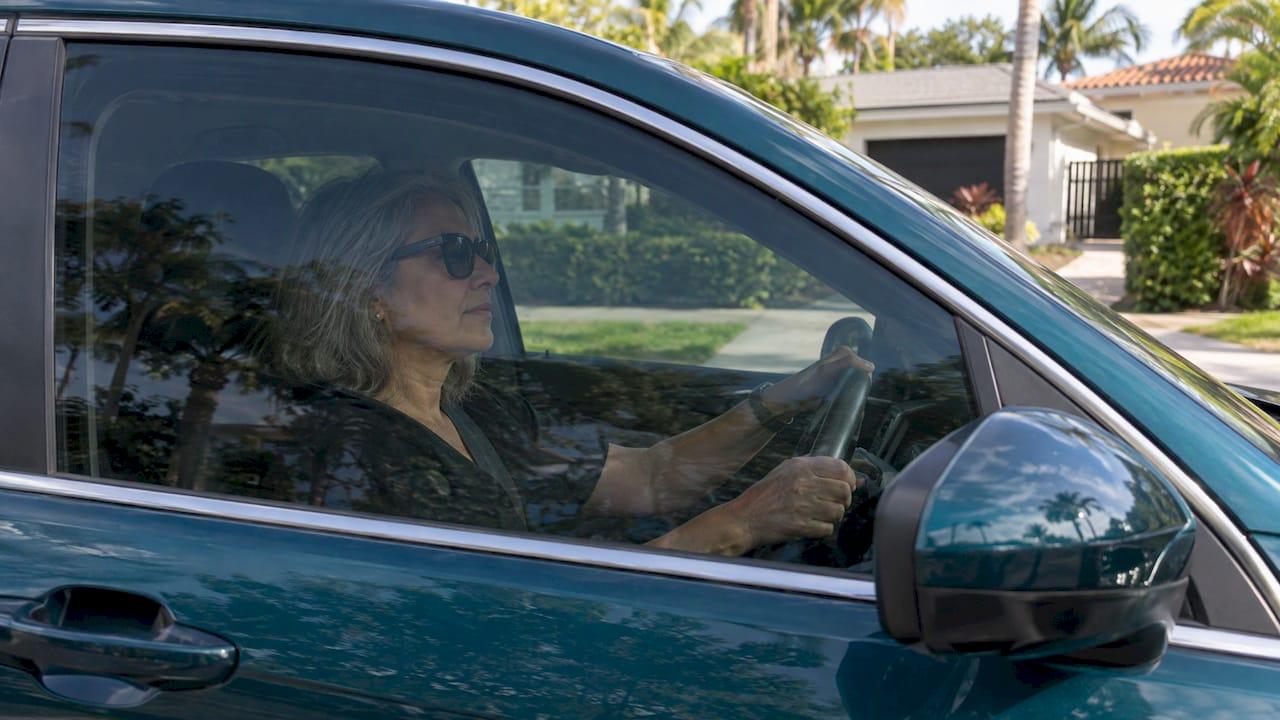
If sunlight gives you rashes or lupus flares, the right window film can cut the UV that reaches you through the glass in your car, home or office. Darkness is not what protects you. The film's UV blocking is, and that is why a clear film can protect as well as a dark one. We install ceramic films at your home or office anywhere in Miami-Dade, so you never have to sit in a shop while your car is worked on.
TL;DR
- Car side and rear windows are tempered glass that does not block UVA well, and a darker tint does not fix that. UV-blocking film can block more than 99% of UVA and UVB.
- Many people with lupus, porphyria, xeroderma pigmentosum and other photosensitive conditions are affected by UVA and visible light that pass through glass.
- Florida has a medical exemption for sunscreening material for people with lupus, other autoimmune disease and similar conditions. It is issued to the registered owner of the vehicle by the state, on a physician's certification.
- We tint cars, homes and offices on site across Miami-Dade with ceramic films only. A full car with windshield starts at $450.
Table of Contents
- Why ordinary glass does not protect a photosensitive person
- What lupus and sun allergies have to do with window glass
- What to look for in a UV-blocking window film
- Florida's medical exemption for window tint
- Your car: which windows matter most
- Your home and office: the glass you sit next to all day
- Why Miami makes this more pressing
- How a mobile tint appointment works for you
- Perspective
- Get your windows done where you are
- FAQ
- Sources
Why ordinary glass does not protect a photosensitive person
Most people assume that glass stops the sun's UV. It stops part of it. Sunlight has two UV types that reach the ground: UVB, which burns, and UVA, which penetrates deeper and is the one most people with a sun allergy or lupus react to. Glass and UV protection vary by window.
A 2016 JAMA Ophthalmology study of 29 vehicles found that front windshields blocked an average of 96% of UVA, while side windows blocked an average of only 71%. The range on side windows was wide, from 44% to 96%. A more recent study measured vehicles in Philadelphia and New York during the summer of 2024 and found front windshields averaged 99.25% UVA attenuation against 88.78% for driver-side windows.

The reason is how the glass is made. The windshield is laminated, with a plastic layer in the middle that absorbs UVA. Side and rear windows are a single sheet of tempered glass, which may or may not contain UVA-blocking material. In the 2016 study, factory tint on the side windows did not go with higher UVA blocking, and some tinted cars had the lowest numbers. A dark-looking window can still let a lot of UVA in.
For you, that means a drive to Homestead or a long commute on the Palmetto can expose your arm and the side of your face to more UVA than you would expect, even with the windows up and the glass dark.
What lupus and sun allergies have to do with window glass
Sun sensitivity is common in lupus. Lupus Canada states that as many as three-quarters of people with lupus are photosensitive, that sun exposure can cause rashes and trigger flares that may affect internal organs, and that house and car windows do not filter out UV rays.
Dr. Jillian Richmond of Tufts University explained in a 2026 Lupus Research Foundation interview that sun exposure can cause lupus flares and that patients can get prescriptions for car window tints, because glass typically does not block all light. She also describes the sensitivity as coming from skin cells that are more easily damaged by the sun, combined with an overactive immune response to that damage.
Lupus is not the only condition. A 2024 letter in the Journal of the American Academy of Dermatology notes that diagnoses qualifying for vehicle-tint medical exemptions include the lupus erythematosus spectrum, porphyrias, xeroderma pigmentosum, vitiligo and polymorphous light eruption. The same letter says vehicle windows block UVB but transmit UVA and visible light, so photosensitive patients can have flares while traveling and can benefit from tinted windows.
A plain "sun allergy" such as polymorphous light eruption is often triggered by UVA. Which wavelengths set off your reaction is a question for your dermatologist or rheumatologist. What we can tell you is how to cut the UV that comes through your windows.
What to look for in a UV-blocking window film
The Skin Cancer Foundation advises looking for films sold as UV window film, solar window film, UV window tint or solar window tint, rather than films made only for darkening or design. Its Seal of Recommendation goes to films with data showing they block 99% or more of UVA and UVB.
The lab evidence for adding film to side glass is strong. Almutawa and colleagues reported in 2013 that tempered side and back windows blocked almost all UVB but only 21% of UVA. Adding a UV-absorbing film to the side window brought total UV blocking to 99.6%. In their skin-cell test, 93.5% of cells survived UV passing through glass plus film, compared with 36.9% through glass alone. They concluded that film on tempered side and rear glass is an excellent way to raise UVA protection for patients with severe photodermatoses.
Two points follow for your decision:
- Shade level and UV blocking are separate. The Skin Cancer Foundation's expert point is that darker tints do not protect against UV any better than clear UV-protective film, which can block 99 percent of UV light. You can choose a shade for comfort, privacy or looks and still get strong UV protection.
- Film types differ in how they are built. UV absorbers go into the adhesive or the film itself, and metal layers can add reflectance. Ceramic films are made without metal, so they do not interfere with GPS, cell or radio signals. That matters in a modern car full of electronics.
We install ceramic films only. Our lineup is 3M Ceramic IR with a lifetime warranty, SunTek CIR with a 5-year warranty and Uviron KoolMax with a 3-year warranty. If you tell us when you call that you are tinting for a sun-sensitivity condition, we can talk through the film options with you before the appointment. You can read more about the ceramic tint we install and about 3M Ceramic IR and Crystalline films.
Florida's medical exemption for window tint
Florida limits how dark and reflective car window tint can be, and has a separate medical exemption for people whose conditions need extra protection. The statute directs the state to issue certificates to people with lupus, any autoimmune disease or other conditions requiring limited light exposure. The exemption allows sunscreening material on the windshield, side windows and windows behind the driver that would otherwise violate the tint rules.
The state's application, Form HSMV 83390, lists these qualifying conditions: lupus with a positive ANA titer (a blood test for antinuclear antibodies), dermatomyositis with a positive ANA titer, albinism, total or facial vitiligo, xeroderma pigmentosum, or another autoimmune disease or condition requiring limited light exposure. The form requires a physician's certification signed by a Florida-licensed physician, dermatologist, or one of the other listed medical professionals, and the fee is $6.55 per vehicle with no expiration date.
How the certificate works in practice, according to the state's procedure:
- It is issued to the registered owner, who does not have to be the person with the condition. A parent can hold it for a child with lupus.
- Only one certificate is issued per vehicle, and it is non-transferable.
- Keep it in the glove compartment for verification. Before you sell or transfer the vehicle, the sunscreening material must be removed.
The medical side of this, including the diagnosis and the physician's signature, belongs with your own doctor, and the certificate itself comes from the Florida Highway Safety and Motor Vehicles department. Once you have it, the installation is where we come in.
You may not need the exemption at all. The Skin Cancer Foundation points out that nearly every state allows clear film that blocks 99% of UV, so many photosensitive drivers can get the protection without one. Which route fits you depends on how dark a shade you want and which windows you need covered. If you want a darker shade or film on the windshield, the exemption is what covers that. Ask your doctor about it at your next visit.
Your car: which windows matter most
The windshield already blocks most UVA. Your exposure comes mainly from the driver and passenger side windows, rear side windows, the back glass and any sunroof. The Skin Cancer Foundation says that car side, back and sunroof glass is tempered and does not block UVA effectively.
That gives you a plan by priority:
- Driver and front passenger windows. Your left arm and face sit right next to this glass for the whole drive. Our 2 front windows service starts at $200.
- Rear side and back glass. This is essential if a child or family member with a sun-sensitive condition rides in the back.
- Windshield. Even if it blocks most UVA, film adds protection and heat reduction and is covered by the medical exemption. A windshield starts at $150. We use 60-inch rolls, so large windshields go on in one piece with no seam.
- Full car. A full car plus windshield starts at $450.
These are our published starting prices. The final quote depends on your vehicle and film. If your car already has old or bubbling tint, we remove it first, and we can include that in the same visit.
For the rest of the car, summer UV car care covers how sunlight affects paint, trim and glass, which is useful context when you decide what to protect.
We cut each pattern by computer for an exact fit, and the installation is done by the owner with 28 years of experience. We also have experience with Tesla, luxury and exotic vehicles, which have large glass roofs and curved windows.
Your home and office: the glass you sit next to all day
Sunlight does not only come through the car. A south-facing living room window, a home office desk next to glass, or a store counter by the entrance can give you hours of UV a day. Lupus Canada states that house windows do not filter out UV rays. Reading and working by a window in Pinecrest or Kendall can add up.
The Skin Cancer Foundation says UV window film on home or office windows can block more than 99% of UVA and UVB and stays effective for up to a decade. Richard Edlich's 2004 review recommends photoprotective windows and film in all residential, commercial and school facilities to help reduce skin cancer.

Indoor light matters too. The American Academy of Dermatology notes that fluorescent, compact fluorescent and halogen bulbs give off some UV, and recommends swapping them for LED or incandescent bulbs, or using UV filters, alongside a wide-brimmed hat, sunscreen and sun-protective clothing. Window film is one layer of protection and works together with these habits. It does not replace them.
If you own a business, the same applies to staff and customers who sit near glass. See our residential window tinting and commercial window tinting pages for the properties we do. For homeowners, our guide to UV-blocking window film explains the options in more detail.
Why Miami makes this more pressing
South Florida sun is strong for most of the year, not just in summer. Time in a parked car, school pickup lines, a commute on US-1 and waiting at a bus stop all add up. We wrote about this in more detail in how car window tinting protects against Miami's UV rays and in our UV spectrum guide for car owners. If you are comparing what came with your car with what a film adds, our article on factory tint vs aftermarket film covers it.
How a mobile tint appointment works for you
For someone with a sun-sensitive condition, a mobile service has a practical advantage. You do not sit for hours in a waiting room or stand on a sunlit lot. We come to your home or office anywhere in Miami-Dade, from Homestead and Cutler Bay up through Kendall and Pinecrest to Miami itself. Our mobile window tinting page explains how it works, and our service areas page lists where we go.
A typical process looks like this:
- You call or fill out the online form and tell us the vehicle or the windows, and which film and shade you want.
- We quote the job and schedule a time at your location.
- We cut the patterns by computer, remove any old tint and install the film.
- If you are applying for the Florida medical exemption, your certificate stays with the car, and we can tint to match what it covers.
A note for caregivers: if you are tinting a car for a child or relative with lupus, the registered owner of the car is the one who applies for the certificate, so the paperwork and the booking can both be done by you.
Perspective
When someone with lupus or a sun allergy calls us, the first thing we explain is that dark and protective are two different things. A limo-dark window can still let UVA through, and a light film can do the job. So you choose the shade you want for comfort, looks and privacy, and the UV protection comes from the film you pick.
We install ceramic films only, and we do it ourselves. With 28 years of experience, we know how much the details matter: a pattern cut to fit the glass, a windshield laid in one piece from a 60-inch roll with no seam, and edges that sit right on curved glass. Those details matter more when the person in the car depends on the glass to keep sunlight out.
We come to you, so the appointment fits around your treatment schedule and your energy, not the other way around. Tell us about the condition when you call and we will help you choose among 3M Ceramic IR with its lifetime warranty, SunTek CIR and Uviron KoolMax.
Jose
Get your windows done where you are
We tint cars, SUVs and trucks, and select homes and businesses, across Miami-Dade. A full car with windshield starts at $450, two front windows at $200 and a windshield at $150. Call or send us the vehicle details through our site for a quote and a time that works for you.

You can see the full range and request a quote on our Miami Auto Tinting home page, or go straight to our mobile tinting quote page.
FAQ
Does car window tint block UV rays?
UV-blocking film does, and how dark the tint looks does not decide it. The Skin Cancer Foundation says UV-protective film can block 99 percent of UV light, and that a darker tint does not protect better than a clear one. Factory tint on side windows has not been shown to raise UVA blocking.
Can sunlight through a car window cause a lupus flare?
It can. Lupus organizations state that car and house windows do not filter out all UV, and that sun exposure can cause rashes and flares in people who are photosensitive. Ask your rheumatologist or dermatologist about the right protection for your case, including tinted windows.
Do I need a medical exemption to tint my car for a sun allergy?
Not always. The Skin Cancer Foundation notes that almost every state allows clear film that blocks 99% of UV, so many photosensitive drivers are covered without one. If you want a darker shade or film on windows that the Florida rules otherwise restrict, the exemption covers it. It requires a certification from a Florida-licensed physician and costs $6.55 per vehicle.
Will window film protect my home as well as my car?
Yes. UV window film on home and office glass can block more than 99% of UVA and UVB, and the Skin Cancer Foundation says it stays effective for up to a decade in those settings. It works best together with other measures such as sunscreen, protective clothing and LED or incandescent bulbs.
Can you tint at my house in Kendall, Pinecrest or Homestead?
Yes. We are fully mobile and come to your home or office anywhere in Miami-Dade County. Quotes and scheduling are by phone or our online form.
Sources
- UV Window Film & Tint, Skin Cancer Foundation
- Ask the Expert: Car Window Tint for UV Protection, Skin Cancer Foundation
- Assessment of Levels of Ultraviolet A Light Protection in Automobile Windows, JAMA Ophthalmology
- Evaluation of UV-A and UV-B transmission through vehicle windows, PMC
- Photosensitivity, Sun Safety and Lupus, Lupus Canada
- Can the Sun Make Lupus Worse? Lupus Research Foundation
- Window tinting regulations and medical exemptions, Journal of the American Academy of Dermatology
- Current status of photoprotection by window glass, Photodermatology, Photoimmunology & Photomedicine
- Use of UV-protective windows and window films, PubMed
- Lupus and your skin: Self-care dermatologists recommend, American Academy of Dermatology
- Application for Sunscreening Medical Exemptions, Form HSMV 83390, FLHSMV
- TL-55 Sunscreening Medical Exemption Certificate, FLHSMV
- Florida Statute § 316.29545