
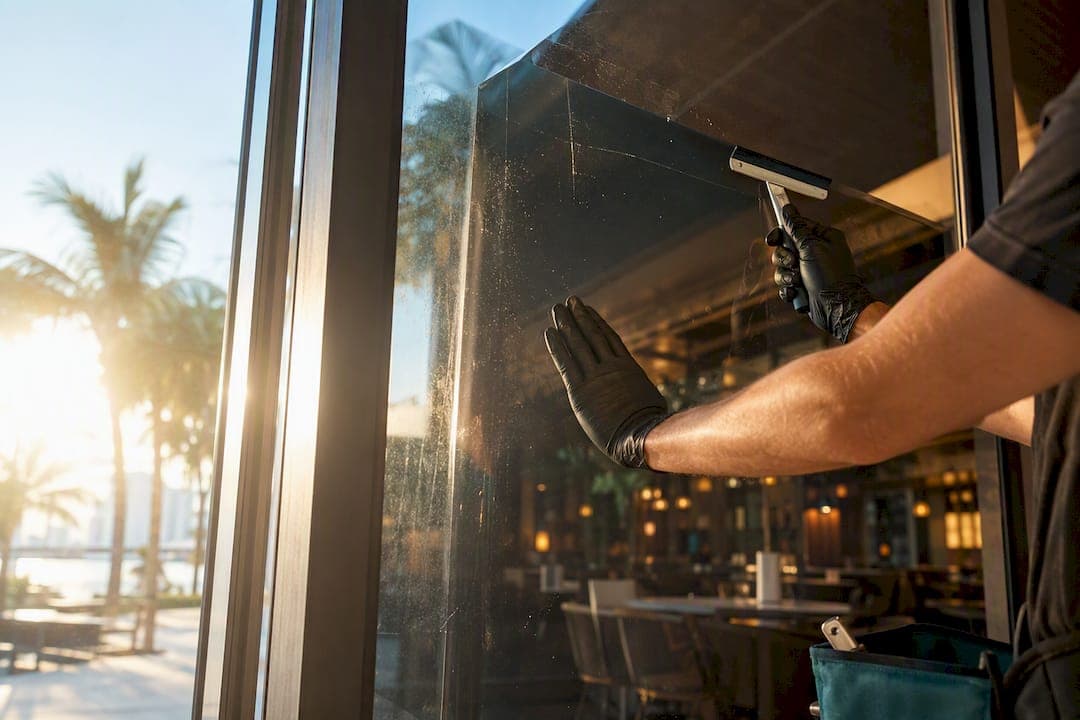
Restaurant window tint pays off when glare, afternoon heat, or a see-through storefront are hurting the dining experience. It's a fast, low-disruption fix for west-facing window seats, glaring bar and TV areas, and sun-faded displays, and it adds UV protection and privacy without touching your remodel budget. Before you call anyone, walk your dining room at your worst hour of the day and note which windows actually cause complaints, then ask an installer for a site survey.
TL;DR:
- Matching the film type to the window's orientation and glass type is crucial; improper matching can void warranties or cause damage.
- Spectrally selective or ceramic films effectively reject infrared heat while maintaining natural daylight, ideal for west-facing or sunlit windows.
- Combining solar, UV, and decorative films on specific problem areas provides faster comfort improvements and aesthetic branding benefits.
- Nighttime reflective films can reverse their appearance after sunset, turning windows into a lit fishbowl unless spectrally selective options are used.
- A site survey from a mobile installer ensures accurate recommendations and cost estimates without disrupting restaurant operations.
Table of Contents
- What Are the Real Benefits of Restaurant Window Film?
- Which Type of Window Film Fits Your Restaurant?
- How Do You Choose the Right Film for Your Windows?
- What Should You Expect During Installation?
- What Mistakes Do Restaurants Make With Window Tint?
- Do You Need a Permit for Restaurant Window Tinting?
- What Do Restaurants Actually See After Installing Window Film?
- What Actually Delivers the Fastest Payoff on Window Film?
- Get a Site Survey From Southmiamitint
- Manufacturer and Installer Resources
- Sources
- FAQ
What Are the Real Benefits of Restaurant Window Film?
The most immediate win is comfort. Radiant heat pouring through glass at window seats drives customers away from your best real estate, and film cuts that heat load at the source instead of forcing your HVAC to fight it after the fact. Spectrally selective and ceramic films reject a large share of infrared heat while staying visually light, so you keep the daylight your dining room needs without the sunburn feeling at table twelve.
UV protection matters more than most owners realize. Sun exposure fades upholstery, artwork, and menu displays within a season or two in a bright storefront, and film blocks the ultraviolet light responsible for most of that damage before it reaches your furnishings.
Beyond comfort, film gives you tools you didn't have before:
- Glare control at bar seating, TVs, and POS screens near windows
- Privacy for booths near the sidewalk, using frosted or decorative patterns
- Branding through etched-glass looks or printed graphics on the glass itself
- Safety and security films that hold shattered glass together during storms or break-in attempts
- UV protection for menus, artwork, and fabric that fade under direct sun
Statistic Callout: Installers commonly note that film reduces solar heat gain at the glass itself, but it will not "slash" your power bill on its own. Cooking equipment and makeup air systems still dominate a restaurant's energy use, so treat tint as a comfort and protection upgrade first, with modest HVAC relief as a bonus.
Which Type of Window Film Fits Your Restaurant?
Not every problem needs the same film, and mismatching film to glass is the single most common reason a restaurant install disappoints an owner. Practical guides group restaurant film into four jobs: solar control, UV protection, decorative privacy, and safety. Here's how each one plays out on the floor.
- Spectrally selective or ceramic film: rejects heat while keeping the room bright, the right call for west-facing window seats or a sunroom-style patio enclosure.
- Clear UV-only film: invisible protection with almost no visible tint, good for storefronts where you don't want any color shift but still need to protect artwork or leather booths.
- Decorative or frosted film: privacy for booth dividers, restroom glass, or a host stand, and doubles as branding when cut into a logo or pattern.
- Perforated vinyl (window perf): built for exterior graphics and signage rather than heat control; it preserves some interior view but solves a different problem than solar film, and pairing perf over a dark solar film can trap heat between layers.
- Safety and security film: thicker film that holds broken glass in the frame, worth considering for street-facing storefronts or anywhere windstorm exposure is a concern.
One caveat that trips up a lot of owners: your existing glazing matters. Low-E coatings, insulated double-pane units, and tempered glass all react differently to film, and installing the wrong film on the wrong glass can void a window warranty or cause thermal stress cracking. Confirm glazing type before you pick a film, and not after.
How Do You Choose the Right Film for Your Windows?
Start with orientation. A south or west-facing storefront in direct afternoon sun needs a different film than a shaded north-facing window that just needs UV protection for a display case. From there, match your choice to four criteria: visible light transmission (VLT) target, infrared/heat rejection specs, how much privacy you actually need, and whether safety film makes sense for that location.
A short installer checklist keeps quotes honest:
- Confirm the glass type (single pane, insulated, tempered, low-E) before any film is recommended.
- Ask for sample swatches or a mock-up panel so you can see the tint color under your own lighting.
- Request the film's UV block percentage and infrared rejection numbers in writing, not just a sales pitch.
- Ask whether the manufacturer warranty and the installer's labor warranty are separate, and what voids each.
- Ask about edge-stress risk on your specific glass, especially with older or tempered panes.
Pro Tip: Get quotes for your two or three worst windows first, not the whole storefront. A small pilot section shows you exactly how the film performs in your lighting before you commit to a full install.
Costs scale with glass size, film grade, and access difficulty. A single problem pane might run a couple of hours of labor, while a full storefront typically fills a workday. Budget more for ceramic and safety-grade films than for basic dyed film, and expect the quote to reflect square footage more than window count.
What Should You Expect During Installation?
A single window with basic film can be done in an hour or two. A full storefront, by contrast, usually takes a full workday, which is why most installers recommend scheduling around a closed day or an early morning slot before service starts.
Here's what keeps the process smooth:
- Clear tables and chairs away from the glass so installers have room to work.
- Ask about cure time. Some films need a day or two to fully bond before you wash the glass.
- Clean film with a mild soap and soft cloth. Skip ammonia-based glass cleaners, which can degrade the adhesive over time.
- Watch for bubbling, peeling edges, or hazing. Those are early signs of a failing install worth calling your installer about, not waiting out.
- Read your warranty carefully. Manufacturer warranties typically cover the film itself against defects, while installer warranties cover workmanship, and the two often run on different timelines.
What Mistakes Do Restaurants Make With Window Tint?
The nighttime mirror effect catches more owners off guard than any other issue. A dark, reflective film that looks great in daylight can flip after sunset, turning your windows into a lit fishbowl visible from the sidewalk instead of a private dining room. 3M's Night Vision film line and other spectrally selective options are built specifically to reduce that reversal, so ask about day and night performance together, not just the daytime look.
A film chosen only for how it looks at 2 p.m. can work against you at 8 p.m., when your dining room is fullest and most visible from the street.
Pro Tip: If you're pairing exterior graphics with solar film, confirm the combination won't trap heat between layers. That mismatch is a common, avoidable cause of glass stress.
Do You Need a Permit for Restaurant Window Tinting?
Most jurisdictions don't require a permit for interior or exterior film applied to existing glass, since you aren't altering the structure or the glazing itself. That said, rules vary by city and county, and a few situations do trigger review.
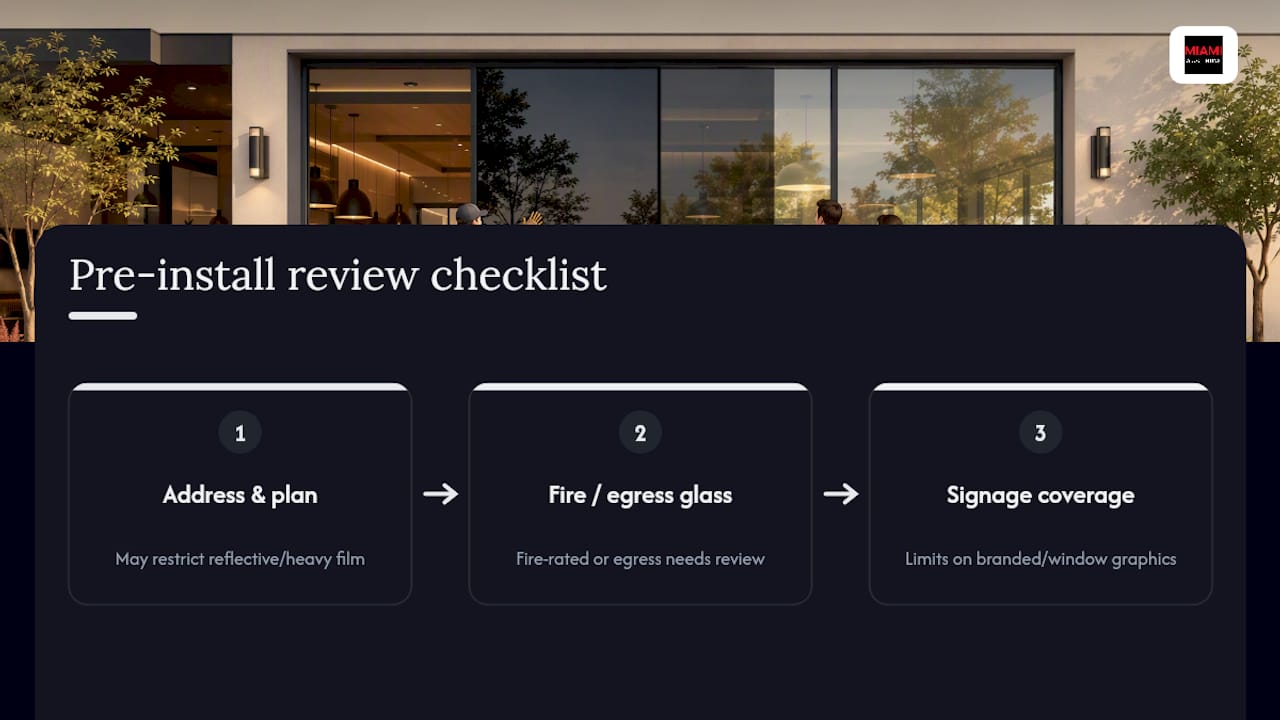
Historic districts often restrict changes to storefront glass, including reflective or heavily tinted film, because it affects the building's street-facing appearance. If your restaurant sits in a designated historic corridor or a business improvement district with facade guidelines, check with your local planning office before ordering film, not after installation.
Fire and building codes occasionally address film on egress windows or fire-rated glass, particularly in older buildings where the glazing itself is part of a fire-separation rating. A reputable installer should ask about your building's occupancy classification and flag any egress windows that need special handling.
Signage ordinances matter more than tint laws for most restaurants. If you're combining decorative film with printed graphics or a logo, some cities regulate the percentage of window coverage allowed for advertising versus product visibility, treating heavy branded film as signage rather than tint. Call your local code enforcement office with your address and film plan before committing, since rules differ block to block in some cities. It's a five-minute phone call that avoids a costly redo.
What Do Restaurants Actually See After Installing Window Film?
The pattern installers report most often starts with a complaint about one specific problem: a bar area where the afternoon sun makes the TVs unwatchable, or a row of booths that guests avoid between 2 and 5 p.m. Fixing that one zone tends to be the fastest win, because it's the seating owners were losing revenue on before the film ever went up.
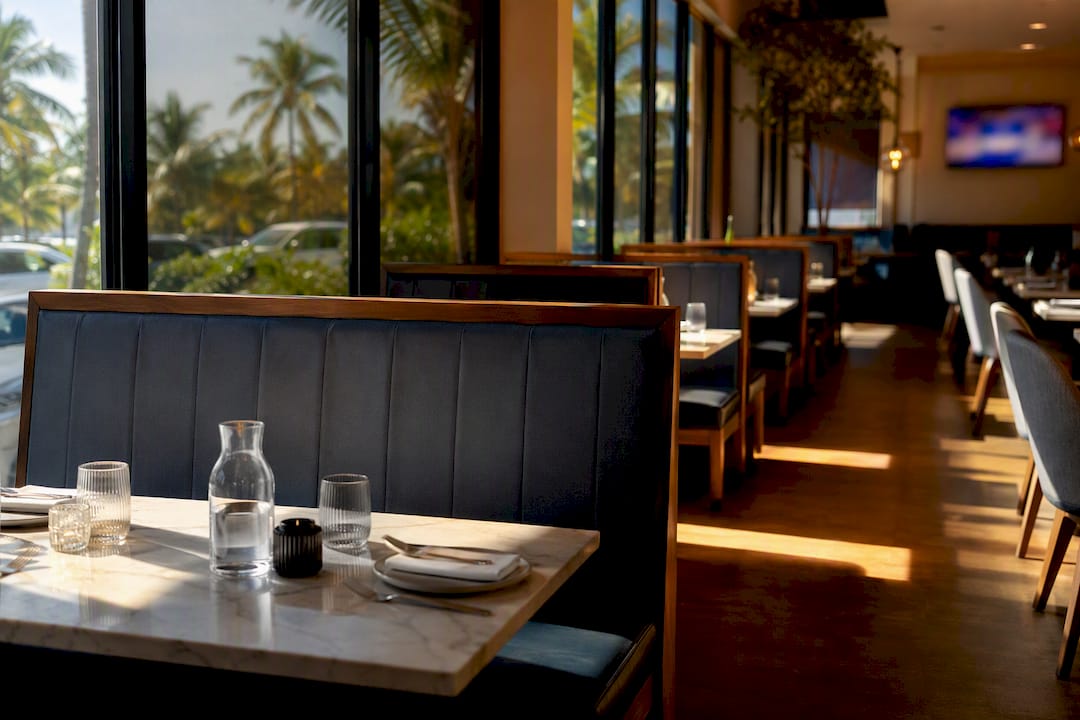
A common second phase follows once owners see the comfort improvement: adding UV film over a wine display or an art wall that had been slowly fading, or adding frosted film to a host stand window for privacy without losing natural light in the entryway. Installers consistently prioritize the highest-traffic, highest-heat seats first, because that's where the return shows up fastest in customer comfort and repeat visits, not necessarily in a utility bill.
Storefronts that combine solar film with decorative branding tend to report the most balanced results: guests get a comfortable dining room, the storefront still reads as inviting from the sidewalk, and the business gets a subtle signage upgrade out of the same visit. The businesses that report disappointment almost always skipped the glazing check or chose a mirrored film without asking about the nighttime look, which lines up with the mistakes covered above.
What Actually Delivers the Fastest Payoff on Window Film?
Owners tend to ask for the wrong thing first. They ask about energy savings, when the real, immediate payoff is almost always guest comfort at the seats they were losing to sun and glare. Fix that seating first, and the energy benefit shows up as a secondary bonus, not the headline.
The second pattern worth noting: the strongest results usually come from mixing two films rather than picking one for the whole building. Solar film where heat is the problem, decorative or UV film where protection or branding matters, applied window by window instead of storefront by storefront. A site assessment is the right next step once you've identified your worst hour of the day and your worst-performing seats.
— Jose
Get a Site Survey From Southmiamitint
Southmiamitint is the mobile alternative to scheduling a shop visit for your commercial glass: our installers come to your restaurant, survey your windows on-site, and quote the job without you closing early or hauling anything anywhere. We install premium film lines including 3M Ceramic IR and Crystalline, 3M Color Stable, and Iviron KoolMax ceramic tint, matched to your glazing and your worst-sun windows first.
Before your survey, clear a little space near your worst windows and note your closed days or slowest hours so we can schedule around service. We'll check your glass type, talk through solar versus decorative needs, and give you a straight quote for the windows that actually need it. If you're also weighing ceramic film options starting from $249 for a smaller job, that page breaks down pricing by pane. Ready to fix your worst window seat? Request your on-site estimate and we'll get you scheduled.
Manufacturer and Installer Resources
Check 3M's restaurant film guidance for product-line specs, and decorativefilm.com's SOLYX guide for decorative and privacy film examples before requesting your first quote.
Sources
- Restaurant Window Films - Food Service | 3M US
- Restaurant Window Film | Bay Area | ClimatePro
- Window Film for Restaurants and Cafes: A Practical Guide | Extreme Window Film
FAQ
What Is Commercial Window Tinting?
Commercial window tinting is the application of film to storefront, office, or restaurant glass to control heat, glare, UV exposure, or visibility. Restaurants use it for the same reasons offices do, plus branding and privacy goals specific to dining rooms, using solar control, UV-only, decorative, and safety films depending on the problem.
Is 35% or 20% Tint Darker?
20% tint is darker than 35% because the percentage refers to visible light transmission, or how much light passes through the film. Lower numbers block more light, so 20% VLT lets in less light and looks noticeably darker than 35%.
What Is the Darkest Legal Tint for Commercial Vehicles?
Legal tint darkness for commercial vehicles varies by state and by which windows are tinted, so check your state's motor vehicle code before installing film on a fleet vehicle. Storefront glass on a restaurant building isn't subject to vehicle tint laws, though local signage and historic-district rules can still apply.
What's the Difference Between Residential and Commercial Tint?
Residential and commercial film share the same core technology, but commercial installs like restaurants more often combine multiple film types on one building, solar control at seating, decorative film at entries, safety film at street-facing glass, to solve several problems at once. Southmiamitint installs both residential and commercial window tinting using the same premium 3M and ceramic film lines.
How Long Does a Restaurant Window Tint Install Take?
A single problem window can be tinted in an hour or two, while a full storefront install typically takes a full workday. Most installers recommend scheduling on a closed day or before opening hours to avoid disrupting service.