
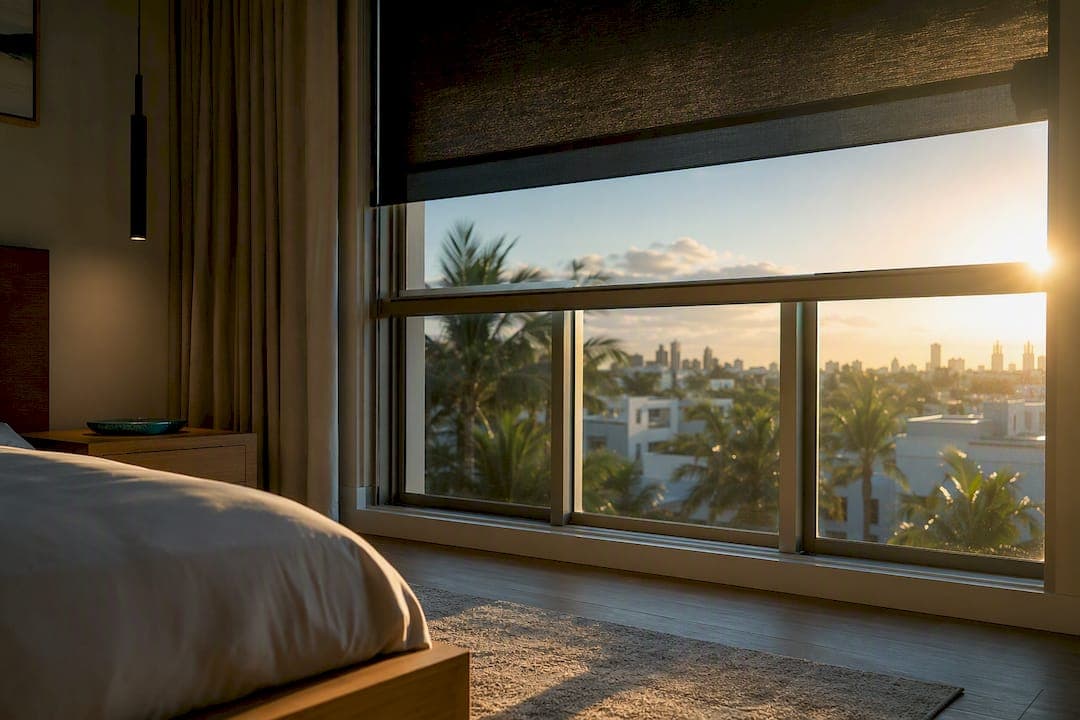
For heat, UV protection, and view preservation, window tint usually wins. For on-demand blackout and 24/7 nighttime privacy, blinds or blackout shades win. Most Miami-Dade homeowners end up happiest with a hybrid: film on the glass for round-the-clock performance, blinds or shades layered in bedrooms for total darkness at night.
TL;DR:
- Window film can cut solar heat gain by roughly 50 to 80 percent, providing consistent relief for south and west-facing rooms without user intervention.
- Blinds or shades offer instant light control and blackout capabilities but only protect against heat and UV when closed, requiring manual adjustment.
- UV protection from quality films blocks 99% or more of harmful rays, making them more reliable for preventing fading of furniture and flooring than blinds.
- Installing film is generally less expensive long-term and requires minimal maintenance, lasting over a decade with almost no upkeep needed.
- Films do little to reduce outside noise compared to storm windows or double-glazing, and safety concerns mainly relate to blinds' cords rather than film application.
Table of Contents
- Window Tint vs Blinds: Pros and Cons at a Glance
- Which Option Cuts More Heat and Lowers Energy Bills?
- How Do Light Control and Privacy Compare?
- Does Tint or Blinds Do More to Prevent Fading?
- What Should You Budget for Cost and Installation?
- How Much Upkeep Does Each Option Really Need?
- Which Looks Better and Preserves Your View?
- Your Room-by-Room Decision Checklist
- Does Window Tint or Blinds Reduce Outside Noise?
- Are There Safety or Emergency Exit Concerns?
- Which Option Is More Sustainable Long-Term?
- An Installer's Take on When Tint Actually Makes Sense
- Ready for a Free Estimate on Residential Window Film?
- Sources
Window Tint vs Blinds: Pros and Cons at a Glance
Window film and blinds solve different problems, and the fastest way to see that is side by side.
Window tint pros:
- Works around the clock, even when nobody touches it
- Blocks heat and UV without covering the glass
- Keeps your view intact instead of hiding it behind slats
- Lasts 10 to 20 years with almost no maintenance
Blinds and shades pros:
- Adjustable in seconds, from full light to full blackout
- Lower upfront cost per window for basic options
- Easy to swap out for a design refresh
- No professional installer required for most styles
Blinds and shades cons:
- Do nothing for heat or UV when they're open
- Slats collect dust and need regular cleaning
- Cords and mechanisms wear out and eventually break
If you want both performance and flexibility, pairing solar film with shades in the right rooms is worth a phone call to a professional installer before you commit to one or the other.
Which Option Cuts More Heat and Lowers Energy Bills?
Window film changes what the glass itself does, working continuously to reject infrared heat before it ever enters the room. Blinds only block heat reactively, and only when they're closed, since heat that passes through open glass gets trapped between the blind and the window as radiant warmth.
Premium films can cut solar heat gain by roughly 50 to 80 percent depending on the product and its visible light transmission (VLT). Blinds offer real relief too, but only during the hours you remember to close them, and a closed blind still leaves a hot pane of glass radiating into the room behind it.
For south and west-facing rooms that bake all afternoon, film delivers a steadier drop in air conditioner runtime. Homeowners with a sunroom or a wall of west windows tend to see the biggest difference in peak-afternoon comfort once film goes on.
How Do Light Control and Privacy Compare?
Reflective and solar films give you strong daytime privacy. Passersby see the outside light bouncing back at them, not your living room. That effect flips at night: once your interior lights are on and it's dark outside, reflective film can reverse and expose the inside of your home rather than hiding it.
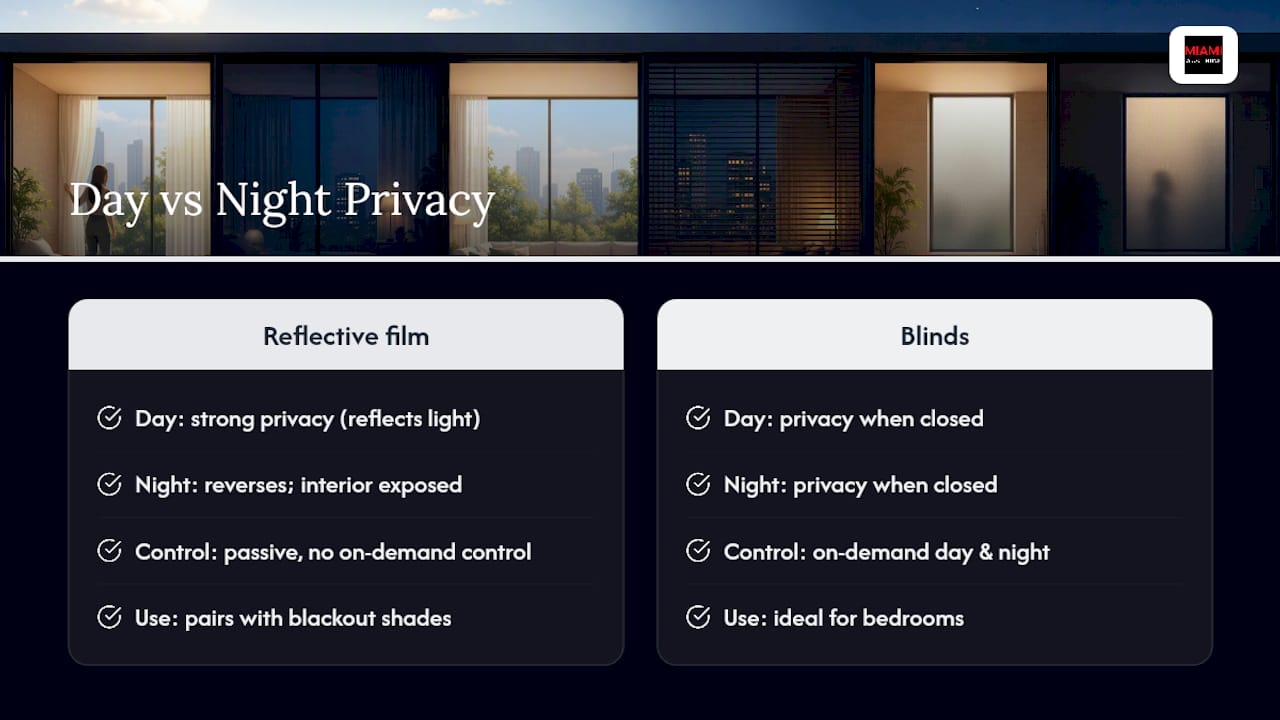
Blinds solve that gap directly. They give you on-demand control, closing fully for blackout at bedtime and opening wide during the day. For bedrooms especially, combining film with blackout shades covers both halves of the day. Frosted film is another option worth asking about for bathrooms and street-facing windows.
Does Tint or Blinds Do More to Prevent Fading?
Quality solar films typically block 99% or more of UV radiation, and that protection runs all day, every day, whether anyone's home or not. Blinds only protect what's covered when they're drawn shut.
UV rays are the main driver of fading, but visible light and infrared heat contribute too, which is why treating the glass matters more than treating the room. If you've got hardwood floors, leather furniture, or artwork near a sun-facing window, film is the more dependable long-term fix. Blinds can help, but only on the days you actually close them.
What Should You Budget for Cost and Installation?
Basic manual blinds often run in the low hundreds of dollars per window installed. Cellular shades land in the mid-hundreds. Quality residential window film typically starts in the low hundreds and can reach $400 to $1,200 or more per window depending on the product, with premium options like 3M Ceramic sitting at the higher end.
Film tends to carry longer manufacturer warranties and lasts longer overall, which narrows the cost gap over time. If you rent or live under an HOA, ask about film removal costs and any covering restrictions before you sign off on either option.
How Much Upkeep Does Each Option Really Need?
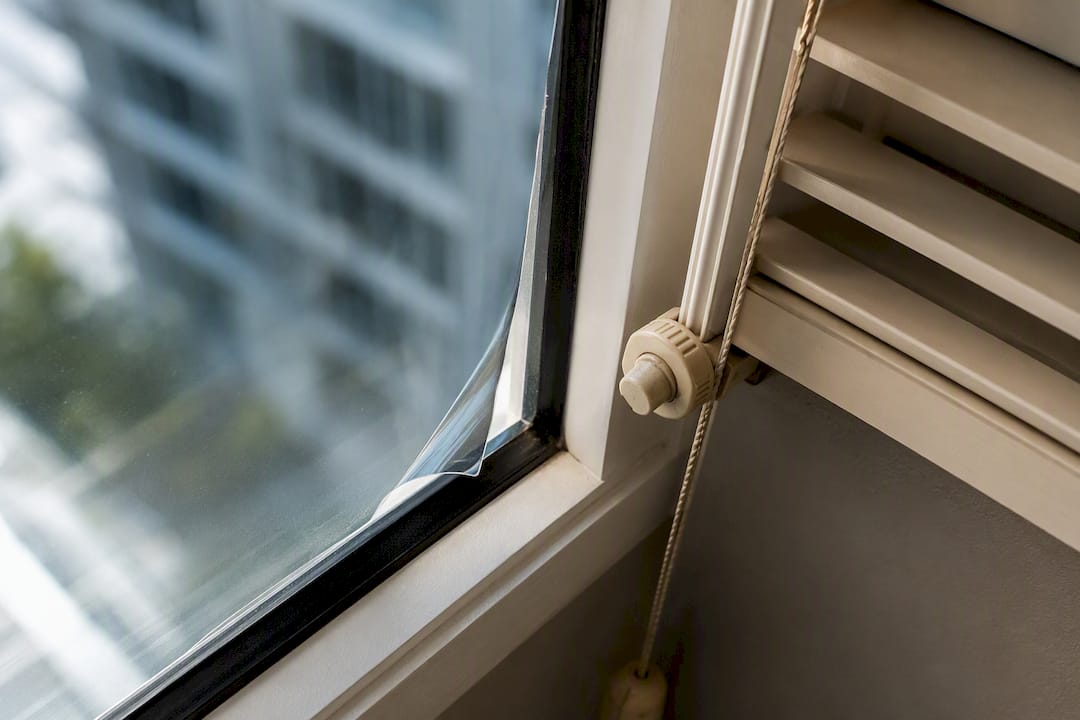
Film needs almost nothing: an occasional wipe with a soft cloth and mild soap. Blinds need regular dusting and occasional cord or tilt-mechanism repair, since that's where most mechanical failures happen. Watch for peeling edges or bubbling on film and stuck slats or frayed cords on blinds. Renters should factor in removal costs for film before installing it in a leased unit.
Which Looks Better and Preserves Your View?
Film keeps your windows looking like windows. Ceramic options in particular reject heat without darkening the glass much, so you keep the view. Decorative and frosted films add style without losing that openness.
Blinds and shades become a visible design element, especially closed. That's a plus if you want texture and color in a room, but a minus if an unobstructed view matters more to you than the window treatment itself.
Your Room-by-Room Decision Checklist
- Living room or family room: Film is usually the right call. It keeps sightlines open while cutting glare and heat during the hours you're actually using the space.
- Bedroom: Film plus blackout shades. You get daytime heat and UV protection plus full darkness at night.
- Sunroom or glass-heavy addition: High-performance ceramic film first. These rooms take the most solar exposure and benefit most from continuous rejection, as detailed in our sunroom window tint guide.
- Home office or nursery: Film for glare reduction, blinds if screen glare or nap-time blackout is a factor.
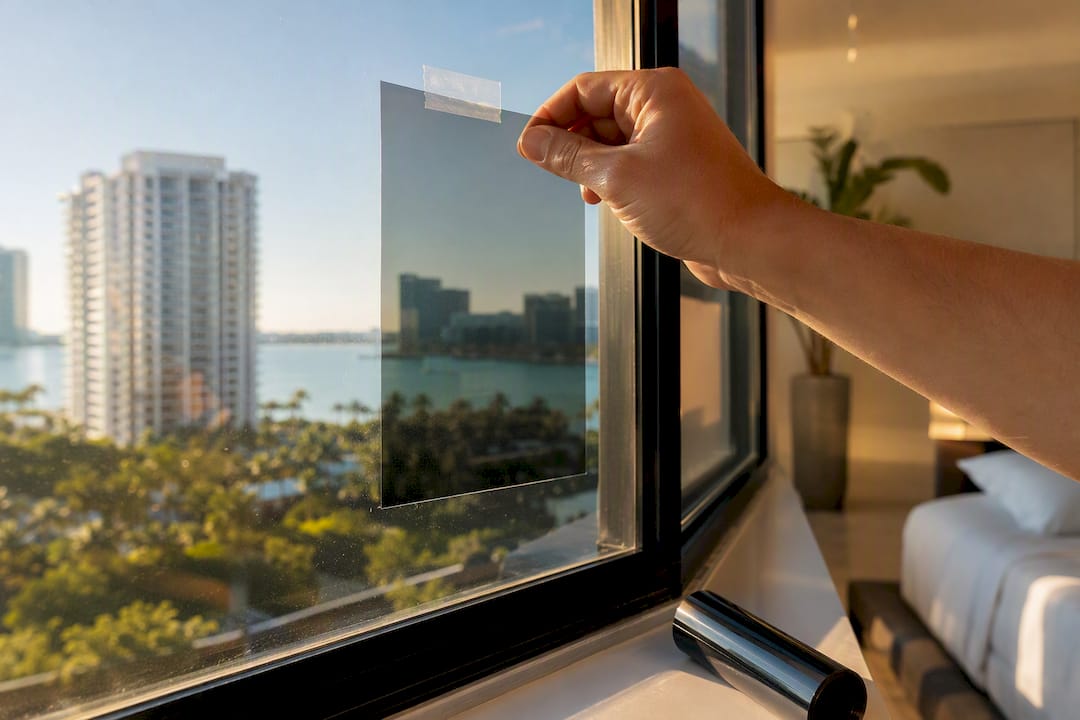
When you're getting quotes, ask about VLT targets for each room, warranty length and what it covers, and whether the installer offers a sample patch before full installation.
Pro Tip: Ask for a demo film sample taped to your actual window for a day before committing. VLT looks different on a sample swatch than it does on your own glass in your own light.
Does Window Tint or Blinds Reduce Outside Noise?
Neither option is a real substitute for soundproofing, but they don't perform equally, either. Thicker window films, especially the multi-layer ceramic varieties, add a small amount of mass and dampening to the glass itself, which can take a modest edge off traffic noise and street chatter. The effect is real but limited. Film is bonded directly to glass that's still a single pane, so it can't match what double glazing or laminated glass does for sound.
Blinds and shades do almost nothing for noise on their own. A slatted blind has gaps by design, and even a solid roller shade sits inches away from the glass with an air gap that sound passes through easily. Cellular shades with a honeycomb structure trap a bit more air and perform slightly better than flat blinds, but you're still talking about a marginal difference, not a fix.
If noise is a genuine concern, the two treatments aren't competing solutions. The more effective route is usually addressing the window itself, adding storm windows, upgrading to laminated or double-pane glass, or sealing gaps around the frame, and treating film or blinds as a bonus rather than the main strategy. Homeowners near busy roads or flight paths sometimes layer heavier cellular shades over tinted glass for whatever incremental benefit each adds, but neither should be marketed or budgeted as a noise-reduction product.
Are There Safety or Emergency Exit Concerns?
Window film is permanently applied to the glass and doesn't obstruct anything. It doesn't cover hardware, doesn't need to be opened, and doesn't add a step between you and getting out during a fire or other emergency. That's a genuine advantage in bedrooms, where egress windows matter most for code compliance and basic safety.
Blinds and shades introduce a small but real consideration. Cords on older corded blinds have long been flagged as a strangulation hazard for young children, which is why most manufacturers now default to cordless or motorized designs. Beyond that, a fully lowered blind or shade in a panic situation adds a physical barrier someone has to raise or push past before reaching the window, particularly in the dark or in smoke.
Neither treatment should ever be installed in a way that blocks a window's ability to open fully, especially in bedrooms where local building codes typically require a clear emergency escape route. If you're outfitting a child's room, cordless shades are the safer default, and any film installer worth hiring will confirm the window still opens and functions normally after installation. Security or safety films marketed for shatter resistance are a separate product category from standard solar or privacy film, and worth a direct conversation with your installer if that's a priority.
Which Option Is More Sustainable Long-Term?
Quality window film is one of the more overlooked energy-efficiency upgrades a homeowner can make, largely because it reduces cooling demand without replacing a single pane of glass. Less air conditioner runtime means lower electricity draw, and unlike a full window replacement, film generates a fraction of the manufacturing and installation waste. A well-installed film also typically lasts a decade or more, so it isn't a disposable product replaced every few seasons.
Blinds and shades carry a different environmental profile. They're generally made from a mix of materials, vinyl, aluminum, wood, or fabric, and mechanical parts like cords, tilt wands, and lift systems tend to wear out well before the material itself does. That means more frequent replacement cycles for lower-quality blinds, and more items headed to landfill over the same 10 to 15 year period a good film would simply keep working.
Neither option is inherently the "green" choice across every scenario. Wood or bamboo shades sourced responsibly have their own sustainability case, and film that's improperly installed or removed can leave adhesive residue that complicates window recycling down the line. The more consistent sustainability win comes from energy savings over time: a product that's actively lowering your cooling load every day it's on the glass tends to have a smaller footprint than one that only helps when it's closed.
An Installer's Take on When Tint Actually Makes Sense
After years of climbing ladders and measuring sun angles across Miami-Dade rooftops, the pattern is consistent: homeowners call about heat long before they call about privacy. The two most common questions are whether film works on curved sunroom glass and whether it's reversible for renters or HOA properties, and the honest answer is usually yes to both, with the right film and a certified installer.
Professional installation earns its cost when the glass is oversized, curved, or covered under warranty terms that DIY film would void. If your afternoons are unbearable and your view still matters, that's the signal to call a pro rather than order a roll online.
— Jose
Ready for a Free Estimate on Residential Window Film?
If the heat and fading are the real problem, not the lack of a curtain rod, Southmiamitint installs premium residential window film at your home across Miami-Dade, no shop visit required. We work with 3M Ceramic IR, 3M Crystalline, 3M Color Stable, and Iviron KoolMax ceramic films, matched to your VLT goals and warranty preferences.

Every quote includes a straightforward walkthrough of film options for your specific rooms, whether that's a sunroom that bakes by 2pm or a west-facing living room that needs UV protection without losing the view. Ask about a sample patch before you commit, and we'll confirm the right ceramic option for your budget. Start with a free ceramic window tint estimate and get a real number for your home, not a guess from a general contractor.
Sources
- Window Film vs Blinds: Which Works Better? - Comfort Pro
- Window Film vs Blinds: The Ultimate Comparison Guide for the Modern Buckinghamshire Home
- Window Film vs Blinds vs Shades Toronto 2026: Which Is Right? | RenoHouse
- Window Tinting vs Blinds vs Shutters: Best for San Diego | Cali Auto Glass & Tint