
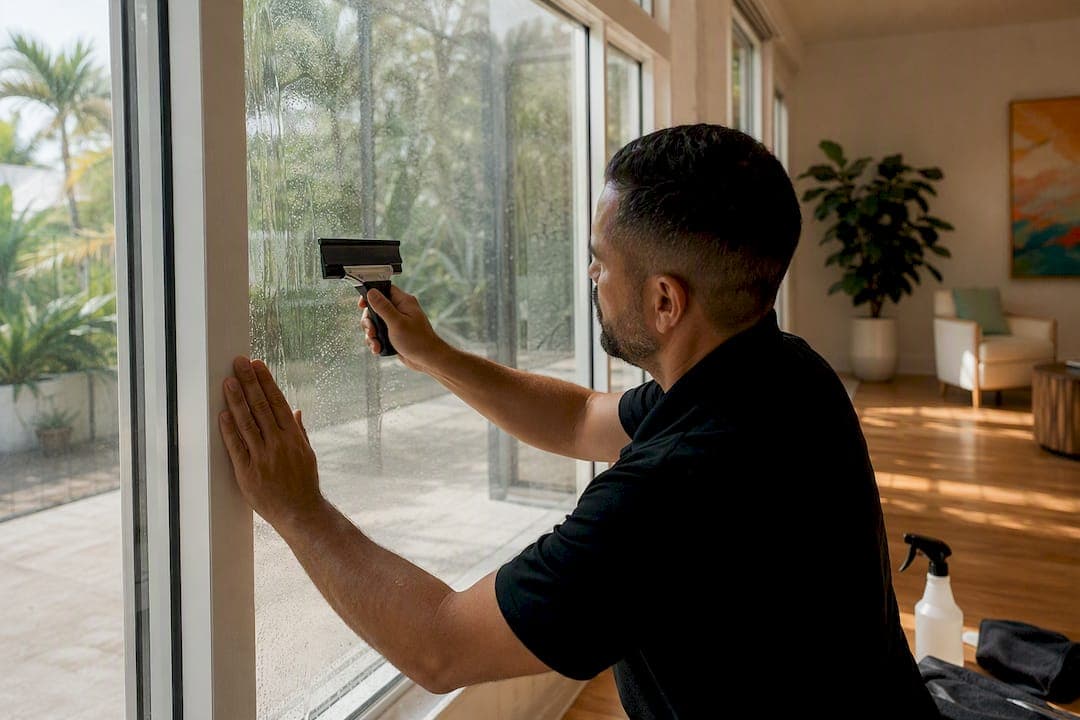
Yes, tinting your sunroom works, and a spectrally selective or nano-ceramic film is usually the better choice over cheaper reflective options. It cuts heat, kills glare, and blocks UV rays without turning your glass into a mirror or blacking out the view you paid for. For anything larger than a standard vertical pane, especially skylights or roof glass, hire a professional installer instead of tackling it yourself.
TL;DR:
- Spectrally selective and nano-ceramic films are most effective because they reject infrared heat without darkening or blocking the view.
- TSER, IR rejection, VLT, and UV blocking are the key specifications to ask for when comparing professional quotes, not marketing claims.
- Proper installation of large panes and skylights requires professional templating, edge sealing, and moisture management to ensure durability and performance.
- Cost typically ranges from $7 to $10 per square foot for quality ceramic films, with larger or complex jobs exceeding $15 per square foot.
- DIY tinting is suitable only for small, flat panes, while larger or overhead glass should be handled by experienced professionals to avoid failures and warranty issues.
Table of Contents
- What is sunroom window tint and does it really work?
- Which film type is best for sunroom windows?
- What specs actually determine heat reduction?
- How do you pick the right film and vet an installer?
- DIY sheets or professional installation: what fits your sunroom?
- What does sunroom tinting cost and what's the real payoff?
- How long does sunroom tint last and what does the warranty cover?
- Why film family and installer experience matter as much as the film itself
- What do installers wish homeowners knew before they started?
- Get a sunroom tint estimate from Southmiamitint
- Sources
What is sunroom window tint and does it really work?
Sunroom window tint is a thin polyester film applied to the interior (or sometimes exterior) surface of glass to control heat, glare, and UV exposure while letting you keep the view. It works because sunrooms are essentially glass boxes with almost no thermal mass to absorb solar energy, so every ray that hits the glass either bounces off, gets absorbed, or passes straight through into your furniture and your air conditioner's workload.
Manufacturer testing backs this up in concrete terms. 3M reports that some of its window films reduce up to 78% of the solar heat passing through glass and block up to 99% of UV rays, figures that hold up as a useful benchmark when you're comparing installer quotes. Independent lab testing from Consumer Reports found real variation between films in transparency, scratch resistance, and durability, which means the film brand and the installation quality both matter more than most homeowners expect.
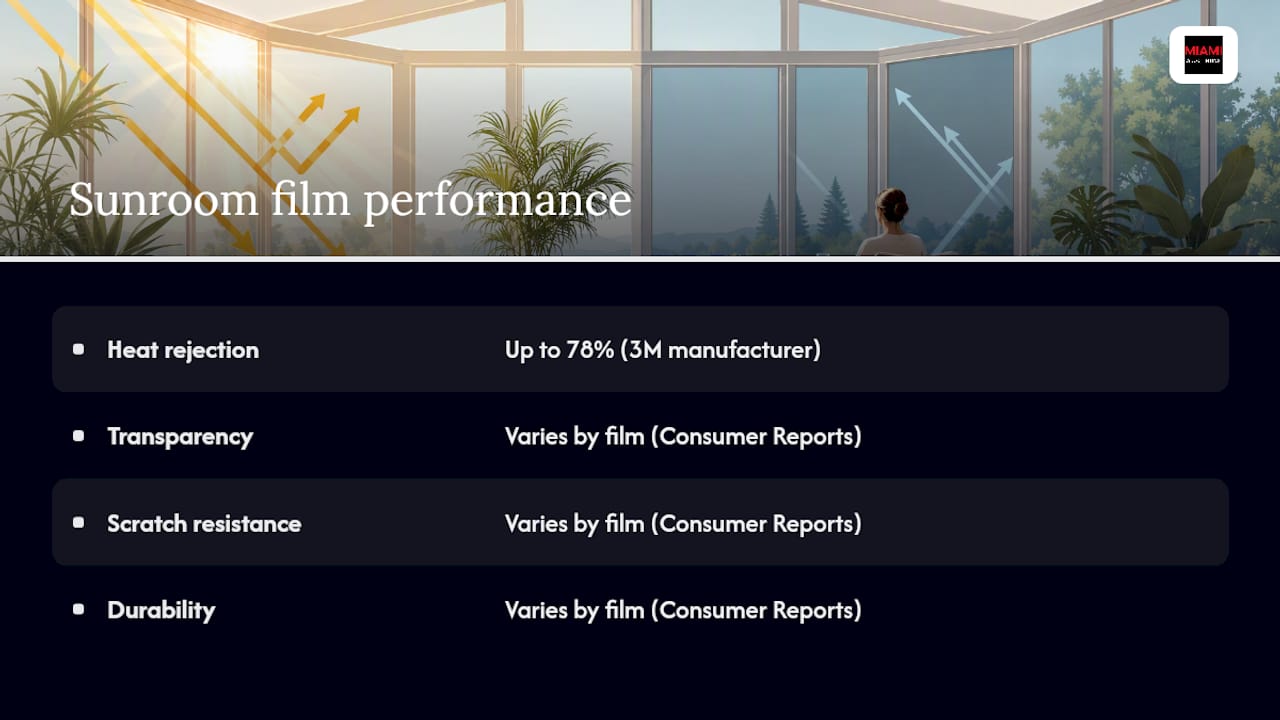
Here's the part most people get wrong: darker doesn't mean cooler. A film's tint depth has almost nothing to do with how much infrared heat it actually rejects. That's why the film category you choose matters more than how dark you go.
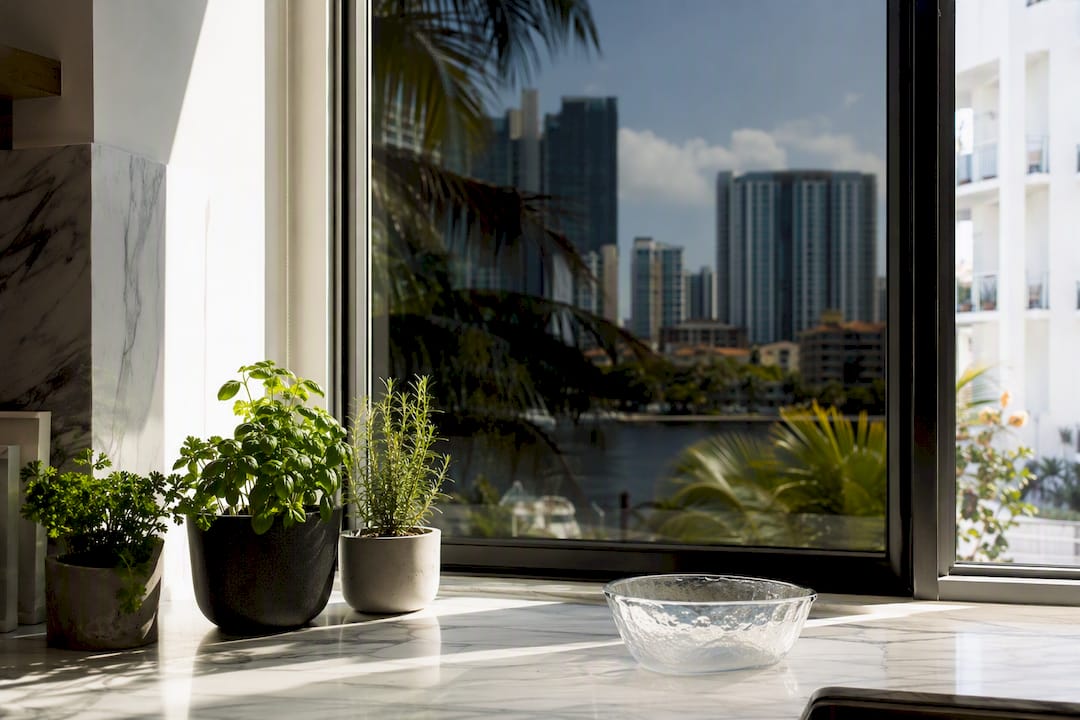
Which film type is best for sunroom windows?
Not all films solve the same problem, and picking the wrong category for your sunroom's exposure is the most common mistake homeowners make before they even call an installer.
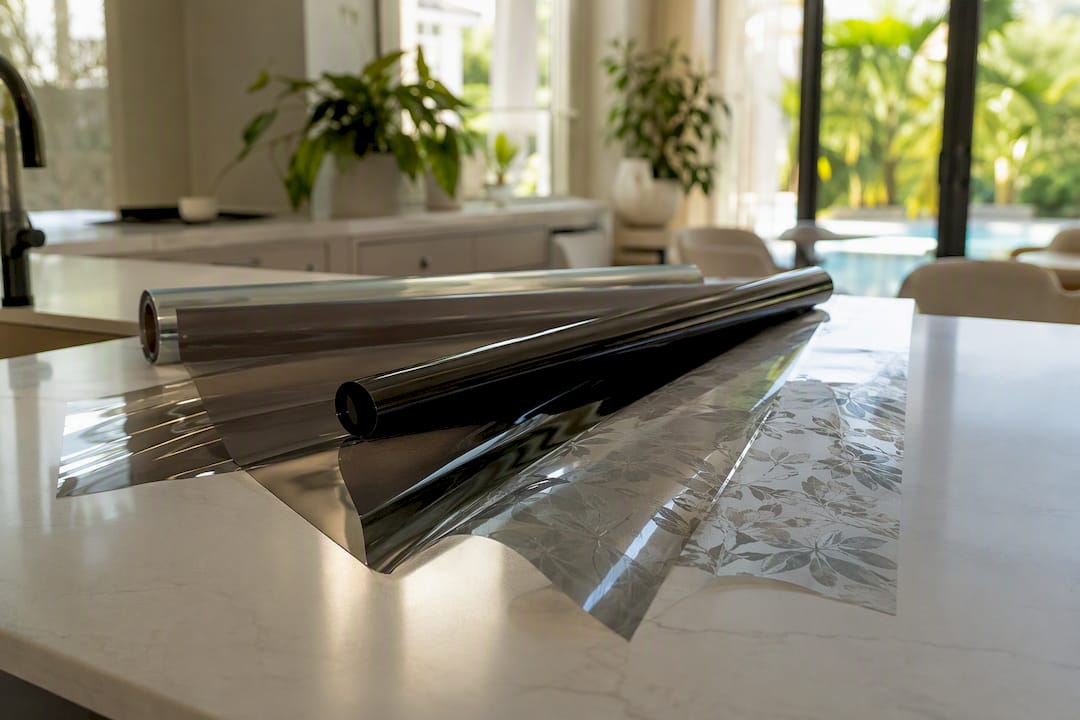
- Ceramic film uses nano-ceramic particles instead of metal to block infrared heat. It doesn't interfere with cell signals, doesn't fade over time the way dyed film does, and delivers strong heat rejection at a lighter, more neutral tint. This is the category most installers recommend first for sunrooms.
- Spectrally selective film is engineered to reject specific wavelengths of infrared and UV light while transmitting more of the visible spectrum. The result is a film that feels almost clear but still knocks down a meaningful chunk of solar heat, which is exactly the "bright but cool" tradeoff sunroom owners want.
- Reflective (metalized) film bounces heat away using a metal layer, which makes it highly effective at heat rejection but gives glass a mirrored look, sometimes interferes with Wi-Fi or garage door signals, and can look dated on a residential sunroom.
- Decorative and frosted film does nothing for heat but solves privacy on panes facing a neighbor's yard or a busy walkway.
- Static-cling DIY sheets are a low-cost, no-adhesive option pitched at renters and small windows, not full sunroom glazing.
Ceramic and spectrally selective films dominate sunroom recommendations because sunrooms combine two problems reflective film handles poorly: they need heat rejection across large panes and they need to preserve enough visible light that the room doesn't feel like a cave at 2 p.m.; for a detailed overview of maintaining high visible light transmission while rejecting heat, see this clear ceramic tint: UV protection without the dark look. Spectrally selective and nano-ceramic films are specifically recommended for skylights and sunrooms for exactly this reason.
Pro Tip: Mix film types by exposure instead of using one film everywhere. Put a high-performance ceramic or spectrally selective film on your south and west panes where the sun hits hardest, and save a decorative or lighter film for north-facing glass that just needs privacy. This hybrid approach matches the film to the actual problem each pane creates instead of over-tinting glass that was never the issue.
What specs actually determine heat reduction?
Skip the marketing language and ask for four numbers. Any installer proposal that can't produce these isn't giving you enough to compare against a competing quote.
- VLT (Visible Light Transmission): the percentage of visible light that passes through the film. Lower VLT means a darker room; most sunroom installs land between 30% and 50% VLT to balance brightness with glare control.
- TSER (Total Solar Energy Rejected): the single best number for judging heat performance, since it accounts for direct, absorbed, and re-radiated heat combined. Quality ceramic and spectrally selective films for sunrooms typically fall in the 40% to 60% TSER range.
- IR rejection: measures how much infrared heat specifically gets blocked, separate from visible light. This is where ceramic film distinguishes itself from dyed film, which can share a similar VLT but reject far less infrared.
- UV blocking: 3M's data shows some films block up to 99% of UV rays, which matters enormously for sunrooms because UV is what fades rattan furniture, hardwood floors, and fabric cushions faster than anything else in the room.
Installer case data on ceramic and spectrally selective installs shows interior peak temperatures dropping roughly 8 to 12 degrees Fahrenheit on affected panes, a range that shows up consistently enough across projects to use as a realistic planning benchmark rather than a best-case outlier.
How do you pick the right film and vet an installer?
Walk into any estimate with a clear picture of your own sunroom, and you'll get a far more accurate quote.
- Identify your primary problem first. Is it afternoon heat, blinding glare off the pool, faded furniture, or a neighbor with a clear sightline into your space? Each priority points toward a different film choice.
- Note your exposure direction. South-facing and west-facing glass takes the most punishing, longest-duration heat load and should get your highest-performing film.
- Count every pane, including skylights. Roof glass and overhead panels are the biggest single driver of sunroom discomfort, and homeowners routinely undercount square footage when they're only thinking about the walls.
- Flag anything at risk of fading, from leather furniture to artwork, so the installer can prioritize UV blocking on those exposures.
- Ask for the film's TSER, IR rejection, and VLT numbers in writing, not just a verbal "it blocks most of the heat."
- Confirm compatibility with insulated glass (IG) units if your sunroom has double-pane windows, since some films can trap heat between panes and stress the seal.
- Ask exactly how edge sealing is handled on skylights, since this is where amateur installs fail first.
Pro Tip: A good installer hands you a spec sheet with real numbers before you sign anything, not a sales pitch about how "premium" the film feels. If an estimator can't tell you the TSER percentage or dodges questions about warranty coverage on skylights specifically, treat that as a red flag and get a second quote.
DIY sheets or professional installation: what fits your sunroom?
The honest answer depends almost entirely on what kind of glass you're covering, not on your patience or budget alone.
DIY static-cling and adhesive sheets, the kind Gila markets for weekend installs with claims of roughly 70% solar energy rejection and 99% UV blocking, work reasonably well on small, flat, vertical panes you can reach easily. They're a fine short-term or rental-friendly fix. But installer and retailer guidance consistently notes that failure rates climb fast on large panes and non-flat geometry, where bubbling, peeling edges, and visible seams become the norm rather than the exception.
Professional wet-applied installation solves the problems DIY can't:
- Templating ensures each panel is cut to the exact pane dimensions instead of trimmed on-site and hoped into place.
- Large-pane handling avoids the air bubbles and misalignment that come from wrestling a big sheet solo.
- Proper edge sealing on skylights and roof panels prevents moisture intrusion, which is the single biggest failure point on overhead glass.
- Written warranties typically cover peeling, bubbling, and discoloration for years, something DIY sheets rarely offer.
Skylights and roof panels deserve special attention because they face thermal stresses and flashing details that vertical wall glass never encounters. Overhead glass drives the largest single comfort improvement when tinted, since it receives direct sun for more hours per day than any vertical pane, but it also demands roof access and careful edge work that most DIY kits were never designed for.
On install day, expect the crew to clean each pane thoroughly, apply the film wet, and squeegee out moisture and air. Most installers recommend waiting three to five days before washing the glass and avoiding lowering shades or blinds against freshly applied film for the first 24 to 48 hours while the adhesive cures.
What does sunroom tinting cost and what's the real payoff?
Quality ceramic-style film installed by a professional typically runs $7 to $10 per square foot in many regions, with some installers quoting up to $15 per square foot for jobs involving skylights, difficult access, or extended warranty coverage.
For a 250 square foot sunroom (a common size for enclosed patios), that math works out roughly like this:
| Scenario | Rate per sq ft | Estimated total |
|---|---|---|
| Low-end (basic ceramic, easy access) | $7 | $1,750 |
| Median (ceramic or spectrally selective, standard install) | $7 to $10 | $2,250 |
| High-end (skylights, extended warranty, complex access) | up to $15 | $3,250 |
Installer case data shows peak interior temperature drops of roughly 8 to 12 degrees Fahrenheit on tinted panes, which translates into real reductions in cooling load for whatever room shares an HVAC zone with the sunroom. That's a meaningful comfort shift for a room that often sits unused in peak summer because it's simply too hot to enjoy.
Film stops making financial sense when the glass itself is failing, single-pane, or so old that seal failure and drafts are the bigger problem. In those cases, replacement windows deliver better long-term ROI than tint ever will, since no film can fix a broken seal or a frame that's letting outside air pour in year-round.
How long does sunroom tint last and what does the warranty cover?
Modern ceramic and spectrally selective films commonly last 10 to 20 years on vertical glass, with skylights and roof panels sitting toward the shorter end of that range due to constant direct UV exposure and greater thermal cycling.
Right after installation, expect a curing period of several days to a few weeks where the film may look slightly hazy or show small trapped moisture bubbles. This is completely normal and clears up on its own as the adhesive fully sets.
- Do clean tinted glass with a soft cloth and a mild, ammonia-free cleaner.
- Don't use abrasive sponges, squeegees with metal edges, or window-cleaning tools that can scratch the film's surface.
- Do wait the recommended post-install period, typically three to five days, before any cleaning at all.
- Call for warranty service if you notice peeling edges, persistent bubbling well after the curing window, or visible discoloration.
Pro Tip: Read the warranty's fine print on labor coverage, not just materials. A film warranty that only replaces defective material but doesn't cover the cost of removal and reinstallation leaves you holding the labor bill if something fails years down the road.
Why film family and installer experience matter as much as the film itself
Southmiamitint installs 3M Ceramic IR, 3M Color Stable, and Iviron KoolMax ceramic films on residential and commercial glass across Miami-Dade County, including sunrooms that deal with year-round direct sun exposure most parts of the country never see.
These film families get chosen for sunroom work for specific technical reasons:
- 3M Ceramic IR uses non-metallic ceramic particles that reject infrared heat without the mirrored look or signal interference of reflective film.
- 3M Color Stable resists fading and color shift over time, which matters on glass that sits in direct sun for a decade or more.
- Iviron KoolMax ceramic offers strong heat rejection performance at competitive pricing for larger glass areas like sunroom walls and skylights.
Homeowners vetting any installer, not just Southmiamitint, should ask for the same quality signals: accurate templating for each pane, proper edge sealing on overhead glass, and a written spec sheet showing the film's actual VLT and TSER numbers rather than vague marketing claims.
What do installers wish homeowners knew before they started?
The mistake I see most often is homeowners chasing darkness instead of performance. They ask for the darkest film available assuming it'll be the coolest, when a lighter spectrally selective film often outperforms it on actual heat rejection while keeping the room livable.
The second mistake is attempting skylights as a DIY project. Overhead glass has zero margin for error on edge sealing, and a failed seal there means water intrusion, not just a cosmetic bubble.
My advice: stage the project if budget is a concern, tint your worst-exposure panes first, and always ask for a before-and-after temperature reading so you can see the real difference on your own glass. If your sunroom has skylights or more than a few large panes, get a professional estimate before you touch a DIY kit.
— Jose
Get a sunroom tint estimate from Southmiamitint
Southmiamitint handles sunroom tinting the way large glass deserves: on-site, with mobile installers who template every pane instead of guessing at dimensions from a truck. Rather than hauling your sunroom glass to a shop or gambling on a DIY kit for panels that took a contractor a full day to install, you get 3M Ceramic IR, 3M Color Stable, or Iviron KoolMax ceramic film applied at your property in Miami-Dade County, with the crew and equipment coming to you.

During your estimate, you'll get accurate pane measurements, a written spec sheet showing the film's real VLT and TSER numbers, and clear warranty terms before any work begins, so you're comparing facts instead of sales language. Pricing depends on square footage, exposure, and whether skylights are involved, and you can review typical ranges on the mobile tinting pricing page before you book. Ready to see what your sunroom needs? Request a quote through the ceramic mobile tint service page and get a real estimate scheduled at your address.
Sources
- Best window films — Consumer Reports
- Home window films for temperature control | 3M
- Heat control window film | Gila
- Sunroom window tint: The fix for Texas sunroom heat | Granbury Window Tint