
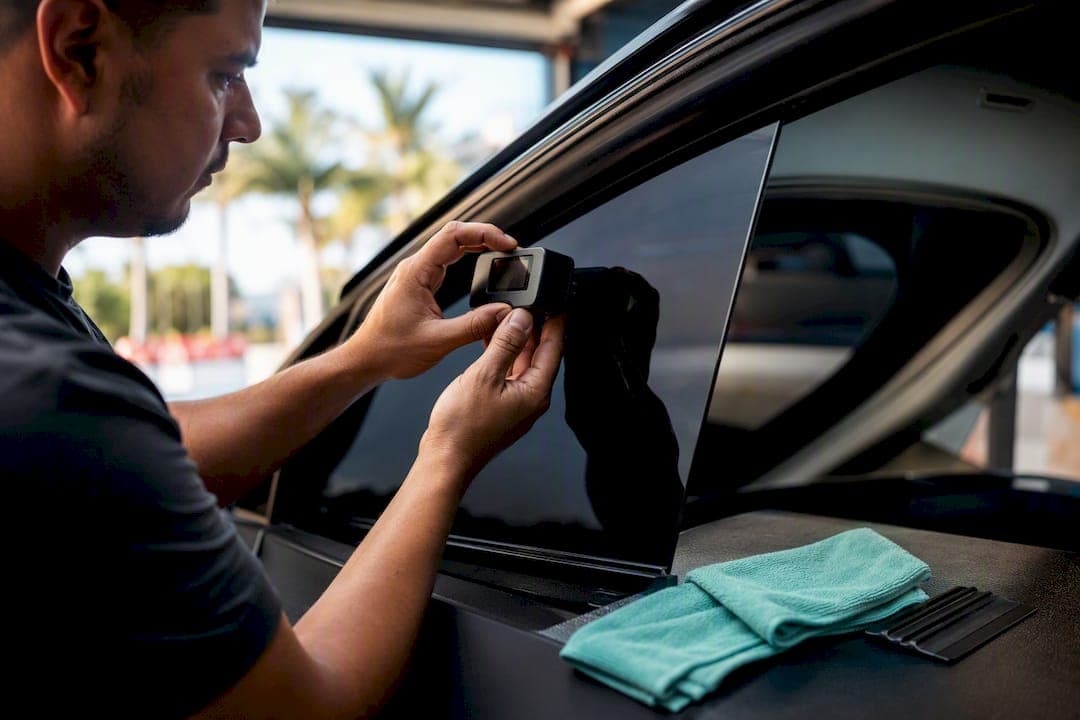
Ceramic film is the recommended category across every window because it cuts heat without blocking camera or sensor signals. Always ask your installer for a post-install VLT reading rather than trusting the percentage printed on the film roll, and check your local front-window rules before you commit to anything darker than factory glass.
TL;DR:
- Factory privacy glass significantly affects the final tint percentage, making a 35% film appear closer to 20% in effective VLT once layered.
- It is essential to request VLT meter readings before and after installation to verify actual tint levels, avoiding potential legal issues.
- Ceramic films are the best choice for Model Y owners because they reject UV and infrared heat without interfering with sensors or signals.
- Front side windows should generally be tinted with a light ceramic film, such as 50% to 70%, to maintain nighttime visibility and adhere to local laws.
- Full-vehicle tinting costs vary from a few hundred dollars for basic packages to over a thousand dollars for premium ceramic options, depending on coverage and film choice.
Table of Contents
- Model Y Tint Percentage Recommendations by Window
- Why Factory Privacy Glass Changes Your Final Tint Percentage
- Ceramic vs. Carbon vs. Dyed Film: Which Matters for a Model Y?
- Legal Limits and Nighttime Visibility on Your Model Y
- Your Pre-Install and Post-Install Checklist
- What Does Model Y Window Tint Cost?
- Field-Tested Lessons for Model Y Owners
- Get a Measured, Ceramic Tint Job Without Leaving Your Driveway
- Sources
- FAQ
Model Y Tint Percentage Recommendations by Window
Every window on a Model Y does a different job, so the tint percentage that works for your rear hatch is usually wrong for your windshield. Think of it less as one tint job and more as four separate decisions that happen to get installed on the same afternoon.
You want visibility here, especially at night, so this is not the place to chase maximum darkness.
Rear side windows and the rear hatch are where most owners go darker. A 20% to 35% VLT range works well for daily privacy without turning the cabin into a cave, while 15% to 20% suits owners who park in dense urban areas or simply want maximum privacy and don't mind losing rear visibility at night.
Because Florida sun hits that glass all day, this window does the heaviest lifting for cabin temperature, and a quality ceramic IR film cuts heat load without turning the interior noticeably darker than factory glass.
The windshield top strip should stay modest, usually a narrow band that mirrors factory sun visors. Keep it discreet and within your local rules since this strip sits in your direct line of sight.
A quick way to pick your starting point is:
- Hot climate, street parking, daily highway driving: prioritize the roof and rear hatch first.
- Privacy is the main goal (dense parking, valet use): go 15% to 20% on rear windows.
- Frequent night driving with passengers in back: stay closer to 35% on rear sides to preserve visibility.
Why Factory Privacy Glass Changes Your Final Tint Percentage
Film percentage and finished VLT are not the same number, and this trips up more Model Y owners than any other part of the process. The percentage printed on a roll of film describes how much light that film alone blocks. Factory privacy glass already blocks some light before the film ever touches it, so the two combine.
There is no single factory VLT figure that applies to every Model Y. Privacy glass appearance varies by window position and model year, which means a 35% film applied to one Model Y's rear glass might read closer to 20% effective VLT once layered over factory tint, while the same film on a different Model Y reads differently. Guessing at the math gets owners darker windows than they intended, sometimes darker than local rules allow.
Pro Tip: Ask your installer to take a VLT meter reading before and after installation, then hand you a written certificate with both numbers. That single piece of paper protects you if a window is ever questioned during an inspection or traffic stop.
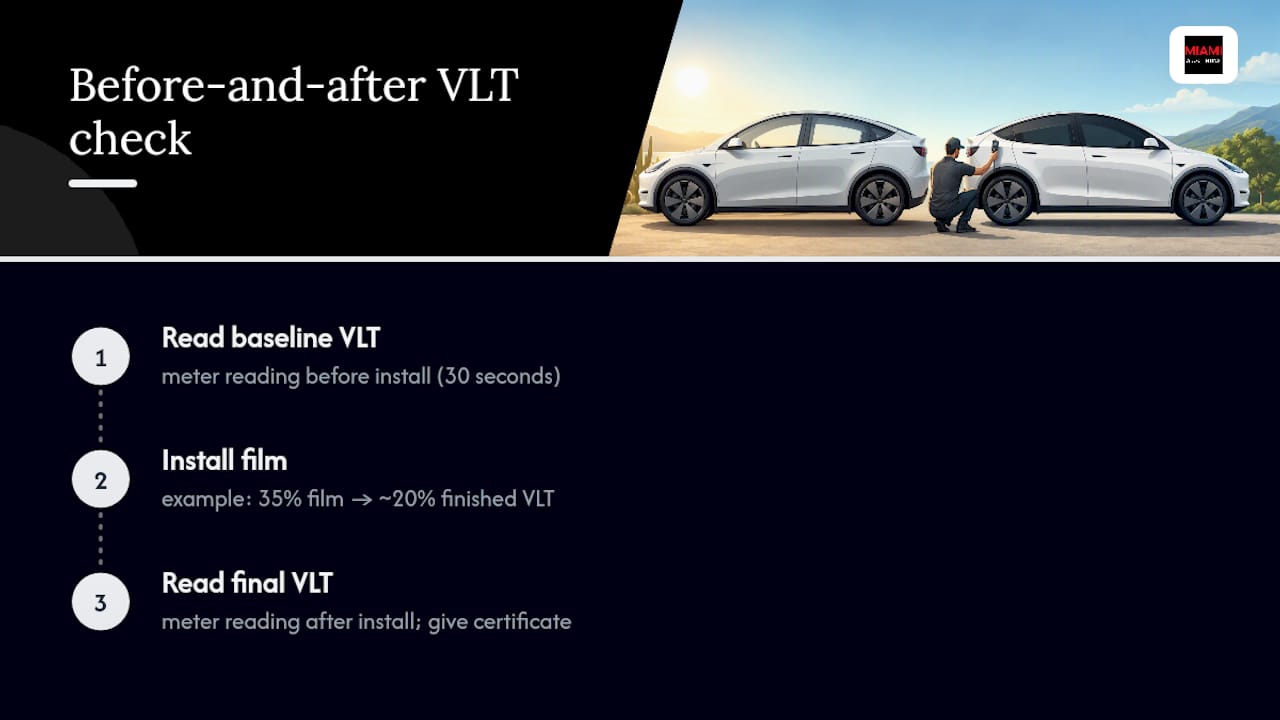
Installers who skip this step are relying on published film percentages that assume bare glass, which your Model Y does not have. A meter reading takes thirty seconds and removes the guesswork entirely.
Ceramic vs. Carbon vs. Dyed Film: Which Matters for a Model Y?
Film technology affects more than looks. It determines how much heat comes through your glass, whether your cameras and sensors keep working properly, and how long the tint lasts before it fades or peels.
- Ceramic film offers the highest UV and infrared rejection, causes no camera or signal interference, and holds its color for years. It's the default recommendation for Model Y owners, and non-metallic ceramic options like 3M Ceramic IR or Iviron KoolMax are specifically built to avoid the antenna and sensor problems metallic films can cause.
- Carbon film is a reasonable middle ground with decent heat rejection at a lower price than ceramic, though it falls short of ceramic's infrared performance.
- Dyed film costs the least but rejects the least heat and fades faster under Florida sun, making it a poor match for a vehicle that relies on climate efficiency.
- Metallic film rejects heat well but carries a real risk of interfering with GPS, Bluetooth key fobs, and cellular signal, which makes it a bad fit for a car this dependent on wireless systems.
If heat rejection matters more to you than maximum darkness, look at TSER and IR rejection numbers before you look at the VLT percentage.
Legal Limits and Nighttime Visibility on Your Model Y
Front-side windows in many states are measured as glass plus film combined, not film alone. Confirm your state's specific threshold before choosing a front-side film, since assuming your film's rated percentage is the finished result is exactly the mistake that leads to a fix-it ticket.
Nighttime visibility is the trade-off nobody mentions until they're already driving home in the dark. Very dark film on front windows reduces how much light reaches your eyes at night, which matters more than most owners expect during rain or on unlit roads.
- Choose a front-side film that preserves low-light visibility rather than chasing maximum darkness.
- Avoid 15% to 20% on front windows unless you've verified it's legal in your state and you're comfortable with reduced night visibility.
- Request meter readings for every finished window, not just the ones you're worried about.
- Keep your installation certificate in the glove box alongside your registration.
Your Pre-Install and Post-Install Checklist
A good installer gives you documentation, not just a finished car. Before you book, and again before you drive away, run through this list:
- Ask for the exact film brand and model, such as 3M Ceramic IR, 3M Crystalline, or Iviron KoolMax, and request the published UV and TSER rejection specs.
- Request VLT meter readings for each finished window along with a written certificate showing the numbers.
- Confirm the film is non-metallic to avoid antenna, Bluetooth key, or camera interference.
- Ask about warranty length and what it covers, including bubbling, peeling, or color shift.
- Decide whether a mobile install at your home or office works better for your schedule than a shop visit.
Pro Tip: If an installer can't produce a VLT meter reading on request, that's a signal to keep looking. Every professional shop worth booking owns one and uses it as a matter of routine, not as a special request.
What Does Model Y Window Tint Cost?
Pricing depends heavily on which windows you tint and which film tier you choose. Aftermarket ceramic packages typically break down like this:
- Front windows only: a few hundred dollars depending on film grade and glass size.
- Rear windows and hatch: moderate pricing, often bundled together since they're installed in one session.
- Full-vehicle ceramic package: the most common choice among owners who want consistent look and performance front to back.
- Panoramic roof add-on: priced separately since curved glass takes more installer time.
Tesla's own partnered service through Xpel gives a useful benchmark. Reported pricing for Tesla's Xpel tint service starts around $150 for limited coverage, with front-window-only jobs landing closer to $225 to $275, and full-vehicle premium packages reaching $700 to $1,275 depending on film selection. Tesla's Xpel product listing shows the partnered service as an option worth comparing against independent installers, especially since Tesla ties it to under-glass warranty coverage. When you compare quotes, weigh the film's actual TSER and UV numbers and the installer's warranty terms just as heavily as the price tag itself.
Field-Tested Lessons for Model Y Owners
The biggest mistake I see is owners picking a rear percentage first and treating the roof as an afterthought. Consistent rear shading paired with a proper ceramic IR roof film does more for comfort than chasing the darkest legal number on the sides. Ask for meter readings every time. Our Miami case study shows what that verification looks like on an actual vehicle, not just on paper.
— Jose
Get a Measured, Ceramic Tint Job Without Leaving Your Driveway
Professional mobile window tinting services bring the installer to you, allowing you to get your Model Y tinted in your own driveway with post-install VLT readings provided before the installer leaves. Installers typically use premium ceramic films chosen for the window position and heat, privacy, or visibility priorities.
A DIY kit can't verify effective VLT the way a meter can, and it can't match ceramic film's UV and IR rejection without the installer experience to apply it evenly across curved panoramic glass. If you're weighing a mobile pro install against doing it yourself or booking a shop appointment, mobile ceramic installation gets you warrantied work at your location on your schedule. Check pricing and book your mobile ceramic window tint appointment, or browse 3M film options if you want to compare Ceramic IR against Crystalline before you decide.
Sources
- Model Y window tinting service starts from $150 — Notebookcheck
- Tesla Model Y window tinting: Complete guide — Gilroy Blackout
FAQ
Is 20% or 35% Tint Darker?
The percentage refers to how much visible light the film lets through, so a lower number means less light passes and the window looks darker.
What Is the Recommended Window Tint for a Tesla Model Y?
Most owners do well with light ceramic on the front sides, 20% to 35% on the rear sides and hatch, and 50% to 70% ceramic IR on the panoramic roof. The right mix depends on your climate, privacy needs, and how often you drive at night.
Should I Do 70% or 50% Tint on My Windshield?
Keep any windshield film limited to a narrow top strip rather than tinting the full windshield, and choose whichever percentage keeps that strip legal and visually consistent with your factory sun visor. Full-windshield tint is restricted or banned in many states regardless of percentage.
What Percentage Should I Tint My Tesla?
Always confirm the finished VLT with a meter reading, since factory privacy glass changes how dark the final result looks.