
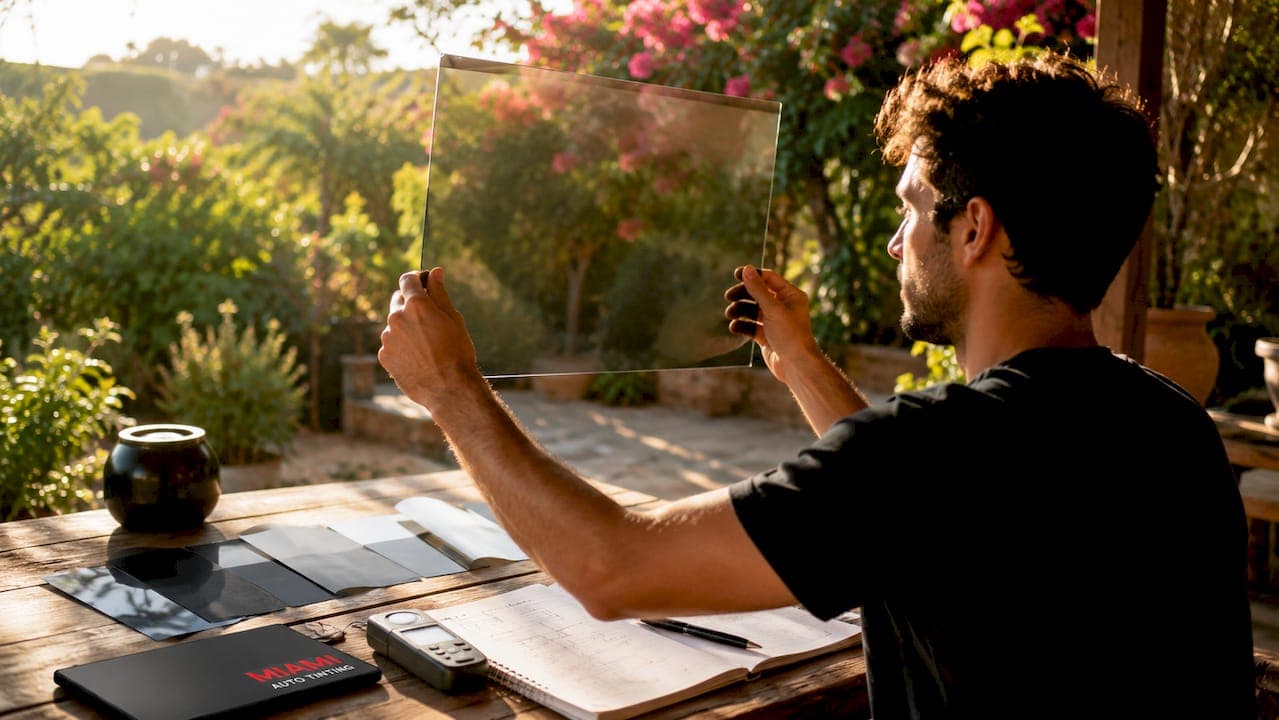
Glass tint clarity is defined as the optical transparency and absence of haze in tinted glass, measured primarily by Visible Light Transmission (VLT) percentage. Understanding what is glass tint clarity matters because it directly determines how well you see through a tinted window, not just how dark it looks. The right tint keeps your car or home comfortable, protects against UV radiation, and still lets you see clearly at night. Southmiamitint installs premium films including 3M IR, 3M Color Stable, and Iviron Kollmax ceramic tint, all chosen specifically for their optical quality.
What is glass tint clarity and how does VLT measure it?
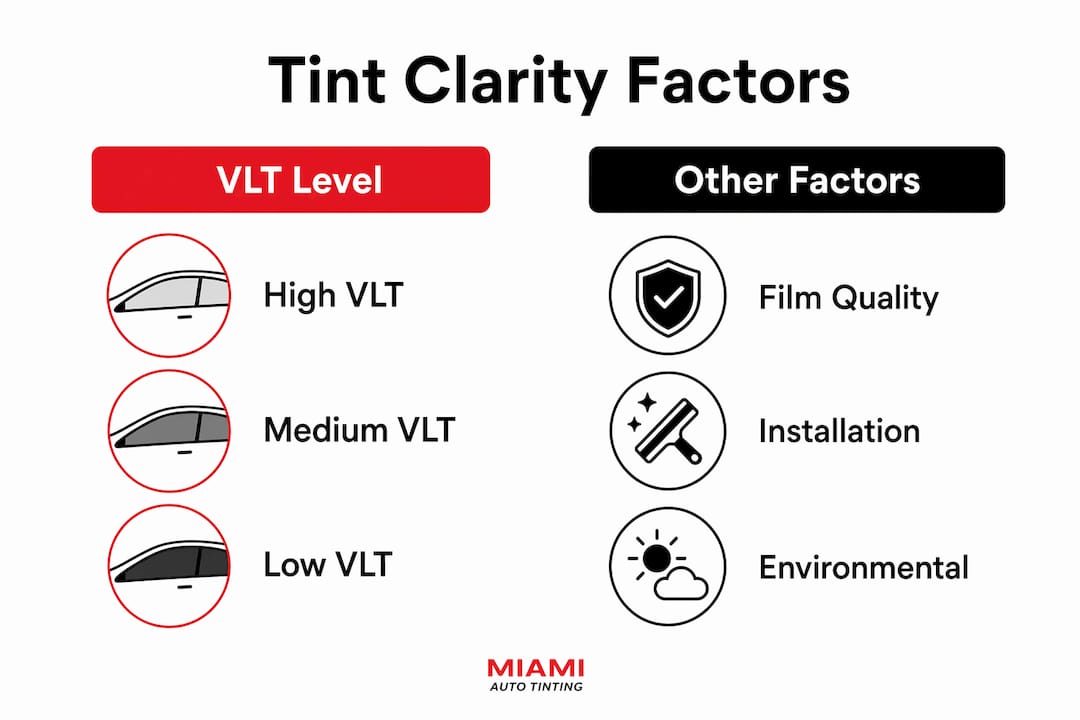
VLT is the percentage of visible light that passes through a tinted window. Clear glass allows around 90% VLT, meaning almost all light passes through with zero distortion. That number drops as tint gets darker, but a lower VLT does not automatically mean worse optical clarity.
The distinction matters. VLT measures darkness. Optical clarity measures distortion, haze, and color neutrality. A film can block 65% of light and still look perfectly clear if the film quality is high. Conversely, a cheap light-tinted film can look foggy even at 70% VLT. Tint darkness and clarity are related but not the same thing.
| VLT Range | Tint Level | Expected Clarity |
|---|---|---|
| 70–100% | Very light or clear | High clarity, near-factory appearance |
| 40–70% | Medium tint | Good clarity with mild darkening |
| 10–40% | Dark tint | Clarity depends heavily on film quality |
| Below 10% | Very dark (limo tint) | Reduced outward visibility, legal restrictions apply |
The table shows why film quality becomes more critical as VLT drops. At 35% VLT, a premium ceramic film can look as clear as untinted glass from the inside. A budget dyed film at the same VLT often looks hazy or greenish. Choosing by darkness alone is the most common mistake buyers make.
What factors affect tint clarity beyond VLT?
Manufacturing quality directly controls optical clarity in tinted glass. Raw material purity, temperature control during production, and chemical consistency all determine whether a finished film transmits light cleanly or scatters it. Thicker glass can increase visible distortion and color density, which compounds any haze already present in a lower-grade film.
Film type is the biggest variable most buyers overlook. The four main categories perform very differently:
- Dyed films absorb light but fade over time, often developing a purple tint that signals degraded clarity.
- Metallized films reflect heat effectively but can create a mirror effect and interfere with cell signals.
- Carbon films offer stable color and good clarity without signal interference, making them a solid mid-range choice.
- Ceramic films use nano-ceramic particles to filter heat and UV without metallic layers, delivering the highest optical clarity of any film type.
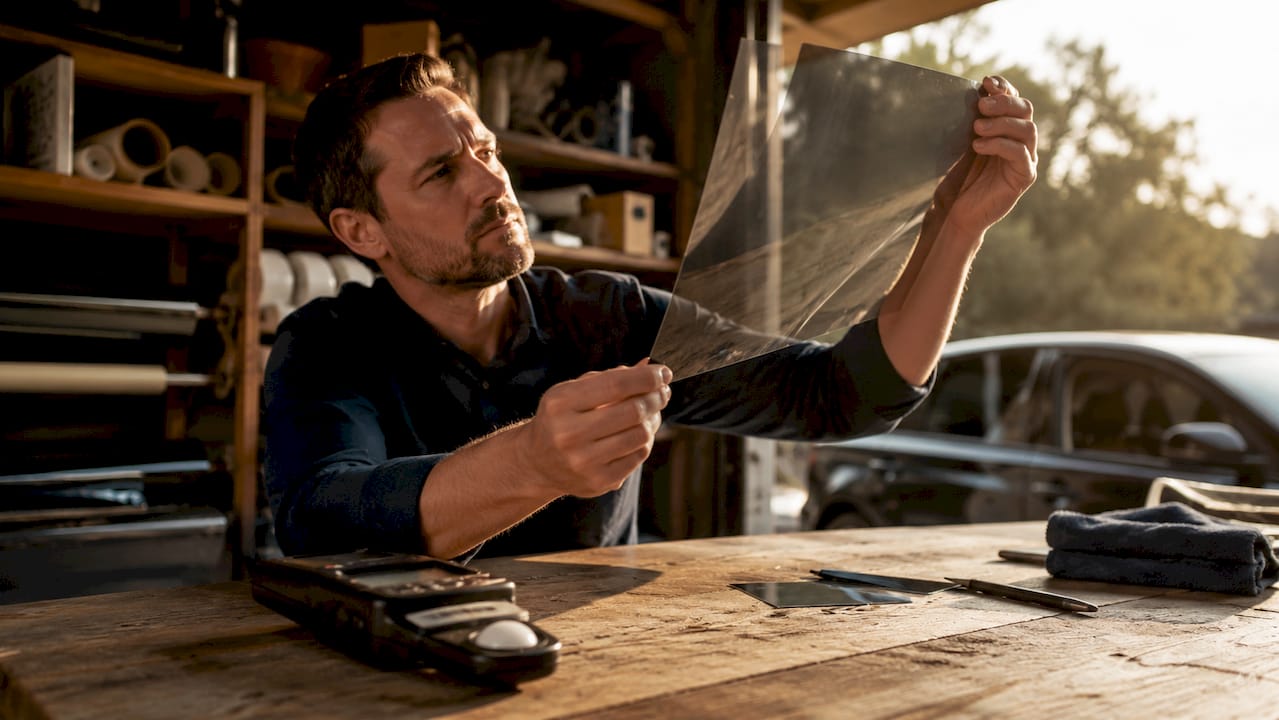
Installation quality also affects the result. Trapped adhesive water, dust contamination, and improper squeegee technique all introduce haze. Most clarity issues trace back to film quality rather than installation errors, but a poor install can still ruin an otherwise good film. Viewing a freshly installed tint in direct sunlight at a low angle reveals problems that are invisible under normal conditions.
Pro Tip: Ask your installer to show you the film sample in direct sunlight before committing. Haze and color shift are easiest to spot in bright, angled light.
How does ceramic tint technology preserve clarity at darker shades?
Premium ceramic films block up to 99% UV and reject significant infrared heat without adding metallic layers that cause haze or signal interference. That combination was not possible with older dyed or metallized films. Nano-ceramic technology changed the equation entirely.
A 35% VLT ceramic film is the clearest example of this shift. From the inside, it looks nearly identical to uncoated glass. From the outside, it appears as a clean, neutral charcoal shade. There is no greenish or purplish cast, no mirror effect, and no haze under low-angle light. The benefits of ceramic window tint extend beyond heat rejection because the optical quality itself is superior.
For vehicles and homes, ceramic films offer specific advantages worth knowing:
- No signal interference. Unlike metallized films, ceramic tint is signal-transparent, so GPS, cell service, and keyless entry all work normally.
- Long-term color stability. Ceramic particles do not oxidize, so the film holds its neutral charcoal color for years without hazing.
- Clear shield options. Clear ceramic films block UV and reduce infrared heat while keeping the factory glass appearance, which is ideal for windshields and locations with strict tint laws.
- Consistent performance at any shade. From 70% VLT down to 20%, ceramic films maintain the same optical quality.
Pro Tip: Test a film's authenticity by checking cell signal through it. A genuine ceramic film causes no signal drop. A metallized film will weaken reception noticeably.
What are the most common optical clarity problems in tinted glass?
Low-angle haze and ghosting are the two clarity defects that cause the most complaints after installation. Both stem from uneven ceramic particle distribution or unstable coatings in low-grade films, not from the installer's technique. They are often invisible during a standard inspection but appear clearly when sunlight hits the glass at a shallow angle, like during a sunrise or sunset drive.
Ghosting creates a faint double image of objects viewed through the glass. Low-angle haze makes the window look milky or frosted in certain lighting. Neither defect improves over time. Both are permanent features of the film itself.
| Symptom | Cause | Solution |
|---|---|---|
| Milky appearance in bright light | Low-grade film with unstable coating | Replace with certified ceramic film |
| Double image (ghosting) | Uneven particle distribution in film | Request film spec sheet before install |
| Purple or brown color shift | Dyed film degradation over time | Upgrade to carbon or ceramic film |
| Haze after installation | Trapped adhesive water | Allow cure time; inspect after 2 weeks |
Choosing the right installer reduces risk significantly. Optical clarity defects are the leading cause of customer dissatisfaction with tinted glass. Experienced installers test films under glare-heavy conditions before selling them. They also carry film spec sheets showing haze ratings from the manufacturer. If an installer cannot produce that documentation, that is a clear signal to look elsewhere. You can also review common installation issues to know what to watch for after your appointment.
Pro Tip: Inspect your tint within the first two weeks after installation. View it from inside the car with sunlight coming through at a low angle. Any haze visible then is a film quality issue, not a curing issue.
How does tint clarity affect your daily experience in a vehicle or home?
Tint clarity shapes every interaction you have with a tinted window. Glare reduction improves driving comfort during Miami's intense afternoon sun, but only if the film does not introduce its own optical distortion. A hazy film trades one visual problem for another. Night driving visibility depends entirely on how cleanly the film transmits the limited light available after dark.
Clear ceramic films solve a specific problem for drivers who want UV and heat protection without any visible darkening. They maintain the factory glass look while blocking harmful rays. This matters for windshields, where most states restrict VLT to 70% or higher, and for homeowners who want sun protection without changing the appearance of their windows.
The practical benefits of well-chosen tint clarity include:
- Reduced eye strain from glare, without the visual fatigue caused by distorted or hazy films.
- Legal compliance by matching state-mandated VLT minimums, which vary by window position and vehicle type.
- Energy savings from heat rejection that reduces air conditioning load in both cars and homes.
- Aesthetic consistency that preserves the original look of a vehicle or building facade.
Choosing between a clear ceramic film and a darker tinted film comes down to your priorities. If privacy and heat rejection are the goal, a 35% VLT ceramic film delivers both without sacrificing clarity. If legal restrictions or aesthetics require a factory look, a clear UV-blocking film achieves protection invisibly. The key is matching the film's VLT and optical quality to your actual use case, not just picking the darkest legal option.
Key Takeaways
Glass tint clarity is determined by VLT percentage and film optical quality together, and ceramic films deliver the best balance of darkness, heat rejection, and distortion-free visibility.
| Point | Details |
|---|---|
| VLT measures darkness, not clarity | A low VLT film can still be optically clear if the film quality is high. |
| Ceramic films lead on clarity | Nano-ceramic technology blocks UV and heat without haze or signal interference. |
| Film type matters more than shade | Dyed films fade and shift color; ceramic films hold neutral clarity for years. |
| Ghosting and haze are film defects | These issues come from poor film construction, not installation errors. |
| Clear ceramic films protect invisibly | They block up to 99% UV while keeping the factory glass appearance. |
What I've learned after years of watching clarity get overlooked
After seeing hundreds of tint jobs, the pattern is consistent. Customers walk in focused on shade level and price. They walk out disappointed when the film hazes over in six months or looks greenish in direct sunlight. Darkness is visible in the showroom. Optical clarity only reveals itself over time and under the right lighting conditions.
The uncomfortable truth is that most clarity complaints are entirely preventable. They happen when buyers choose a film based on VLT alone and installers sell whatever moves fastest. A 20% VLT dyed film costs less upfront. A 35% VLT ceramic film from 3M IR or Iviron Kollmax costs more and performs better for years longer. The math is not complicated once you factor in replacement costs and the frustration of driving with a hazy windshield.
My advice is simple. Ask for the manufacturer's haze rating before you approve any film. View a sample in direct sunlight at a low angle. If the installer cannot answer those questions confidently, find one who can. Clarity is not a luxury feature. It is the baseline standard that every quality tint job should meet.
— Jose
Premium ceramic tinting in Miami, done right
Southmiamitint brings expert ceramic window tinting directly to your location across Miami-Dade, with no shop visit required. Every installation uses 3M IR, 3M Color Stable, or Iviron Kollmax ceramic film, all selected for their optical clarity and long-term performance.
Whether you need tinting for your car, home, or commercial space, Southmiamitint's mobile service covers the full process at your address. Films are tested for haze and signal transparency before installation. Pricing starts at $249 for ceramic window tint in Miami, with transparent quotes and no hidden fees. Check current mobile tinting prices or book a consultation to find the right film for your needs.
FAQ
What is glass tint clarity in simple terms?
Glass tint clarity is how clearly and distortion-free you can see through a tinted window. It depends on both the VLT percentage and the optical quality of the film itself.
Does darker tint always mean worse clarity?
No. A high-quality ceramic film at 35% VLT can appear as clear as untinted glass from the inside. Darkness and optical clarity are separate measurements.
What causes haze in window tint?
Haze is caused by unstable coatings or uneven ceramic particle distribution in low-grade films. Installation errors like trapped water can also cause temporary haze, but most cases trace back to film quality.
How do I know if a film is genuine ceramic?
Test cell signal through the film. Genuine ceramic tint causes no signal drop because it contains no metallic layers. Metallized films noticeably weaken GPS and cell reception.
What VLT is best for cars in Miami?
Most Miami drivers choose 35% VLT for side windows, which balances heat rejection, privacy, and legal compliance. Florida law requires front side windows to allow at least 28% VLT.