
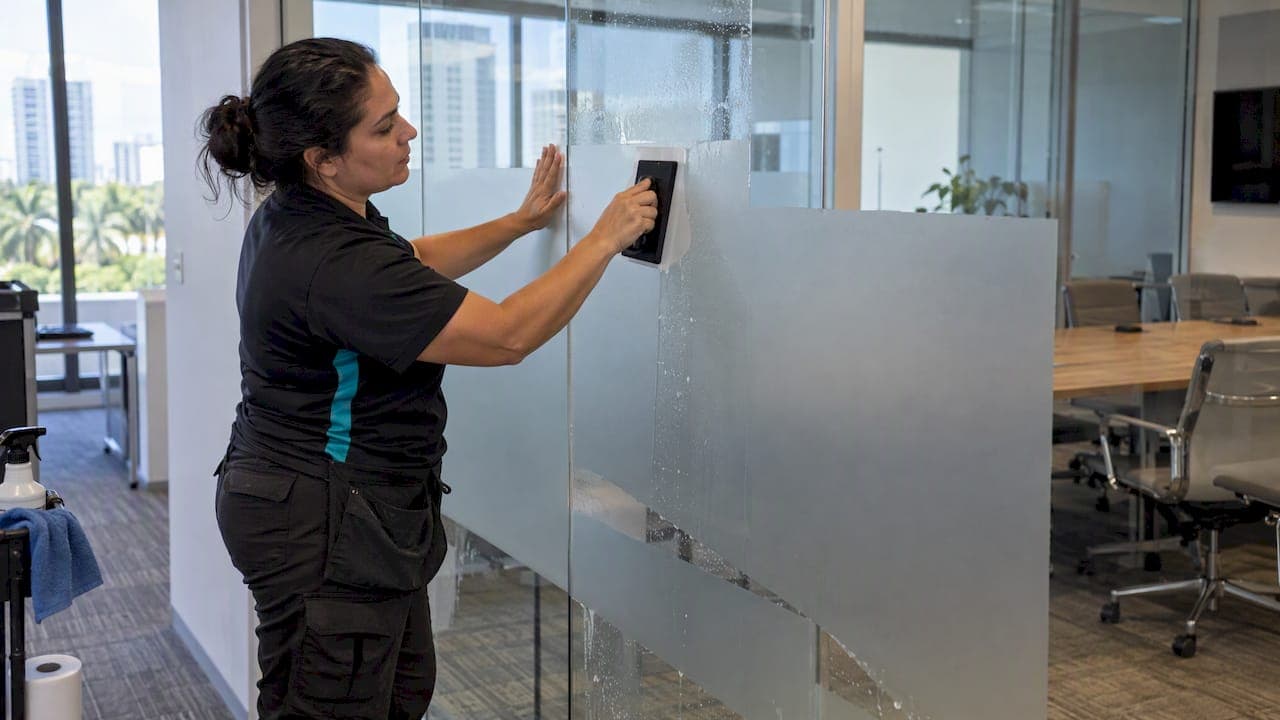
Frosted window film for offices means professionally installed commercial privacy and solar control film, not a DIY static cling sheet from a hardware store. Products like 3M Sun Control Window Film Ceramic Architectural Series, 3M Color Stable, and Iviron KoolMax deliver measurable UV and heat performance when a trained mobile installer handles the job. If you manage a building, the right next step is booking an on-site assessment and quote before you approve any film purchase.
TL;DR:
- Most commercial window films can block up to 99% of UV rays and reject infrared heat, reducing interior fading and lowering cooling costs.
- Proper installation requires checking specific technical metrics such as VLT, UV block percentage, IR rejection, and visible reflectance, with ceramic films avoiding signal interference.
- Using an authorized, experienced installer ensures warranty coverage, adherence to glass checklist requirements, and prevents voided warranties or glass damage.
- Costs generally start around $249 for small jobs, with multi-floor or complex projects requiring longer timelines and tailored quotes based on glass and building specifics.
- Frosted and patterned films can improve privacy without darkening interiors, and partial frosting allows for a balance between openness and seclusion.
Table of Contents
- Benefits of professional window film for office spaces
- What technical specs actually matter before you approve a project
- How to vet a mobile commercial window film installer
- What happens during installation and how to maintain the film afterward
- Typical cost and installation timeline estimates
- Design and aesthetic options beyond plain privacy film
- How frosted film changes the light and feel of an office
- Why installer experience matters more than the film brand alone
- Get a mobile commercial window film quote for your building
- Sources
- FAQ
Benefits of professional window film for office spaces
A properly specified film does three jobs at once: it blocks UV rays, cuts radiant heat, and controls glare, all without turning your windows into a privacy screen that blocks daylight entirely.
3M Sun Control and Ceramic Architectural Series films block up to 99% of UV rays while using ceramic nanoparticles to reject heat, which means you can keep interiors bright and still protect furniture, flooring, and artwork from sun damage. Metallized films reject more heat in some cases but can interfere with cell signal and radio reception, something ceramic films avoid.
Film retrofits are one of the more cost-effective ways to improve comfort in older commercial buildings, according to the International Window Film Association, which recommends them specifically for aging building stock where full glazing replacement is not practical.
The practical benefits facility managers care about:
- Reduced interior fading from UV exposure, protecting furniture, flooring, and finishes over time.
- Lower cooling loads from reduced radiant heat, which eases strain on HVAC systems.
- Glare control for screens and conference rooms without blacking out windows.
- Privacy for ground-floor offices, lobbies, and conference rooms without sacrificing a modern facade.
- A refreshed exterior appearance that can support leasing efforts and tenant retention.
Older buildings with single-pane or aging double-pane glass tend to see the most noticeable comfort improvement after a retrofit, since those windows are doing the least work on their own against heat and glare.
What technical specs actually matter before you approve a project
Not all film quotes are comparable. Before signing off on a vendor's proposal, check these four numbers, since they determine how a film will actually perform on your building.
- VLT (visible light transmittance): how much daylight passes through. Higher VLT keeps spaces bright; lower VLT adds more privacy and glare reduction.
- UV block percentage: 3M's Ceramic Architectural Series films list UV block figures and other performance numbers on their technical data sheet, which you should ask any vendor to provide for comparison.
- IR or heat rejection: measures how much infrared heat the film keeps out, separate from UV blocking and visible light.
- Visible reflectance: affects how the glass looks from outside, which matters for building aesthetics and tenant impressions.
Ceramic (non-metallized) films avoid signal interference and are less prone to corrosion over time, while metallized films can sometimes interfere with Wi-Fi, cell signal, or GPS reception inside the building. For an office with heavy wireless use, that tradeoff matters.
Before any installation, 3M's glass checklist outlines conditions, including window size, pane type, glass thickness, and whether the glass is tempered or annealed, that can require prior manufacturer approval or an Impact Protection Attachment. Skipping this step can void your warranty or, worse, cause thermal stress and glass failure.
Warranty terms vary by film family: 3M's Ceramic Architectural Series commonly carries a 12-year commercial warranty when professionally installed, and that coverage typically depends on following the manufacturer's installation and glass-checklist procedures exactly.
Pro Tip: Ask every vendor to show you the manufacturer's technical data sheet for the exact film they're quoting, not a general brochure.
How to vet a mobile commercial window film installer
Hiring the wrong installer costs you more than a bad-looking job. It can void your warranty or damage glass that was never checked against manufacturer requirements. Work through this checklist before signing a contract:
- Confirm the installer is an authorized dealer for major brands like 3M, and ask for references from completed commercial projects.
- Ask exactly how they handle the glass checklist and whether they file for manufacturer prior approval or eWarranty registration when required.
- Clarify site logistics: working hours, whether they need scaffolding or lifts, elevator access, and how they minimize disruption to occupied offices.
- Require proof of liability insurance and worker's compensation coverage before any crew steps on site.
- Get warranty terms, removal clauses, and replacement policy in writing, not just verbal assurance.
Watch for red flags: a vendor who skips the glass inspection, won't put warranty terms in writing, or pushes you toward a retail DIY film instead of a commercial-grade product. Those shortcuts tend to show up later as voided coverage or film failure.
What happens during installation and how to maintain the film afterward
A professional crew follows the same basic sequence regardless of building size: inspect the glass, measure and cut the film to fit, apply it wet, squeegee out air and moisture, trim the edges, then seal or attach per manufacturer spec if the glass checklist calls for it.
- Small suites with a handful of windows often wrap up in a single day.
- Larger facades with many floors can take several days, scheduled around tenant hours to limit disruption.
- Film needs time to cure, and during that window you may notice slight haziness or small water bubbles, which is normal and clears as the adhesive sets.
- Windows remain fully operational almost immediately, though full optical clarity can take longer depending on temperature and humidity.
- Clean film with a soft cloth and mild, ammonia-free cleaner. Harsh chemicals or abrasive tools can scratch the surface and may void your warranty.
If a section needs a touchup, a reputable installer handles it under the original warranty terms rather than charging you again, as long as the issue traces back to installation rather than misuse.
Typical cost and installation timeline estimates
Costs vary by building size, film type, and how much of the glass checklist process is required, so there's no single flat rate that applies everywhere. What you can expect is that ceramic films like 3M Ceramic IR and Iviron KoolMax sit at a premium compared to basic dyed films, reflecting their heat rejection and UV performance.
For a general sense of mobile tint pricing structure, South Miami Tint's ceramic tint page lists mobile ceramic service starting from $249, which gives you a ballpark for smaller jobs before a commercial quote adjusts for square footage and glass type.
Timeline depends heavily on access. A single-story office with a handful of windows might be done same-day. A multi-floor building with scaffolding, lift access, or an eWarranty prior-approval filing will take longer to schedule and complete, since the manufacturer review step has to happen before installation begins.
Ask any vendor for a written estimate that breaks out square footage, film type, and labor separately. That makes it much easier to compare quotes and catch a vendor who's cutting corners on film quality to hit a lower number.

Design and aesthetic options beyond plain privacy film
Frosted film isn't limited to a single flat, opaque look. You can choose from solid frost, etched patterns, geometric designs, or custom-cut logos and branding elements that work well in lobbies and conference rooms.
Partial frosting, such as a horizontal band across a glass wall, balances privacy with an open feel, which many offices prefer over full coverage. Textured finishes add visual interest to an otherwise plain glass partition without looking like an afterthought.
For spaces that need both privacy and brand presence, some installers can cut custom shapes or incorporate a company logo directly into the frosted pattern. That turns a functional upgrade into part of the office's visual identity, particularly useful in lobbies where first impressions matter.
If you're deciding between a full glazing replacement and a film retrofit for glare and privacy, it's worth understanding how architectural glazing options compare, since film retrofits generally cost less and install faster than swapping out glass entirely.
How frosted film changes the light and feel of an office
Frosted film doesn't just block visibility. It changes how light moves through a space, softening harsh direct sun into a more even, diffused glow.

Conference rooms and private offices benefit most, since frosted sections cut down on direct glare hitting monitors and whiteboards while still letting in ambient light. That's different from heavy tint, which can make a room feel darker overall rather than simply glare-free.
Ceramic films with higher VLT ratings preserve more of that natural brightness, so you don't trade privacy for a dim, closed-in feel. For open floor plans with a lot of glass, a partial frost pattern keeps sightlines open where you want them and private where you need them, without changing the overall light level room to room.
Why installer experience matters more than the film brand alone
The film you choose matters, but so does who installs it. A warranty on paper means little if the installer skipped the glass checklist or applied the film incorrectly.
A mobile commercial service comes to your building rather than requiring you to coordinate drop-off logistics. For occupied offices, that mobile model limits disruption and simplifies scheduling around business hours.
Proper warranty administration, following manufacturer prior-approval steps when the glass checklist requires them, is what separates a film that holds up for years from one that fails early and voids coverage. That operational discipline, more than any single brand name, is what determines whether a commercial film project actually delivers on its promise.
— Jose
Get a mobile commercial window film quote for your building
Mobile commercial window film, including 3M Ceramic IR, 3M Color Stable, and Iviron KoolMax ceramic tint, can be installed directly at your building rather than requiring you to ship glass or close your office for installation.
Here's what you can expect when you reach out:
- A phone call or online quote request where you describe your building size, glass type, and goals (privacy, heat reduction, or both).
- An on-site assessment to check your glass against manufacturer requirements before any film is ordered.
- Warranty terms provided in writing, tied to the specific authorized film product installed.
- Scheduling built around your business hours to limit disruption to staff and tenants.
For full-building projects, check the 3M Window Tinting service page for details on Ceramic IR, Crystalline, and Color Stable options available for commercial installs. Request your quote today and get a straight answer on cost and timeline before you commit to anything.
Sources
- International Window Film Association — Commercial
- 3M™ Commercial Window Film – Solutions
- 3M™ Sun Control Window Film Ceramic Architectural Series technical data sheet
FAQ
What is the difference between frosted film and privacy tint?
In a commercial setting, both terms often describe the same category: professionally installed film that limits visibility while controlling glare and heat. The distinction is usually in appearance, frosted film looks etched or opaque, while privacy tint may be a darker shade, but both require the same glass checklist and installation standards.
How long does commercial window film last?
Ceramic films like 3M's Ceramic Architectural Series commonly carry a 12-year commercial warranty when professionally installed, and that coverage depends on the installer following manufacturer glass-checklist procedures. Film that skips those steps risks early failure and voided warranty coverage.
Can window film be installed on tempered or laminated glass?
Yes, but 3M's glass checklist outlines conditions based on glass type, thickness, and pane configuration that can require prior manufacturer approval before installation. A qualified installer checks these conditions on-site before quoting a final price.
Will frosted film make my office darker?
Not necessarily. Ceramic films with higher VLT ratings let in significant daylight while still controlling glare and adding privacy, so the room stays bright without the direct glare on screens or whiteboards. Partial frosting patterns also let you balance privacy with open sightlines room by room.
How much does commercial window film cost?
Costs vary by building size, film type, and whether a manufacturer prior-approval process is required, so there's no single flat rate. For a general reference point, South Miami Tint's ceramic mobile tint service starts from $249 for smaller jobs, with commercial projects quoted after an on-site assessment.