
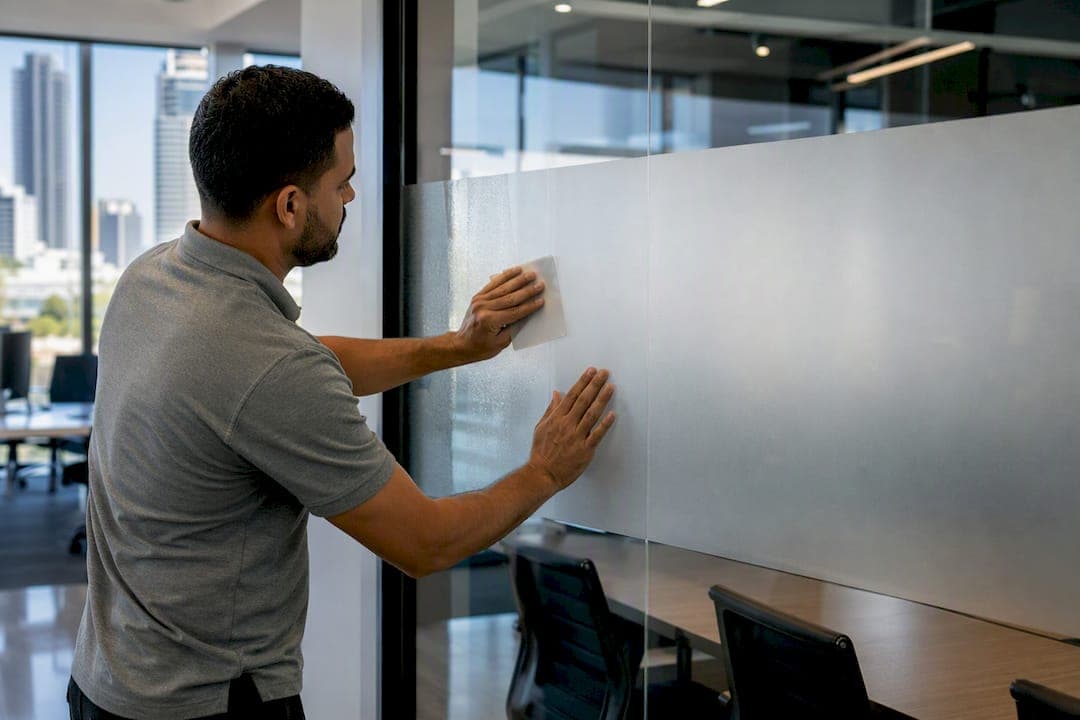
For most glass conference rooms, the fastest reliable fix is a commercial-grade frosted or decorative adhesive privacy film. It delivers consistent, 24/7 privacy without blocking daylight, and it costs a fraction of replacing glass walls with solid panels. If your room needs privacy that switches on and off (say, for a room that doubles as a showcase space), a switchable PDLC film is worth the higher price tag. DIY static-cling films work fine for a single small pane or a temporary setup, but full walls, tempered glass, or anything with custom graphics should go to a professional installer.
Next steps:
- Request a manufacturer datasheet and a physical sample patch before you commit to a product.
- Ask any installer for photos of past conference room jobs, ideally on similarly sized glass.
- Schedule an on-site assessment so measurements and glass type get confirmed before ordering film.
Table of Contents
- Types of Conference Room Privacy Film: Frosted, Decorative, Gradient, and More
- How Does Light Affect Privacy Film Performance Day and Night?
- How Do You Choose the Right Privacy Film for a Conference Room?
- Installing Conference Room Window Film: DIY vs. Professional
- What Does Privacy Film Cost, and How Long Does It Last?
- Adding Logos and Branding Without Losing Natural Light
- What South Miami Tint Has Learned Installing Privacy Film
- Safety and Fire Code Considerations for Glass Wall Film
- Will Privacy Film Interfere With Video Conferencing or AV Equipment?
- How Do You Remove or Replace Conference Room Privacy Film?
- What Facility Managers Get Wrong About Privacy Film
- Get Conference Room Privacy Film Installed Without the Downtime
- Sources
Types of Conference Room Privacy Film: Frosted, Decorative, Gradient, and More
Five film families dominate the conference room market, and each solves a slightly different problem.
- Frosted or etched film. This looks like sandblasted glass and provides uniform, translucent coverage. 3M's matte privacy film line is the standard reference point here, offering subtle privacy while keeping the room bright. It works day and night because it does not depend on outside light.
- Decorative and printed film. Patterns, stripes, dots, or full custom graphics fall into this category. Vendors like Decorative Films supply catalog patterns as well as printed logo runs, and opacity varies by how much of the glass the design covers.
- Gradient film. A frosted band, usually running from waist height to about eye level, blocks direct sightlines while leaving clear glass above and below for light. It is a popular middle ground for conference rooms that want privacy without fully opaque walls.
- Reflective or one-way film. This film uses a mirrored coating that reflects light from the brighter side of the glass. It only works when there's a meaningful difference in light levels between the two sides.
- Switchable (PDLC) film. Embedded liquid crystal layers switch between clear and frosted with an electrical charge. It is the most expensive option but gives the only true on-demand privacy toggle.
Manufacturer-grade films like 3M's are engineered for consistent opacity and come with real warranty backing, tested light transmission specs, and longer service life. Consumer peel-and-stick or static-cling films, the kind sold by brands like DUOFIRE, cost less and install in an afternoon, but they trade off adhesion strength and lifespan. For a shared conference room used daily, that trade-off usually shows up within a year or two as curling edges and yellowing.
How Does Light Affect Privacy Film Performance Day and Night?
Privacy film performance changes with the sun, and this is the detail most buyers overlook until their first evening meeting gets awkward.
Reflective and one-way films depend entirely on a light imbalance. During the day, when the office side is dimmer than the hallway or exterior, the mirrored coating hides the interior effectively. Once the sun goes down and interior lights turn on, that balance flips. The room becomes more visible from outside than it was during business hours, not less. Reflective films largely lose their privacy function at night because their entire mechanism relies on which side has more ambient light.
Frosted films sidestep that problem entirely. They scatter light evenly rather than depending on directional brightness, so frosted film maintains consistent visual obstruction around the clock, which is why installers routinely point clients toward frosted or etched options for any conference room hosting after-hours meetings.
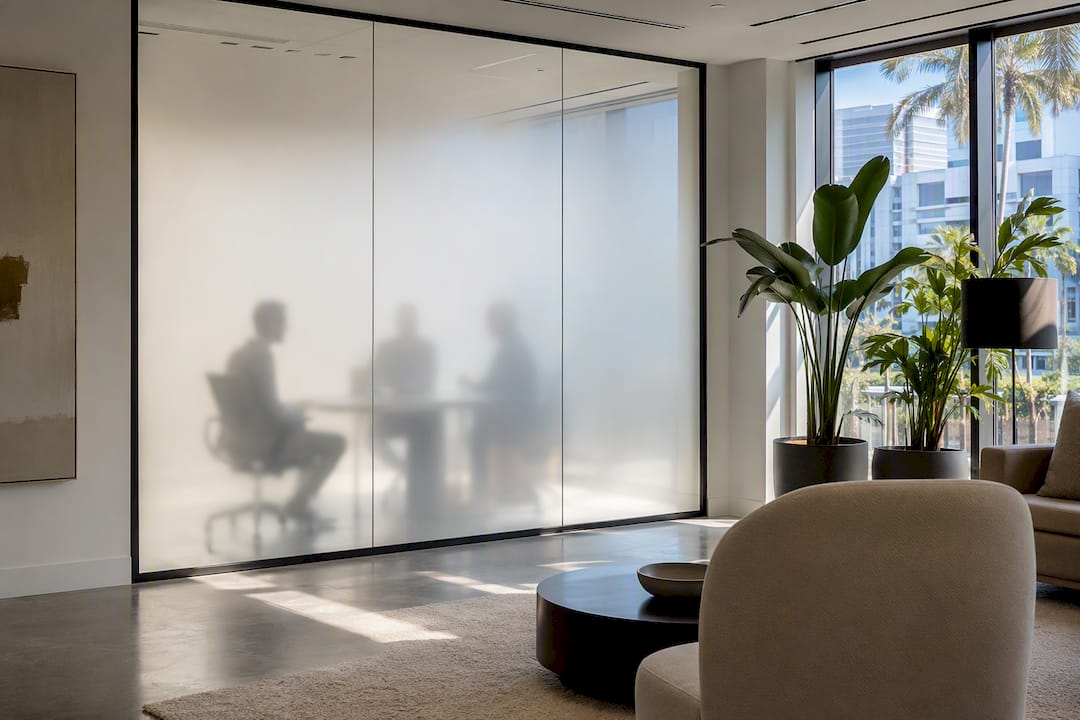
Gradient and decorative films sit in between. A waist-high frosted band blocks sightlines to seated people at a table while leaving clear glass above for light, though the trade-off is that anyone standing near the glass at head height is still visible.
Quick reference:
- Frosted/etched: privacy holds steady day and night.
- Reflective/one-way: strong daytime privacy, weak or reversed at night.
- Gradient/decorative: partial coverage, works best for seated-meeting privacy rather than full room concealment.
How Do You Choose the Right Privacy Film for a Conference Room?
Start with the criteria that actually differentiate products, not the marketing copy. Privacy level, light transmission, permanence (adhesive versus static cling), safety rating, custom graphic capability, warranty length, and price all interact, and getting the order of priority backward is how facility teams end up re-doing a job six months later.
When you're collecting quotes, ask each vendor the same set of questions so the answers are actually comparable:
- Can you provide a manufacturer datasheet with light transmission and opacity percentages?
- Can you send a physical sample patch I can hold up to our actual glass?
- Do you have installation photos or references from similar conference room jobs?
- What does the warranty cover, and for how long?
- What's your removal policy if we want to upgrade or switch products later?
Watch for a few red flags during that process. A vendor unwilling to provide a sample patch, one that pushes minimum order quantities far beyond your actual glass area, or one that adds unexplained "access" or equipment charges after the initial quote are all signs to get a second bid.
Pro Tip: Bring your own tape measure to the site walk. Vendors sometimes round pane dimensions up to the next roll size, which can quietly inflate your quote by 10 to 15 percent.
Installing Conference Room Window Film: DIY vs. Professional
The core installation workflow is the same whether you hire it out or attempt it yourself: measure precisely, prep the surface, apply the film wet, squeegee out air and trim the edges, then let it cure.
- Measure and order. Account for pane irregularities; conference room glass is rarely a perfect rectangle.
- Clean thoroughly. Any dust, adhesive residue, or grease left behind will show up as a bubble or a dull spot under the film.
- Apply wet. A soapy water solution lets the film slide into position before it sets.
- Squeegee and trim. Work air and excess water out from the center outward, then trim edges cleanly against the frame.
- Cure and inspect. Most professional installers build in a 24 to 72 hour cure window before signing off on the job.
The most common failure points are insufficient cleaning, trapped debris under the film, and rushed trimming, which is why installers point to prep work and cure time as the leading causes of rework. Large panes, tempered or structural glass, and any job involving custom-printed graphics belong with a professional. A crooked seam on a small side window is forgivable; a crooked seam across an 8 foot conference room wall is not.
What Does Privacy Film Cost, and How Long Does It Last?
Commercial-grade adhesive films typically outlast consumer static-cling options by several years, largely because of stronger adhesive bonds and UV-stable materials. Retail frosted static films, the kind sold by brands like BuyDecorativeFilm, are marketed with roughly 90% opacity and work well as a renter-friendly or short-term fix, but they're not built for years of daily office wear.
Cleaning is simple: a soft cloth and mild, ammonia-free glass cleaner. Avoid abrasive pads, which scratch the film surface and create permanent hazing.
Cost mainly comes down to five factors:
- Film grade (consumer static cling versus commercial adhesive versus PDLC)
- Custom printing or graphic complexity
- Labor and access requirements (ladders, lifts, after-hours scheduling)
- Warranty length and coverage
- Removal and disposal of any existing film before the new install
Adding Logos and Branding Without Losing Natural Light
Heavier graphics block more light, so the real design question is how much branding you want versus how much daylight you're willing to trade for it. A frosted logo band across the middle of the glass, paired with clear film above and below, is the most common compromise facility managers land on. It reads as intentional design rather than an afterthought.
Custom printed runs, whether solid patterns or logo work, typically carry minimum order quantities and lead times measured in days to a couple of weeks, depending on the vendor and complexity. Build that lead time into your renovation schedule; it's the detail most people forget until the install date is already booked.
A gradient with a logo zone at eye level is another tasteful approach: full privacy where people sit, a branded accent at standing height, and clear glass near the ceiling to keep the room from feeling boxed in.
What South Miami Tint Has Learned Installing Privacy Film
Southmiamitint recommends manufacturer-grade adhesive frosted films, products like 3M's line, for any conference room that needs durable, round-the-clock privacy. Always insist on a sample patch, budget 24 to 72 hours of cure time, and require photo documentation of the finished edges. Mobile installation also means less disruption for teams trying to schedule work around a room that's still in daily use.
Safety and Fire Code Considerations for Glass Wall Film
Privacy film itself is not typically classified as a life-safety system, but the glass it's applied to often falls under building and fire code requirements that facility managers need to check before installation. Tempered and laminated glass used in conference room walls usually carries specific safety glazing certifications, and adding film across the entire pane can change how that glass behaves under stress or impact.
Egress requirements matter too. If a conference room's glass wall doubles as part of a fire escape route or borrows light into a corridor, some codes restrict how opaque that glazing can become. A fully frosted or blacked-out panel might violate a local code that requires visual monitoring or emergency visibility into the space, particularly in office buildings with shared common areas.
Ask your installer or building department about two things before ordering film: whether the glass has a documented safety rating, and whether your jurisdiction has any occupancy or egress rules tied to glass wall transparency. This is also where checking with the glass manufacturer matters, since film can alter the thermal stress profile on tempered glass and, in some cases, affect the glass warranty. A five-minute phone call before installation is cheaper than discovering a code conflict after the film is already on the wall.
Will Privacy Film Interfere With Video Conferencing or AV Equipment?
Privacy film changes the amount and quality of light entering a room, and that has a direct, practical effect on video conferencing. Heavily frosted or reflective film can create uneven lighting patterns on camera, especially rooms that rely on natural daylight as their primary light source for calls. Cameras with weaker low-light performance may struggle if you install a high-opacity film that cuts daylight significantly.
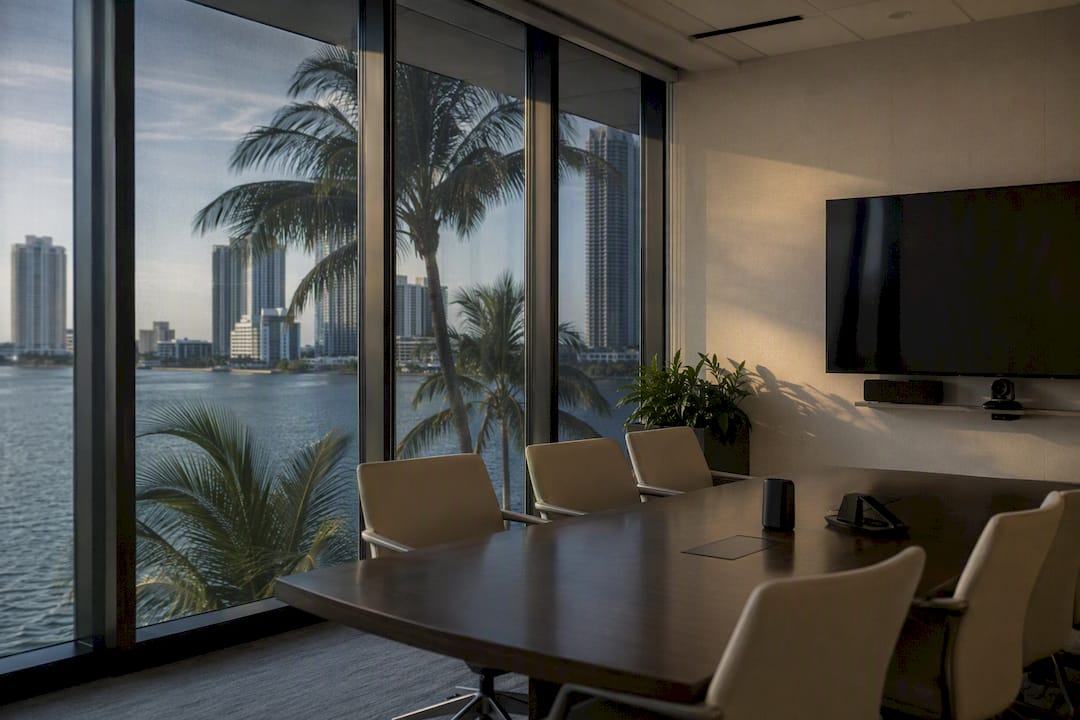
The fix is straightforward: match film opacity to your existing AV setup rather than picking the darkest option available. A gradient film that keeps clear glass near the ceiling preserves more ambient light for cameras than a full-panel frosted install. If your room already runs on supplemental lighting rather than daylight, this concern mostly disappears.
Reflective film carries an additional wrinkle. Its mirrored coating can occasionally create glare or reflection issues for cameras and screens positioned near the glass, particularly in rooms with the wall directly behind a presenter or monitor. If your conference room leans heavily on video calls, a walkthrough with the AV team before ordering film is worth the extra day. Wall-mounted microphones and sensors near the glass line are rarely affected, since film sits on the glass surface and doesn't interfere with sound transmission or electronics.
How Do You Remove or Replace Conference Room Privacy Film?
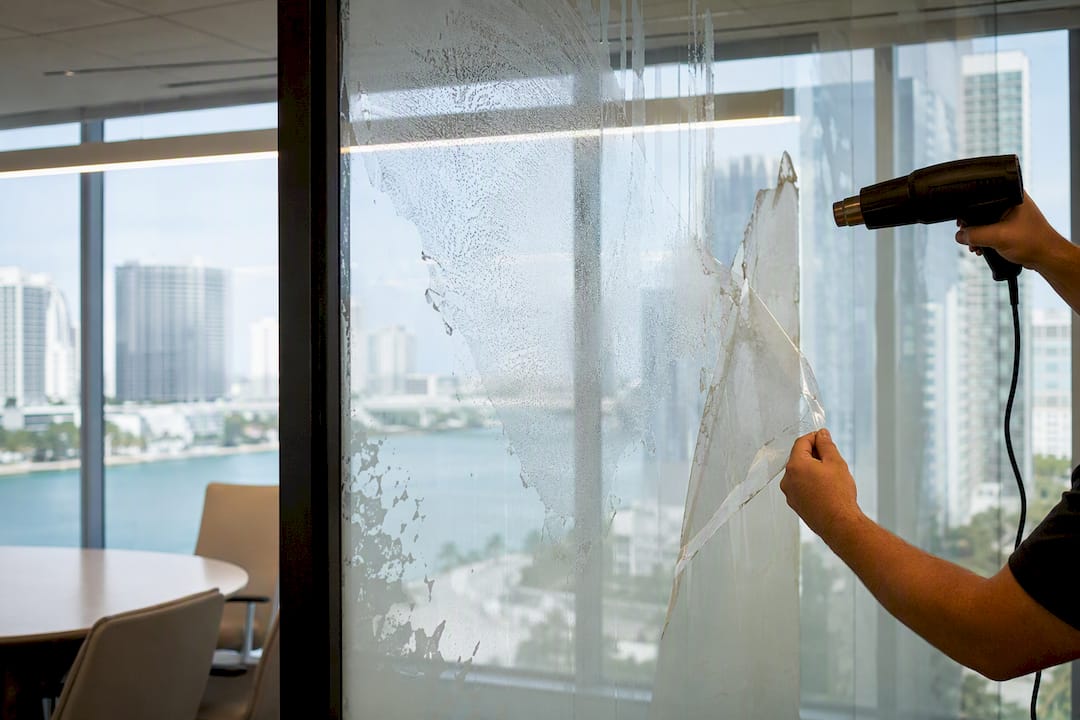
Removing old privacy film is more labor-intensive than installing it, mainly because adhesive residue tends to bond tightly over time, especially with commercial-grade films that were designed to stay put for years. The typical process involves heating the film gently to soften the adhesive, peeling it back slowly to avoid tearing, then scraping and cleaning any residue left on the glass before a new film goes on.
Static-cling consumer films are the easiest case. Since they use no true adhesive, products like DUOFIRE's static-cling frosted film are marketed as renter-friendly and removable, which makes them a reasonable choice for spaces where you expect to change the design or move out within a year or two.
If you're upgrading from a basic frosted film to something like a gradient design or added branding, factor removal time and cost into your renovation budget upfront. Rushed removal is one of the more common causes of scratched glass or leftover adhesive haze, which then requires additional cleaning before the new film can go on cleanly. Ask any installer quoting a replacement job whether removal and disposal of the old film are included in the price or billed separately, since this is a frequent source of surprise charges on renovation projects.
Frosted and etched films provide consistent 24/7 privacy regardless of light conditions, making them the most reliable choice for conference rooms that host meetings after dark.
| Point | Details |
|---|---|
| Pick frosted for consistency | Choose frosted or etched film over reflective options if you hold meetings after daylight hours. |
| Match film to glass type | Insist on a professional installer for tempered, laminated, or large-format glass walls. |
| Budget for cure time | Plan for a 24 to 72 hour cure window before the room returns to full use. |
| Check codes before ordering | Confirm glazing safety ratings and egress rules before choosing a high-opacity film. |
| Southmiamitint for mobile install | Southmiamitint installs manufacturer-grade frosted films on-site with minimal office downtime. |
What Facility Managers Get Wrong About Privacy Film
Most guidance on this topic treats privacy film as a one-time purchase decision. It isn't. The bigger variable is almost always installation quality, not product selection. A mid-tier film installed by someone who prepped the glass properly and respected cure time will outperform a premium film rushed onto a dirty surface.
The conventional advice also overweights opacity percentages and underweights light behavior across a full day. A film that tests well in a showroom under even lighting can behave completely differently in a west-facing conference room at 5 p.m. Ask to see a sample on your actual glass, at the actual time of day meetings happen.
If you take one thing from this guide, prioritize matching film type to your meeting schedule before you shop on price. A room that only hosts 9-to-5 meetings has different needs than one running evening board sessions, and that distinction should drive the product choice, not the other way around.
— Jose
Get Conference Room Privacy Film Installed Without the Downtime
Southmiamitint brings manufacturer-grade film and installation directly to your office, so your conference room doesn't sit empty for days waiting on a shop appointment. We install 3M Ceramic IR, 3M Crystalline, and Iviron KoolMax films on-site in Miami-Dade County, which means your team keeps using the rest of the building while we work.
If you've been weighing frosted versus decorative film for a glass wall conference room, our 3M window tint installation page breaks down the film grades we carry and their light transmission specs. For a straightforward quote on mobile, on-site installation, visit our ceramic window tint service page and request a scheduling assessment for your space.
Sources
- 3M™ Privacy Film | 3M United States
- 3M™ Privacy Film, Matte, 2 mil, 60 in x 100 ft, 1 Roll/Case | 3M United States
- BuyDecorativeFilm 48 in. x 100 ft. MTWH White Frosted Privacy Window Film DPVWHWM48100 - The Home Depot
- Frosted vs Reflective Films: Best for Office Privacy? - Extreme Window Film
- Professional Guide to Conference Room Privacy Window Film Installation - Solar Screen