
No. Installing window tint does not automatically void your U.S. warranty. A manufacturer must prove the tint or its installation caused the specific damage before it can deny a claim. This protection comes straight from federal law: the Magnuson-Moss Warranty Act and Federal Trade Commission (FTC) rules both back you up here.
TL;DR:
- The manufacturer must present specific evidence linking tint or its installation to the failure before denying a warranty claim; suspicion alone is insufficient.
- Evidence like wiring condition, panel removal, and physical damage are critical in establishing whether tint caused or contributed to vehicle problems.
- Warranty protections do not apply equally to home windows, especially with dual-pane or Low-E glass, which may have exclusions for aftermarket film due to thermal stress risks.
- State tint laws vary widely, and enforcement depends on measurement during traffic stops, making compliance essential to avoid citations and inspection issues.
- Proper documentation, such as photos and receipts, along with a professional installation, reduces the risk of warranty disputes related to aftermarket tint.
Table of Contents
- Federal Law Baseline: Magnuson-Moss and FTC Guidance
- How Dealers Evaluate Claims When Tint Is Present
- Home Window Special Cases: Dual-Pane, Low-E, and Glass Warranties
- State Tint Laws and Enforcement: Staying Legal Nationwide
- Insurance and Aftermarket Tint: What Your Policy Covers
- Practical Checklist to Protect Your Warranty When Tinting
- If a Warranty Claim Is Denied: Step-by-Step Escalation
- South Miami Tint Perspective: How Professional Installation Reduces Risk
- Get Documented, Professional Tint Installation in Miami-Dade
- Sources
- FAQ
Federal Law Baseline: Magnuson-Moss and FTC Guidance
Your warranty rights come from a federal law most people never hear about until they need it. The 16 C.F.R. § 700.10 tie-in rule under the Magnuson-Moss Warranty Act prohibits manufacturers from requiring you to use their specific parts, brands, or services to keep your warranty valid. That means a dealer cannot tell you your entire warranty is void just because you added aftermarket tint.
The rule works on causation, not assumption. A manufacturer has to show that the tint or the way it was installed actually caused the failure you're claiming. General suspicion isn't enough, and neither is the simple fact that tint is present on the vehicle.
The FTC's Businessperson's Guide to Federal Warranty Law breaks this down in plain language for both consumers and dealers. It explains how tie-in sales restrictions work and what manufacturers can and cannot use as grounds for denial.
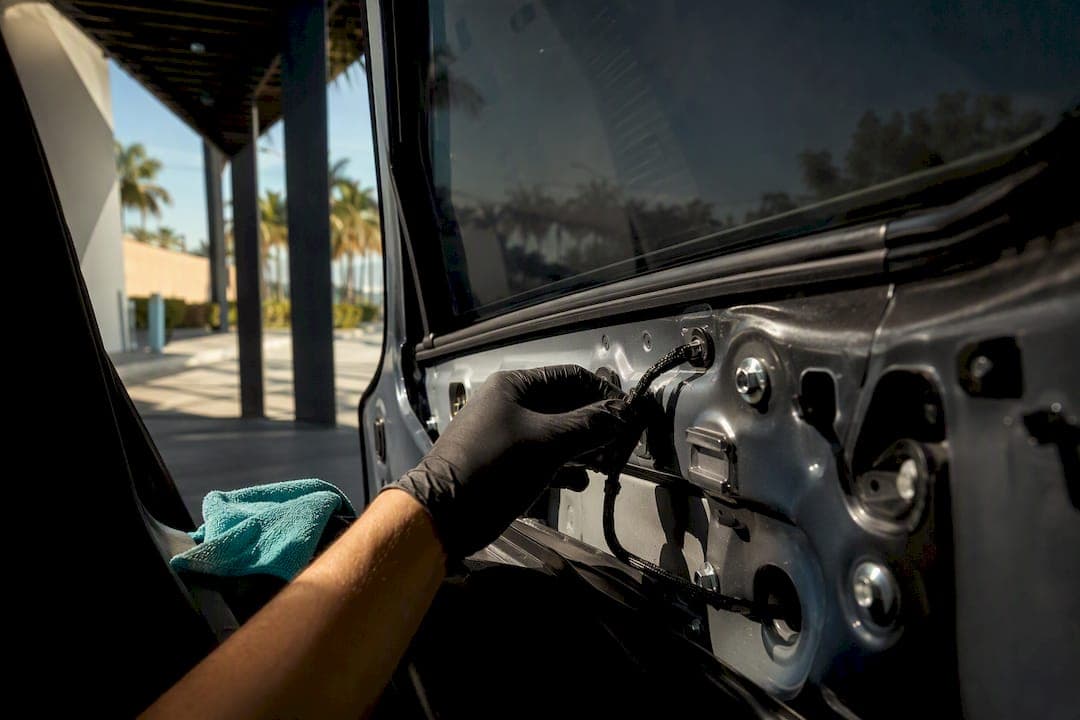
Here's a real-world example. Say your power window motor fails six months after you get your windows tinted. If the installer never touched the door panel or the wiring, tint has nothing to do with a mechanical motor failure, and the manufacturer would need real evidence to say otherwise. But if the installer pulled the panel to route wiring and something got pinched, that's a different story, and the burden still falls on the manufacturer to demonstrate the connection.
The manufacturer must prove causation to deny your claim. (16 C.F.R. § 700.10) That single fact is the strongest card you hold in any warranty dispute involving tint.
A few things to remember about how this protection actually works:
- Manufacturers cannot void your entire warranty over one unrelated modification.
- The denial has to be tied to the specific part or system that tint could plausibly affect.
- You are not required to prove your innocence. The manufacturer carries the burden.
How Dealers Evaluate Claims When Tint Is Present
When you bring in a claim and the service department notices tint, they're trained to look for specific evidence before they can legally deny anything. Here's what that inspection usually covers:
- Physical damage near the affected part, like cracked trim, scratched glass, or bent clips.
- Wiring condition, especially near doors, mirrors, and any electrical component tied to your claim.
- Adhesive residue in places it shouldn't be, which can suggest the film extended past where it belongs.
- Evidence of panel removal, such as mismatched clips, stripped screws, or gaps in trim alignment.
A denial should also be specific. If a technician finds pinched wiring near your power window switch, the dealer can reasonably deny that one repair. They cannot use it as a reason to void coverage on your engine, transmission, or air conditioning system, since those systems have nothing to do with tint installation.
Industry technicians point to poor installation, not the tint film itself, as the real source of most legitimate denials. Panel removal, pinched wiring, and damaged clips show up again and again as the actual cause of documented failures, not the presence of film on the glass.

Pro Tip: Ask your installer for photos of the door panel before and after removal. That documentation becomes your evidence if a dealer later tries to blame tint for an unrelated issue.
Home Window Special Cases: Dual-Pane, Low-E, and Glass Warranties
Vehicle tint and home window film play by different rules, and this is where things get more restrictive. Many home and commercial glass manufacturers write explicit film exclusions into their warranties, particularly for dual-pane and Low-E coated windows.
The concern is thermal stress. Film changes how much heat glass absorbs and how quickly it disperses that heat, and on insulated units that shift can strain the seal between panes or stress the edges of the glass itself. Some manufacturers maintain approved-film lists and will honor a warranty only if you used one of those products; others exclude aftermarket film altogether, regardless of brand.
Watch for these warning signs after film goes on insulated glass, and consider using an anti-fog treatment for car windows to help prevent condensation issues:
- Fogging or moisture buildup between panes, which usually signals a failed seal.
- Visible cracks or stress lines near the edges of the glass.
- Warping or bowing in the glass that wasn't there before installation.
Before tinting home windows, check your glass warranty's language directly rather than assuming vehicle rules apply.
State Tint Laws and Enforcement: Staying Legal Nationwide
Tint darkness limits are set state by state, and what's legal in one state can get you pulled over in the next. Every state regulates visible light transmission, the percentage of light allowed through the glass, along with reflectivity limits on certain windows.
Enforcement typically happens during routine traffic stops, where officers use a tint meter to measure light transmission on the spot. A tint that reads darker than your state allows can result in a citation, a fix-it order, or in some cases a requirement to remove the film entirely before the vehicle passes inspection.
A few practical points worth keeping in mind:
- Front side windows usually carry the strictest limits, often stricter than rear windows or windshields.
- Some states allow medical exemptions for lighter transmission requirements with proper documentation.
- If you drive across state lines regularly, your tint needs to satisfy the strictest state on your route, not just your home state.
- Tourists and relocating drivers should check local limits before assuming their home state's tint job is fine everywhere.
Getting a ticket for illegal tint is a separate issue from warranty protection, but it's worth handling correctly since it can create paperwork trails that affect other claims down the road.
Insurance and Aftermarket Tint: What Your Policy Covers
Auto insurers generally treat aftermarket tint as a modification, which changes how it's covered compared to tint installed at the factory. Factory tint is usually built into your standard coverage since it's part of the vehicle as sold. Aftermarket tint often falls into a separate, more limited category.
Progressive explains that many standard policies include automatic coverage for custom parts and equipment (ACPE), often have limited coverage for aftermarket parts and equipment, typically up to a modest amount per policy, according to Progressive. If your tint job cost more than that, an optional custom parts and equipment (CPE) endorsement raises your coverage limit for exactly this kind of upgrade.
A tint ticket itself doesn't automatically raise your rates, but it lands on your driving record and can factor into future pricing depending on your carrier and your overall history. Where this gets complicated is when illegal tint or a denied warranty claim shows up during an active insurance claim, since it can raise questions about the vehicle's condition or invite closer scrutiny of the modification.
A few habits protect you here:
- Tell your insurer when you get tint installed, especially on a newer or higher-value vehicle.
- Ask about CPE coverage if your tint investment exceeds your policy's default ACPE limit.
- Keep your installation receipt handy in case a claim ever requires proof of the work and its cost.
Practical Checklist to Protect Your Warranty When Tinting
A little preparation before, during, and after installation goes a long way toward avoiding disputes later.
- Read your warranty language first. Look specifically for any mention of aftermarket modifications, approved products, or film exclusions.
- Check your state's tint laws so the film you choose is legal where you drive most.
- Ask your installer for their process before work begins, including whether they need to remove any panels.
- Request photo documentation of the installation, especially any step involving panel removal or wiring near electrical components.
- Get a written, itemized receipt listing the film brand, tint percentage, and the parts of the vehicle worked on.
- Notify your insurer if the tint is a meaningful upgrade over what came standard on your vehicle.
- Save your installer's contact information in case you need them to confirm details for a future warranty dispute.
Pro Tip: Keep your tint receipt and installation photos in the same folder as your vehicle's warranty paperwork. If a dispute ever comes up, having everything in one place saves you time and gives your case more credibility.
A guide on what a tint warranty actually covers walks through more of these documentation habits in detail.
If a Warranty Claim Is Denied: Step-by-Step Escalation
If a dealer denies your claim and points to tint as the cause, don't just accept it. Work through these steps in order:
- Request the denial in writing, along with the inspection notes and any photos the technician took.
- Get an independent inspection from a third-party mechanic or another dealer to confirm or challenge the manufacturer's finding.
- Escalate to the manufacturer's customer service line directly, referencing Magnuson-Moss and the tie-in prohibition under 16 C.F.R. § 700.10 if the denial seems unsupported.
- File a complaint with the FTC or your state attorney general's office if the manufacturer won't reconsider. The FTC's warranty guide outlines this process.
- Consider small-claims court for disputes involving repair costs that fall within your state's filing limits.
Most disputes resolve before reaching that last step, especially once a manufacturer sees documentation showing the tint installation had nothing to do with the failure in question.
South Miami Tint Perspective: How Professional Installation Reduces Risk
The most common cause of warranty trouble isn't tint itself. It's rushed or careless installation. We work with premium films like 3M Ceramic IR, 3M Color Stable, and Iviron KoolMax, and we handle panels and wiring with a level of care that avoids the pinched wires and broken clips that create real disputes.
We answer warranty questions before we start any job, not after something goes wrong. If you want proof of film specs or details on our installation process for your own records, ask us directly. Southmiamitint's myths about tint piece covers more of what installation actually involves.
— Jose
Get Documented, Professional Tint Installation in Miami-Dade
If you want tint installed without the guesswork about who's liable if something goes wrong later, that's exactly what we handle. Mobile installation at your home, office, or driveway anywhere in Miami-Dade County, using premium films with full documentation for every job.
Here's what that looks like in practice:
- Mobile installation at your location, no shop visit required.
- Genuine 3M Ceramic IR and Crystalline films with documented specs.
- Ceramic tint options built for South Florida heat.
- Old tint removal for vehicles that need a clean start before a new install.
- Written receipts and installation notes you can keep with your warranty paperwork.
Ask any warranty-specific question when requesting a quote, and get information on how vehicles are handled before the job starts. You can book a mobile tint appointment to receive answers on pricing, film options, and scheduling.
Sources
- 16 C.F.R. § 700.10 (Magnuson–Moss: tie-in prohibition)
- Businessperson's Guide to Federal Warranty Law | FTC
- Do Window Tint Tickets Affect Car Insurance? | Progressive
- Magnuson–Moss Warranty Act explained (industry perspective) | AmericanTrucks
FAQ
Does window tint ruin your warranty?
No, tint alone does not void your warranty. Under 16 C.F.R. § 700.10, a manufacturer must prove the tint or its installation directly caused the specific failure before denying a claim.
What state is strictest on tint?
Tint darkness and reflectivity limits vary by state, and enforcement depends on local measurement standards and police practices. Check your specific state's transportation or motor vehicle agency for the exact visible light transmission limits that apply to your vehicle.
Is $500 a lot for ceramic tint?
Pricing depends on vehicle size, film brand, and how many windows are covered. Southmiamitint's Full Car + Windshield package starts from $500, which reflects a full-vehicle ceramic installation rather than a partial job.
Is 35% or 20% tint darker?
Always confirm your state's legal limit before choosing a darkness level for your front windows.