
A tint warranty is a formal guarantee from a film manufacturer or professional installer that covers specific defects in window tint film or workmanship for a defined period. Two distinct warranty types exist: the manufacturer warranty, which backs the film's physical and chemical integrity, and the installer warranty, which covers labor and application quality. Understanding both is the first step to protecting your investment in car window tint. Southmiamitint works with premium films including 3M IR, 3M Color Stable, and Iviron Kollmax ceramic tint, each carrying manufacturer-backed coverage that gives you real, documented protection.
What does a window tint warranty typically cover?
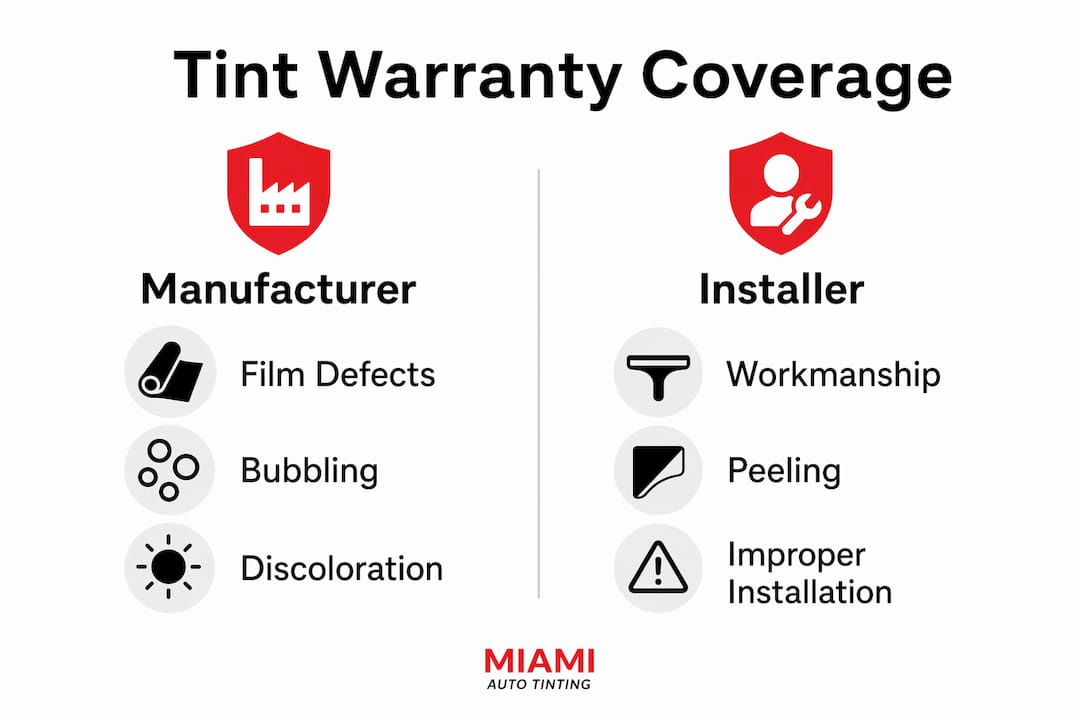
Tinting warranty coverage splits cleanly into two categories: what the film maker guarantees and what the installer guarantees. Knowing which category applies to your problem saves time and prevents frustration when something goes wrong.
Manufacturer warranty coverage
A manufacturer warranty covers defects in the film itself. Common covered failures include bubbling that appears after the 30–60 day curing period, color change or purple shift, delamination, and cracking caused by manufacturing defects. The curing period matters here. Bubbling during the first 30–60 days after installation is often a normal part of the film settling. Bubbling that appears after the cure period is complete points to a material defect, and that falls squarely on the manufacturer to fix.
Discoloration is one of the most common long-term failures. Dyed films are especially prone to a purple or brown shift over time when the dye breaks down under UV exposure. A manufacturer warranty on a quality ceramic or carbon film protects you from that outcome.
Installer workmanship warranty coverage
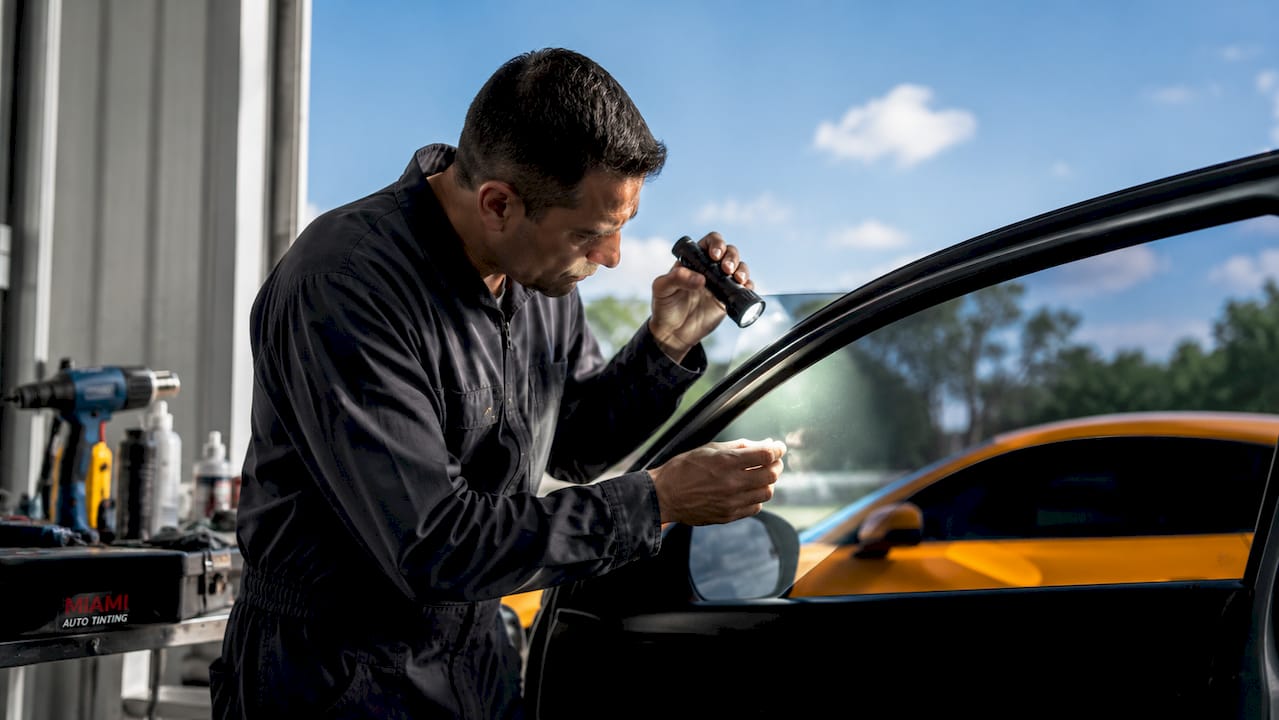
Installer warranties cover workmanship issues such as contamination under the film, improper trimming, poor heat shrinking, and edge lifting. These are errors that happen during application, not because of the film itself. A piece of debris trapped under the film, a lifted corner, or a crooked cut along the window edge are all installer responsibility.
Common defects covered under a workmanship warranty include:
- Debris or dust contamination visible under the film
- Edge lifting or peeling within the warranty period
- Improper trimming that leaves gaps or overlaps
- Poor heat shrinking on curved rear windows
- Adhesion failure caused by surface preparation errors
Pro Tip: Photograph your windows immediately after installation and again at 30 and 60 days. This creates a clear timeline that supports any warranty claim you need to file.
How long do tint warranties last?
Warranty duration depends almost entirely on the film type. Premium ceramic window films carry manufacturer warranties of 15–25 years. Carbon films typically run 10–15 years, hybrid films 7–12 years, and basic dyed films 3–7 years. That gap between ceramic and dyed film coverage reflects a real difference in material quality and UV stability.
| Film type | Typical manufacturer warranty | Installer workmanship warranty |
|---|---|---|
| Ceramic | 15–25 years | 1–3 years |
| Carbon | 10–15 years | 1–3 years |
| Hybrid | 7–12 years | 1–3 years |
| Dyed | 3–7 years | 1–3 years |
Professional installers provide workmanship warranties that are separate from manufacturer coverage and typically last 1–3 years. This shorter window reflects the nature of installation errors, which show up quickly rather than years down the road.
The phrase "lifetime warranty" deserves special attention. Lifetime warranties often refer to the vehicle's ownership period, not the tint film's actual lifespan or performance. That means coverage ends the moment you sell the car. It does not mean the film is guaranteed to perform for decades.
Pro Tip: Ask your installer to specify in writing whether "lifetime" means the life of the film or the life of your ownership. The answer changes the value of the warranty significantly.
For Miami drivers dealing with intense UV exposure year-round, film durability matters more than in most markets. Ceramic films with long manufacturer warranties are worth the premium. You can read more about film durability in coastal climates to understand how heat and humidity affect tint longevity.
What are common exclusions in tint warranties?
Every tint warranty has limits. Standard warranties do not cover physical damage like scratches, impacts, or tears, nor damage from improper cleaning agents or harsh chemicals. Owners should review exclusions before signing, because the fine print determines whether a claim succeeds or gets denied.
The most common exclusions include:
- Scratches from keys, rings, or abrasive cleaning tools
- Damage from ammonia-based cleaners, which degrade adhesive
- Tears or punctures from physical contact
- Film installed at a darkness level that exceeds legal tint limits for your state
- Normal fading or wear on dyed films past the warranty period
- Damage caused after the installer's workmanship warranty expires
The legal tint limit exclusion catches many owners off guard. If a shop installs film darker than your state allows and you later file a warranty claim, the manufacturer can deny coverage on the grounds that the film was used outside its intended application. Always confirm that your chosen tint level complies with Florida law before installation.
Owners should proactively review warranty exclusions because many standard policies void coverage for chemical damage or over-legal tinting. Reading the document before you sign takes ten minutes and can save you hundreds of dollars in denied claims.
How do manufacturer warranties differ from installer warranties?
Differentiating manufacturer warranties from installer warranties protects you from confusion when something goes wrong. The two warranties cover completely different problems and are backed by different parties.
| Warranty type | What it covers | Who backs it | Duration |
|---|---|---|---|
| Manufacturer warranty | Film defects: bubbling, delamination, color change, cracking | Film brand (e.g., 3M, Iviron Kollmax) | 3–25 years by film type |
| Installer warranty | Workmanship: contamination, edge lifting, trimming errors | The installation shop | 1–3 years |
The practical difference matters most when an installer goes out of business. A manufacturer-backed warranty is more reliable because it allows service through authorized installers nationwide. A warranty tied only to a single dealer disappears if that dealer closes. This is why film brand matters as much as installer reputation.
Dual coverage is the goal. You want a manufacturer warranty on the film and a workmanship warranty from the installer. Together, they cover every failure scenario from day one through the film's useful life. Ask for both documents at the time of installation and keep them with your vehicle records.
Industry experts emphasize that warranty duration alone is less important than the warranty's structure and backing source. A 25-year warranty from an unknown film brand with no authorized service network is worth less than a 15-year warranty from 3M with nationwide installer support.
How to get the most out of your tint warranty
Protecting your warranty requires consistent habits from the day of installation. These steps keep your coverage valid and make any future claim straightforward.
- Use only approved cleaning agents. Proper maintenance is critical to keeping your warranty valid. Ammonia-based cleaners degrade the adhesive layer and void most manufacturer warranties. Use a mild soap solution or a cleaner specifically labeled as tint-safe.
- Avoid rolling down windows for the first 3–5 days. The adhesive needs time to cure fully. Rolling windows down too early can cause edge lifting, which may be classified as owner-caused damage rather than a workmanship defect.
- Keep all paperwork from installation day. Store your warranty documents, the installer's receipt, and any product spec sheets together. A claim without documentation is difficult to process.
- Inspect your tint at 30 and 60 days post-installation. The 30–60 day curing period is the window when most installation defects become visible. Report any issues to your installer promptly.
- Report problems within the warranty period. Waiting too long to report a defect can result in a denied claim. Contact your installer or the manufacturer as soon as you notice bubbling, peeling, or discoloration.
- Use authorized installers for any repairs. Repairs done by an unauthorized shop can void your manufacturer warranty. Always check with the film brand before having work done elsewhere.
Understanding common tinting installation issues before they happen helps you catch problems early and act within the warranty window.
Key Takeaways
A tint warranty's real value comes from its backing source and structure, not just its stated duration.
| Point | Details |
|---|---|
| Two warranty types exist | Manufacturer warranties cover film defects; installer warranties cover workmanship errors. |
| Duration varies by film type | Ceramic films carry 15–25 year manufacturer warranties; dyed films carry only 3–7 years. |
| "Lifetime" has limits | Lifetime warranties typically cover the vehicle's ownership period, not the film's full lifespan. |
| Exclusions can void coverage | Physical damage, ammonia-based cleaners, and over-legal tint levels commonly void warranty claims. |
| Manufacturer backing matters most | A film brand's warranty survives if an installer closes; a dealer-only warranty does not. |
What I've learned about tint warranties after years in the field
Most vehicle owners ask me how long a warranty lasts. That is the wrong first question. The right question is: who backs it and through what network?
I have seen owners walk in with "lifetime" warranties from shops that closed six months after installation. The warranty document looked impressive. The coverage was gone. A 15-year manufacturer warranty from 3M, redeemable through any authorized installer in the country, is worth more than a lifetime promise from a shop with no brand backing.
The second thing I tell every customer is to read the exclusions before they sign anything. Most warranty disputes I have seen come down to one of three things: the owner used the wrong cleaner, the tint was installed darker than the legal limit, or the owner waited too long to report the defect. All three are avoidable with five minutes of reading.
Film quality and warranty quality track together almost perfectly. When you choose a premium ceramic film with a documented manufacturer warranty, you are not just buying better heat rejection. You are buying a claims process that actually works. Cheap dyed films with short warranties are not a bargain when you factor in replacement costs.
My honest advice: ask for both the manufacturer warranty card and the installer's written workmanship guarantee before you pay. If a shop cannot produce both, that tells you something important about how they operate.
— Jose
Tinting with confidence: Southmiamitint's warranty-backed options
Southmiamitint installs 3M ceramic window tint and Iviron Kollmax ceramic film, both of which carry strong manufacturer warranties that give you documented protection from day one. Every installation comes with a workmanship guarantee, so you are covered on both fronts.
Southmiamitint operates as a fully mobile service across Miami-Dade, which means professional installation at your home, office, or anywhere convenient for you. The films Southmiamitint uses are selected specifically for Miami's intense UV and heat conditions, and the warranty coverage reflects that. If you want ceramic tint installed in Miami with real manufacturer backing and a workmanship guarantee you can count on, Southmiamitint is ready to schedule at your location.
FAQ
What is a tint warranty in simple terms?
A tint warranty is a written guarantee from a film manufacturer or installer that covers specific defects in window tint film or its application for a set period. It protects you from paying out of pocket for failures caused by material defects or installation errors.
Does a tint warranty cover bubbling?
Bubbling that appears after the 30–60 day curing period is typically covered under the manufacturer warranty as a material defect. Bubbling during the curing period is usually normal and is not a warranty issue.
What voids a window tint warranty?
Physical damage, ammonia-based cleaning products, and tint installed beyond legal darkness limits are the most common reasons a warranty claim gets denied. Always use tint-safe cleaners and confirm your tint level is street-legal before installation.
Is a lifetime tint warranty worth it?
A lifetime warranty is only as good as its backing source. If it is tied to a single dealer rather than a film manufacturer, coverage disappears if that dealer closes. A manufacturer-backed warranty with a defined term and authorized service network typically offers more reliable protection.
How do I make a tint warranty claim?
Contact your installer or the film manufacturer directly, provide your warranty documentation and installation receipt, and describe the defect with photos. Report the issue as soon as you notice it, since delays can result in a denied claim.