
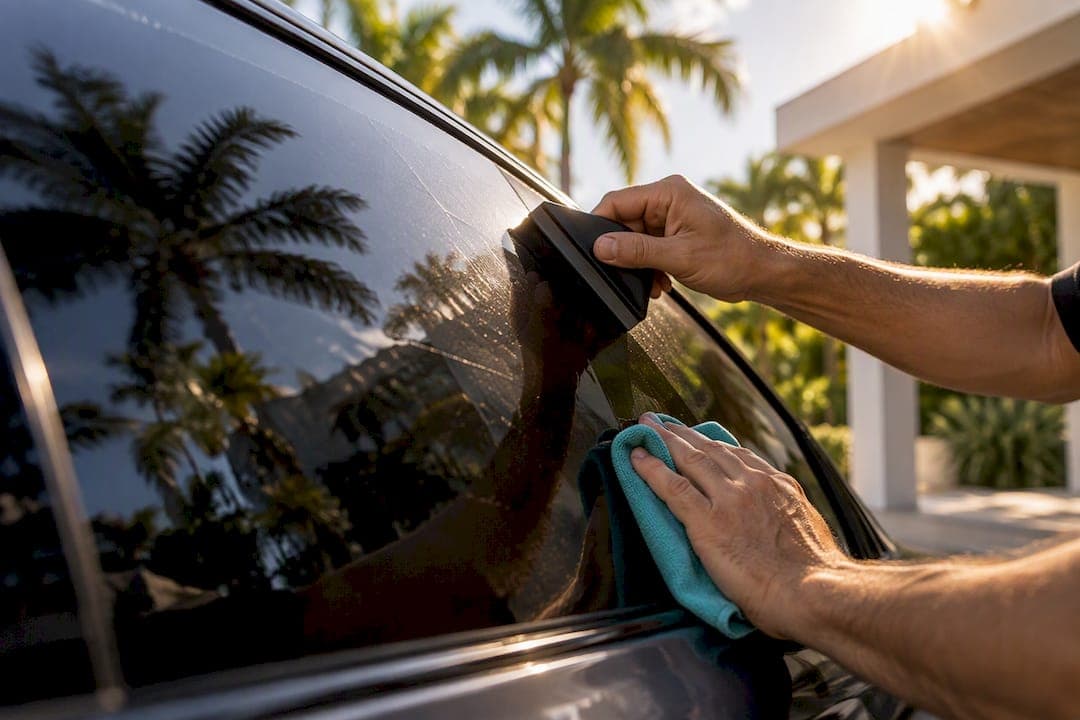
Most professional car tint jobs typically take a few hours to install, but the full visual and adhesive cure can take several days to finish. A sedan with just the front two windows might be done in under an hour, while a full SUV with old tint removal and a windshield can stretch toward the higher end. Install time gets your car through the door and back in your hands. Cure time refers to the period after installation during which the film bonds fully and any moisture underneath evaporates.
TL;DR:
- Full vehicle tinting, including removal of old film, can take up to 4 hours depending on the vehicle size and complexity.
- Sawed-off, two-window jobs usually require only 30 to 90 minutes, while full SUVs with extra curves and windshield work may extend beyond three hours.
- The actual film application process involves preparation, cutting, applying, and finishing, typically taking 1 to 3 hours based on window count and shape.
- Full adhesive curing generally requires 3 to 7 days before windows can be rolled down or automatic washings are safe.
- Factors such as glass curvature, film type, and installation environment can significantly influence total appointment length.
Table of Contents
- Average Installation Time by Vehicle and Scope
- What Happens During Each Step of the Install
- Curing Time vs. When You Can Actually Use Your Windows
- What Makes an Installation Take Longer or Shorter
- Getting Ready for Your Appointment
- Why the Installer Behind the Film Matters
- Booking a Mobile Tint Appointment That Fits Your Schedule
- Sources
- FAQ
Average Installation Time by Vehicle and Scope
The clock starts differently depending on what you're getting done. A quick job on two front windows runs 30 to 90 minutes. A full sedan, all windows included, typically takes 1 to 3 hours. SUVs and trucks run a bit longer at 1.5 to 4 hours because there's more glass and often more curve to work around, a range consistent with the installation time estimates reported by industry guides. Windshields and small triangular vent windows add time on top of any of these, since they require extra pattern work.
It helps to separate the time the installer spends applying film from the total length of your shop visit. A sedan might only need 40 to 60 minutes of hands-on film work, but the full visit, including prep, trimming, and quality checks, often runs closer to 1.5 hours.
- Front windows only: 30 to 90 minutes for a straightforward two-door job.
- Full sedan: 1 to 3 hours covering all windows and finishing steps.
- SUV or truck: 1.5 to 4 hours due to added glass and curvature.
- Old tint removal: adds 30 minutes to 2 hours or more, depending on how well the old adhesive has held up.
If your vehicle already has tint that's peeling, purple, or bubbled, plan for the longer end of that removal window. Old adhesive that's baked onto the glass for years takes real scraping time to clear before new film goes on.
What Happens During Each Step of the Install
A tint appointment isn't one continuous task. It's a sequence of smaller steps, and knowing what each one involves makes the total time make more sense.
- Preparation and cleaning (15 to 30 minutes): the installer washes the glass inside and out, removing dust, grease, and any leftover adhesive residue. Skipping this step is the most common cause of bubbles later, so a careful installer won't rush it.
- Film patterning and customization (15 to 60 minutes): film gets cut to match each window's shape, either with a computer plotter using your vehicle's factory pattern or by hand, trimmed directly on the glass. Plotter-cut patterns tend to be faster and more consistent.
- Wet application and fitting (30 to 180 minutes): this is the core of the job. The installer applies a soapy solution, lays the film, and works out air and moisture with a squeegee. Time here depends heavily on the number of windows and how curved they are.
- Trimming, edge finishing, and quality checks (10 to 30 minutes): excess film gets trimmed, edges are tucked, and the installer inspects every window for bubbles, lifted corners, or dust under the film before calling the job done.
Pro Tip: Plotter-cut film patterns cut down hands-on install time and reduce the odds of a rework visit, since the fit is dialed in before the film ever touches your glass.
Curing Time vs. When You Can Actually Use Your Windows

Installation and curing are two different clocks, and mixing them up is where most confusion starts. Your windows are generally operational within 24 hours of install, meaning you can drive and use the car normally. Full adhesion, though, takes longer. According to 3M's technical guidance, final adhesion is typically reached after a prolonged curing period under optimal conditions, such as around 18°C and dry weather., and that timeline shifts with temperature and humidity.
During that window, most installers recommend a few precautions:
- Avoid rolling your windows down for 3 to 7 days so the film edges can fully set.
- Skip automatic car washes or power washing for longer than that, since pressure can lift edges before the adhesive cures.
- Expect some moisture, faint streaking, or tiny bubbles in the first days. These usually clear up on their own as the water underneath evaporates.
If bubbles or haze are still visible well past the expected cure window, that's the point to call your installer rather than wait it out. For a deeper breakdown of what curing looks like day by day, southmiamitint covers it in tint cure time and pro fixes, and the step-by-step film care guide walks through aftercare in more detail.
What Makes an Installation Take Longer or Shorter
A handful of variables decide whether your appointment runs on the fast end or drags into the afternoon.
- Glass curvature: deeply curved rear windows and hatchbacks take longer to fit than flat sedan glass.
- Number and shape of windows: small triangular vent windows and multi-piece rear glass add fitting time.
- Film type: ceramic and multi-layer films often need more careful cutting and fitting than basic dyed film. The guide to choosing the right tint breaks down how film type affects both performance and install time.
- Old tint or damaged glass: removal and any glass repair add time before the new film goes on at all.
- Installer method: plotter-cut kits move faster than hand-patterned jobs, and a two-technician team can work in parallel on a larger vehicle.
- Work environment: a temperature-controlled shop speeds drying, while mobile installs depend on shade, humidity, and wind at the job site.
Reviewing these factors before you book, covered in more depth in things to consider before tinting your car windows, makes it easier to set the right expectations with your installer.
Getting Ready for Your Appointment
A little prep keeps your appointment on schedule and avoids surprises once the installer arrives.
- Confirm the scope. Know exactly which windows are included, what film you're getting, and whether the windshield is part of the job.
- Have your vehicle details ready. A VIN or a few photos can help confirm window shapes ahead of time, especially for less common models.
- Plan for the full visit length. Block out time for the estimated shop visit, not just the hands-on install portion, so you're not rushing the installer.
- Ask about removal, warranty, and aftercare. Before pickup, confirm whether old tint removal is included, what the warranty covers, and how long to wait before rolling down your windows.
Why the Installer Behind the Film Matters
Separating install time from total appointment time isn't just a scheduling detail. It's how an experienced installer sets honest expectations instead of a vague "come back later" answer. Premium films and plotter-cut patterns cut down on fit rework, which means fewer callbacks and a cleaner final quality check the first time around.
That kind of consistency comes from doing the work repeatedly across different vehicle types, not from guesswork. For readers who want to go deeper before booking, the tint cure time breakdown and the guide to choosing tint film cover the details this article only summarizes.
— Jose
Booking a Mobile Tint Appointment That Fits Your Schedule
Southmiamitint runs mobile tint installs across Miami-Dade, and appointment lengths follow the same ranges covered above, whether the work happens at a shop or at your driveway.
- 2 Front Windows: pricing details available on the client's website.
- Full Car + Windshield: pricing details available on the client's website.
- Windshield Tint: pricing details available on the client's website.
Use the preparation checklist above before your visit, and get a quote through southmiamitint to lock in a time that matches the scope of your job.
Sources
- 3M Automotive Window Film – Crystalline series (technical application guidance)
- How Long Does it Take to Tint Car Windows, and What to Expect?
FAQ
How long should it take to tint a car?
Most professional installs take 1 to 4 hours, depending on vehicle size, film type, and whether old tint needs removing, a range confirmed by industry installation guides. A front-windows-only job runs on the shorter end, while a full SUV with windshield work runs longer.
Is 35% or 20% tint darker?
Tint percentage refers to how much light passes through the film, so a lower number means a darker tint. That makes 20% darker, letting less light and visibility through the glass.
Can I roll my windows down 2 days after tint?
Most installers recommend waiting 3 to 7 days before rolling windows down, giving the film edges time to set properly. Rolling down too early can lift the film before it has a chance to bond, so check the wash and aftercare rules your installer provides.
Is $500 a lot for ceramic tint?
Pricing depends on the package and film used. Southmiamitint's Full Car + Windshield package starts from $500 one-off, which covers every window plus the windshield in a single appointment.