
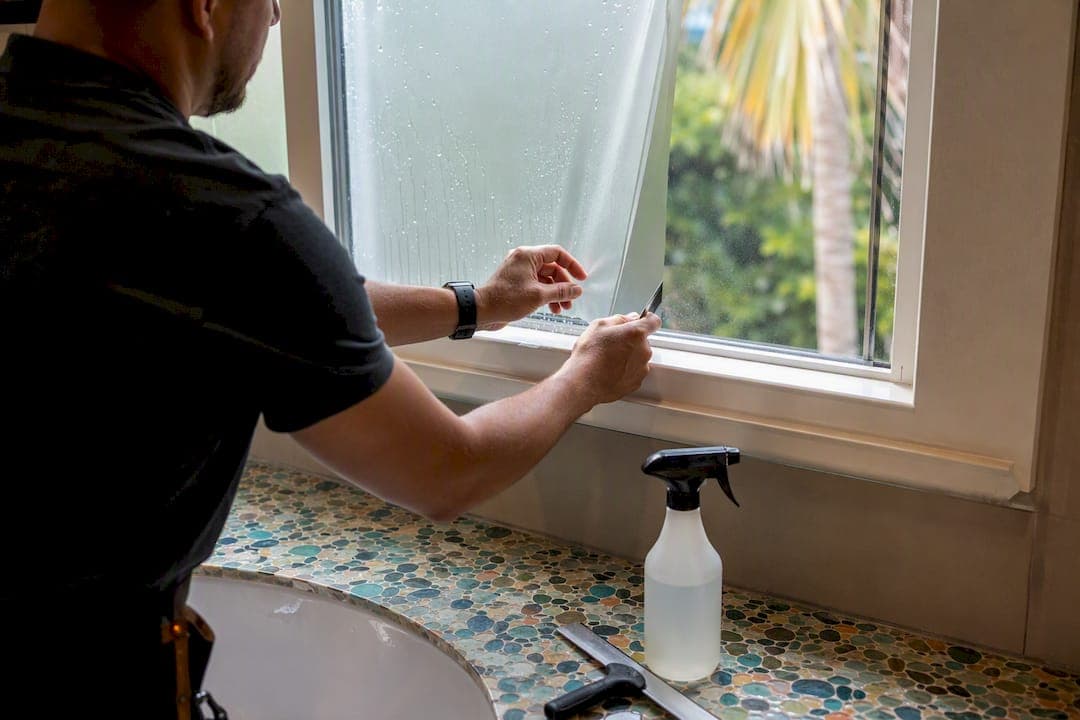
For most bathroom windows, frosted or white-out film is the right call. It blocks the view day and night without blocking your light, and that combination is what separates a bathroom film from every other kind of window treatment. If you rent or want something reversible, a static-cling frosted film gives you real privacy without touching the glass permanently. If you own the home and want a solution that lasts, a moisture-rated adhesive film installed by a professional will outperform DIY options in humid bathroom conditions for years longer.
Here's how to sort your options fast:
- Renting or testing it out? Static-cling frosted film. No adhesive, fully removable, good privacy.
- Own the home and want it done once? Moisture-rated adhesive film, professionally installed.
- Want a pro to handle measuring, adhesive selection, and warranty? Southmiamitint installs moisture-rated adhesive film with warranty-backed results across Miami-Dade.
- Skip one-way/reflective film for any bathroom window that needs privacy after dark. It fails once the light outside drops below the light inside.
Key Takeaways
Frosted or white-out film delivers reliable day-and-night bathroom privacy through light scattering, while one-way film fails after dark and static-cling trades long-term durability for renter-friendly flexibility.
| Point | Details |
|---|---|
| Choose diffusion over reflection | Frosted and white-out films scatter light for 24/7 privacy; one-way films fail once the bathroom light goes on at night. |
| Match film to tenancy status | Renters should use static-cling; homeowners planning to stay long-term benefit more from adhesive film. |
| Respect the humidity factor | Bathroom steam cycles cause DIY static-cling to lift in 2 to 5 years, versus 10 to 15 years for professional adhesive installs. |
| Leave the edge gap | A 1/8-inch gap between film and caulk reduces moisture wicking, whether you DIY or hire a pro. |
| Consider professional installation | Southmiamitint installs moisture-rated adhesive film, including 3M Ceramic IR and Iviron KoolMax lines, in 30 to 60 minutes per standard window with warranty-backed results. |
Table of Contents
- Types of Bathroom Privacy Window Film and How They Work
- Does Privacy Film Actually Work on Bathroom Windows at Night?
- How to Choose the Right Film: A Buying Checklist
- How to Install Bathroom Privacy Film Yourself
- Why Professional Installation Solves What DIY Can't
- How Long Bathroom Window Film Lasts and How to Care for It
- Where to Buy Bathroom Privacy Film and What It Costs
- Bottom Line: Pick Your Path and Move on It
- What Homeowners Get Wrong About Bathroom Privacy Film
- Get Bathroom Privacy Film Installed the Right Way
- Sources
Types of Bathroom Privacy Window Film and How They Work
Every privacy film does the same basic job: it scrambles light before it reaches your eyes so you see a blur instead of a shape. How aggressively it scrambles that light, and under what lighting conditions, is what separates the categories.
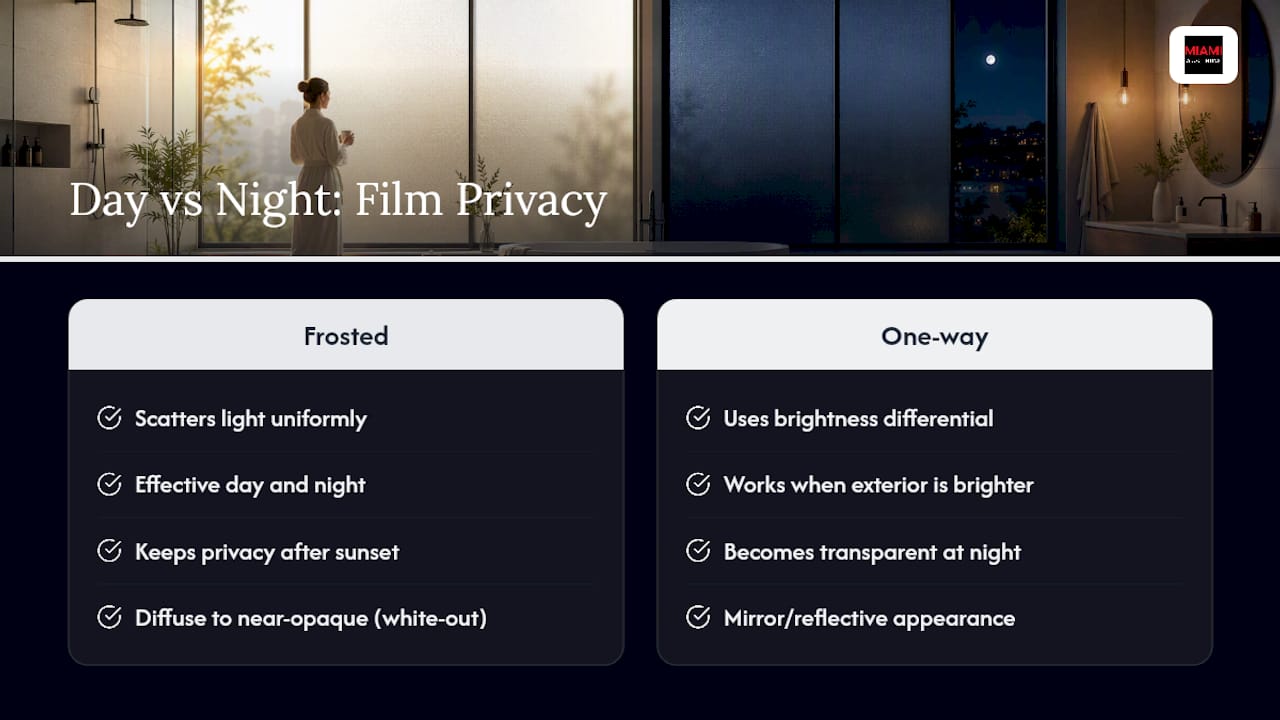
Frosted and white-out films are the standard choice for bathrooms because they scatter light uniformly, regardless of whether it's noon or midnight. A privacy film buying guide from Ecovision Window Films notes that professionally installed frosted and white-out films deliver all-day and all-night privacy precisely because they rely on light scattering rather than a brightness difference between inside and outside. White-out films push diffusion even further, producing a near-opaque appearance that reads almost like painted glass. If you want maximum privacy and don't mind a slightly more clinical look, white-out is the more aggressive option.
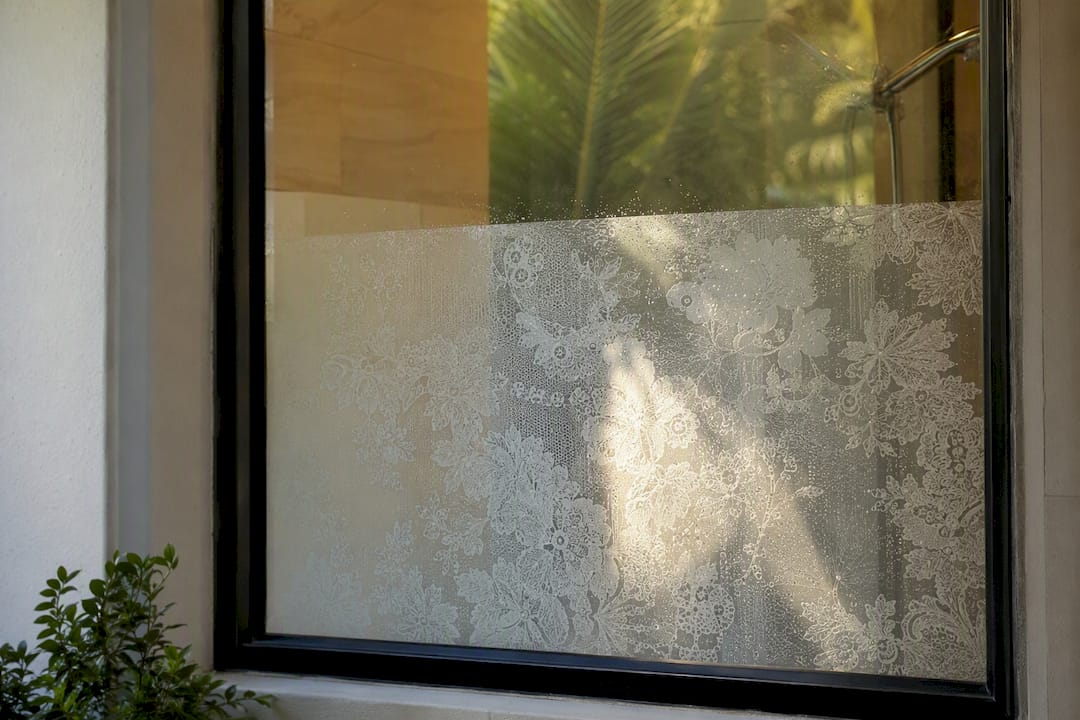
Decorative and patterned films bring style into the mix. Rain glass, linen textures, geometric etching, and stained-glass style patterns all diffuse light while adding visual interest to what is often the plainest window in the house. Privacy density varies a lot here. A busy, high-coverage pattern blocks nearly as much as frosted film; a sparse or linear pattern leaves gaps that a determined observer could see through at close range. Check the coverage percentage before buying if privacy is your priority and decoration is secondary.
One-way and reflective films work differently, and this is where a lot of buyers get burned. These films rely on a brightness differential: the side with more light becomes visible from the darker side. During the day, with bright sun hitting the exterior of the glass, they can work reasonably well. At night, once you flip on the bathroom light, that differential reverses. The bathroom is now the brighter side, and the film becomes essentially transparent from outside. One-way film is not a good fit for any bathroom window that needs privacy after sunset, which is most of them.
Static-cling versus adhesive is the other major fork in the road. Static-cling (peel-and-stick, no glue) films use water and static tension to hold onto glass. They're removable, renter-friendly, and require no permanent commitment. The tradeoff shows up over time: in a bathroom's humid, temperature-swinging environment, static-cling films are more prone to edge lift and bubbling than adhesive versions. Reviews of popular consumer options like rabbitgoo's static-cling frosted film consistently praise the privacy and light diffusion but flag installation difficulty and edge adhesion issues in humid rooms. Adhesive films, particularly moisture-rated versions installed with proper technique, hold up considerably better against condensation and steam over the long haul.
Pro Tip: If you're shopping online, look past the marketing photo and read the one and two-star reviews specifically. That's usually where you'll find out how a film actually behaves in a steamy bathroom six months in, not on day one.
Southmiamitint's guide on privacy levels in window film breaks down how these categories stack up on a light-versus-seclusion scale, which is worth a look if you're trying to match a film to a specific window's sun exposure.
Does Privacy Film Actually Work on Bathroom Windows at Night?
Yes, but only if you picked the right type. This is the single most common source of buyer disappointment, so it's worth understanding the mechanics before you spend money.
Frosted and etched films work by physically scattering light as it passes through the glass, breaking up the straight lines that let your eye resolve a shape into a recognizable image. That scattering effect doesn't care what time it is or which room is brighter. It happens the same way at 2 p.m. and 2 a.m., which is exactly why frosted and white-out films are the reliable answer for full-day bathroom privacy.
One-way and reflective films work on an entirely different principle: brightness differential, not diffusion. During the day, sunlight bouncing off the reflective coating on the exterior side overwhelms the dimmer interior view. At night, that differential flips, and the film offers little to no privacy at all. This isn't a defect in the film. It's how the physics of reflective coatings work, and it means one-way film is the wrong category for a room where you need privacy after dark, full stop.
When you see a product advertise a specific privacy percentage, treat it as a general strength rating rather than a hard guarantee. A film billed at high privacy typically hides detail (facial features, what you're doing) very effectively, while a lower-rated film might only obscure a silhouette. If you want to disappear completely, not just blur, look for products that market themselves specifically around full opacity or "no visible silhouette," and check customer photos taken at night with interior lights on, since that's the true stress test.
Before you commit to any product, run this quick in-place test:
- Turn on the bathroom light after dark and have someone stand outside at typical sidewalk or yard distance.
- Check whether they can make out your shape, movement, or just a soft glow.
- Repeat the check with the exterior light on and interior light off to catch a reflective-film failure mode.
- Test from multiple angles, since privacy performance can shift depending on viewing angle on some films.
How to Choose the Right Film: A Buying Checklist
Comparing bathroom privacy film products side by side gets easier once you know which criteria actually matter and which are marketing noise. Run through this list before you buy anything or hire anyone:
- Day and night privacy performance. Confirm the film relies on diffusion (frosted, white-out, dense pattern), not reflection, if nighttime privacy matters to you.
- Humidity rating. Bathroom-specific films should list moisture resistance; general-purpose window film often doesn't handle steam cycles well.
- Light transmission. Higher transmission keeps the room bright; check the percentage if the manufacturer publishes one, since it varies more than you'd expect between similarly priced films.
- UV rejection. Most frosted films block a meaningful share of UV rays, which helps protect bathroom fixtures and paint from fading over time.
- Warranty length. DIY static-cling products rarely carry more than a satisfaction guarantee; professionally installed film often comes with a multi-year warranty.
- Removability. If you rent, confirm the film is labeled non-adhesive or residue-free on removal.
Watch for these red flags before you buy or book anyone:
- A seller pushing one-way or mirrored film for a window that needs privacy at night.
- No humidity or moisture rating listed anywhere on the product page or quote.
- No warranty offered on a "professional" install.
- Installation claims that skip any mention of an edge gap near caulk lines, which is often where humid-bathroom installs fail first.
If you're talking to an installer instead of buying a DIY roll, ask these four questions before booking:
- What adhesive do you use, and is it rated for high-humidity rooms?
- What edge gap do you leave near the caulk line, and why?
- What's the warranty, and does it cover edge lift or bubbling specifically?
- Can you show photos of a bathroom install you've completed before?
As a decision rule: small, temporary, or rental windows point you toward static-cling film. Permanent bathrooms, larger windows, or anything with a history of steam and moisture problems point you toward a professionally installed adhesive film.
How to Install Bathroom Privacy Film Yourself
DIY installation works well for static-cling and peel-and-stick adhesive films, and most homeowners can finish a standard bathroom window in under an hour once they've got the right tools lined up.
What you'll need:
- Spray bottle filled with water and a few drops of baby shampoo or dish soap
- A hard squeegee (a credit card works in a pinch, but a real squeegee does a better job)
- A sharp utility or razor knife
- A tape measure
- A hair dryer or heat gun for cold-weather installs or stubborn edges
Step-by-step:
- Measure your window glass precisely, then cut the film about an inch larger on each side to leave trimming room.
- Clean the glass thoroughly. This step gets skipped more than any other, and it's the single biggest cause of bubbles later. Dust, soap scum, and mineral deposits from hard water all telegraph through the film once it's applied.
- Spray the glass generously with the soapy water solution. Don't be shy here. More solution gives you more time to reposition the film before it grabs.
- Peel the backing and apply the film wet, starting from one corner and working across.
- Squeegee out air and water from the center outward, working in overlapping strokes.
- Trim excess film to the window frame with your razor knife, and leave roughly a 1/8-inch gap between the film's edge and any caulk seal. This detail matters more in bathrooms than anywhere else in the house, since it reduces the chance of moisture wicking under the film's edge and causing it to lift.
Common bathroom-specific failure points: edge lift almost always traces back to skipping that gap near the caulk. Bubbling usually means dust or debris got trapped under the film during application, not a defect in the product itself. Curling at the corners after a few months typically points to temperature swings between a cold shower and a heated bathroom, which stresses adhesive more than a stable-temperature room like a bedroom window would.
Pro Tip: Work on a humid day or right after a hot shower with the fan off. The extra ambient moisture keeps the soapy water from drying too fast while you're still positioning the film.
If you've measured wrong twice, you're seeing persistent bubbles you can't chase out, or the window has an unusual shape (arched, angled, or textured glass), that's your signal to stop and call a professional rather than keep fighting the material.
Why Professional Installation Solves What DIY Can't
A lot of DIY failures in bathrooms come down to one thing: the adhesive wasn't built for a room that goes from steamy to dry to steamy again multiple times a day. Southmiamitint installs moisture-rated pressure-sensitive adhesives specifically because standard adhesives, and especially static-cling films, weren't engineered for that cycle. The adhesive bond has to tolerate repeated condensation without softening or releasing at the edges, which is exactly where consumer static-cling products tend to struggle over time.
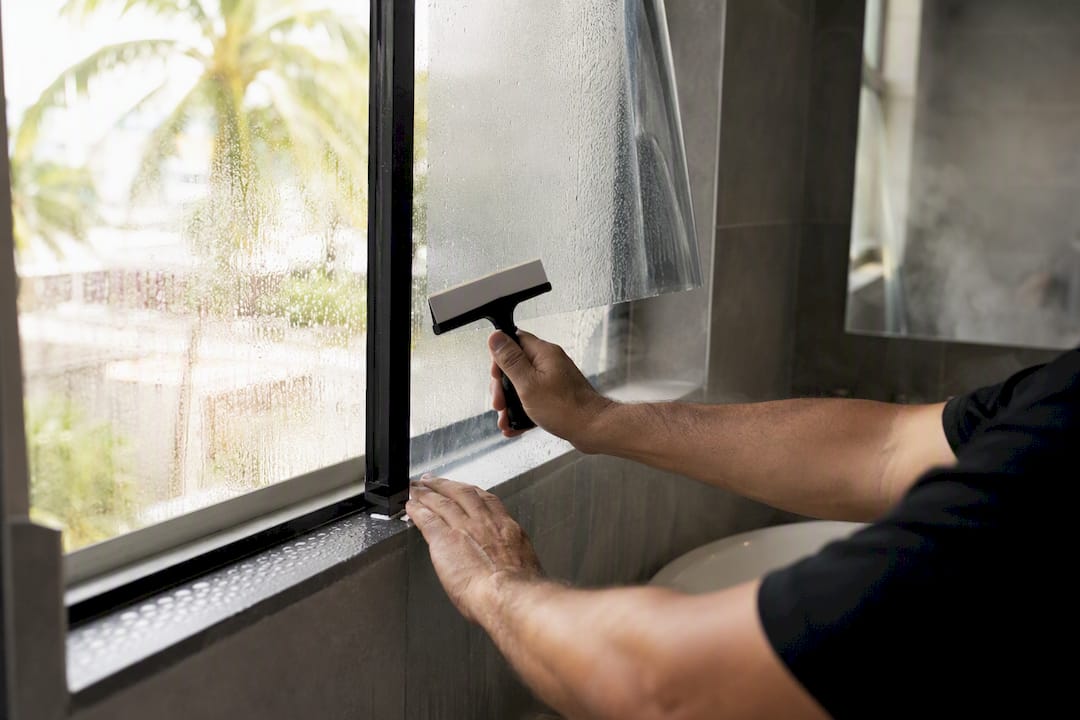
A standard bathroom window typically takes 30 to 60 minutes to install professionally, including the site visit where the technician checks glass type, measures precisely, and identifies any caulk or frame issues that could affect the install. That visit is also where a pro will flag anything a DIY buyer might miss, like whether the window has tempered or textured glass that changes which film adheres best.
Southmiamitint installs several film lines depending on what the space needs. 3M Ceramic IR and 3M Color Stable both deliver strong UV rejection alongside privacy, which matters in bathrooms with south or west-facing windows where fixtures and paint take a beating from sun exposure over time. Iviron KoolMax ceramic tint adds heat rejection on top of that, useful for bathrooms that run hot from both sunlight and shower steam. All three are a different class of film from what you'll find on a retail shelf, built for durability rather than a one-time DIY project.
Getting a quote starts with a call or an online request; Southmiamitint comes to your location for the site visit and install rather than requiring you to haul film or glass anywhere. Warranty terms and aftercare guidance come standard with a professional install, which is the piece most DIY purchases simply don't include.
How Long Bathroom Window Film Lasts and How to Care for It
Lifespan depends heavily on which category you chose and how it was installed. DIY static-cling film typically holds up for 2 to 5 years in a bathroom before edges start lifting or the film needs replacing. Professionally installed frosted or adhesive film, using moisture-rated adhesives and proper edge technique, commonly lasts 10 to 15 years, according to installation guidance from Ecovision Window Films. That gap is almost entirely about adhesive quality and installation technique, not the film material itself.
Caring for either type is straightforward:
- Use a non-ammonia glass cleaner. Ammonia-based cleaners can degrade film adhesive and cause premature clouding.
- Wait at least a week after installation before wiping the film down, giving adhesive film time to fully cure.
- Clean with a soft cloth or squeegee, working from the center outward, and avoid scrubbing hard at the edges where lifting starts.
Watch for these warning signs: corner lifting usually means moisture got under the edge and it's only going to spread. Hazing or yellowing points to UV degradation or age. Bubbling that appears well after installation, rather than during it, often signals trapped moisture rather than a dust issue. Delamination, where the film separates into visible layers, means the film is failing and needs replacement rather than repair.
Minor edge lift on a small corner can sometimes be re-adhered with a bit of soapy water and a squeegee. Anything beyond that, especially widespread bubbling or delamination, calls for a professional repair or full replacement rather than a patch job.
Where to Buy Bathroom Privacy Film and What It Costs
DIY film is widely available through big-box retailers and online marketplaces. Amazon's bathroom window film listings and Walmart's window film selection both carry static-cling rolls and sheets sized for typical residential windows, generally priced from around $15 for a small sheet up to $50 or more for a larger roll, depending on brand and dimensions. These are a reasonable path if you're renting, testing a look before committing, or working with a small window.
Professional installation pricing depends on several factors: the film type chosen, total window area, glass complexity (single pane versus dual, tempered versus standard), and warranty length. A single bathroom window professionally installed typically costs more upfront than a DIY roll, but the moisture-rated adhesive and multi-year warranty usually make it the better value over the film's full lifespan, particularly in a room that sees daily humidity swings. Whole-home privacy film projects scale with total glass area and often come with volume pricing.
If you'd rather skip the online product hunting entirely, Southmiamitint's mobile ceramic tint booking page lets you request a quote directly, with installation happening at your home rather than requiring you to transport anything.
Bottom Line: Pick Your Path and Move on It
For the vast majority of bathroom windows, frosted or white-out film wins because it solves day and night privacy the same way, without sacrificing natural light. Static-cling belongs in rentals and short-term situations. Moisture-rated adhesive film, professionally installed, belongs in any bathroom you plan to keep for years.
Two ways to move forward:
- DIY route: buy a frosted or static-cling film from a retailer like Amazon or Walmart, clean your glass thoroughly, and follow the wet-application steps above, leaving that 1/8-inch gap near any caulk.
- Professional route: book a quote with Southmiamitint. Expect a technician to measure your window, check glass type, recommend a film line, and complete most standard installs within an hour.
Either path gets you real privacy. The difference is how long it lasts and how much of your own time it costs to get there.
What Homeowners Get Wrong About Bathroom Privacy Film
Most buying advice on this topic treats privacy film like a single product category, when it's really two very different products wearing the same name. Static-cling and professionally installed adhesive film solve the same problem, but they age completely differently in a room that produces steam every single day. The conventional advice, "just buy a roll and stick it on," works fine for a rental or a two-year stopgap, but it sets homeowners up for disappointment when that same film starts curling at the corners in year three.
The bigger blind spot is one-way film. It photographs beautifully in a sunlit product listing and fails the exact moment you need it most, at night with the bathroom light on. Anyone shopping specifically for a bathroom should treat that category as a non-starter unless the window genuinely gets zero nighttime use.
If you take one thing from this guide, prioritize the edge gap and adhesive quality over the exact film pattern. That's the detail that actually determines whether you're redoing this project in two years or in fifteen.
— Jose
Get Bathroom Privacy Film Installed the Right Way
If you've read this far, you already know the tradeoff: DIY static-cling saves money upfront but rarely survives a bathroom's humidity for more than a few years, while professional adhesive film costs more once and then you stop thinking about it. Southmiamitint installs moisture-rated adhesive film at your home in Miami-Dade, using 3M Ceramic IR, 3M Color Stable, and Iviron KoolMax ceramic tints, so you get privacy, UV protection, and heat rejection in a single visit instead of a weekend project.

That mobile setup matters more than it sounds. A technician measures your specific window, checks the glass type, and installs on-site, typically within an hour for a standard bathroom window, backed by warranty terms that a store-bought roll simply doesn't offer. If your bathroom sees daily steam and you're tired of watching corners lift on DIY film, request a quote through the Ceramic Window Tint Miami booking page and get a straightforward price for your window before you commit to anything.