
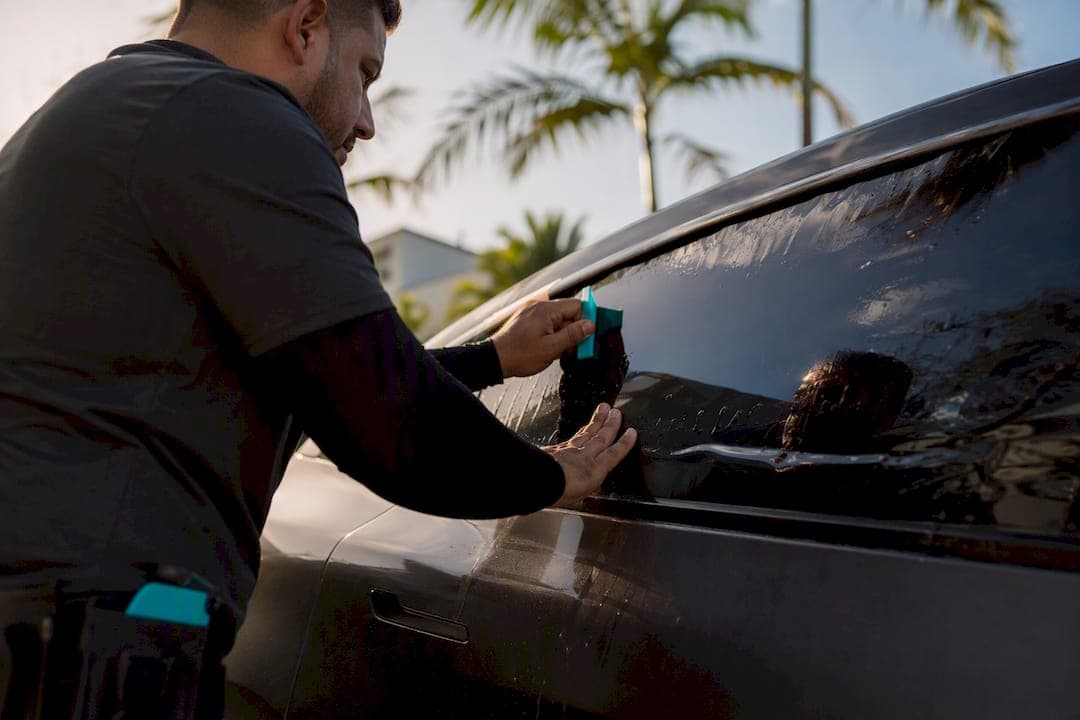
3M Crystalline is worth the premium for drivers who plan to keep their vehicle long term, live somewhere hot, and want heat rejection without a dark, tinted look. The film blocks up to 99% of infrared heat, but that benefit only shows up on your vehicle if a skilled installer applies it and you're prepared to pay a real price for the material and the labor it demands.
TL;DR:
- Crystalline offers up to 99% infrared heat rejection, but its performance heavily depends on expert installation and a significant investment.
- It maintains high visible light transmission, keeping the glass nearly clear, while effectively blocking IR, UV, and other solar rays.
- The film's longevity is technically five years in storage, but on-car performance varies with climate, maintenance, and proper installation.
- Cost ranges from $580 to $1,200, with the price justified mainly for long-term use in hot climates or for preserving interior health and resale value.
- Installer skill is critical to ensure the film's clarity and heat rejection, and buying from authorized 3M dealers is essential for warranty coverage.
Table of Contents
- What Is 3M Crystalline and What Do the Specs Actually Mean?
- How Does Crystalline Compare to Ceramic and Other Premium Films?
- What Does 3M Crystalline Cost, and How Do You Judge the Value?
- Shelf Life vs. On-Car Life: What Warranty Actually Covers
- Why Installer Skill Determines Whether Crystalline Performs
- Should You Buy Crystalline? A Quick Decision Checklist
- What Installation and Pricing Actually Look Like
- When I'd Personally Pick Crystalline Over Ceramic
- Ready to Get 3M Crystalline Installed the Right Way?
- Sources
What Is 3M Crystalline and What Do the Specs Actually Mean?
Crystalline isn't a tinted dye film or a metal-flake tint. It's a multilayer optical film (MOF), built from more than 200 microscopically thin layers that reflect infrared light without any metal content. That non-metalized construction matters for a practical reason: metallic films can interfere with radio signals, GPS, and cell reception. Crystalline avoids that problem entirely, which is one reason installers recommend it for newer vehicles loaded with sensors and wireless systems.
The official numbers, straight from 3M's product line, break down like this:
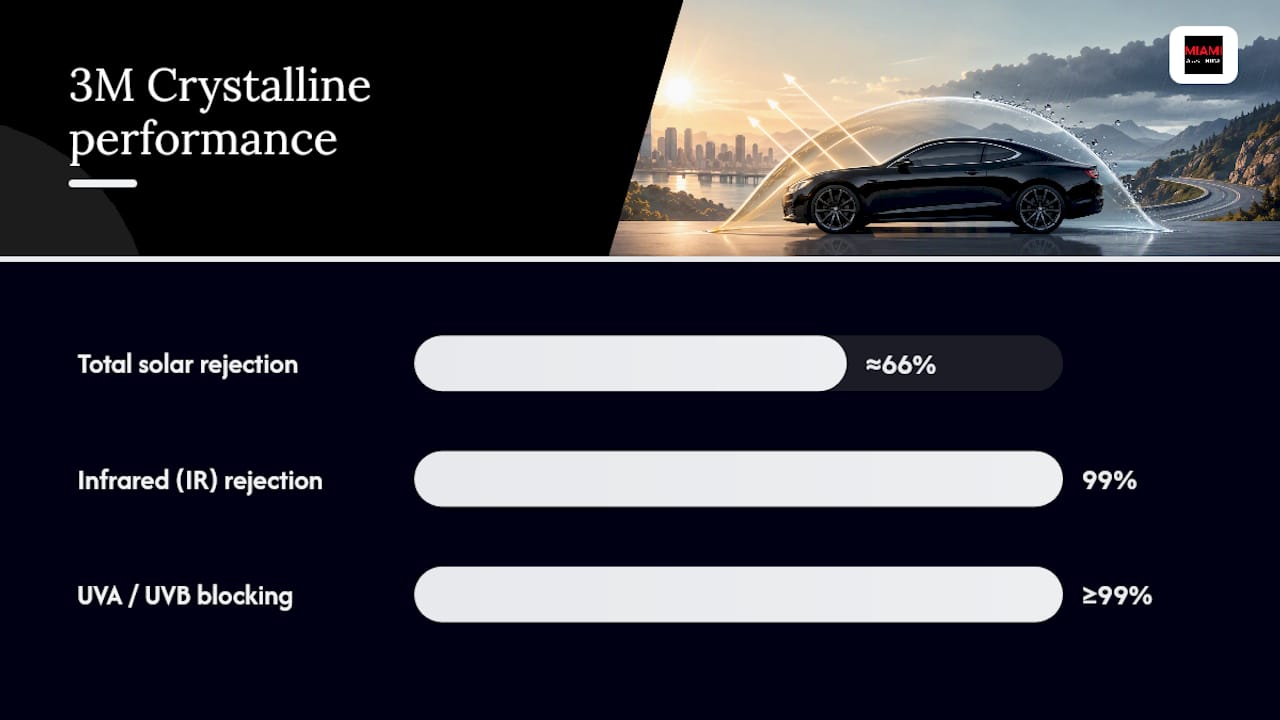
- Up to about two-thirds of total solar energy rejection, covering the full spectrum of heat-producing sunlight
- Up to 99% infrared (IR) heat rejection, the wavelength responsible for most of the "hot seat" feeling
- 99% or more UVA and UVB blocking, meeting the threshold set by the Skin Cancer Foundation's Seal of Recommendation for window film
Here's where a lot of buyers get confused: visible light transmission (VLT) and heat rejection are two separate measurements. VLT tells you how dark the film looks. IR and solar energy rejection tell you how much heat it blocks. Crystalline's whole selling point is that it keeps VLT high, so the glass looks nearly clear, while IR rejection stays close to the top of the category. A darker film isn't automatically a cooler one.
One more distinction worth locking in early: 3M's technical bulletin lists a 5-year shelf life from the manufacturing date for unopened, properly stored rolls. That's a warehouse guideline, not a promise about how long the film will perform once it's on your windows. Those are two different clocks, and mixing them up leads to a lot of unfair one-star reviews online.
How Does Crystalline Compare to Ceramic and Other Premium Films?
Independent installer tests and shop write-ups generally agree on one thing: Crystalline delivers strong IR rejection while staying lighter in appearance than most ceramic films at a comparable heat-blocking level. That's the film's real advantage, not a marketing slogan. If you want a near-factory-clear windshield strip or front windows that don't scream "tinted," Crystalline gets you there while still cutting a meaningful share of solar heat.
Ceramic films, on the other hand, sometimes match or come close to Crystalline's total heat reduction, especially in mid-range VLT levels, and they often do it at a lower price point. The catch is that "match" depends heavily on which metric you're comparing:
- Total solar energy rejection measures the full spectrum, including visible and UV light, not just heat
- IR rejection isolates the wavelength most responsible for the feeling of heat on your skin and dashboard
- UV rejection is a separate protective claim tied to skin and interior fading, largely decoupled from how "cool" a cabin feels
A film that leads on one metric can lag on another, so a single headline percentage on a brochure rarely tells the whole story.
In practical terms, drivers report a noticeably cooler cabin and reduced glare with Crystalline, with 3M's own materials citing cabin temperature drops of up to 47°F under specific test conditions and glare reduction in the 77 to 81% range. Those numbers come from controlled testing, so treat them as a best-case ceiling rather than a guarantee for every car, every climate, every seat position. The non-metalized build also means zero interference with toll transponders, dash cams, or phone signal, an advantage that some metal-based ceramic films can't claim outright.
What Does 3M Crystalline Cost, and How Do You Judge the Value?
Full-vehicle Crystalline installation typically runs $580 to $1,200, depending on vehicle size, window count, curved glass complexity, and local labor rates. A compact sedan sits at the lower end. A three-row SUV with a wraparound rear window and a windshield strip lands closer to the top.
Standard dyed or carbon films usually cost less upfront, and mid-tier ceramic films fall somewhere in between, once you account for material and skilled labor. Crystalline sits at the top of that range because the multilayer film itself costs more to manufacture and because it demands more precise installation technique.
To judge whether that premium pays off, run it through a simple framework:
- Comfort value. How much does cabin heat bother you on a daily commute or long drive?
- AC load. A cooler cabin means your air conditioning works less, which matters more in year-round hot climates than in a four-season market.
- Interior preservation. UV and IR exposure fade dashboards, crack leather, and bleach upholstery over years of parking outside.
- Resale value. A documented, professionally installed premium tint can be a selling point, particularly in hot-weather markets where buyers actively ask about heat rejection.
- Ownership horizon. The math favors Crystalline most clearly if you're keeping the car five or more years to let that upfront cost spread out.
The premium is easiest to justify for daily drivers in hot climates, owners of light-colored leather interiors prone to sun damage, and anyone who's already decided they want the lightest possible tint that still performs.
Shelf Life vs. On-Car Life: What Warranty Actually Covers
3M's stated 5-year shelf life applies to unopened, warehoused film, not the tint on your windows. Once installed, Crystalline is designed to last for years under normal conditions, but "normal" varies by climate, parking habits, and how the vehicle is maintained.
Three separate timelines matter here, and mixing them up causes most of the confusion buyers run into online:
- Packaged shelf life. A storage guideline for distributors and shops, not a countdown clock on your car.
- On-vehicle performance. How the film actually holds up against sun exposure, temperature swings, and window operation over the years you own the car.
- Warranty coverage. What's contractually protected if something goes wrong, which is the number that should weigh most heavily in your decision.
Warranty terms typically require purchase and installation through an authorized 3M installer, so buying from an unauthorized shop can quietly void your coverage even if the film itself is genuine. Edge lift, bubbling, and discoloration are the most common on-car failures, usually tied to harsh cleaning chemicals, poor initial installation, or extreme sun exposure on unshaded parking. For guidance on proper maintenance, see this streak-free method for UK owners to keep your window film in top condition. Before you book anything, ask your installer directly whether the warranty is transferable if you sell the car, and get the enrollment confirmation in writing rather than a verbal promise.
Why Installer Skill Determines Whether Crystalline Performs
A multilayer optical film is unforgiving. Crystalline requires precise wet application and careful heat shrinking to conform to curved rear windows and complex glass shapes without stretching the layers or trapping moisture. A rushed install can leave you with a film that technically has the right spec sheet but never delivers the clarity or heat rejection you paid for.
Before you book, ask the installer these questions:
- Are you an authorized 3M dealer for the Crystalline line, and can you register my warranty?
- What's your process for handling rear window curves and multiple layers of glass?
- Can I see photos or examples of your past Crystalline installations?
- What does the written warranty cover, and is it transferable if I sell the car?
- How long should I wait before rolling the windows down after installation?
Red flags are easy to spot once you know what to look for: a price that's dramatically below the typical $580 to $1,200 range, no written warranty documentation, or an installer who can't show clear photos of finished work. Any of those should make you pause.
Pro Tip: Schedule your installation with a few days of buffer before you need the car, and avoid rolling your windows down for at least 48 to 72 hours afterward. The adhesive needs that window to fully cure, and rolling too early can cause edge lift you'll notice for the life of the film.
Should You Buy Crystalline? A Quick Decision Checklist
Run through this short list before you commit to the higher price tag.
- Climate. If you live somewhere with long, hot summers and intense direct sun, Crystalline's IR rejection earns its keep faster than in a mild, four-season climate.
- Ownership horizon. Keeping the car five-plus years pushes the value case toward "buy." Selling within a year or two weakens it.
- Desired look. If a nearly clear windshield strip and light-tinted front windows matter to you, Crystalline is the category built for that specific outcome.
- Cabin heat sensitivity. Frequent long drives, parking without shade, or a family that complains about hot seats all strengthen the case.
- UV protection priority. If skin protection or preventing leather and dashboard fade is a real concern, the 99%+ UVA/UVB blocking benchmark is hard to beat.
Buy if you're a daily commuter in a hot climate planning to keep the car long term and you want the lightest tint that still performs. Consider if you're weighing Crystalline against a quality ceramic film mainly on price. A well-installed ceramic option can close much of the heat-rejection gap for less money, particularly if a near-invisible look isn't your top priority. Skip it, at least for now, if you're leasing short term, plan to sell within a year, or your budget can't stretch past entry-level tint without sacrificing a properly authorized install.
A luxury sedan owner who keeps cars for a decade and hates any visible tint line is the clearest "buy." A daily commuter grinding through a hot, sunny stretch every afternoon is close behind. A driver flipping a lease in eighteen months is better off saving the difference. Reading up on what actually defines tint clarity before you decide helps set realistic expectations either way.
What Installation and Pricing Actually Look Like
Southmiamitint installs 3M Crystalline as a mobile service across Miami-Dade, alongside 3M Ceramic IR and 3M Color Stable, with full-vehicle Crystalline jobs typically landing in the $580 to $1,200 range depending on your vehicle.
A proper evaluation before installation covers a few specific things:
- Current glass condition, including any existing scratches, chips, or old adhesive residue
- Window curvature and complexity, since SUVs and hatchbacks with wraparound rear glass require more precise heat shrinking
- Whether old film needs to be removed first, which adds labor time and cost
- Warranty enrollment through 3M's authorized dealer channel, confirmed in writing at the time of install
A professional quote should spell out material cost, labor, and the warranty registration step separately, not bundle them into one vague number. That transparency is what tells you whether you're paying for the film alone or for the installer skill that makes the film actually perform.
When I'd Personally Pick Crystalline Over Ceramic
Run the checklist honestly and the answer usually reveals itself fast. A driver keeping a light-interior SUV for eight years in a hot, sun-heavy market is an easy "buy." Someone flipping a lease in fourteen months, chasing the lowest possible price, is better served by a quality ceramic film and a warranty they'll actually use before they sell. The clearest case for Crystalline isn't heat rejection alone. It's wanting maximum IR blocking without the visual tradeoff, which is a narrower need than most buyers assume when they start shopping.
— Jose
Ready to Get 3M Crystalline Installed the Right Way?
Professional mobile window tinting brings Crystalline installation directly to your driveway or office parking lot, so you skip the shop waiting room entirely.
The service includes 3M Crystalline, 3M Ceramic IR, and 3M Color Stable films, with full-vehicle Crystalline pricing typically falling in a range depending on your vehicle's size and glass complexity. Every quote breaks out material, labor, and warranty registration separately, so you know what you're paying for before scheduling. If Crystalline's price feels like a stretch for your situation, our ceramic tint options starting at $249 deliver strong heat rejection at a lower entry point. Ready to compare options for your specific vehicle? Request a mobile installation quote and we'll walk you through pricing, scheduling, and what to expect on install day.
Sources
- 3M™ Automotive Window Film Crystalline Series
- 3M Automotive Window Film Crystalline product bulletin (rev. e)
- Skin Cancer Foundation — Seal of Recommendation