
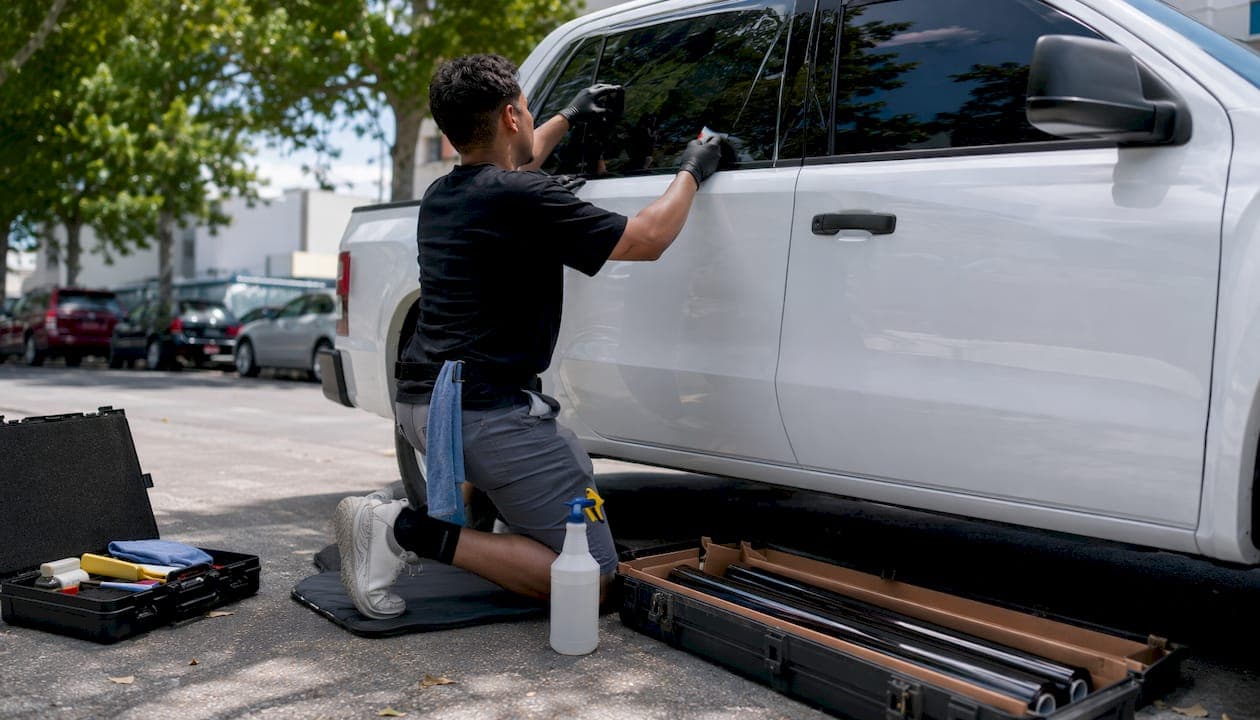
For most urban truck owners, a premium ceramic window film installed by a mobile professional delivers the best combination of privacy, heat rejection, UV protection, and warranty coverage. Films like 3M Ceramic IR, 3M Crystalline, 3M Color Stable, and Iviron KoolMax are the top picks. Professional window tinting blocks up to 99% of UV rays, protecting your interior and your health on every drive.
- Best film type: Premium ceramic (3M Ceramic IR or Iviron KoolMax for heat; 3M Crystalline for clarity)
- Best installation method: Mobile professional service for warranty-backed, bubble-free results
- First step: Check your state's VLT limits before booking
Table of Contents
- Why window film for truck owners makes sense in the city
- How do common film types compare for your truck?
- Which premium films does Southmiamitint recommend?
- Mobile professional install vs. DIY kits: which is right for you?
- How to choose the right film and what to ask your installer
- What are the legal tint limits for trucks in the U.S.?
- How long does window film last, and how do you care for it?
- Key Takeaways
- The case for professional ceramic installs in urban trucks
- Get a mobile ceramic tint install for your truck in Miami-Dade
- Useful sources for specs, state rules, and installation guidance
Why window film for truck owners makes sense in the city
Urban driving puts your truck through a specific kind of stress. Stop-and-go traffic means your cab heats up fast. Large crew-cab windows put your gear, tools, and personal items on full display in parking lots and job sites. And hours behind the wheel add up to serious UV exposure over time.
Window film addresses all of it at once:
- Privacy: Darker films make it harder for people to see inside, reducing the risk of break-ins when you park in public lots
- Heat rejection: Quality ceramic films can reduce cabin temperature significantly, cutting the load on your AC
- UV protection: Professional window tint blocks a high percentage of UV rays, protecting your dashboard, upholstery, and your skin on long drives
- Glare reduction: Less glare means less eye strain during long urban commutes
- Interior preservation and resale value: Blocking UV and heat keeps your cabin surfaces from cracking and fading, which holds resale value over time
Mobile installation is a practical bonus for busy truck owners. A mobile tinting service comes to your home, office, or job site so you skip the drop-off and wait.
How do common film types compare for your truck?
Ceramic films are the strongest all-around choice for trucks in urban environments. They reject heat without interfering with GPS, toll transponders, or phone signals, and they stay color-stable for years. Here is how the main film categories stack up:
| Film Type | Heat Rejection | UV Blockage | Night Visibility | Signal Interference | Color Stability | Cost | Best For |
|---|---|---|---|---|---|---|---|
| Ceramic | Excellent | High | High (clear) | None | Excellent | $$$ | Heat + clarity + electronics |
| Crystalline | Excellent | High | Very high | None | Excellent | $$$$ | Maximum clarity, low reflectance |
| Carbon | Good | High | Good | None | Good | $$ | Budget-friendly heat control |
| Dyed | Low | Moderate | Moderate | None | Poor | $ | Basic privacy only |
| Metallic | Good | Good | Moderate | Yes | Good | $$ | Heat, but blocks signals |
A few points worth knowing as you read that table. Ceramic and crystalline films sit at the top because they combine superior heat rejection with excellent optical clarity, which matters a lot for safe urban driving at night. Carbon film is a solid mid-range option if budget is a constraint. Dyed film fades and turns purple over time, making it a poor long-term investment for a truck you rely on daily. Metallic film rejects heat but can block GPS and toll-reader signals, which is a real inconvenience in city driving.
Which premium films does Southmiamitint recommend?
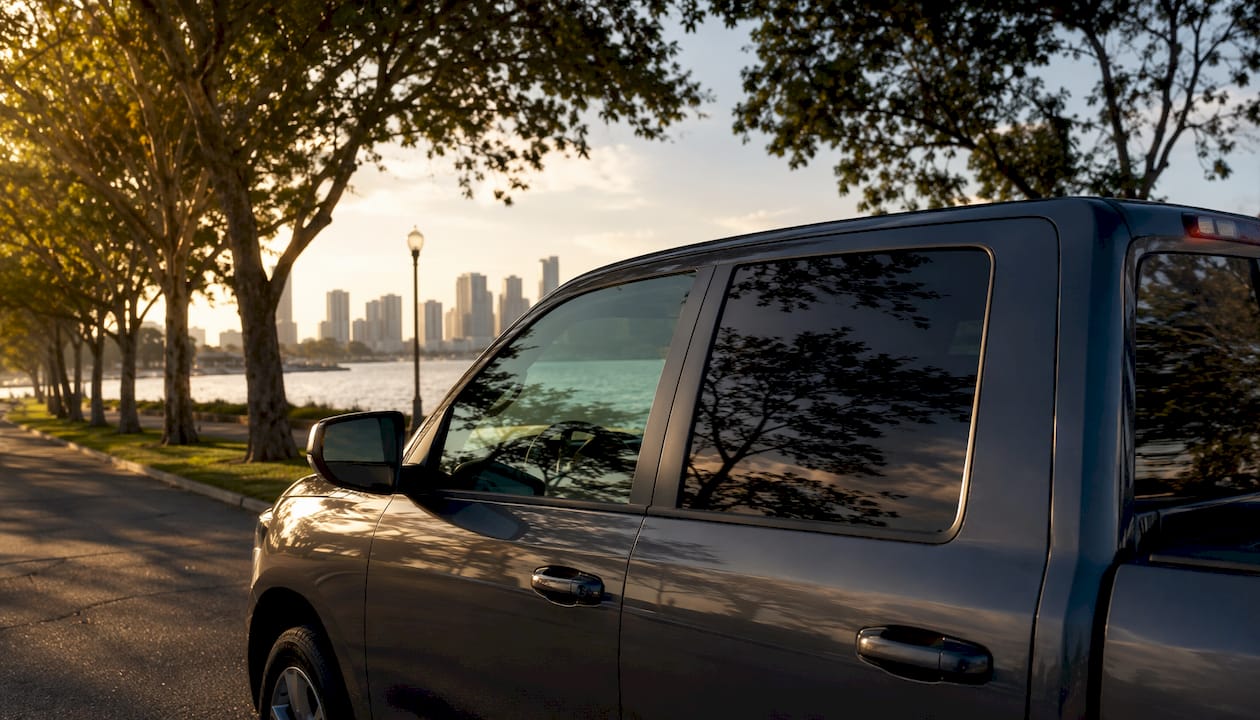
Ceramic films are the default recommendation for urban truck owners because they handle heat, UV, and clarity without trade-offs. Here are the four film families Southmiamitint installs:
- 3M Ceramic IR: The go-to for maximum infrared heat rejection. Blocks a high percentage of infrared radiation while keeping VLT high enough for clear night driving. No signal interference.
- 3M Crystalline: The best pick when optical clarity is your top priority. Ultra-thin, nearly clear, and still blocks heat and UV effectively. Ideal if you want protection without a dark appearance.
- 3M Color Stable: A reliable, color-stable film that resists fading and purpling. Good all-around performance at a slightly lower price point than Ceramic IR.
- Iviron KoolMax: A ceramic-based film with strong heat and UV rejection. A solid choice for truck owners who want ceramic performance with competitive pricing.
Use-case guide:
- Privacy is your main goal: choose a lower VLT (15%–20%) in 3M Color Stable or Iviron KoolMax on rear and side windows
- Heat rejection is your main goal: 3M Ceramic IR or Iviron KoolMax on all windows
- Night visibility is critical: 3M Crystalline at a higher VLT (35%–50%) keeps the cabin bright while still blocking UV and heat
All four films are non-metallic, so they will not interfere with your truck's electronics, toll transponders, or phone signal.
Mobile professional install vs. DIY kits: which is right for you?
For most urban truck owners who want a clean, warranty-backed result, a mobile professional is the right call. Here is why.
Mobile professional installation
- Pros: Warranty-backed results, proper surface prep, heat-shrink fitting on curved rear glass, no bubbles or trapped debris, comes to your location
- Cons: Higher upfront cost than DIY kits
DIY precut kits
- Pros: Lower cost, available for most popular truck models including crew cabs, some kits include EZ rear or multi-piece rear options for pickups
- Cons: Requires a heat gun, squeegee, and careful trimming; truck rear glass has compound curves that need heat shrinking to avoid bubbles and poor adhesion; any trapped dust or oil becomes permanently visible after the adhesive cures
Typical professional installation for a truck depends on the number of windows and film type, with mobile installs usually completed within a few hours. DIY ceramic precut kits for popular models like the Silverado or Ram are widely available but achieving a bubble-free result still requires a heat gun and real patience.
Pro Tip: DIY makes the most sense on flat side windows. For the curved rear glass on most pickup trucks, the heat-shrink process is genuinely difficult. Professionals use regulated heat guns and may cut the film into strips on double-curved glass to prevent creasing. If you have never done it before, the rear window alone can take two hours and still end up with bubbles.
For a deeper look at the trade-offs, see Southmiamitint's guide on DIY vs. professional tinting.
How to choose the right film and what to ask your installer
Start with your primary goal. Privacy, heat rejection, and night clarity each point to a different film and VLT. Once you know your goal, use this checklist.
Questions to ask your installer:
- What film brand and product line are you installing?
- What warranty does the film carry, and is it written?
- Do you offer mobile installation at my location?
- What VLT options are available, and which do you recommend for my state's legal limit?
- What is the curing time, and when can I clean the windows?
- Can I see photos of previous truck installs?
Red flags to watch for:
- Vague or verbal-only warranty with no written documentation
- No before-and-after photos or installation portfolio
- No mobile-install capability if you need on-site service
- Pressure to choose the cheapest film without explaining the trade-offs
- Installer cannot name the specific film brand or product line
Always ask to see the manufacturer's technical specs for the film being installed. A reputable installer will have them on hand.
What are the legal tint limits for trucks in the U.S.?
Tint laws vary by state. Installing a film that is too dark for your state can result in a fix-it ticket or a failed inspection. Check your local rules before you book.
- Look up your state's VLT limits for front side windows, rear side windows, and the rear window separately. Rules differ by window position.
- Windshield tinting is restricted in most states to a non-reflective strip along the top.
- Medical exemptions exist in many states for drivers with documented light-sensitivity conditions. Ask your state DMV for the application process.
- Keep proof of compliance in your vehicle. Some states require a sticker or certificate from the installer.
For night safety in urban driving, most professionals recommend a minimum of 35% VLT on front side windows. Darker rear windows are generally legal and safe since you rely on mirrors rather than direct rear visibility.
Use the IWFA state tint law charts or your state's DMV website to confirm current limits before installation.
This article is general information, not legal advice. Confirm your state's current tint rules with your DMV or a qualified installer before proceeding.
How long does window film last, and how do you care for it?
Premium ceramic films typically have a long lifespan with proper care. Standard dyed films may start fading or bubbling earlier, especially in hot urban climates with heavy sun exposure.
Care do's and don'ts:
- Wait 3–10 days after installation before cleaning your windows. The adhesive needs time to cure fully, and cleaning too soon can damage the finish.
- Use ammonia-free cleaners only. Ammonia breaks down the film's adhesive over time.
- Avoid abrasive cloths or scrapers on tinted glass.
- Apply film in shaded, dust-free conditions if doing a DIY install. Any debris trapped under the film becomes permanent once the adhesive sets.
Urban conditions, including pollution, stop-and-go heat buildup, and frequent temperature swings, accelerate wear on lower-quality films. Ceramic films handle these conditions better than dyed or carbon options. If you notice bubbling, peeling, or significant color shift, it is time to consider replacement. Most professional installs include a warranty that covers defects, so keep your paperwork.
Key Takeaways
Ceramic window film installed by a mobile professional is the most reliable choice for urban truck owners who want privacy, heat control, and UV protection with a warranty.
| Point | Details |
|---|---|
| Choose ceramic film | Ceramic films like 3M Ceramic IR and Iviron KoolMax deliver the best heat rejection, UV blockage, and signal compatibility. |
| Go mobile professional | A mobile installer handles curved rear glass correctly and backs the work with a written warranty. |
| Check state tint laws first | VLT limits vary by state and window position; verify with your DMV before booking. |
| Film lifespan matters | Premium ceramic films last many years with proper care, while dyed films may degrade faster in urban heat. |
| Southmiamitint mobile installs | Southmiamitint offers on-site ceramic tinting in Miami-Dade using 3M Ceramic IR, 3M Color Stable, and Iviron KoolMax. |
The case for professional ceramic installs in urban trucks
Window tinting is one of those upgrades where the gap between a good job and a mediocre one is completely invisible until it is not. A film that was installed without proper heat shrinking on the rear glass looks fine for the first few months. Then the bubbles show up, the edges start lifting, and you are paying to have it redone.
The argument for professional ceramic installation is not just about aesthetics. In a city environment, your truck sits in direct sun for hours, heats up in traffic, and gets cleaned frequently. Ceramic film handles all of that without fading, purpling, or losing its heat-rejection performance. A written warranty means you have recourse if something goes wrong. That combination of durability and accountability is what makes the professional route worth the extra cost for most truck owners.
If you are also customizing your truck with other accessories, it is worth coordinating your tint install alongside other upgrades. Resources like this show truck lighting guide can help you plan the full build while keeping legal compliance in mind.
Get a mobile ceramic tint install for your truck in Miami-Dade
Southmiamitint brings professional ceramic window tinting directly to your location in Miami-Dade County, no shop drop-off required. Every install uses premium films including 3M Ceramic IR, 3M Color Stable, and Iviron KoolMax, and comes backed by a written warranty.
- On-site installation at your home, office, or job site
- 3M Ceramic IR, 3M Crystalline, 3M Color Stable, and Iviron KoolMax available
- Written warranty on every install
- Most truck installs completed in 2–4 hours
- Mobile service throughout Miami-Dade County
Ceramic mobile installs start at $249. Call or book online to get a quote and schedule your install at a time and place that works for you.
Useful sources for specs, state rules, and installation guidance
- Manufacturer installation instructions: Gila Films truck and SUV rear-window install PDF covers heat-shrink technique and curing guidance
- DIY how-to: Lowe's window film application guide covers surface prep and cleaning steps
- Step-by-step video: AutoZone pickup rear-window tint installation video walks through the full process
- State tint laws: Use the IWFA state-law charts at iwfa.com or your state's DMV website to confirm current VLT limits and medical exemption rules
- Film technical specs: Request the manufacturer data sheet from your installer before booking; 3M and Iviron publish product-specific specs that list VLT, heat rejection percentage, and warranty terms