
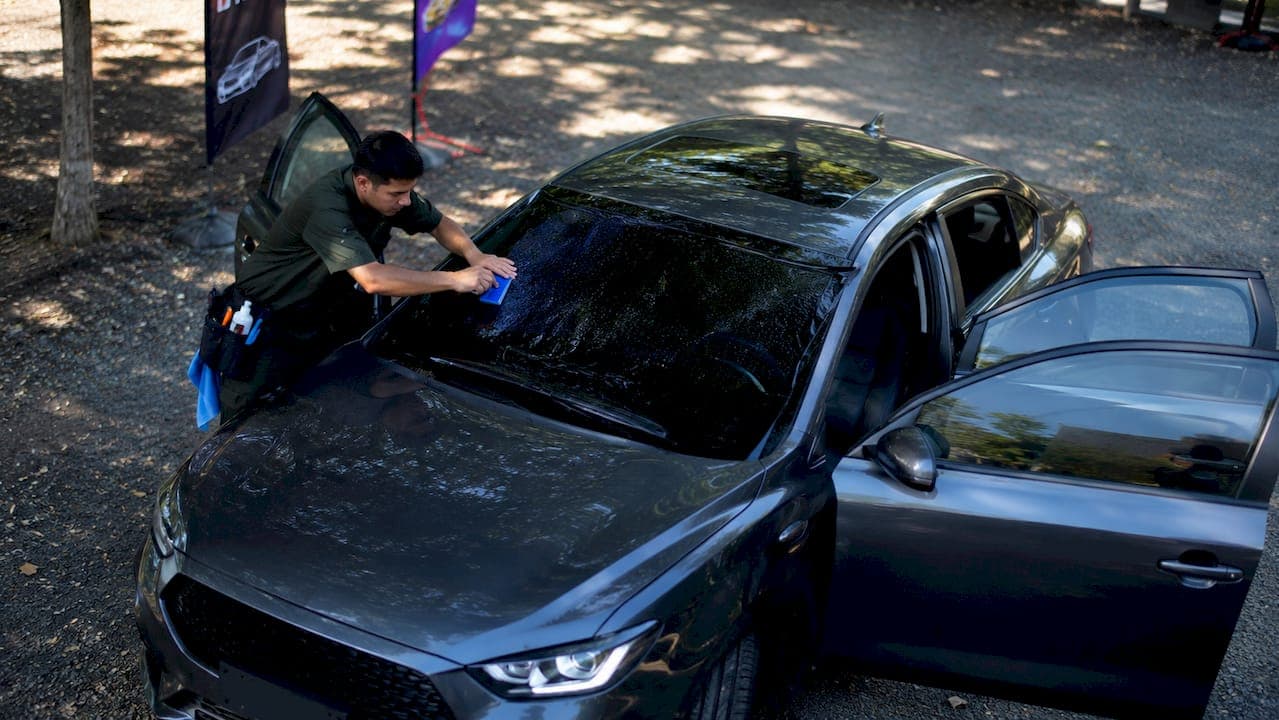
Nano-ceramic window film is the most effective tinting solution for sunny climates, blocking up to 98% of infrared heat and 99% of UV rays while improving fuel efficiency by 5–10%. Car owners in Sunbelt regions face intense solar radiation year-round, which drives up cabin temperatures, fades interiors, and forces air conditioning systems to work harder. The right film technology solves all three problems at once. This guide covers every major film type, legal limits, budget trade-offs, and maintenance tips so you can make a confident, informed choice.
1. What makes nano-ceramic film the best tinting solution for sunny climates?
Nano-ceramic window film uses microscopic ceramic particles embedded in a polyester layer to block infrared radiation before it enters the cabin. That physical barrier is what separates ceramic from every other film category. Infrared rejection is the critical metric for comfort in sunny climates, not tint darkness or visible light transmission alone.
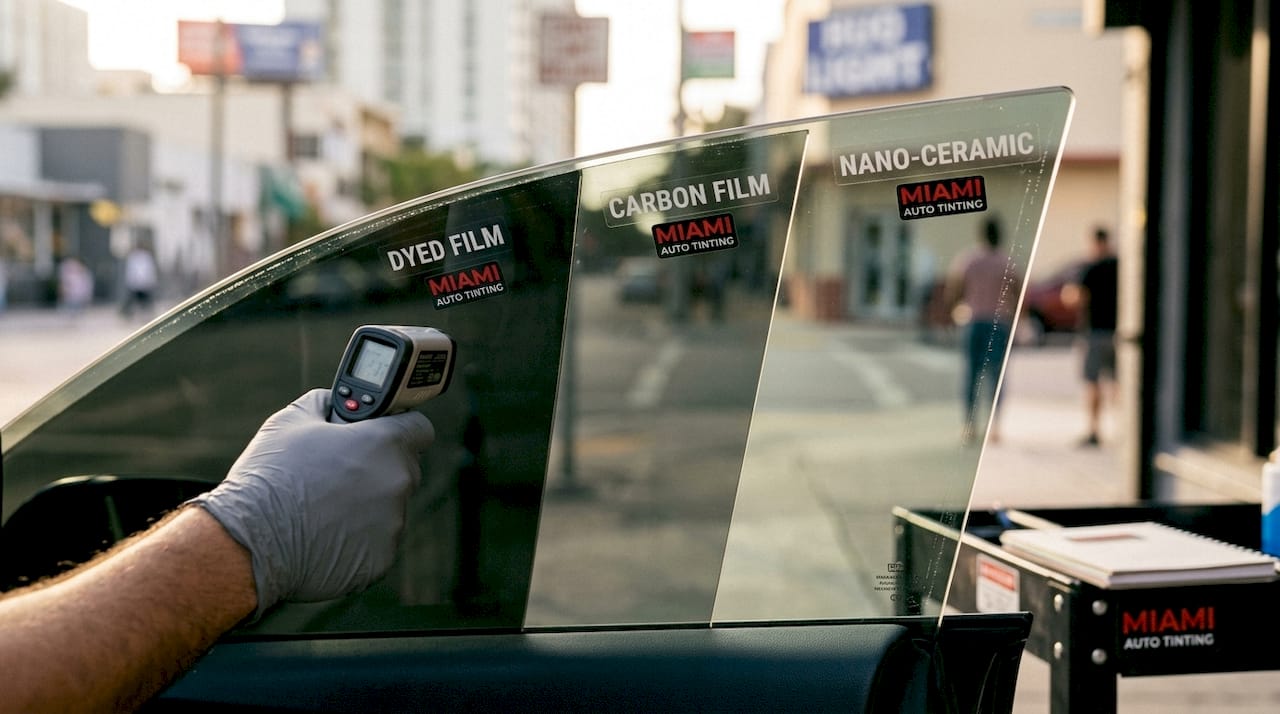
Nano-ceramic films reject up to 80–90% of infrared radiation, which is significantly higher than carbon or dyed alternatives. That gap translates directly to a cooler cabin, a lighter AC load, and measurably better fuel economy. The film also blocks 99% of UV rays, which protects both the driver and the vehicle interior from long-term sun damage.
One underappreciated advantage is signal compatibility. Non-metallic nano-ceramic films do not interfere with GPS, cellular, or Wi-Fi signals. That matters in modern vehicles loaded with connected technology. Metallic films can disrupt those signals; ceramic films cannot.
Durability is another strong point. Ceramic films resist cracking, bubbling, and color fading far longer than dyed films under sustained UV and heat exposure. That longevity makes the higher upfront cost a sound investment for drivers in Miami, Phoenix, Houston, or any other high-sun market.
Pro Tip: Ask your installer for the film's Total Solar Energy Rejected (TSER) rating, not just the VLT percentage. TSER captures both infrared and UV rejection in one number and gives you a true picture of heat performance.
How film types compare on heat rejection
| Film Type | Infrared Rejection | UV Protection | Signal Safe | Lifespan |
|---|---|---|---|---|
| Dyed | Low | Moderate | Yes | Short |
| Carbon | Moderate | Good | Yes | Medium |
| Nano-ceramic | Up to 80–90% | Up to 99% | Yes | Long |
| Metallic/reflective | Good | Good | No | Medium |
2. What are the top tinting options besides ceramic for hot weather?
Nano-ceramic is the premium choice, but not every car owner needs or can afford it. Several alternatives offer real benefits for window tinting for hot weather at lower price points.
- Dyed films are the most affordable entry point. They reduce glare and provide basic UV protection, but their infrared rejection is low. Under sustained Florida or Texas sun, dyed films also fade faster and can develop bubbles within a few years.
- Carbon-based films sit in the middle of the market. They offer better heat rejection than dyed films and hold their color longer. Carbon films do not interfere with electronic signals and provide solid UV protection, making them a practical upgrade for budget-conscious drivers.
- Metallic and reflective films deliver good heat rejection by bouncing solar energy away from the glass. The trade-off is signal interference. Drivers with modern navigation systems, keyless entry, or in-car Wi-Fi may notice disruptions. That limitation makes metallic films a harder sell in 2026.
- Photochromic (adaptive) films are an emerging category worth watching. These films balance daytime heat rejection with nighttime visibility by adjusting their tint level in response to light intensity. The technology is still maturing and carries a premium price, but it addresses the classic trade-off between dark tint and safe nighttime driving.
The practical takeaway: carbon films are the best value alternative for drivers who want meaningful heat reduction without the ceramic price tag. Dyed films are acceptable for mild climates but underperform in true Sunbelt conditions.
3. How do local laws affect window tint choices in sunny regions?
Window tint laws vary by state, and ignoring them is expensive. Legal limits commonly restrict front side window VLT to 25–35% and rear windows to 15–20%, though exact numbers differ by jurisdiction. Florida, Texas, and California each have distinct rules, and enforcement is active.
The good news is that legal compliance and strong heat rejection are not mutually exclusive. A lighter ceramic film at 35% VLT can outperform a dark dyed film at 15% VLT in actual heat rejection. Darkness of tint is less important than IR rejection for thermal comfort. Film technology, not shade, drives heat control.
Nighttime visibility is a real safety concern with very dark films. Drivers who push tint to the legal minimum on front windows often report reduced visibility at night, which increases reaction time in low-light conditions. Choosing a lighter, high-performance ceramic film solves both problems.
- Verify your state's VLT limits before purchasing any film.
- Check whether your state requires a tint certificate or sticker on the vehicle.
- Confirm that rear window rules differ from front side window rules in your state.
- Ask your installer to measure installed VLT with a light meter before you leave the shop.
Pro Tip: In Florida, the front side windows must allow at least 28% of light through. A quality ceramic film at 35% VLT will keep you legal, comfortable, and safe at night without sacrificing meaningful heat rejection.
4. How to select the best tinting solution based on your needs and budget
The right film depends on three factors: how much heat you need to block, what your state allows, and what you can spend. Matching those three variables produces a clear answer for most drivers.
Maximum heat rejection for extreme climates: Nano-ceramic is the only choice. Drivers in Miami-Dade, the Phoenix metro, or coastal Texas who spend long hours in their vehicles will feel the difference immediately. The interior protection benefits extend beyond comfort. Ceramic tint prevents dashboard cracking and preserves vehicle resale value by shielding surfaces from UV degradation.
Balancing privacy and appearance: Carbon films at legal VLT limits give you a clean, dark look without the ceramic price. They reject enough heat to be useful and hold up well in moderate sun exposure. For drivers who prioritize aesthetics over maximum thermal performance, carbon is a sensible pick.
Professional installation versus DIY kits: DIY tint kits often fail prematurely due to poor installation, especially under intense sunlight and UV exposure. Dust contamination, air bubbles, and imprecise cutting are the most common failure points. Professional installation costs more upfront but includes a warranty and eliminates those risks.
Budget-friendly path: Carbon film installed professionally beats DIY ceramic every time. A clean carbon installation lasts years longer than a self-applied ceramic kit that bubbles within months.
| Goal | Recommended Film | VLT Range | Notes |
|---|---|---|---|
| Maximum heat rejection | Nano-ceramic | 35–50% | Best IR and UV performance |
| Privacy and aesthetics | Carbon | 20–35% | Good value, no signal issues |
| Lowest cost | Dyed | 25–35% | Short lifespan in hot climates |
| Adaptive visibility | Photochromic | Variable | Emerging tech, higher cost |
- Match film type to your primary goal before comparing prices.
- Get at least two professional quotes and ask each installer for the film's TSER rating.
- Check whether your vehicle's rear defroster or heated glass requires a specific film type.
- Factor in warranty length when comparing professional installation costs.
5. What are insider tips for maintaining tinted windows in sunny climates?
Proper care extends the life of any film, but it matters most in high-UV environments where degradation happens faster. The first rule is patience. New tint needs 3–5 days to fully cure before cleaning, and rolling windows down during that period can lift the film edges.
Improper installation is the leading cause of early film failure under intense sun exposure. Bubbles, haze, and peeling almost always trace back to installation errors rather than film quality. That is why choosing a certified professional installer matters as much as choosing the right film.
- Use a soft microfiber cloth and ammonia-free cleaner on tinted glass. Ammonia degrades adhesive and causes peeling.
- Inspect film edges every six months for lifting or discoloration, which are early signs of adhesive failure.
- Park in shade or use a windshield sunshade when possible. Even the best ceramic film benefits from reduced direct exposure during peak hours.
- Keep your warranty documentation. Quality installers back their work with multi-year warranties that cover bubbling, peeling, and color change.
Pro Tip: Purple or brown discoloration in a film almost always means the dye has broken down from UV exposure. If you see that color shift, the film has lost most of its UV protection and needs replacement.
Southmiamitint uses 3M IR, 3M Color Stable, and Iviron Kollmax ceramic films, all of which carry manufacturer warranties. Choosing a film with a documented warranty gives you a clear path to recourse if performance drops early.
Key takeaways
Nano-ceramic window film is the definitive choice for car owners in sunny climates because it delivers superior infrared rejection, full UV protection, and long-term durability without interfering with vehicle electronics.
| Point | Details |
|---|---|
| Nano-ceramic leads on heat rejection | Ceramic films block up to 80–90% of infrared radiation, more than any other film type. |
| Darkness does not equal heat rejection | A lighter ceramic film can outperform a darker dyed film in actual heat control. |
| Legal VLT limits shape your options | Front side windows typically require 25–35% VLT minimum; verify your state's exact rule. |
| Professional installation protects your investment | DIY kits fail faster under intense UV; certified installers provide warranties and cleaner results. |
| Ceramic tint protects resale value | UV-blocking films prevent dashboard cracking and interior fading, preserving vehicle condition. |
What I've learned after years of watching drivers choose the wrong tint
Most drivers walk into a tint shop focused on one thing: how dark they want their windows. That instinct is understandable, but it leads to bad decisions more often than not.
The biggest misconception I see is that darker tint means cooler car. It does not. A 20% dyed film will leave your cabin hotter than a 35% ceramic film on a July afternoon in Miami. The film's material determines heat rejection. The shade determines privacy. Those are two separate variables, and conflating them costs drivers money and comfort.
The second mistake is treating professional installation as optional. I have seen pristine ceramic film ruined by a DIY application with one dust particle trapped under the surface. Under direct sun, that bubble grows fast. A professional installer eliminates that risk and backs the work with a warranty. The price difference is real, but so is the difference in outcome.
My honest recommendation for any Sunbelt driver: spend on the film technology, not the darkness level. A quality ceramic tint at a legal VLT will keep you cooler, protect your interior, and last years longer than a cheap dark film. Think of it as protecting a $30,000-plus asset with a $300–$600 investment. That math works every time.
— Jose
Southmiamitint brings professional tinting to your location
Southmiamitint offers mobile window tinting across Miami-Dade, bringing certified installation directly to your home, office, or parking lot. The film lineup includes 3M IR, 3M Color Stable, and Iviron Kollmax ceramic tint, covering every performance level from entry-level protection to maximum heat rejection.
Every installation comes with expert guidance on legal VLT compliance and a film recommendation matched to your vehicle and driving habits. You do not have to guess which film fits your needs. Check service areas near you or request a quote to get a personalized recommendation and same-day scheduling across Miami-Dade.
FAQ
What is the best window tint for blocking heat in sunny climates?
Nano-ceramic window film is the best option for heat rejection in sunny climates. It blocks up to 80–90% of infrared radiation and 99% of UV rays, outperforming dyed and carbon alternatives.
Does darker tint mean better heat rejection?
No. Heat rejection depends on film technology, not tint darkness. A lighter ceramic film can block more heat than a darker dyed film because infrared rejection is controlled by the film's material composition.
Will window tint interfere with my GPS or phone signal?
Nano-ceramic films are non-metallic and do not interfere with GPS, cellular, or Wi-Fi signals. Metallic and reflective films can cause signal disruption in modern connected vehicles.
How long does professional window tint last in a hot climate?
High-quality ceramic films installed by a certified professional typically last 10 or more years in hot climates. DIY kits and dyed films degrade significantly faster under sustained UV and heat exposure.
What VLT percentage is legal for front windows in Florida?
Florida law requires front side windows to allow at least 28% of light through. Rear windows have a lower minimum, but front window compliance is the most commonly enforced rule during traffic stops.