
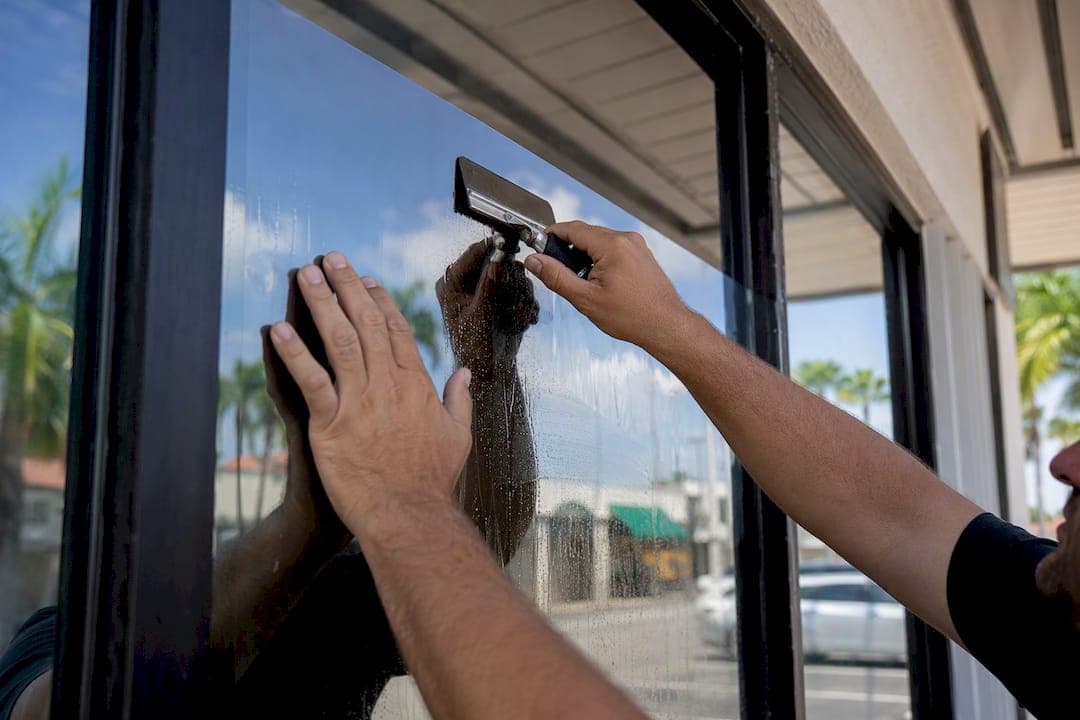
That's the short version, and for most retail owners it's enough to justify a closer look. Business owners who install commercial film typically see:
- Lower cooling bills — less solar heat means less HVAC runtime
- Protected merchandise — UV rejection stops fading on apparel, packaging, and displays
- Better shopping experience — reduced glare on displays, screens, and POS terminals
- Added privacy and security — from frosted back rooms to shatter-resistant safety film
LLumar reports annual energy savings of about 5% to 15% for buildings retrofitted with solar control film, often paying for itself within three to five years. We'll walk through the numbers, the film categories, and a real installer checklist further down.
Key Takeaways
Storefront window tinting reduces energy costs, blocks nearly all UV rays, cuts glare, and adds security and branding value in a single low-disruption retrofit.
| Point | Details |
|---|---|
| Energy savings are real but bounded | Expect 5% to 15% annual savings with payback in three to five years, per manufacturer data. |
| UV protection preserves merchandise | Films blocking up to 99% of UV rays reduce fading on apparel, packaging, and fixtures. |
| Security film delays, not prevents | Shatter-resistant film slows forced entry long enough to deter most break-in attempts. |
| Glass compatibility checks are non-negotiable | Skipping this step risks thermal stress fracture on tempered or heat-strengthened glass. |
| Southmiamitint offers on-site installation | Mobile install of 3M and Iviron KoolMax films minimizes storefront downtime in Miami-Dade. |
Table of Contents
- What Are Storefront Tint Benefits for Energy and Cost Savings?
- How Does UV and Glare Reduction Improve the Shopping Experience?
- What Merchandise and Interior Damage Does Tinting Prevent?
- What Security and Privacy Options Does Storefront Film Offer?
- Can Decorative Film Upgrade Your Storefront's Branding?
- Which Film Type Fits Which Storefront Application?
- What Should You Expect During Installation and What Does It Cost?
- What Should You Ask a Storefront Tint Installer Before You Sign?
- What Does the Research Say About Storefront Tint Performance?
- What Installers Actually Check Before They Tint Your Storefront
- Ready to Tint Your Storefront? Here's the Next Step
- Sources
What Are Storefront Tint Benefits for Energy and Cost Savings?
Untreated storefront glass acts like a magnifying lens for your HVAC system. Solar infrared radiation passes through the glass and heats the interior air, furniture, and floors, forcing your air conditioning to run longer and harder to hold a comfortable temperature. Window film intercepts that infrared energy before it ever crosses the glass, which is the mechanical reason tinted storefronts run cooler with less compressor cycling.
The U.S. Department of Energy lists film as one of the lowest-disruption retrofits available. Unlike full window replacement, film installs in hours, not weeks, and needs no structural work or permits in most jurisdictions.
Here's how the savings typically play out for a retail storefront:
- Baseline assessment — a storefront with large west or south-facing glass loses the most to solar heat gain and sees the biggest gains from tinting.
- Energy reduction range — LLumar's manufacturer data puts annual energy savings between 5% and 15% after professional film installation.
- Payback window — most commercial installs recover their cost within three to five years through reduced utility bills, according to the same LLumar data.
A 2,000-square-foot storefront spending $12,000 a year on electricity could reasonably expect to save $600 to $1,800 annually just on HVAC load reduction, before factoring in reduced equipment wear.
Pro Tip: Prioritize your primary sun-facing glass first. If budget is tight, tint the storefront windows that get direct afternoon sun before touching side or shaded panes. That's where the payback happens fastest.
How Does UV and Glare Reduction Improve the Shopping Experience?
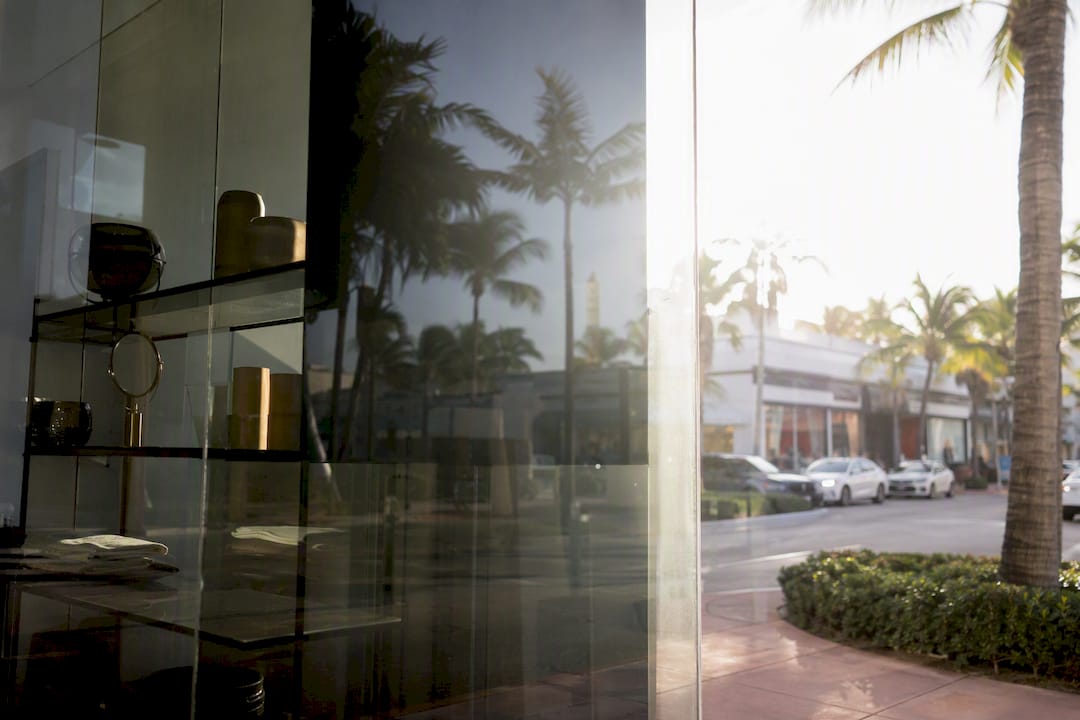
UV light is the primary driver of fading in fabric, printed packaging, and finished wood, and it does its damage even on cloudy days through untreated glass.
Glare reduction is the benefit shoppers notice immediately. Cutting glare makes it easier to see digital displays and POS screens clearly, without the washed-out look that direct sun causes on monitors near the windows.
- Staff working near unshaded glass deal with heat and eye strain that untreated storefronts create
- Excess glare makes window displays harder to see from the sidewalk, not easier
- Comfortable indoor temperatures tend to keep browsing customers in the store longer
Pro Tip: Ask your installer about visible light transmission (VLT) ratings before choosing a film. A film with too low a VLT can darken your display windows more than you want. High-VLT ceramic films cut heat and UV while keeping your storefront bright.
What Merchandise and Interior Damage Does Tinting Prevent?
Fading isn't cosmetic wear and tear, it's a margin problem. UV exposure bleaches apparel on mannequins, yellows printed packaging, and dulls wood flooring and fixtures faster than most owners expect. A storefront full of west-facing glass can visibly fade merchandise within a single retail season.
Selecting a high-VLT protective film preserves interior brightness while cutting the UV exposure responsible for most of that damage.
- Apparel and textiles on display avoid the bleaching that forces early markdowns
- Printed signage and packaging keep their original color longer
- Wood floors, fixtures, and art installations near glass age more slowly
- Identify which displays sit closest to direct sun exposure.
- Prioritize UV-rejecting film on those zones first.
- Track markdown frequency on sun-exposed merchandise before and after installation.
Pro Tip: If you rotate window displays seasonally, ask your installer whether a single high-UV-rejection film across all storefront glass makes more sense than spot-treating individual display windows.
What Security and Privacy Options Does Storefront Film Offer?
Safety and security films work by holding shattered glass together in a single sheet, which slows down forced entry attempts rather than preventing them outright. According to the FBI's home safety guidance, that delay is often what separates a failed break-in from a completed one, since most intruders abandon an attempt that takes too long.
Anti-graffiti film works differently: it's a sacrificial exterior layer bonded to the glass. When vandals etch or spray it, you replace the film rather than the glass pane underneath.
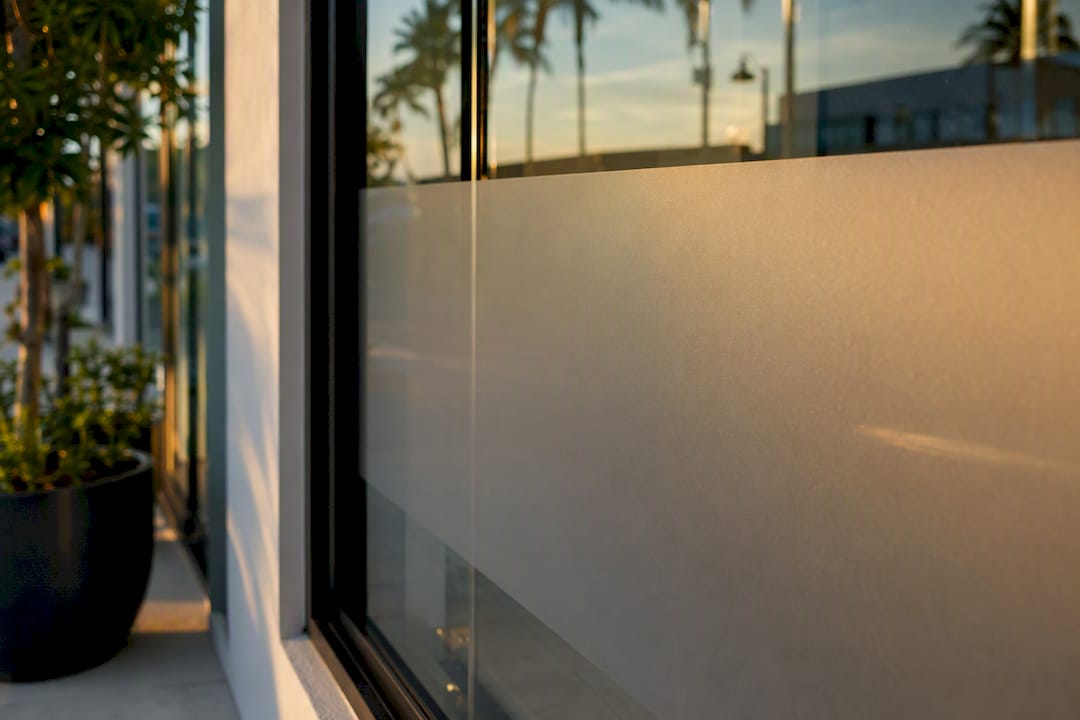
- Frosted film works well for back-of-house windows and storage areas
- Translucent film softens visibility while still letting daylight through
- Reflective film limits daytime visibility into the store without full blackout
- Security film is rated by thickness (measured in mils) and adhesive quality, which determine forced-entry resistance
Pro Tip: When comparing security film quotes, ask for the mil thickness and adhesive type in writing. A 4 mil film and a 12 mil film are not interchangeable, and vague answers here are a red flag.
Can Decorative Film Upgrade Your Storefront's Branding?
You don't need a construction crew to change how your storefront looks. Frosted logos, etched patterns, textured film, and one-way mirror finishes all apply directly to existing glass, often in an afternoon.
Fitting rooms benefit from frosted privacy bands. Seasonal promotions work well with printed decals applied over a clear protective base film. Logo etching on an entry door gives a permanent branded touch without replacing the glass.
Dual-reflective films solve a common worry: owners want daytime privacy or glare control but don't want their storefront turning into a black mirror after dark that hides the merchandise they're trying to sell.
A storefront that looks like a mirror at 2 PM and a blank wall at 8 PM isn't doing its job. Dual-reflective film is built to reject heat during the day while staying visually open once the sun goes down.
Pro Tip: Bring your brand colors and logo files to the installer consultation. Most decorative film shops can match pattern density and tint shade closely enough that the final look is intentional, not improvised.
Which Film Type Fits Which Storefront Application?
Commercial films fall into a handful of categories, and matching the category to your goal matters more than chasing the "best" film in general.
- Solar control / ceramic film — the workhorse for energy savings, UV block, and glare reduction on display windows
- Spectrally selective film — engineered to reject heat while maximizing visible light, ideal where display clarity is critical
- Security film — thicker film focused on forced-entry delay for entry doors and ground-level glass
- Anti-graffiti film — a replaceable sacrificial layer for exposed exterior panes in high-foot-traffic areas
- Decorative film — frosted, etched, or printed film for branding and privacy zones
| Application | Recommended film category |
|---|---|
| Main display windows | Ceramic or spectrally selective |
| Entry doors | Security film |
| Back-of-house windows | Frosted or translucent decorative |
| Exposed street-level glass | Anti-graffiti overlay |
Pro Tip: Tempered and heat-strengthened glass can be vulnerable to thermal stress fracture if you install a high-absorbency film that wasn't matched to the glass type. Always have an installer run a compatibility check before ordering film for existing storefront glass.
What Should You Expect During Installation and What Does It Cost?
Professional installation on a standard storefront typically runs a single business day for most locations, and mobile installers handle it on-site so you're not shutting down for a multi-day job.
- Pre-inspection — the installer checks glass type, existing coatings, and measures square footage.
- Installation — film is cut and applied to each pane, usually completed the same day.
- Cure and inspection — film adhesive cures over the following days, with a final check for bubbles or edge lift.
Cost scales with film performance grade, square footage, and glass complexity (curved or oversized panes cost more to fit). Some installers report energy savings claims as high as 30% to 50% in hot climates with older single-pane glass, though those figures depend heavily on orientation and existing HVAC efficiency.
What Should You Ask a Storefront Tint Installer Before You Sign?
Get these answers before you approve a quote:
- What VLT, UV rejection, and infrared rejection numbers does this specific film carry?
- Has the glass been checked for compatibility with this film's absorbency level?
- Is the installer manufacturer-approved for the brand of film being quoted?
- What does the warranty cover, and for how many years?
- Can you provide a sample swatch before full installation?
- Vague or rounded performance numbers ("blocks most UV") instead of specific percentages
- No mention of a glass compatibility check
- A price significantly below competing quotes with no explanation
- Warranty terms that aren't in writing
Pro Tip: Always request a small sample swatch and hold it up against your actual storefront glass in daylight. Colors and reflectivity look different on a sample card than on a full pane.
What Does the Research Say About Storefront Tint Performance?
The headline numbers hold up across multiple sources: LLumar's manufacturer data shows 5% to 15% annual energy savings with paybacks inside three to five years, and films blocking over 99% of UV rays. Installer case reports from retail projects echo the same pattern: reduced hot spots near window displays and merchandise that holds its color longer.
One consistent theme across manufacturer and installer data is that retail buildings with heavy west or south glass exposure see the fastest and most noticeable results, both in comfort and utility bills.
| Metric | Reported range |
|---|---|
| Annual energy savings | 5% to 15% |
| UV rejection | Up to 99% |
| Typical payback period | 3 to 5 years |
What Installers Actually Check Before They Tint Your Storefront
Every proper install starts with a glass compatibility check, not a sales pitch. Tempered and heat-strengthened storefront glass can crack under thermal stress if the wrong film absorbency is applied, so we test a small area before committing to the full job.
Pro Tip: Ask to see a swatch under your actual storefront lighting, day and night. Dual-reflective films look different after dark, and you want to confirm your displays stay visible to sidewalk traffic once the sun goes down.
Professional installation isn't just about a clean finish. It's what keeps your manufacturer warranty valid and your glass intact.
Ready to Tint Your Storefront? Here's the Next Step
You've seen the range of benefits, energy savings, UV protection, glare control, security, and branding, and the next step is getting your specific storefront measured and quoted. Southmiamitint installs on-site across Miami-Dade, which means no hauling glass to a shop and no closing your doors for days.
Southmiamitint installs manufacturer-grade film including 3M Ceramic IR and Crystalline along with Iviron KoolMax ceramic tint, all backed by warranty support and applied by installers trained on each product line. Because the crew comes to your location, you skip the downtime that shop-based installers require, and scheduling fits around your store hours rather than the other way around.
If you're ready to see real numbers for your storefront, request a mobile tint quote and get a straightforward estimate on cost, film options, and expected energy savings before you commit to anything.
Sources
- LLumar — Commercial window film benefits
- FBI — Home safety / residential burglary (security guidance)
- All Spec Sun Control — Commercial window tint for retail stores