
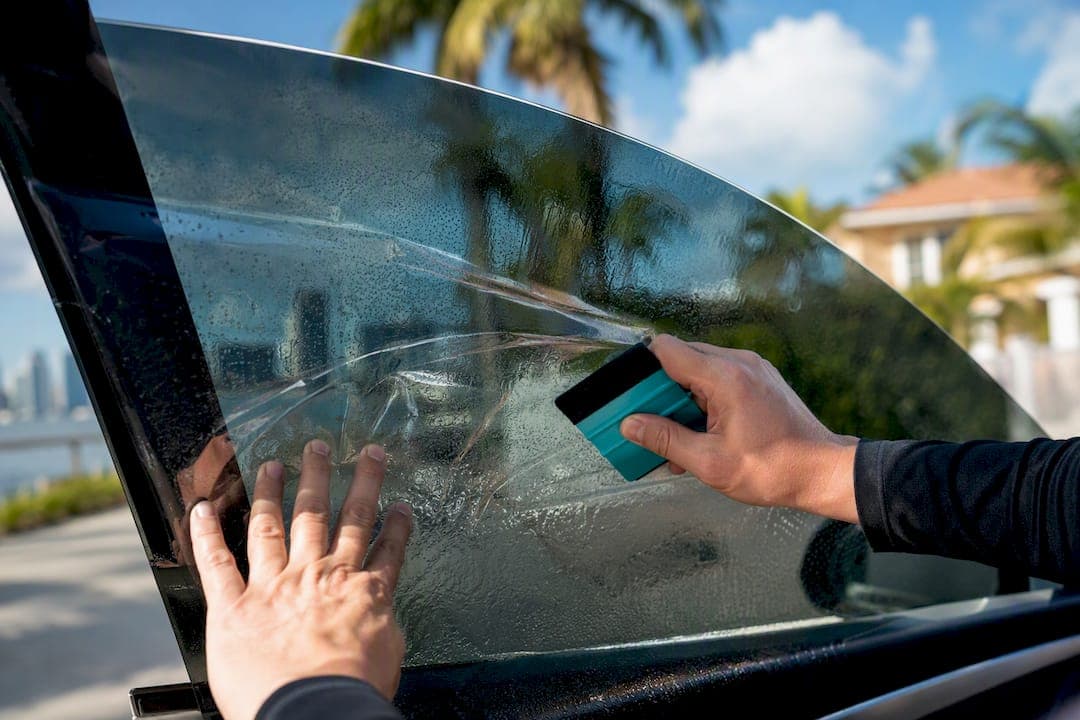
For most Miami drivers, the smart mix is a moderate to medium range of VLT on the front side windows, a darker range on the rear sides and back glass, and a clear or AS-1 strip on the windshield, always checked against your state's limit. Ceramic film matters more than raw darkness here. A high-performance ceramic like 3M Ceramic IR or Iviron KoolMax blocks heat and UV at a lighter, legal shade, so you're not forced to go dark just to stay cool. Before you book, confirm your state's numbers and ask for a post-install VLT meter reading in writing.
TL;DR:
- A ceramic film with high infrared rejection, such as 3M Ceramic IR or Iviron KoolMax, provides better heat and UV protection at lighter, legal VLT levels than dyed films.
- State laws vary widely, with front side windows typically requiring the highest VLT percentages, and a post-installation VLT measurement ensures compliance.
- After installation, waiting 48 to 72 hours for curing is essential, and using non-ammonia cleaners helps maintain the film's integrity.
- Very dark VLT films (20% or lower) significantly impair night visibility and are risky for night driving, especially on dim or rainy roads.
- Requesting a calibrated meter reading and viewing the film's technical specifications before installation can prevent legal issues and ensure optimal heat rejection.
Table of Contents
- What Shade Is Needed for Mobile Tint, and How Does VLT Work?
- How Do Tint Laws Affect My Shade Choice?
- Why Ceramic Film Beats Dyed Film at the Same Shade
- Is Dark Tint Safe for Night Driving?
- What Should I Expect After a Mobile Tint Install?
- Balancing Shade, Safety, and Miami Comfort
- Get a Meter-Verified Mobile Tint Install in Miami-Dade
- Sources
- FAQ
What Shade Is Needed for Mobile Tint, and How Does VLT Work?
Visible Light Transmission, or VLT, measures the percentage of light that passes through your window and film combined. Lower VLT means darker glass. A very low VLT film blocks most visible light and appears very dark, while a high VLT film lets most light through and looks barely tinted.
This is the number every state law and every tint shop actually cares about, not the film's marketing name. When you're figuring out the shade for your vehicle, VLT is the language you need to speak.
Here's how the common levels break down in real-world use:
- A very dark VLT around limo tint levels offers nearly opaque privacy, often restricted on front windows and more common on rear glass where allowed.
- Darker low VLT shades provide strong privacy and glare reduction, popular for rear windows and SUVs desiring seclusion.
- Moderate VLT levels serve as a balanced daily-driver choice, offering heat and glare relief without a blacked-out look.
- Higher VLT levels offer a lighter smoke appearance with subtle glare reduction, suited for those preferring a factory-tint look.
- Very high VLT levels appear nearly clear and are mostly used for UV protection on windshields or front windows where laws limit darkness.
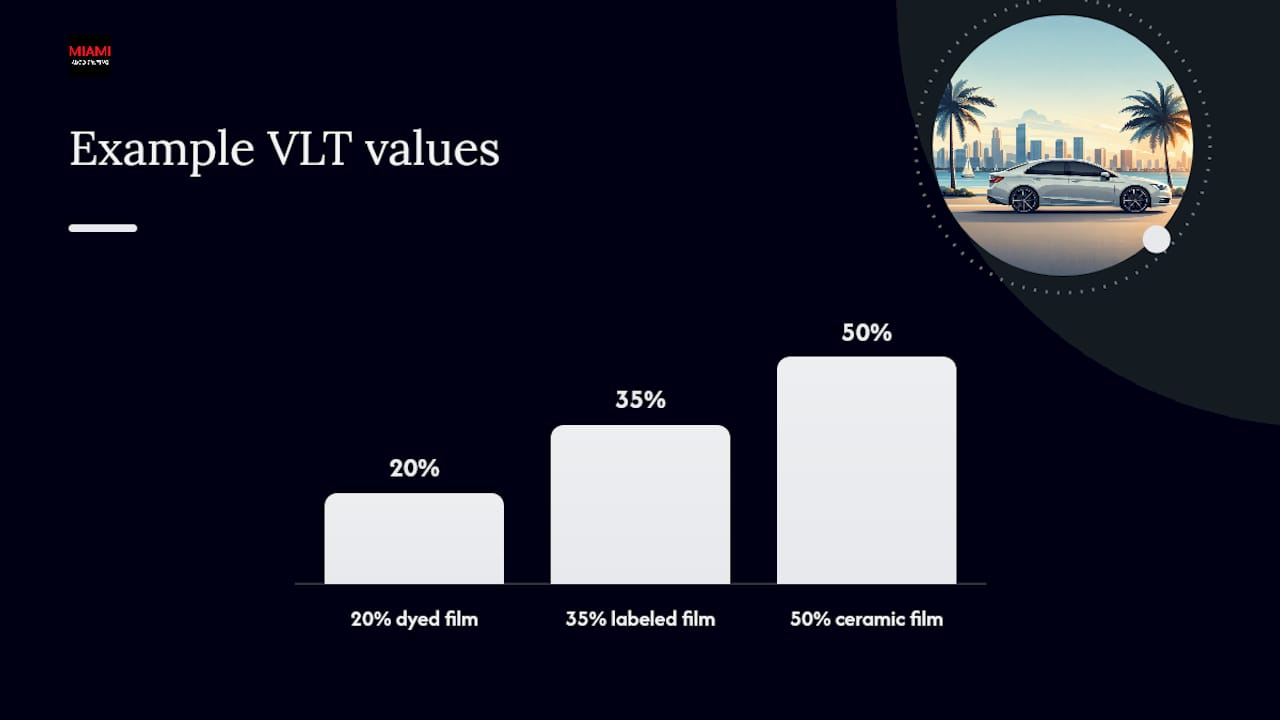
Darker film feels cooler because it cuts glare and blocks the sun's visible glare from your eyes, but perceived heat relief and actual heat rejection aren't the same thing. A cheap dyed film at 20% can still let significant infrared heat through, while a quality ceramic film at 50% can outperform it. Film technology, not just darkness, drives comfort.
One detail catches new customers off guard: your factory glass already blocks some light before film goes on. A film labeled "35%" doesn't produce a 35% final reading, because it multiplies against your glass's existing transmission. That's why a reliable VLT check after installation matters more than the sticker on the film roll.
How Do Tint Laws Affect My Shade Choice?
Every state sets its own VLT floor, and the rules are rarely the same window to window. Front side windows almost always carry the tightest restriction, since officers need a clear view into the driver's seat. Rear side windows and the back glass typically allow darker film, sometimes significantly darker. The windshield usually permits only a narrow AS-1 strip along the top, though a small number of states now allow clear, high-VLT ceramic film across the whole windshield.
State tint laws vary widely, and medical exemptions exist in most states for documented light-sensitivity conditions, letting drivers legally run darker film than the standard cap allows.
Before you schedule a mobile install, take these steps:
- Look up your exact state's VLT limits on an official DMV or state legislature site.
- Note your state's allowed percentages for each window type and bring this information to your installer.
- Ask the installer to meter your finished tint after installation and provide a written reading.
- Request any compliance documentation your state may offer.
- If you qualify for a medical exemption, carry the appropriate documentation.
Compliance isn't just about avoiding a stop. An illegal tint job can complicate an insurance claim or knock down your resale value if a buyer's mechanic flags it during inspection.
Why Ceramic Film Beats Dyed Film at the Same Shade
Ceramic films built with nano-ceramic particles, like 3M Ceramic IR, 3M Color Stable, and Iviron KoolMax, reject far more infrared heat and UV radiation than standard dyed film at an identical VLT. That's the whole case for choosing ceramic when you're stuck picking a lighter, legal front-side shade. You get the comfort without breaking the law.
Ceramic film's clarity advantage also matters for daily driving. Dyed film can look flat or purple over time and doesn't reject heat as efficiently, while ceramic stays optically sharp and doesn't interfere with radio, GPS, or phone signal the way older metalized films sometimes did.
When you're comparing quotes, ask to see the actual spec sheet for each film, not just a sample swatch. Look for three numbers:
- IR rejection percentage: How much infrared heat the film blocks, which drives cabin comfort more than VLT does.
- UV block percentage: Quality ceramic films block 99% or more of UV rays, protecting your skin and your dash from sun damage.
- Visible light transmission: The legal number, confirmed by a meter reading, not the marketing label.
If your priority is staying at a lighter legal front-side VLT while still cutting Miami's heat load, a ceramic upgrade is the more effective lever than chasing extra darkness.
Pro Tip: Ask your installer to show you the film's spec sheet before the van shows up, and get their promised post-install VLT reading in writing. A shop confident in its film has no reason to skip either step.
Is Dark Tint Safe for Night Driving?
Dropping your front side VLT to 20% or lower cuts more than glare. It reduces how much light reaches your eyes at night, which becomes a real problem in rain, unlit rural roads, or dim parking garages. Very dark film can turn a routine lane change into a guessing game after sunset.
Run a simple test after install, before you decide you're happy with the shade:
- Sit in the driver's seat at night and check mirror visibility and blind spots.
- Practice a few parking maneuvers in a garage or dim lot.
- Have a passenger sit in the back and check how much they can see looking outward from different angles.
If you drive at night frequently, stick to 35 to 50% VLT on the front sides. If night driving is rare for you, 25 to 35% still works and gives you more heat and glare control during the day.
What Should I Expect After a Mobile Tint Install?
Freshly installed film needs time to cure before you touch it. Most mobile installers recommend waiting a couple of days before rolling your windows down or washing them, allowing the adhesive to cure fully.
Once cured, stick to non-ammonia glass cleaners and a soft microfiber cloth. Ammonia-based cleaners can break down the film's adhesive over time, and anything sharp near the edges risks lifting the film prematurely, similar to the careful glass-cleaning approach recommended for maintaining clear auto glass generally.
Watch for these warning signs in the weeks after install:
- Bubbling anywhere on the film, which signals trapped moisture or poor adhesive application.
- Edges lifting or peeling away from the glass frame.
- A milky or hazy patch that doesn't clear up after the full cure period.
Any of these should be corrected under your installer's warranty at no extra cost.
Pro Tip: If a shop won't commit to a warranty against bubbling or lifting, treat that as a red flag before you book, not after.
Balancing Shade, Safety, and Miami Comfort
Most Miami drivers I talk to land on the same formula once they understand the tradeoffs: ceramic film at a mid-range front VLT, paired with darker ceramic on the rear where state law allows it. That combination handles Florida's sun load without sacrificing a clear view during a nighttime drive home on the Palmetto.
What surprises people is how much the film spec sheet matters compared to the number on the sticker. Two films can carry the same VLT and perform completely differently on a 95 degree afternoon. I'd rather see a driver pick a lighter, fully legal shade with strong IR rejection than max out the darkness and still feel the dashboard baking.
If you want your shade choice verified rather than guessed at, that's what a proper mobile install should include as standard.
— Jose
Get a Meter-Verified Mobile Tint Install in Miami-Dade
You can find services that offer calibrated meters and film spec sheets for ceramic tint options including 3M Ceramic IR, 3M Color Stable, and Iviron KoolMax films at your location.
Mobile ceramic tint installs start from $249, and every job comes with a straightforward final VLT reading so you know exactly what you're driving with, not just what the film label claims. If you're weighing 3M against other ceramic options, our 3M film page breaks down the specs side by side. Ready to lock in a shade that fits your state's limit and Miami's heat? Request your mobile quote and ask for a post-install meter reading in writing before the van leaves.
Sources
- How to Pick the Right Window Tint Shade | VLT Percent Guide
- The Ultimate Guide to Car Window Tint Levels in 2026: Choosing the Perfect Shade for Your Ride | TintFinder Blog
FAQ
What VLT Is Best for Heat Reduction in Miami?
A ceramic film in the 35 to 50% range on front windows, paired with darker ceramic on the rear where legal, gives strong heat and UV protection without sacrificing night visibility.
Are Ceramic Tints Legal in Every State?
Ceramic film itself is legal everywhere; what matters is the final VLT percentage, which must fall within your state's specific limit for that window.
How Do I Confirm My Tint's Actual VLT?
Ask your installer for a calibrated meter reading after the film cures, since factory glass combines with film to produce a final number different from the film's nominal rating.
How Long Does Mobile Tint Need to Cure?
Most installers, including mobile services, recommend waiting 48 to 72 hours before rolling windows down or washing them to let the adhesive fully set.
Can I Get a Darker Tint Than My State Allows?
Only with a documented medical exemption, which most states offer for light-sensitivity conditions and which your installer or DMV can help you verify.