
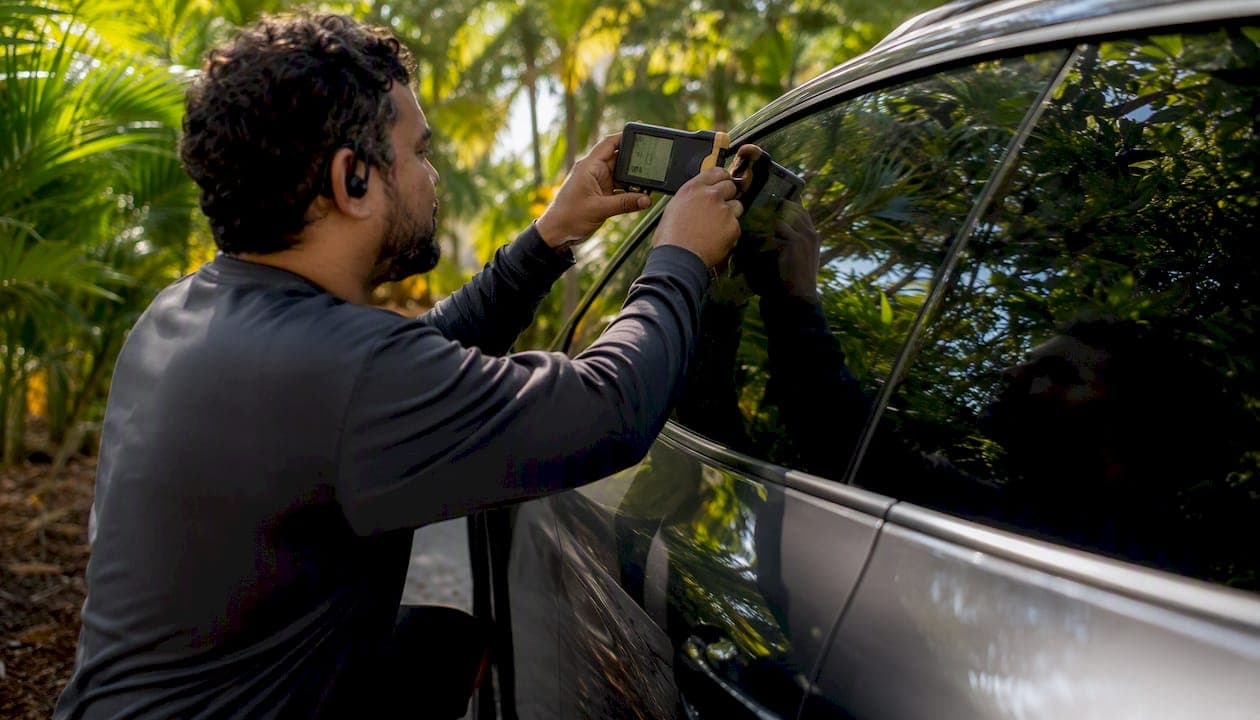
Tint opacity, measured as Visible Light Transmission (VLT), is the percentage of visible light that passes through your combined glass and film system. Lower VLT equals a darker tint. Here is how the scale looks in practice:
- Very dark, near-opaque tint known as "limo tint"
- Dark tint providing strong privacy
- Medium tint commonly used for rear windows
- Light tint similar to factory clear glass
For Miami-Dade owners, two numbers matter most. First, Florida law requires front side windows to allow at least 28% VLT. Second, ask any installer for a lab-verified TSER (Total Solar Energy Rejection) rating on the film, because darkness alone does not determine how much heat a film blocks.
Key Takeaways
Choosing the right tint means matching VLT to Florida's legal minimums and your night-driving habits, then selecting a ceramic film with verified TSER for real heat control.
| Point | Details |
|---|---|
| VLT sets darkness and legality | Florida requires front side windows at ≥28% VLT; a ±3% tolerance applies to enforcement measurements. |
| TSER beats darkness for heat | A lighter ceramic film with lab-verified TSER outperforms a dark dyed film on heat rejection. |
| Measure the full system | Final VLT combines factory glass and film; always get a combined reading, not just the film label. |
| Rear vs. front VLT choices | Rear windows can go darker (≥15% for passenger cars, ≥6% for multipurpose vehicles) without the same night-visibility risk as front windows. |
| Southmiamitint mobile service | On-site measurement, 3M Ceramic IR, 3M Color Stable, and Iviron KoolMax installation with compliance sticker, starting from $249. |
Table of Contents
- How tint opacity interacts with other window treatments and coatings
- What a pro sees when measuring tint opacity on-site
- Southmiamitint brings mobile tinting and compliance to your door
- Useful sources for VLT, TSER, and Florida compliance
How tint opacity interacts with other window treatments and coatings
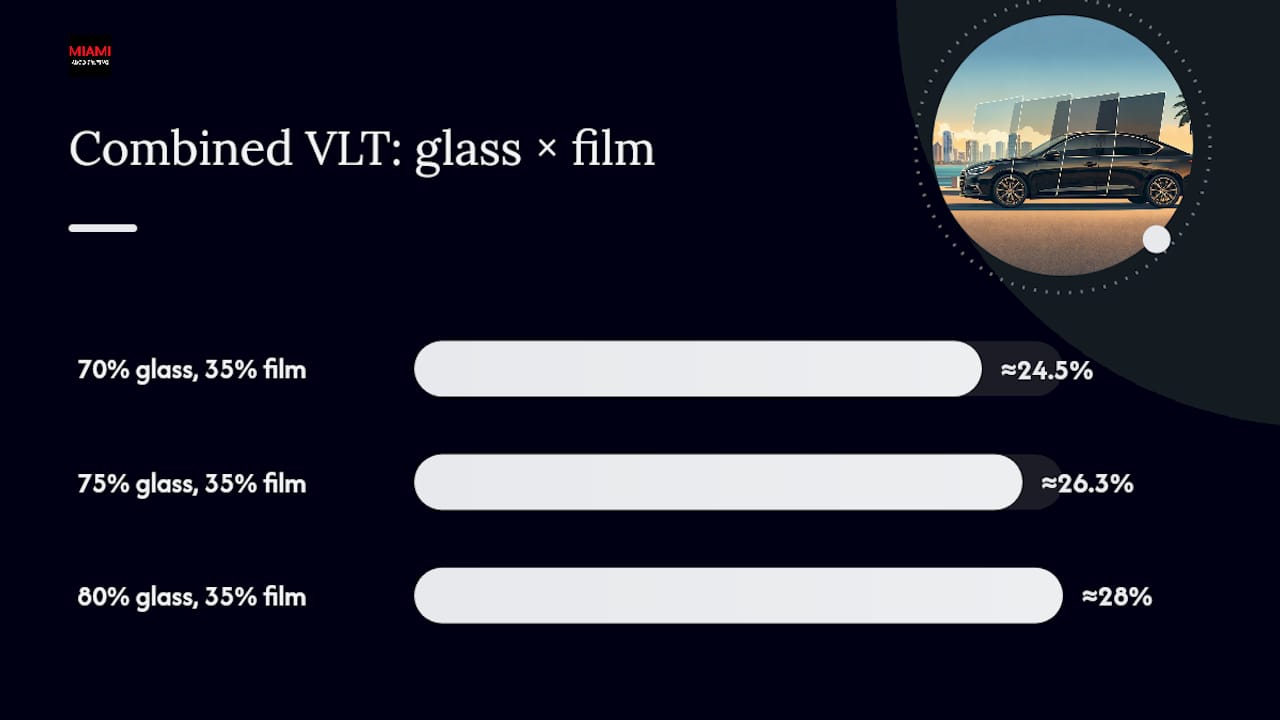
Your window's final VLT is never just the film's number. It is the combined result of the factory glass VLT multiplied by the film VLT. Most factory glass sits around 70–80% VLT, so a 35% film on that glass produces a final reading closer to 25–28%. That is why installers measure the combined glass-plus-film system with a spectrophotometer or optical meter rather than relying on the film's label alone.
Factory "privacy glass" found on many SUV rear windows looks dark but is pigment-infused for appearance. It typically provides little thermal or UV protection. Pairing a ceramic film over factory privacy glass adds real heat and UV control without necessarily darkening the window further; see this Matte paint ceramic coating: the UK owner's guide for related insights on ceramic technology. For vehicles or homes that already have a low-e coating or solar control glass, adding a film changes the combined VLT and TSER, so a professional baseline measurement before installation is the right starting point.
UV rejection and heat rejection are also separate metrics. Quality ceramic films block close to 99% of UV, but UV is a small share of total solar energy. TSER, measured under ASTM E972 and ISO 9050 standards, captures the full picture, including infrared heat. A lighter ceramic film with a high TSER rating will keep your interior cooler than a dark dyed film with no verified TSER data. Ceramic films consistently outperform dyed films on heat rejection at equivalent or lighter VLT levels.
Pro Tip: Request the product datasheet for any film before you commit. If the TSER figure is not lab-verified under ISO 9050 or ASTM E972, treat the heat-rejection claim as unverified marketing.
What a pro sees when measuring tint opacity on-site
Measuring tint opacity correctly means measuring the whole system. Pros use a calibrated spectrophotometer or point meter across the visible spectrum (roughly 380–700 nm) and apply a ±3% enforcement tolerance recognized under Florida's statute. A film labeled 28% VLT on a piece of factory glass that reads 75% VLT can produce a combined final reading of 21%, which would be a violation on a front-side window.
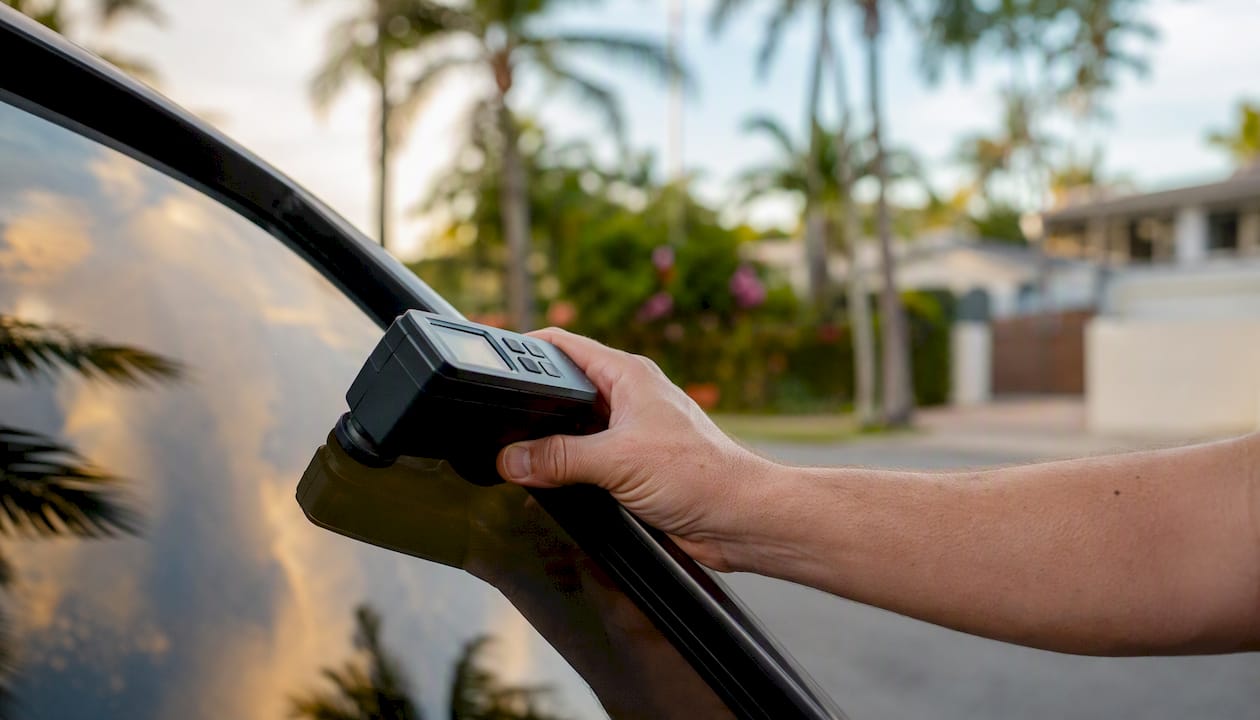
Very dark films with low visible light transmission reduce night visibility noticeably. For drivers who frequently travel at night, a medium tint on front-side windows balances privacy and safety better than darker options; rear windows can be darker without the same safety concerns. A mobile inspection covers the factory glass VLT baseline, a film sample demo with TSER and IRR data, an install time estimate, and post-install compliance sticker documentation. VLT controls privacy and brightness; TSER and IRR determine actual heat performance, and a premium ceramic film at 50% VLT can outperform a dark dyed film at 20% on heat rejection.
Southmiamitint brings mobile tinting and compliance to your door
Skip the shop wait. Southmiamitint's mobile service comes to your home, office, or parking spot anywhere in Miami-Dade, measures your factory glass baseline on arrival, and installs your chosen film with a post-install VLT reading and compliance sticker included.
Three film families cover every need. 3M Ceramic IR and 3M Color Stable deliver lab-verified IR rejection and long-term color stability. Iviron KoolMax ceramic tint offers strong TSER performance at competitive price points. All three meet Florida's VLT requirements when installed correctly, and all carry manufacturer warranties. Ceramic mobile tint starts from $249. To book, have your vehicle type, preferred VLT target, and any medical exemption documentation ready, then request a quote online or by phone.
Useful sources for VLT, TSER, and Florida compliance
Use these references to verify legal limits, check testing standards, and evaluate film claims before booking an installer.
- Florida VLT law: FloridaCourtRules — Florida Window Tint Law covers front and rear minimums, vehicle-type differences, and exemptions in plain language.
- Verified Florida statute figures: — SunGuard's Florida tint data page transcribes the 2025 statute numbers: front side ≥28% VLT, rear side ≥15% (passenger cars) or ≥6% (multipurpose vehicles), ±3% tolerance.
- Testing standards: ASTM E972 covers solar heat and performance testing for films; ISO 9050 covers optical and solar properties of glass and film. Request lab reports citing both when evaluating premium films.
- Tint percentage and measurement: Southmiamitint's tint percentage guide explains combined glass-plus-film VLT calculations step by step.