
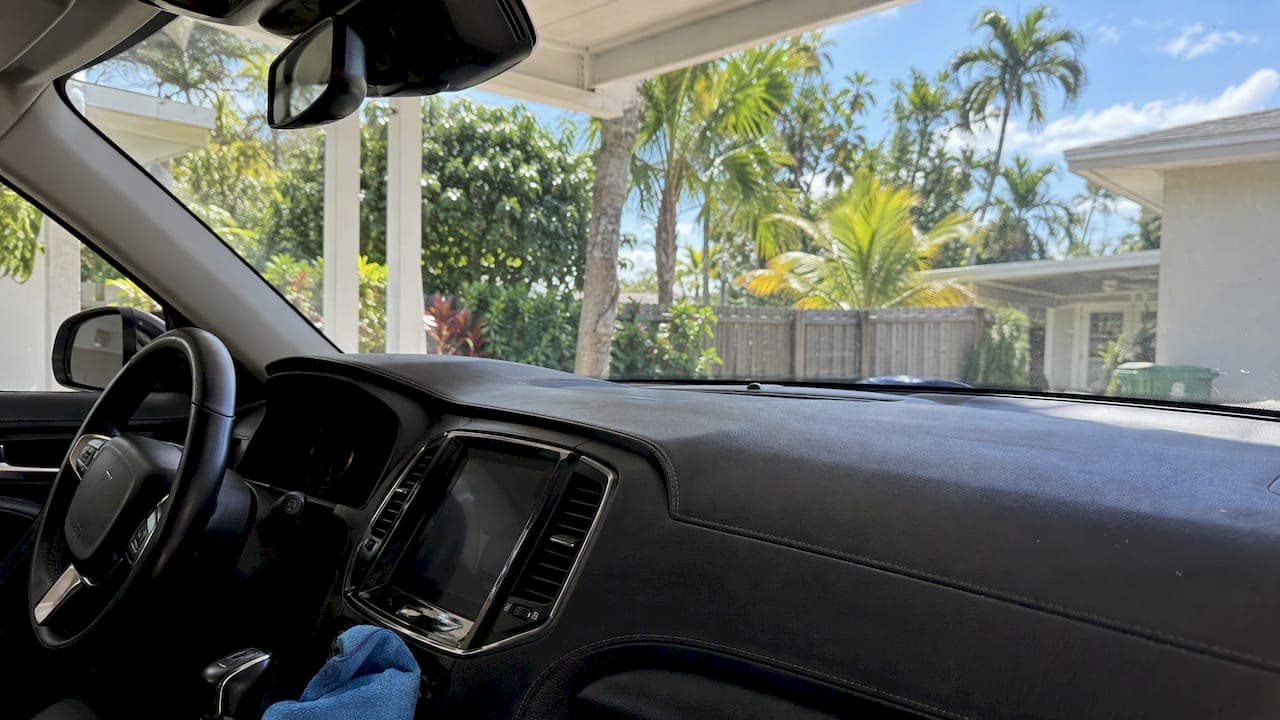
A quality UV and infrared-rejecting film cuts down the solar energy that dries out and fades leather, and the windshield is the glass to treat first. Tint works best as one layer in a bigger plan: pair a ceramic or clear IR/UV film with a sunshade and a simple leather-care routine. If you want one low-effort fix that protects your dash for years, start with a windshield-focused clear IR/UV film from an installer who can show you real specs.
TL;DR:
- Windshield film offers the highest UV and IR rejection, with some options blocking up to 99.9% of UV and 95% of infrared energy, protecting the dashboard effectively.
- Matching film types across all windows, especially on the windshield and side windows, ensures consistent protection and avoids gaps in UV and heat rejection.
- Combining tint with physical barriers like sunshades, dash covers, and shaded parking significantly improves long-term dashboard preservation.
- Regular leather cleaning and applying UV-rated protectants monthly during summer help maintain leather health despite solar damage reduction from tint.
- Always verify specific film specs such as TSER, UV rejection, and whether the film is metal-free before installation to ensure compliance and system safety.
Table of Contents
- How window film protects dashboard leather
- Which windows to treat first, and which film type fits
- Layering tint with sunshades, dash covers, and smarter parking
- Keeping leather healthy: cleaning and protectant routine
- Installation, safety, and legal checklist before you book
- What a mobile tint visit actually looks like
- When tint earns its cost for your dashboard
- Get your dash protected with South Miami Tint
- FAQ
- Sources
How window film protects dashboard leather
Three kinds of solar energy hit your dashboard every time you park in the sun. Ultraviolet (UV) light breaks down the oils and dyes in leather, which is what causes fading and surface cracking. Infrared (IR) energy carries heat, and it is the main reason your dash gets hot enough to warp or dry out. Together, UV and IR make up most of what's measured as total solar energy.

Manufacturer data gives a sense of what good film can do. 3M Ceramic IR film can reject up to 99.9% of UV light and up to 95% of infrared energy, though the exact number depends on the film shade and the glass it's paired with.
When you're comparing films, ask about these specs instead of relying on a vague "heat rejection" claim:
- UV rejection: how much ultraviolet light the film blocks, usually the highest and most consistent number across films.
- TSER (Total Solar Energy Rejected): the broadest measure of how much overall solar energy the film keeps out.
- IRR or IRER: infrared rejection, measured two different ways, so ask which one backs up a product's advertised percentage.
- VLT (Visible Light Transmittance): how much visible light passes through, which affects both your view and legal compliance.
Which windows to treat first, and which film type fits
Your windshield takes the most direct, consistent sun exposure of any glass in the car, which makes it the single biggest factor in dashboard heat and UV damage. If you can only treat one piece of glass, treat that one.
For the windshield, a clear or ultra-clear film is usually the better call. 3M Ultra-Clear Solar Film is built to block UV and reject infrared energy while keeping visible light transmission above 90%, so it protects the dash without darkening your view or risking a legal issue. Side and rear windows have more room for darker ceramic or carbon films, since visibility rules are typically less strict there.
A few practical notes when choosing:
- Ceramic IR films tend to offer the strongest heat rejection with the least color distortion.
- Carbon films cost less than ceramic but usually reject less infrared energy.
- Clear solar films protect without changing the look of your glass at all, which matters most on the windshield.
- If your car has a heads-up display or windshield-mounted sensors, ask your installer about metal-free film and clear zones that keep those systems working correctly, a point our guide to sensor-safe ceramic tint covers in more detail.
Matching film type across windows keeps the look consistent and avoids gaps in protection, so plan the whole car at once rather than one window at a time.
Layering tint with sunshades, dash covers, and smarter parking
Tint reduces the solar energy coming through your glass, but it doesn't stop every ray, and it won't help once the car is parked for hours in direct sun without backup. Combining a few low-cost habits with tint gives your dash the most reliable protection.
- Use a reflective sunshade every time you park outdoors for more than a few minutes. It blocks the sun before it reaches the dash at all.
- Add a fitted dash cover, sometimes called a DashTex-style cover, which blocks glare and adds a physical barrier against both heat and UV.
- Choose shaded parking when you have the option, and time errands to avoid parking in direct afternoon sun.
- Treat tint as your base layer, then add the shade and cover habits on top for the days your schedule doesn't allow for ideal parking.
This layered approach holds up better over years of daily use than any single product on its own, a point backed up by consumer guidance on preventing dashboard cracking.
Keeping leather healthy: cleaning and protectant routine
Tint and shade reduce the damage reaching your dash, but regular leather care still matters. Start by cleaning before you ever apply a protectant, since trapping dirt or oil under a product can cause more harm than leaving the surface alone.
- Test any cleaner on a small hidden spot first.
- Use a mild, leather-safe cleaner and a microfiber towel, never a stiff brush.
- Pick a protectant that lists UV protection on the label, not just shine or moisture.
- Skip silicone-heavy or oily dressings, since they often create glare on the windshield and don't actually block UV.
- Prefer a satin or matte finish over a glossy one.
Pro Tip: Apply a UV-rated leather protectant monthly during peak summer months, and check your owner's manual for any specific leather-care guidance before trying a new product.
If your dash already shows deep cracking or heavy fading, a professional detailer who specializes in leather restoration will get better results than a drugstore product applied at home.
Installation, safety, and legal checklist before you book
Before any film goes on your windshield, check your state's visible light transmittance (VLT) rules. Limits vary widely, and a film that's legal in one state may not be in another.
Professional installation matters for reasons beyond neat edges. A qualified installer measures the finished glass-and-film combination, matches factory-tinted windows for a consistent look, and knows how to work around HUDs and sensors without blocking them.
Before you book, ask:
- What is the measured TSER and UV rejection for this specific film, not just the advertised range?
- Can you see the film's brochure or tech sheet?
- Is the film metal-free, so it won't interfere with GPS, radio, or electronic toll systems?
- What warranty comes with the installation?
NHTSA's interpretation guidance lays out Standard No. Those federal rules apply differently to manufacturers and repair businesses than to individual vehicle owners, so always confirm your own state's tint laws before scheduling an install.
What a mobile tint visit actually looks like
We install 3M Ceramic IR, 3M Color Stable, and Iviron KoolMax ceramic films directly at your home or office, along with windshield-specific clear IR/UV options. Our posts on ceramic versus carbon tint and how tint protects leather seats cover the same questions we get asked on every job.
A typical visit starts with a walk-around of your vehicle, a discussion of your priorities (heat, UV, privacy, or all three), and a quote before any film is cut. Ask to see the film's spec sheet so you know exactly what you're getting.
When tint earns its cost for your dashboard
If your car sits outdoors most days, the simplest rule is: windshield film first, a monthly UV protectant second, and a sunshade whenever you park in direct sun. That combination handles the bulk of the damage with minimal ongoing effort.
If your car mostly lives in a garage or covered spot, tint matters less, and a cover or shade alone may cover your needs at a lower cost.
— Jose
Get your dash protected with South Miami Tint
We handle the whole process for you, starting with a free online quote and a mobile visit at your home or office. For dashboard protection specifically, our Windshield Tint service starts at $150, and a Full Car + Windshield package starts at $500 if you want every window covered in one visit.
For readers who want the strongest UV and IR rejection available, our 3M Window Tinting page covers both Ceramic IR and Crystalline options, including 3M Color Stable film for long-term color consistency. Before you book, we recommend:
- Requesting the TSER and UV spec sheet for the exact film you're considering.
- Asking for metal-free film if you have HUD, GPS, or toll-sensor concerns.
- Confirming warranty terms and checking your local VLT rules so your install stays road-legal.
Call us or fill out our online quote form to check mobile availability in your area and get a straightforward price before any work begins.
FAQ
How can I protect my car dashboard from sunlight?
The most effective combination is a UV and IR-rejecting windshield film, a reflective sunshade when parked, and a UV-rated leather protectant applied regularly. Parking in shade whenever possible adds another layer of protection with no cost at all.
Can a dash cam see through 5% tint?
Many installers recommend a lighter film or a clear zone near the camera to keep footage usable.
What can I put on my leather car seats to protect them?
Choose a leather protectant that specifically lists UV protection on the label, and apply it after cleaning with a mild, leather-safe cleaner. Avoid glossy, silicone-heavy dressings, since they can create glare and often lack real UV protection.
Can I use Armor All Protectant on leather car seats?
Check the specific product label, since some Armor All formulas are designed for leather and list UV protection, while others are general-purpose dressings not meant for leather surfaces. When in doubt, pick a product labeled specifically for leather with UV protection and test it on a small hidden area first.
Is window tint alone enough to protect a leather dashboard?
Tint reduces the UV and infrared energy reaching your dash, but it works best paired with a sunshade, a fitted dash cover, and routine leather care. Relying on tint by itself still leaves your dashboard exposed during long periods of direct, intense sun.
Sources
- 3M™ Automotive Window Film Ceramic IR series (product page / datasheet)
- NHTSA interpretation on aftermarket tinting and glazing standards
- How to prevent car dashboard from cracking (SlashGear)