
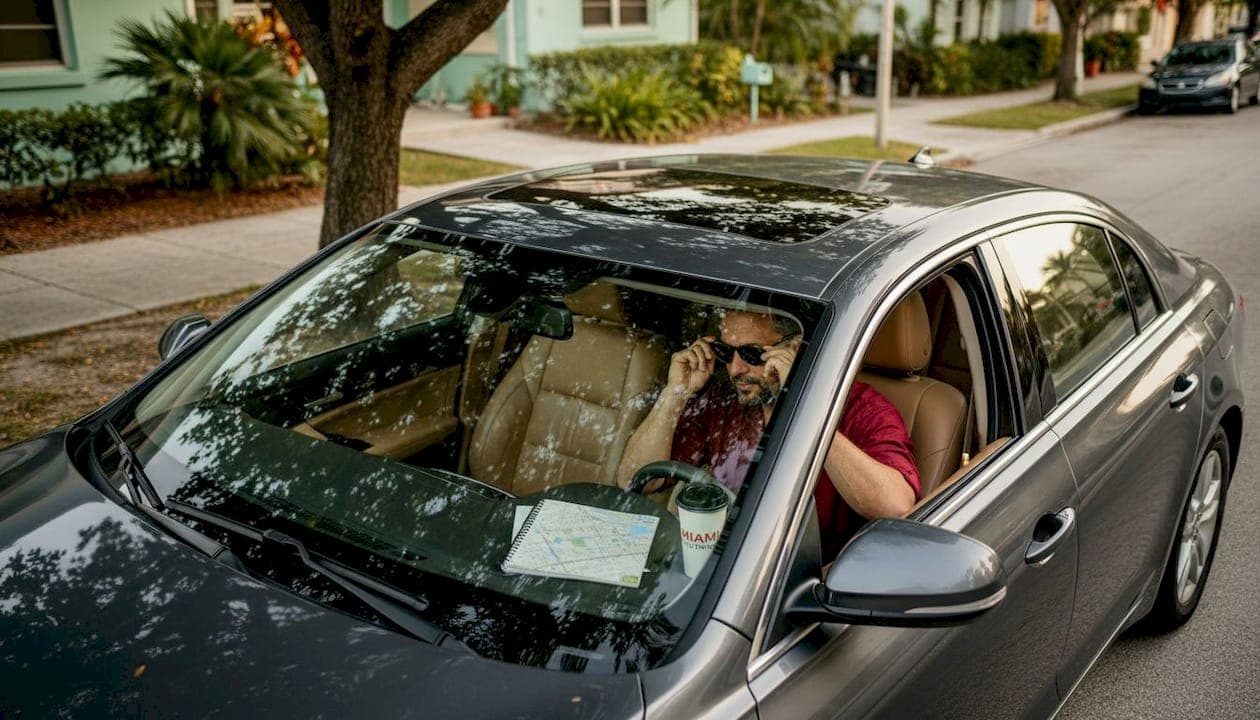
South Florida's sun doesn't just feel intense — it actively damages your car's interior every single day. Leather cracks, dashboards warp, and upholstery fades at a rate that drivers in cooler climates simply never experience. A lot of Miami-Dade car owners assume any tint handles this, slap on a cheap dyed film, and wonder years later why their interior looks ten years older than it should. The truth is that film quality makes an enormous difference, and understanding what separates a basic tint from a truly high-performance option is the key to protecting your comfort, your interior, and your car's long-term value.
Table of Contents
- What makes high-performance tint different?
- UV and heat protection: The Miami advantage
- How premium tint preserves your vehicle's appearance and value
- Aesthetics and clarity: More than just "darker" windows
- Durability and long-term value: How quality pays off
- Our take: Why high-performance tint isn't just for luxury cars
- Ready to upgrade? Explore Miami's best high-performance tint
- Frequently asked questions
Key Takeaways
| Point | Details |
|---|---|
| Superior UV blocking | High-performance tint can block up to 99 percent of UV rays, protecting your car’s interior from sun damage. |
| Miami-ready heat rejection | Advanced ceramic tints reject infrared energy, keeping your car much cooler under Miami’s intense sun. |
| Long-lasting quality | Premium tints maintain their look and performance for many years, reducing the need for replacements. |
| Enhanced comfort and style | You get both optimum visibility and a modern look without resorting to excessively dark windows. |
| Investment in car value | Preventing fading and cracking helps preserve your vehicle’s appearance and resale value. |
What makes high-performance tint different?
After explaining why a basic tint isn't enough, let's look at how high-performance tints set themselves apart.
Not all window films are created equal, and the gap between entry-level dyed films and premium options is wider than most people expect. Standard dyed tints work by absorbing solar energy, which sounds fine in theory. The problem is that they absorb heat and then radiate it inward. They also degrade quickly under constant UV exposure, meaning they start fading, bubbling, and peeling within a few years, especially in Miami.
High-performance films use fundamentally different materials. Ceramic and nano-ceramic tints contain microscopic ceramic particles that block infrared and UV radiation without absorbing heat the same way. Carbon tints use carbon layers for excellent color stability and heat rejection. High-performance automotive window tint is specifically engineered to add UV protection and prevent interior fading and degradation, not just dim your windows.
The material science here matters directly for Miami conditions. High heat, daily intense sun, and salt air require a film that can take punishment without breaking down. High-performance films are engineered to last longer and resist fading, peeling, and bubbling far better than standard options.
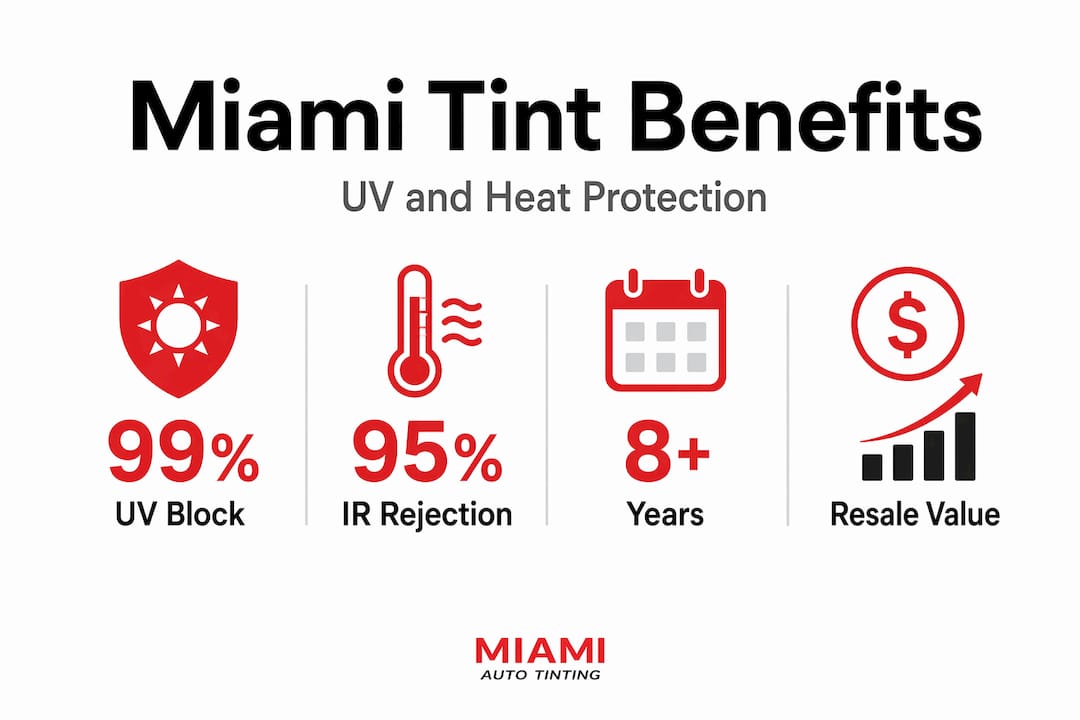
Here's a quick side-by-side comparison:
| Feature | Standard dyed tint | High-performance (ceramic/carbon) |
|---|---|---|
| UV rejection | Up to 50-60% | Up to 99% |
| Infrared heat rejection | Minimal | Up to 95%+ |
| Color stability | Fades within 2-4 years | Stable for 8+ years |
| Bubbling/peeling risk | High over time | Very low |
| Visibility clarity | Sometimes hazy | Crystal clear |
| Warranty | Short or none | Often lifetime |
Key advantages of high-performance tints include:
- Superior UV blocking that protects both passengers and interior surfaces
- Infrared heat rejection that keeps the cabin temperature comfortable
- No signal interference with GPS, cell, or radio signals (unlike metalized films)
- Long-term color stability that keeps your windows looking uniform and clean
- Enhanced glare reduction for safer, more comfortable driving
Pro Tip: High-performance ceramic tints actually improve visibility by reducing glare without making your windows excessively dark. You get better eye comfort AND better protection at the same time. Learn more about specific ceramic tint benefits and why Miami drivers are switching from standard films.
UV and heat protection: The Miami advantage
Having laid out what makes high-performance tint unique, let's focus on why protection is so important in Miami's sunny climate.
Miami-Dade sits at roughly 25 degrees north latitude, close enough to the tropics that UV intensity here is significantly higher than most of the continental United States. The UV Index in Miami regularly hits 10 or 11 during summer months, which is classified as "Very High" to "Extreme." Your car's windows filter some UV naturally, but standard glass and cheap film leave a lot of harmful radiation getting through.
There's an important distinction car owners often miss: visible light transmission (VLT) tells you how dark the window looks. It tells you almost nothing about how much UV or infrared radiation the film blocks. You can have a very light-looking film that still blocks 99% of UV. Conversely, a very dark cheap film might only block 60% of UV. Darkness and protection are not the same thing.
High-quality films can block up to 99% of harmful UV rays, which is critical for protecting upholstery and interior surfaces from UV-induced fading and cracking. Meanwhile, ceramic and nano-ceramic tints are specifically chosen for their infrared and solar heat rejection, keeping the cabin noticeably cooler and reducing glare.
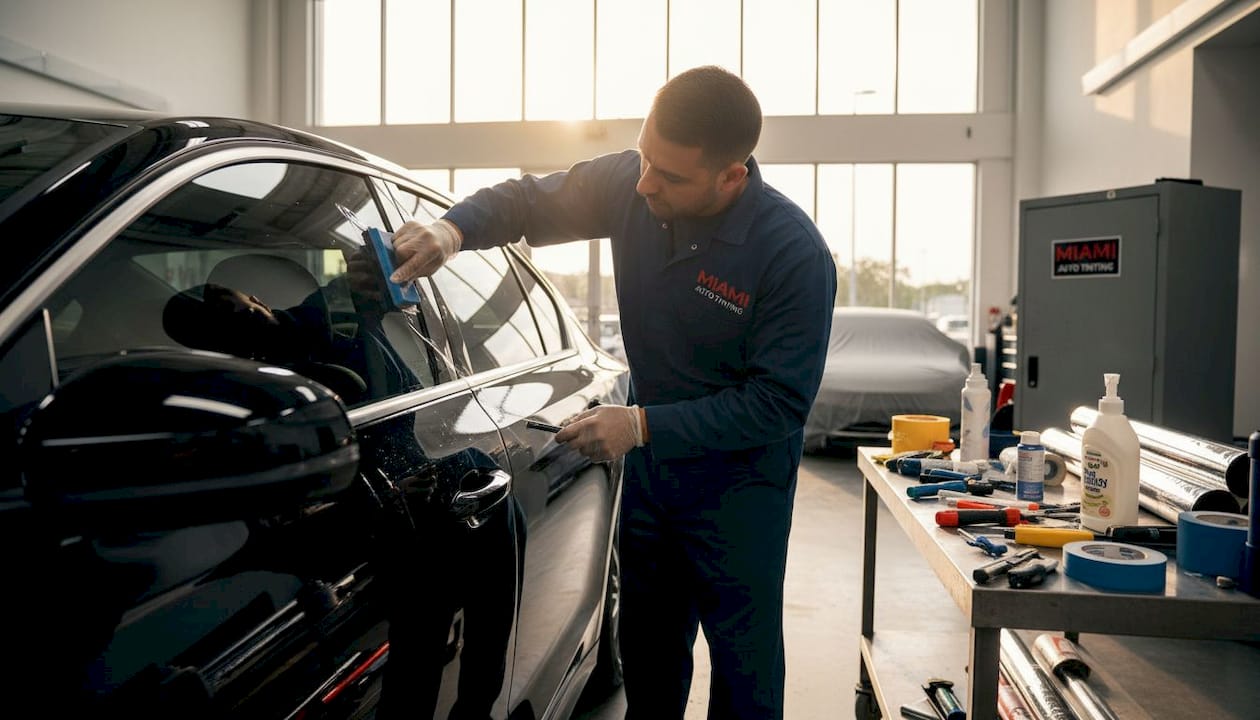
Here's how the numbers compare in practice:
| Protection type | Standard tint | High-performance ceramic |
|---|---|---|
| UV radiation blocked | 50-65% | Up to 99% |
| Infrared heat rejected | 10-25% | Up to 95% |
| Total solar energy rejected | 25-35% | Up to 66% |
| Cabin temperature reduction | 3-5°F | 10-15°F |
| Glare reduction | Moderate | High |
The real-world benefits for Miami drivers are significant:
- Cooler cabin temperatures when returning to a parked car in the sun
- Reduced AC load, which can improve fuel efficiency noticeably over time
- Lower risk of sunburn on arms and hands during long drives
- Protection for passengers, including children and pets who are especially UV-sensitive
- Preserved interior surfaces that stay looking newer for longer
The fading protection benefits are especially important for Miami car owners since sun exposure here is relentless year-round. Understanding UV protection for Miami cars helps you see why a high-performance film is essentially a long-term care investment for your vehicle.
How premium tint preserves your vehicle's appearance and value
Now that you know how high-performance tint blocks UV and heat, it's important to understand how these protections translate into your vehicle's long-term appearance and value.
Think about what Miami sun does to unprotected surfaces over a few years. Leather seats develop fine cracks that spread into full splits. Dashboard plastic warps, becomes brittle, and eventually crazes with a spiderweb of surface damage. Door panels fade unevenly. Carpets and fabric upholstery bleach out in the direct sun patches near windows. Every one of these problems reduces your car's resale value and makes daily driving less pleasant.
High-quality tint protects upholstery and interior surfaces from UV-induced fading and cracking, which is a straightforward but enormously impactful benefit. Here's what premium tint specifically slows down or prevents:
- Leather cracking and drying caused by UV breaking down the material's natural oils
- Dashboard warping from combined heat buildup and direct UV exposure
- Fabric and carpet fading in areas exposed to window sunlight
- Trim discoloration on interior door panels and pillar covers
- Adhesive failure on interior panels that bond poorly after heat cycling
- Electronic screen glare damage on newer cars with large infotainment displays
"Protecting your car's interior from UV is one of the most cost-effective things you can do. A quality window film pays for itself by preventing leather repair bills, dashboard replacements, and the general interior wear that cuts into resale value."
When you protect your interior this well, you're also protecting your resale value. Used car buyers and dealers assess interior condition heavily. A five-year-old Miami car with a pristine interior because it had quality tint from day one commands noticeably more than the same car with cracked leather and a bleached dashboard. The investment you make upfront in premium film translates directly into dollars when it's time to sell or trade in.
For a detailed look at how this works across different vehicle types, the protecting your car interior guide breaks down the specific cost savings. You can also see real Miami examples at the reducing fading resource.
Aesthetics and clarity: More than just "darker" windows
In addition to protection, Miami car owners appreciate how their cars look and feel — let's see how high-performance tints handle both style and practicality at the same time.
There's a persistent myth that "better tint" means "darker tint." That's not how premium films work. The shade of a film (measured as VLT, or Visible Light Transmission percentage) is a style choice that's largely independent of the film's protective performance. A 50% VLT ceramic film lets in more light than a 20% VLT dyed film but might block significantly more UV and infrared radiation. You have real flexibility.
Premium tints improve vehicle aesthetics while maintaining visibility because they're offered across a full range of VLT and darkness levels. You choose your look; the protection comes standard at every shade.
Here's what drives the aesthetic impact of a quality tint installation:
- Color stability over time. Premium films hold their original shade for years. Cheap dyed films turn purple or brown as the dye breaks down, making your car look neglected even if it's well maintained.
- Uniform appearance across all windows. High-quality films apply without streaks, bubbles, or uneven sections, giving your car a clean, factory-installed look.
- Glare reduction for better visibility. The reduction in harsh sunlight glare makes driving more comfortable while also making your windows look sleek from the outside.
- Style options and finishes. Certain premium films offer slight color tones (neutral gray, charcoal) that complement different vehicle colors better than a flat dark film.
- No interference lines or patterns. Metalized films can sometimes show interference patterns in certain lighting. True ceramic films stay visually neutral and clean.
Pro Tip: Florida law requires a minimum 28% VLT on front side windows. Choosing a 35% VLT ceramic film keeps you fully legal while still delivering outstanding UV protection and a sharp, sleek appearance. If you want to go darker on rear windows, Florida is more permissive there. Always check current Florida tint laws before selecting your shade.
If you're comparing your options and want to go deeper, the comparison of why ceramic tint stands out for Miami drivers is worth reading, along with this breakdown of comparing ceramic vs. carbon tints to help you decide which type fits your car and lifestyle.
Durability and long-term value: How quality pays off
A high-performance tint isn't just about comfort and looks. It's an investment with long-lasting returns.
The lifespan difference between standard and premium films is dramatic. Here's how they compare in the real world:
- Standard dyed tint: Lasts roughly 3-5 years before significant fading, bubbling, or adhesion issues become visible
- Carbon tint: Generally lasts 5-7 years with better color stability than dyed films but still degrades under intense Miami UV
- Ceramic and nano-ceramic tint: Typically lasts 10+ years with minimal degradation when properly installed
High-performance films retain up to 90% of original performance for over eight years, engineered specifically to resist fading, discoloration, and adhesion loss. Standard films start deteriorating noticeably in 3-5 years under normal conditions, and Miami's climate pushes that timeline even shorter.
What this means financially is straightforward. A standard tint job might cost less upfront but need replacement twice in the time a premium ceramic install goes without any issues. Factor in the labor, downtime, and the poor interior protection during a degraded film's final years, and premium tint clearly wins on cost per year of actual performance.
The reduced likelihood of bubbling, peeling corners, and hazy purple discoloration also means your car maintains its professional appearance throughout the film's life. Nobody wants windows that look like they've been through a decade of neglect when the car itself is still in great shape.
For a broader look at the practical and financial upside, explore the top 5 benefits of window tinting specifically compiled for Miami-Dade drivers.
Our take: Why high-performance tint isn't just for luxury cars
Here's something we see all the time: a customer brings in a 10-year-old Toyota Camry or a used Honda CR-V and says, "I don't want to spend too much on tint, it's not a luxury car." Then six months later, that same customer comes back amazed by the difference after we installed a quality ceramic film. Cooler cabin, no more squinting at that brutal afternoon glare on I-95, and the interior still looks clean.
The luxury car myth is misleading because it implies that premium protection is about status. It's not. It's about the car you actually rely on every day. In Miami-Dade, most people spend significant time in their cars. Your daily commuter takes just as much sun punishment as a weekend sports car, arguably more since it's out in the sun every single workday.
The cost-to-benefit ratio favors premium tint even more strongly on older and commuter vehicles. When you're protecting a car you plan to keep for five more years, you want to stop the interior degradation now, not after another two years of sun damage with a cheap film that's already starting to fail.
We also know from working with Miami drivers that the upgrade to ceramic tint changes how people feel about their cars. A well-tinted car feels more private, more comfortable, and frankly more premium regardless of the badge on the hood. That quality-of-life improvement, across every drive you take in South Florida, is worth far more than the price difference between a dyed film and a true high-performance ceramic.
Ready to upgrade? Explore Miami's best high-performance tint
If you've been putting off upgrading your tint because of uncertainty about options, pricing, or the hassle of scheduling, we make it easy. South Miami Tint brings professional installation directly to your home, office, or anywhere else in Miami-Dade with our mobile window tinting service. No waiting at a shop, no arranging rides.
We specialize in 3M Ceramic IR, 3M Color Stable, and Iviron Kollmax ceramic films, three of the most trusted high-performance tints available for protecting your interior and keeping your cabin cool year-round. Whether you want a subtle shade or a more dramatic look, our ceramic tint installation service covers every vehicle type across Miami-Dade. Check out our current window tinting prices to find an option that fits your car and your budget. The investment protects your interior, your comfort, and your car's long-term value from day one.
Frequently asked questions
Does high-performance tint keep my car cooler in Miami heat?
Yes. Advanced ceramic films like 3M Ceramic IR reject up to 95% of infrared in key heat-producing wavelengths and block up to 66% of total solar energy, making a noticeable difference the moment you get into a parked car.
What is the difference between standard and high-performance tint in terms of longevity?
Premium ceramic tints retain 90% of original performance for over eight years, while standard dyed films typically start to fade, bubble, or peel within just 3-5 years under Miami conditions.
Will high-performance tint change the look of my car too much?
Not necessarily. Premium films come in a full range of shade levels, so you control how subtle or bold the look is while still getting maximum UV and heat protection at every darkness level.
Is high-performance tint really necessary for Miami drivers?
Given Miami-Dade's extreme UV Index and year-round sun exposure, premium tint offers protection that basic films simply can't match. Blocking up to 99% of harmful UV rays prevents the interior fading and cracking that Miami sun causes much faster than most car owners expect.