
Miami's sunshine is beautiful until it isn't. The same relentless UV radiation that draws millions to South Florida each year quietly destroys car interiors, fades dashboards, cracks leather seats, and raises cabin temperatures to dangerous levels. What surprises most Miami-Dade car owners is that not every window tint on the market blocks UV effectively, and not every shade is legally allowed on Florida roads. Understanding what actually protects your vehicle, your skin, and your wallet requires more than picking the darkest film you can find.
Table of Contents
- Why Miami-Dade car owners need UV protection window tint
- Understanding UV protection performance in automotive window tints
- Florida legal requirements for UV-protective window tint
- How to select and care for UV-protection window tint in Miami
- A practical Miami perspective: What most guides miss about UV window tint
- Find the right UV protection window tint service in Miami
- Frequently asked questions
Key Takeaways
| Point | Details |
|---|---|
| UV tint prevents interior damage | Miami’s high UV exposure rapidly fades and degrades car interiors without proper protection. |
| Legal compliance ensures safety | Meeting Florida’s VLT standards is required to avoid fines and guarantee both privacy and protection. |
| Ceramic tints offer superior UV rejection | Modern ceramic films block up to 99% of UV rays, making them ideal for Miami’s heat and sun. |
| Professional installation is key | Quality installation ensures full UV protection, longevity, and adherence to Miami laws. |
| Regular maintenance extends tint life | Proper cleaning and annual inspections help maintain window tint effectiveness and appearance. |
Why Miami-Dade car owners need UV protection window tint
Miami sits at one of the highest UV index levels in the continental United States. On a typical summer afternoon, UV levels here regularly reach 11 or above on the standard scale, which the EPA classifies as "extreme." That intensity doesn't just cause sunburns. It steadily degrades every material inside your car.
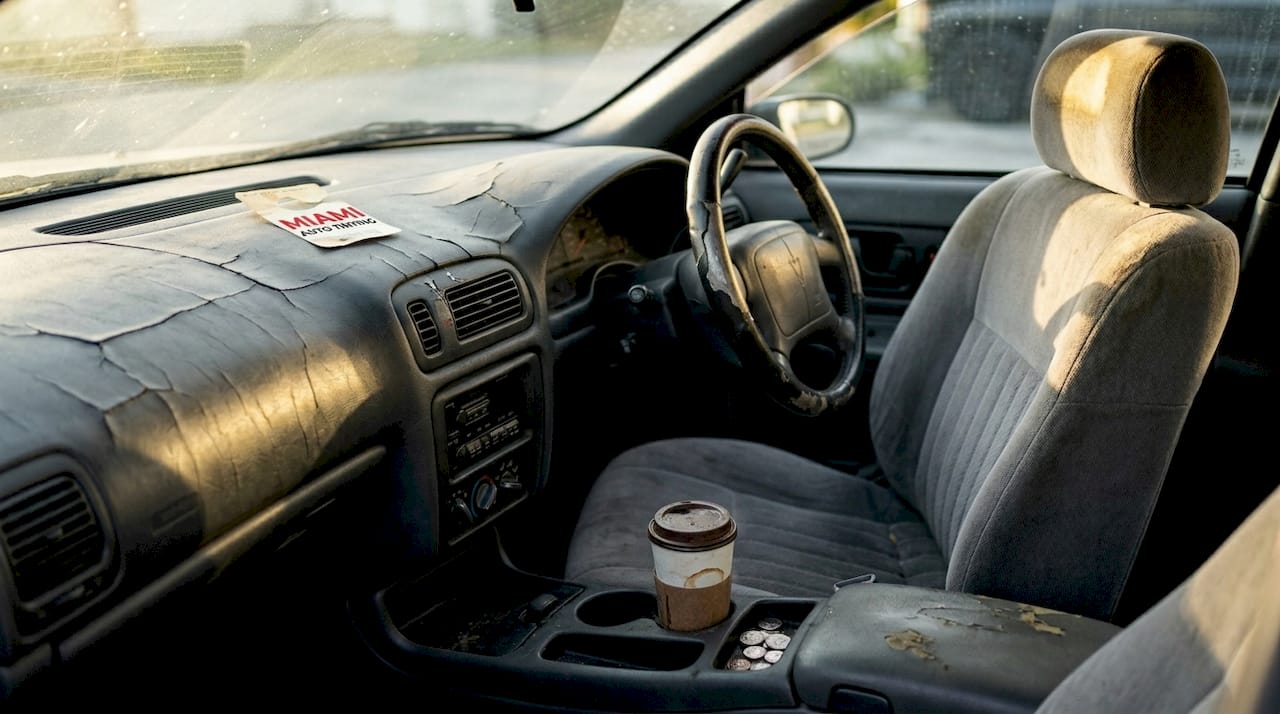
Think about what happens to unprotected upholstery, dashboards, and steering wheels after years of daily exposure. Leather cracks, plastic becomes brittle, and factory colors fade unevenly. Carpets bleach along the driver's side. Door panels warp. These aren't cosmetic annoyances. They are measurable losses in vehicle resale value, and they happen faster in Miami than almost anywhere else in the country.
Beyond the interior, there's a real health concern. Drivers spend significant time behind the wheel, often during peak UV hours between 10 a.m. and 4 p.m. Standard automotive glass blocks UVB rays reasonably well, but UVA rays, which penetrate deeper into the skin and contribute to long-term skin aging and cancer risk, pass right through untreated windows. The window tinting necessity in Miami isn't a luxury upgrade. It's a practical response to a genuinely harsh environment.
Then there's the heat factor. A car parked under the Miami sun can reach interior temperatures of 130°F to 170°F within minutes. Quality UV-protective tint significantly reduces solar heat gain, which means your air conditioning works less to cool the cabin and your fuel economy improves as a result. The combined benefits, from protecting upholstery to easing the load on your AC, make window tinting one of the highest-return upgrades available for Miami drivers. You can read more about the full range of enhanced comfort and protection that quality film delivers.
One critical point that many car owners overlook: not all tints are legal. Florida law specifies minimum Visible Light Transmission (VLT) percentages, meaning the amount of light the film must allow through. VLT is measured as a percentage, where a lower number means a darker film. According to Florida's tint regulations, front side windows must have at least 28% VLT, and sedan rear windows must have at least 15% VLT. Medical exemptions for darker films do exist and are processed through the Florida Highway Safety and Motor Vehicles office (FLHSMV), but they require proper documentation.
Key reasons Miami-Dade drivers need UV-protective tint:
- Extreme UV index levels that exceed national averages throughout the year
- Rapid interior material degradation from constant solar exposure
- Measurable health risks from UVA penetration through standard automotive glass
- Significant cabin heat buildup that strains your AC and reduces fuel efficiency
- Legal compliance requirements that vary by window position and vehicle type
"Window tint in Miami isn't about style first. It's about preservation, health, and staying on the right side of Florida law."
Understanding UV protection performance in automotive window tints
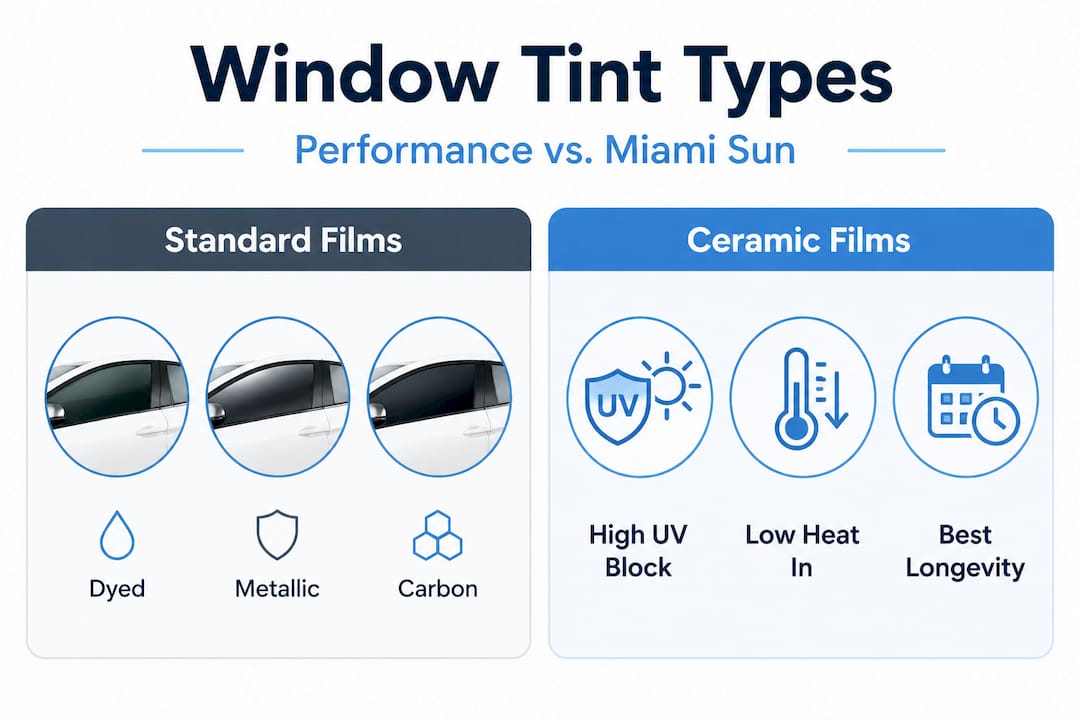
Not all window tints are created equal, and this is where a lot of buyers go wrong. The darkness of a film, the shade you can see from outside, tells you very little about how much UV radiation it actually blocks. A lightly tinted film made from quality ceramic material can block 99% of UV rays. A darker dyed film might block far less while still looking deeply tinted from the street.
There are four main categories of automotive window film: dyed, metallic, carbon, and ceramic. Dyed films are the most affordable but offer the weakest UV and heat rejection. They absorb solar energy rather than blocking or reflecting it, which means they get hot themselves and degrade faster in intense climates like Miami. Metallic films reflect heat effectively and offer decent UV protection, but they can interfere with GPS signals and cell reception, which is increasingly important for drivers who rely on connected devices. Carbon films perform better than dyed films and don't interfere with electronics, offering solid UV rejection and a matte appearance. Ceramic films sit at the top of the performance category, blocking the most UV and infrared heat without any electronic interference.
A comparative study published on PubMed in 2025 titled "Assessing UV Rejection in Window Tints: A Comparative Study of Professional and E-Commerce Products" confirmed that product-level UV rejection varies significantly across film types and sources, reinforcing that the manufacturer's UV rating matters far more than the shade alone.
| Film type | UV rejection | Heat rejection | Signal interference | Longevity in Miami climate |
|---|---|---|---|---|
| Dyed | Low to moderate | Low | None | Poor |
| Metallic | Good | Good | Yes | Moderate |
| Carbon | Good | Moderate | None | Good |
| Ceramic | Excellent (up to 99%) | Excellent | None | Excellent |
For Miami-Dade drivers, ceramic window tint benefits are particularly relevant. Ceramic films handle prolonged UV and infrared exposure without breaking down or discoloring. They maintain their performance year after year in exactly the kind of climate impact on tinting that degrades lower-grade products. We work with 3M IR, 3M Color Stable, and Iviron Kollmax ceramic film because these products are specifically engineered for high-UV, high-heat environments.
When it comes to installation, the professional tinting advantages over DIY or e-commerce kits are substantial. Professional films are applied with precision tools, proper surface preparation, and controlled techniques that eliminate bubbles, lifting edges, and uneven adhesion. A cheap film applied incorrectly may peel within months in Miami's humidity, leaving you with visible damage and zero UV protection.
Pro Tip: When evaluating any tint product, ask specifically for the UV rejection percentage rating from the manufacturer, not just the VLT or shade level. A film rated at 99% UV rejection blocks nearly all damaging UV radiation regardless of how light or dark it appears.
Florida legal requirements for UV-protective window tint
Understanding the legal framework before you choose a tint is essential in Miami-Dade, where Miami window tint regulations are actively enforced. Getting this wrong means fines, required removal, and re-installation costs that could have been avoided entirely.
Florida specifies different VLT minimums depending on which window you're tinting. Here's how the rules break down:
| Window position | Minimum VLT (sedans) | Minimum VLT (SUVs/vans) | Reflectivity limit |
|---|---|---|---|
| Windshield | Non-reflective tint top 6 inches only | Non-reflective tint top 6 inches only | Non-metallic, non-mirrored |
| Front side windows | 28% | 28% | 25% or less |
| Rear side windows | 15% | 6% | 25% or less |
| Rear window | 15% | 6% | 25% or less |
According to Florida's tint law breakdown, front side windows must allow at least 28% VLT for all vehicle types, while rear windows for sedans require at least 15% VLT. SUVs and vans have more flexibility on rear windows. Reflective or mirrored finishes are restricted, so films that create a mirror-like appearance are generally not legal for street use.
Medical exemptions are a real option for drivers with documented conditions like lupus, melanoma, or severe photosensitivity. These are processed through the FLHSMV and allow darker tint on front windows with proper physician documentation. The exemption must be kept in the vehicle at all times.
Here's a compliance checklist to review before your tint installation:
- Confirm the VLT rating of the film for each specific window position
- Verify the film's reflectivity rating stays at or below 25%
- Check that no metallic or mirrored finish is used on driving windows
- Ensure the installer knows Florida's windshield rules (top 6 inches only, non-reflective)
- Ask your installer to provide documentation of the film's VLT rating for your records
- If applying for a medical exemption, obtain your physician's signed documentation before installation
Get a full overview of Miami tint laws overview before your appointment so you walk in informed and confident.
Pro Tip: Always ask your installer for a sticker or certificate that confirms the installed film's VLT rating. Florida law requires this documentation to be present during vehicle inspections or traffic stops.
How to select and care for UV-protection window tint in Miami
Choosing the right tint starts with clarifying your priorities. Are you focused primarily on UV protection for health reasons? Heat reduction for comfort? A balance of both? The answer shapes which product makes the most sense for your specific vehicle and driving habits. You can use a practical guide on choosing the best window tint to align your selection with Miami weather and tint needs specific to South Florida's environment.
Key factors to weigh when selecting UV-protective window tint:
- UV rejection percentage: Look for films rated at 99% UV rejection for maximum protection
- Infrared (IR) rejection: High IR rejection significantly reduces cabin heat, which matters enormously in Miami summers
- Warranty length and coverage: Quality ceramic films typically carry lifetime warranties against bubbling, peeling, and discoloration
- Installer reputation: Choose a licensed, experienced installer who is familiar with Florida's legal requirements
- Film brand and certification: Recognized brands like 3M and Iviron Kollmax publish verified performance data you can check independently
Common mistakes Miami car owners make include choosing a shade that looks great but exceeds legal VLT limits, selecting films without verifying actual UV rejection ratings, and skipping aftercare once the install is done.
Caring for your window tint properly extends its lifespan significantly. In Miami's climate, proper aftercare is non-negotiable:
- Wait at least 3 to 5 days after installation before cleaning windows; the adhesive needs time to fully cure
- Use ammonia-free window cleaners only; ammonia degrades the film and accelerates fading
- Clean with a soft microfiber cloth, not paper towels or abrasive pads that can scratch the surface
- Schedule an annual inspection with your installer to check for edge lifting, bubbling, or fading that signals UV protection is degrading
- Park in covered or shaded areas when possible to reduce cumulative heat stress on the film
For easy window tint selection and maintenance guidance, keeping these principles in mind will help your investment perform for years rather than months.
Pro Tip: In Miami's high-humidity environment, bubbles that appear shortly after installation usually resolve on their own as the film cures. Wait the full curing period before contacting your installer about cosmetic issues.
A practical Miami perspective: What most guides miss about UV window tint
Here's something we've learned from years of installing tint across Miami-Dade: most car owners come in worried about the wrong things. They focus on shade and cost. They rarely ask about UV rejection percentages or reflectivity compliance. And that gap in understanding is where problems get created.
Miami enforcement is real. Officers here are familiar with tint laws, and a vehicle with illegally dark front windows will get noticed. We've seen drivers spend more on fines and removal than they originally saved by going with a cheap, too-dark film. The essential window tinting advice is straightforward: compliance and performance are not competing goals. The right ceramic film gives you maximum UV protection and heat rejection while staying within legal VLT limits.
Another thing most guides don't say clearly enough: aftercare determines longevity. A premium ceramic film installed correctly will last the lifetime of your vehicle if you maintain it. But we've seen expensive installs destroyed within a year by ammonia-based cleaners, aggressive scrubbing, or skipped inspections. The film is only as good as the care it receives afterward.
Finally, the conversation about protecting against Miami UV is ultimately about cumulative exposure. Every hour you spend in your car without proper UV rejection adds up. Ceramic tint is not a luxury decision in this city. It's a long-term investment in your health, your comfort, and your vehicle's condition.
Find the right UV protection window tint service in Miami
You now have the knowledge to make a smart, informed decision about UV-protective window tint. The next step is working with professionals who know Miami's climate and legal landscape inside out.
At South Miami Tint, we offer mobile installation throughout Miami-Dade, bringing the service directly to your home or office. Our films include 3M IR, 3M Color Stable, and Iviron Kollmax ceramic window tinting, all rated for maximum UV and heat rejection. If you're looking specifically for 3M ceramic tint, we carry the full 3M lineup with verified performance ratings. Ready to see what it costs? Check out our transparent Miami tint pricing and get a quote without the pressure.
Frequently asked questions
What is the best type of window tint for UV protection in Miami?
Ceramic window tints are the top choice for Miami drivers, blocking up to 99% of UV rays while handling extreme heat and humidity without degrading over time. They outperform dyed, metallic, and carbon films in long-term UV protection and durability.
What are the legal VLT limits for car window tint in Miami-Dade?
Florida requires 28% VLT for front side windows on all vehicle types, and at least 15% VLT for sedan rear windows. Medical exemptions for darker films are available through the FLHSMV with proper physician documentation.
How can I verify that a window tint offers real UV protection?
Ask for the manufacturer's published UV rejection percentage before purchasing or booking installation. Research published in a 2025 comparative study confirms that UV rejection varies significantly across film types and sources, so always verify ratings rather than assuming based on shade alone.
Are medical exemptions for window tint easy to obtain in Florida?
Medical exemptions are available through the FLHSMV for qualifying conditions but require signed documentation from a licensed physician. The exemption certificate must be kept in the vehicle at all times when driving.