
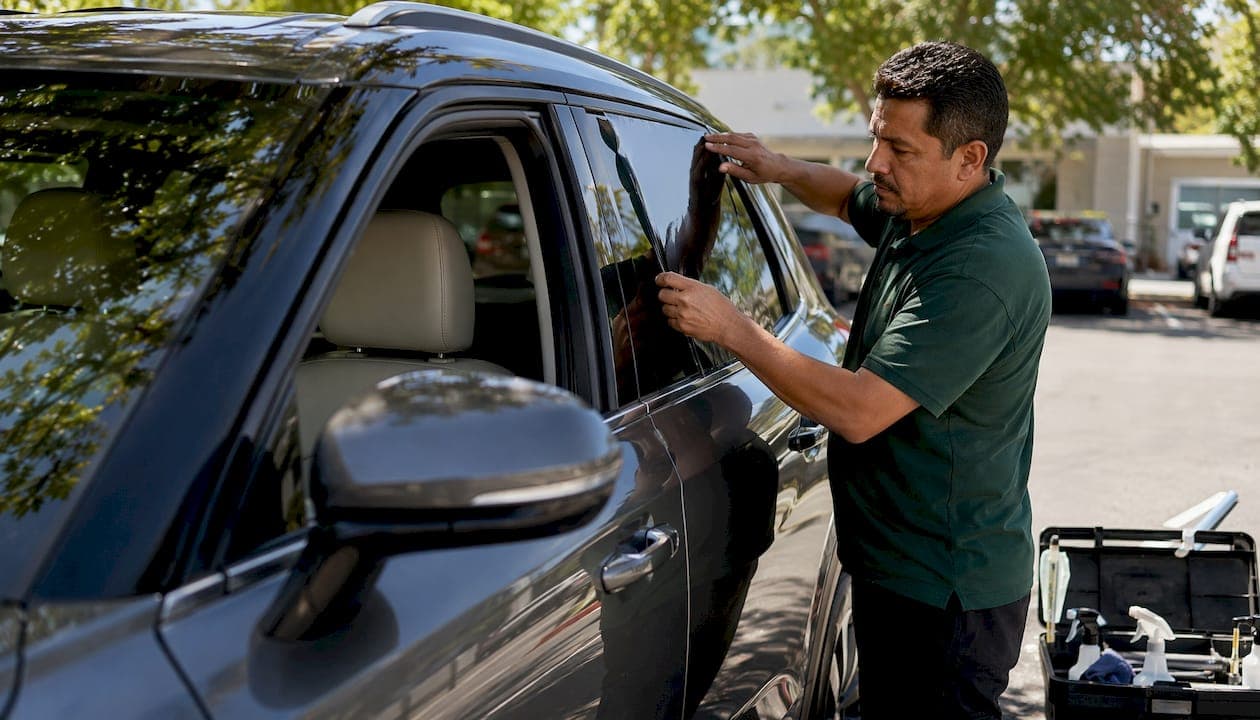
How car window tinting protects your leather seats from UV damage and heat
The right car tint for leather seats blocks up to 99% of harmful UV rays and cuts the infrared heat that dries leather out, causes cracking, and fades color. Without protection, UV radiation breaks down the natural oils in leather, leaving seats brittle and discolored. Interior temperatures in an untinted car can climb high enough to cause burns on contact. Quality window film stops that cycle before it starts.
Key benefits of car window tinting for leather protection:
- Blocks UV rays: Ceramic tint rejects up to 99.9% of UV light, preventing the fading and deterioration that shortens leather life.
- Reduces infrared heat: Films like 3M IR reject solar energy, keeping cabin temperatures lower and reducing thermal stress on seats.
- Prevents burns: Tinted windows stop leather from reaching temperatures that scorch skin on contact.
- Preserves color and texture: Less UV exposure means leather holds its original tone and suppleness far longer.
- Protects the whole interior: Carpeting, plastic trim, and fabric panels all benefit alongside the leather.
Ceramic tint is the industry standard for this job. Products like 3M IR, 3M Color Stable, and Iviron Kollmax ceramic tint deliver the heat rejection and UV blocking that leather preservation demands.
Table of Contents
- What are the best window tint types for protecting leather?
- Legal considerations and why professional installation matters
- How to care for leather seats after tinting your windows
- What affects the price of car window tint installation?
- Southmiamitint brings professional leather protection to your door
- Key Takeaways
What are the best window tint types for protecting leather?
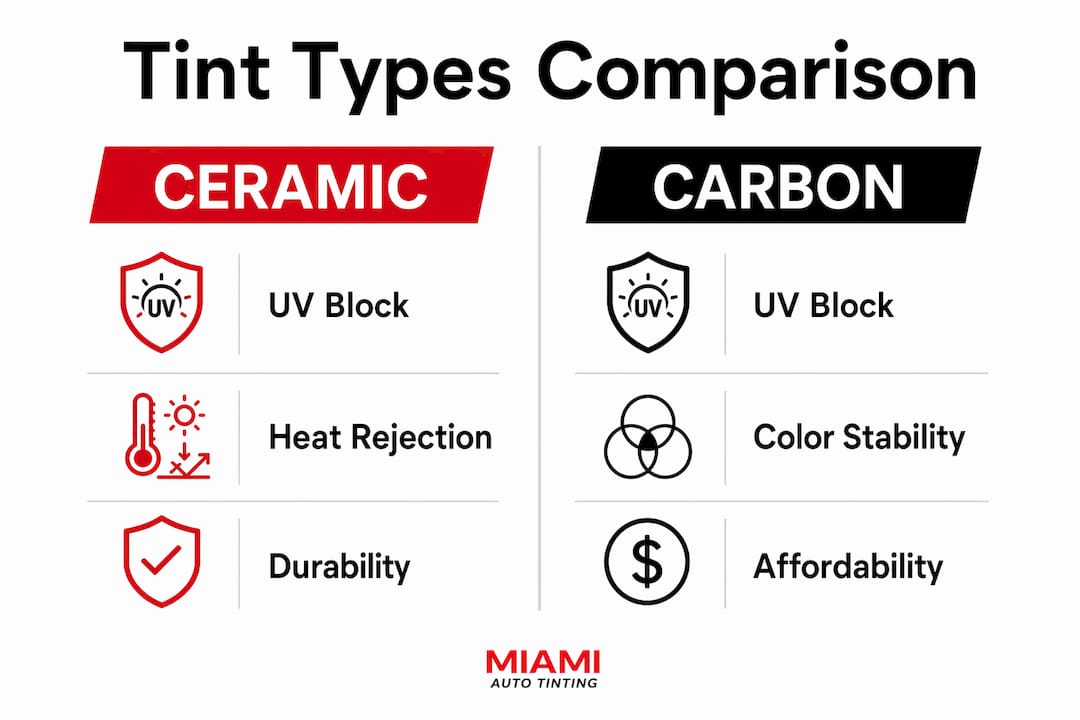
Not all films perform equally. Here is how the main options compare for leather seat protection:
- Ceramic tint: The top choice for heat rejection and UV blocking without interfering with GPS, cell signals, or 5G. Durable, scratch resistant, and does not fade to purple over time. The benefits of ceramic window tint make it the clear pick for anyone prioritizing leather preservation.
- Carbon tint: Blocks infrared light effectively with a matte finish. Does not interfere with electronics and resists fading, though heat rejection may fall slightly below ceramic performance.
- Hybrid tint: Combines dyed and metalized layers for a mid-range balance of cost and protection. A reasonable option when budget is tight.
- Metalized tint: Reflects heat well but can interfere with electronic signals. Less common for newer vehicles.
- Dyed tint: The most affordable option, but dyed films can fade, bubble, or peel after a few years and offer the weakest heat rejection of any category.
For car tinting in hot climates, ceramic and carbon films are the clear leaders. If you drive in South Florida or any sun-heavy region, ceramic is the practical choice for long-term leather care.
Legal considerations and why professional installation matters
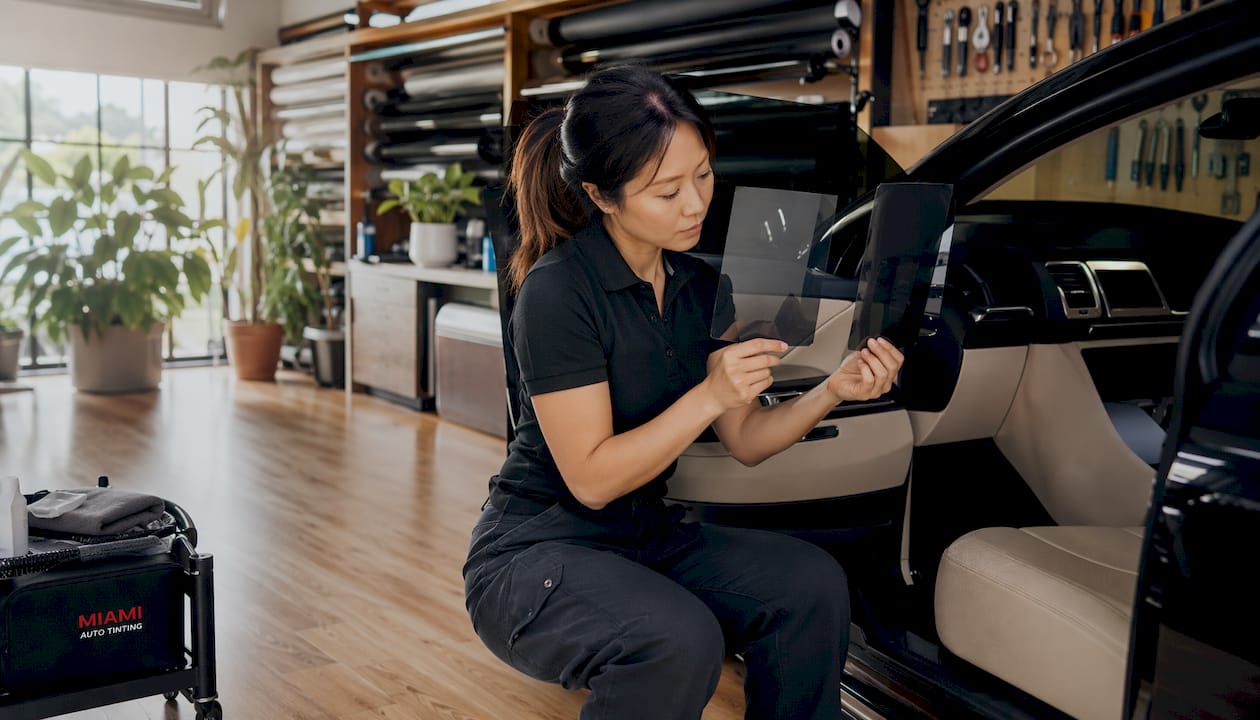
Every US state sets its own Visible Light Transmission (VLT) limits, and those rules vary widely. Florida, for example, allows 28% VLT on front side windows for passenger vehicles. Getting this wrong means fines, failed inspections, and film that has to come off.
Key points on legal compliance and installation quality:
- State VLT limits differ by window position, vehicle type, and state. Always verify local rules before installation.
- Professional installers know which films meet your state's requirements and apply them correctly the first time.
- DIY kits frequently result in air bubbles, uneven adhesion, and premature peeling, all of which reduce UV and heat protection.
- Authorized installers typically back their work with warranties that DIY methods cannot match.
- Poor installation voids many film manufacturer warranties, including those on 3M products.
| Window Position | Typical VLT Range (US States) | Notes |
|---|---|---|
| Windshield | Non-reflective strip only | AS-1 line rule applies in several states |
| Front side windows | 28%–higher VLT | Varies significantly by state |
| Rear side windows | lower VLT to any | Many states allow any darkness |
| Rear window | lower VLT to any | Often unrestricted with rear mirrors |
Pro Tip: Before booking an installation, check your specific state's DMV website for current VLT limits. Laws update, and a reputable installer will always confirm compliance before applying film.
How to care for leather seats after tinting your windows
Window tint reduces UV and heat load, but leather still needs direct attention to stay in top shape.
- Condition regularly: Apply a leather conditioner every 2–3 months. Tint reduces UV damage, but combining tint with conditioning gives leather the best long-term defense.
- Clean with pH-balanced products: Use cleaners made specifically for leather. Harsh chemicals strip the finish even when UV exposure is low.
- Add UV-protective sprays: A UV-blocking leather spray adds a second layer of protection between conditioning sessions.
- Park in shade when possible: Tint handles most of the work, but shaded parking cuts residual heat load further.
- Use a sunshade: A windshield sunshade reduces interior temperature when parked, especially in summer.
- Watch for tint failure: Bubbling, peeling, or a purple hue are signs the film is degrading. Failed tint loses its UV blocking ability, leaving leather exposed. Replace it promptly.
What affects the price of car window tint installation?
Pricing depends on several factors, and costs vary by vehicle size, film type, and location. Ceramic tint costs more upfront than dyed or hybrid film, but it lasts longer and protects leather more effectively, reducing the cost of interior repairs over time.
- Vehicle size: More windows mean more film and more labor.
- Film type: Ceramic films like 3M IR and Iviron Kollmax carry a premium over basic dyed options.
- Number of windows: Full-car installs cost more than rear-only jobs.
- Installer experience and warranty: Authorized installers charge more but deliver better results and back their work.
- Geographic market: Labor rates in Miami differ from those in rural markets.
Get quotes from authorized installers rather than relying on flat-rate estimates. A quality ceramic install on a mid-size sedan typically costs a few hundred dollars, with variation based on film grade and regional labor costs.
Southmiamitint brings professional leather protection to your door
Your leather seats deserve more than a basic film. Southmiamitint installs 3M IR, 3M Color Stable, and Iviron Kollmax ceramic tint on cars across Miami-Dade, and the service comes to you. No shop drop-off, no waiting room.
Every install is done by trained professionals who know Florida's VLT laws and apply film that holds up in South Florida's heat. If you want ceramic tint in Miami starting from $249, or prefer to get a custom mobile quote sent to your location, Southmiamitint makes it straightforward. Book your appointment and protect your leather before the next sunny day does more damage.
Key Takeaways
Ceramic window tint blocks up to 99% of UV rays and rejects infrared heat, making it the most effective single upgrade for preserving leather seats in hot climates.
| Point | Details |
|---|---|
| UV blocking is the priority | Ceramic tint blocks up to 99% of UV rays, stopping the oil loss that causes leather to crack and fade. |
| Heat rejection protects comfort | Films like 3M IR reduce infrared heat, keeping seats cool enough to touch and preventing thermal damage. |
| Professional installation matters | Authorized installers ensure legal VLT compliance and apply film without bubbles or peeling. |
| Maintenance extends results | Conditioning leather every 2–3 months alongside tint gives the best long-term protection. |
| Southmiamitint serves Miami-Dade | Mobile ceramic tint installation using 3M IR, 3M Color Stable, and Iviron Kollmax, starting from $249. |