
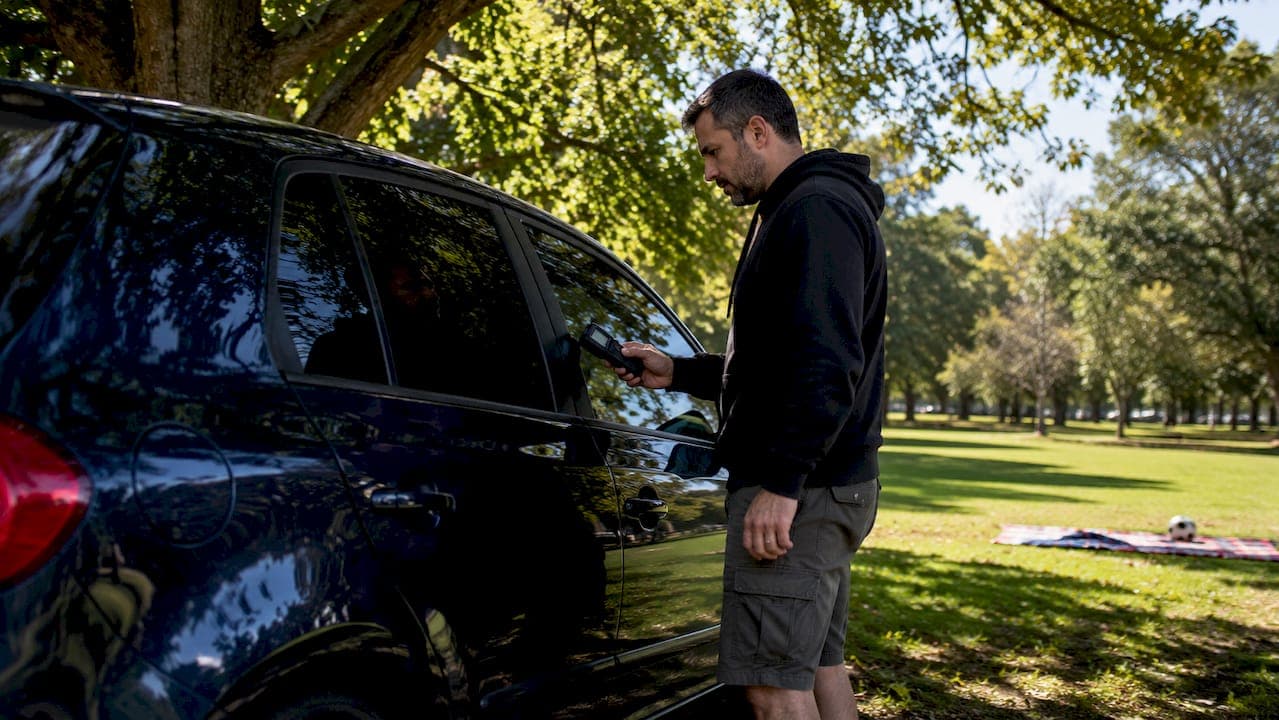
Tint darkness is defined as the percentage of visible light that passes through your car's window film and glass, measured as Visible Light Transmission (VLT). Knowing how to test tint darkness accurately keeps you legal, protects you during traffic stops, and tells you whether your installer delivered what you paid for. Digital tint meters are the industry standard for this measurement, and consumer-grade devices cost between $50 and $200. This guide covers the right tools, the correct technique, and the mistakes that throw off your readings.
How to test tint darkness: tools you need first
The only reliable method for tint darkness measurement is a digital tint meter. These devices shoot a beam of light through the glass and film, then calculate the VLT percentage instantly. A digital tint meter in the $50–$200 range gives car owners a fast, objective reading without needing a shop visit.
Every tint meter shares the same basic design: a light emitter on one side of the glass and a sensor receiver on the other. You clamp or hold both pieces against opposite sides of the window, power the device on, and read the number on the display. The number represents the percentage of light passing through. A lower number means darker tint.
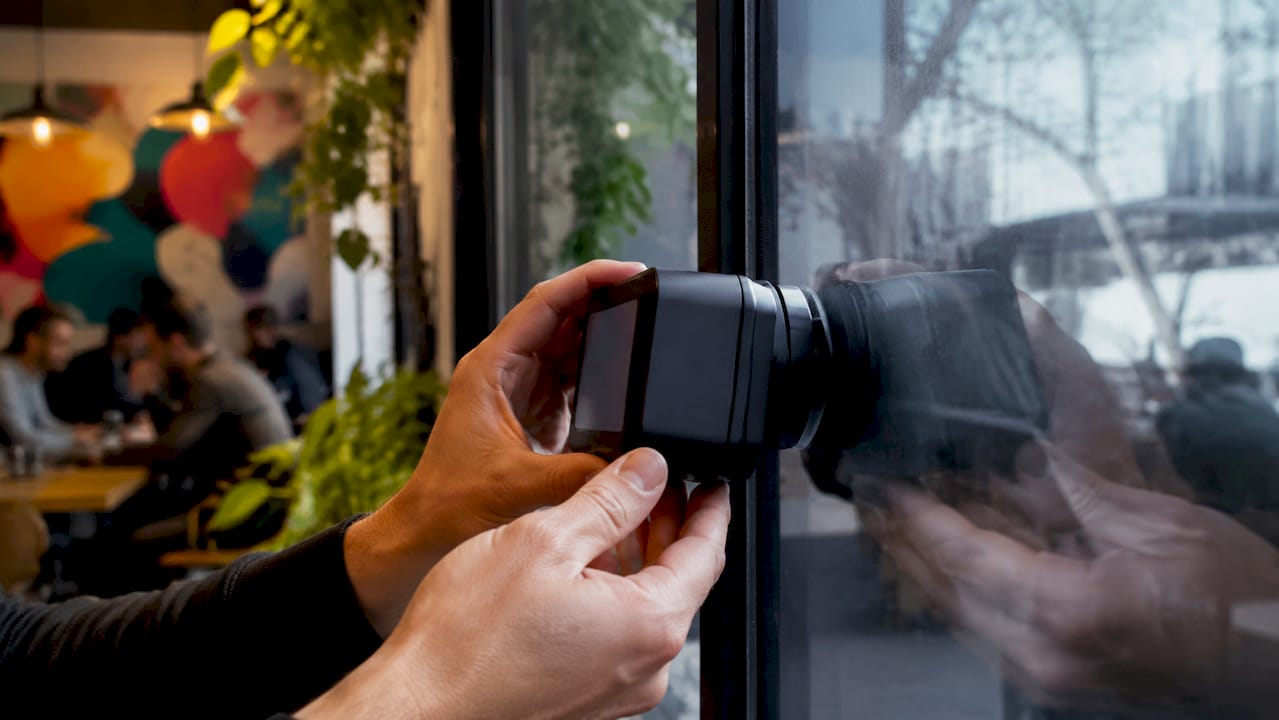
Consumer-grade meters work well for personal checks and pre-inspection verification. Professional-grade meters used by law enforcement and tint shops cost significantly more and carry tighter calibration standards. For most car owners, a mid-range consumer device is accurate enough to catch obvious problems and verify compliance before a traffic stop.
Smartphone apps that claim to measure tint darkness exist, but they rely on the phone's camera sensor rather than a calibrated light emitter. Camera sensors vary widely between phone models and are affected by ambient light. Treat these apps as rough estimates only, not as evidence of compliance.
Key features to look for in a consumer tint meter:
- Auto-calibration or a manual calibration function
- A clear digital display readable in sunlight
- A clamp or magnetic receiver that holds steady against the glass
- Compatibility with curved automotive glass
- A stated accuracy tolerance (look for ±2% or better)
Pro Tip: Before buying a meter, check whether it includes a calibration verification card. Without one, you have no way to confirm the device is reading accurately out of the box.
Step-by-step guide to measuring window tint accurately
Accurate tint level testing requires preparation before you ever touch the meter. Rushing the setup is the single biggest cause of bad readings.
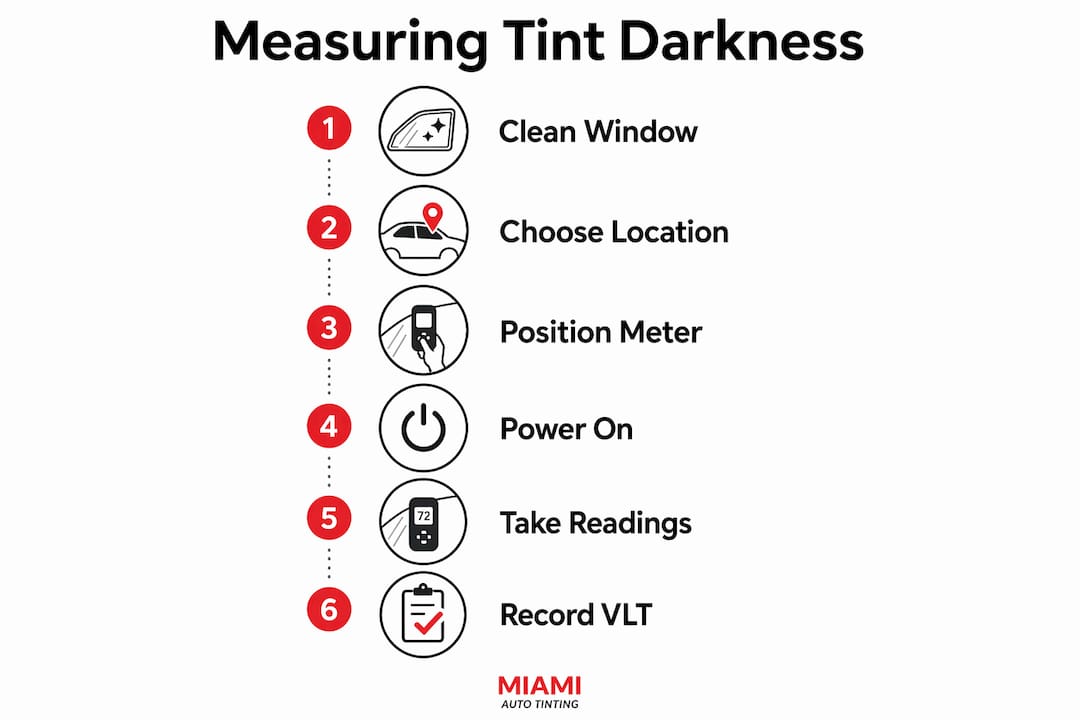
Step 1: Clean both sides of the window. Dirt, fingerprints, and water spots scatter light and produce artificially darker readings. Use a clean microfiber cloth and glass cleaner on both the interior and exterior surfaces. Let the glass dry completely before testing.
Step 2: Choose the right location on the window. Flat sections of glass give the most reliable readings. Avoid the very edges of the window where the film often has slight lifting or where the glass curves sharply into the door frame.
Step 3: Place the meter perpendicular to the glass. Holding the device at an angle changes the path the light travels through the film. Perpendicular placement is the only position that produces a true VLT reading. Even a 10-degree tilt can shift your result by a meaningful margin.
Step 4: Power on and wait for the reading to stabilize. Most consumer meters display a reading within two seconds. Wait until the number stops fluctuating before recording it.
Step 5: Take multiple readings across the window. Multiple readings at different spots on the same window account for uneven film application and natural glass inconsistencies. Take at least three readings per window and average the results.
Step 6: Record and interpret the VLT percentage. A reading of 35% VLT means 35% of light passes through. The lower the number, the darker the tint. Compare your average reading against your state's legal limit for that specific window position.
| Window position | Typical legal VLT minimum | Notes |
|---|---|---|
| Windshield | 70%+ (non-reflective strip only) | Most states prohibit tint on the main windshield |
| Front side windows | 28%–35% | Varies significantly by state |
| Rear side windows | 15%–35% | Many states allow darker tint here |
| Rear window | 15%–35% | Often matches rear side window rules |
Pro Tip: Test your windows in a shaded area or inside a garage. Direct sunlight hitting the glass during testing can interfere with the meter's light sensor and skew your VLT reading.
Common mistakes that ruin your tint darkness readings
Bad readings do not always mean bad tint. Most inaccurate results trace back to technique errors or equipment issues.
The most common mistakes car owners make:
- Off-angle positioning. Tilting the meter even slightly changes the effective thickness of film the light travels through. Always hold the device flat against the glass.
- Dirty glass. A single fingerprint on the sensor contact point can drop your reading by several percentage points. Clean the glass and the meter's contact surfaces before every test.
- Testing on curved sections. Highly contoured automotive windows distort tint meter readings due to light refraction. Always test on the flattest section of the glass available.
- Skipping calibration checks. A meter that reads 2% low will tell you a 33% VLT tint is at 31%. That gap matters when the legal limit is 35%. Verify calibration against a known standard before any serious check.
- Ignoring factory glass tint. VLT reflects both the film and the glass together. Factory glass reduces VLT by 3–8% on its own. A film rated at 35% on bare glass may read 28–30% on your actual car windows.
"Professional-grade tint meters carry an accuracy tolerance of plus or minus 2–3 percentage points. That means a reading of exactly 35% could reflect a true VLT anywhere from 32% to 38%. Never treat a borderline reading as a guarantee of compliance."
Stacking multiple tint films compounds this problem dramatically. Layering films without removing the previous layer pushes VLT well below legal limits and makes accurate measurement harder because the combined films may behave differently than either film alone.
What do legal tint limits mean for your test results?
Legal tint limits are set as minimum VLT percentages, and they vary by state and by window position. Understanding how your test results relate to those limits is the practical payoff of knowing how to measure window tint correctly.
Law enforcement uses professional tint meters during traffic stops. Metered readings are the legal standard for citations. A citation based purely on an officer's visual judgment can be contested in court, but a meter reading is treated as objective evidence. This is why getting your own meter reading before a stop matters.
Visual inspection alone cannot reliably determine tint darkness. Human perception shifts dramatically based on lighting conditions, the color of the film, and the angle of observation. Two people looking at the same window in different lighting will often disagree on how dark it is. A meter eliminates that disagreement.
The 3–5% buffer rule is the most practical takeaway from understanding meter tolerance. If your state requires a minimum of 35% VLT on front side windows, your tint should read 38–40% on your own meter. That buffer absorbs the ±2–3% tolerance of the enforcement meter and keeps you safely compliant. Tint installed right at the legal limit is a citation risk.
Tint laws also vary by state, and some states have different rules for medical exemptions. Checking your state's specific requirements alongside dashcam laws by state and other vehicle regulations gives you a complete picture of what's legal on your car. Keep a printed record of your meter readings and the date you tested. That documentation can support your case if a citation is ever disputed.
Pro Tip: If your meter reading lands within 3% of your state's legal limit, consult a professional installer before assuming you are compliant. The enforcement meter may read differently than yours.
Key Takeaways
A digital tint meter measuring VLT percentage is the only reliable and legally defensible method to verify your car's window tint darkness.
| Point | Details |
|---|---|
| Use a digital tint meter | Consumer-grade meters cost $50–$200 and provide instant, objective VLT readings. |
| Clean glass before testing | Dirt and fingerprints cause artificially dark readings; clean both sides first. |
| Hold the meter perpendicular | Off-angle placement skews the light path and produces inaccurate VLT results. |
| Average multiple readings | Test at least three spots per window to account for film and glass inconsistencies. |
| Build in a compliance buffer | Stay 3–5% above your state's legal VLT minimum to absorb meter tolerance variation. |
What I've learned from years of watching tint tests go wrong
The single most underestimated variable in tint testing is factory glass. Car owners focus entirely on the film they added, but the glass itself already absorbs light. A 35% film on a car with factory privacy glass can easily read 28% on a meter. I've seen drivers get cited for tint they believed was legal because nobody told them to account for the glass underneath.
The second thing most guides skip is the calibration conversation. A meter that's never been verified against a known standard is just a number generator. I recommend testing your meter against a piece of bare, untinted glass. The reading should be at or very close to 100% VLT. If it reads 94% on clear glass, every subsequent reading is off by 6%. That's not a small error when legal limits are at stake.
Multiple readings also matter more than most car owners realize. I've seen the same window produce a 31% reading at the center and a 27% reading near the edge due to uneven film application. Averaging those results gives you a truer picture of what an enforcement officer's meter will find. For a deeper look at how VLT affects compliance, the interaction between glass and film is worth understanding before you buy or install any tint.
The bottom line is that visual judgment is useless for this task. I don't care how experienced you are with tinted cars. Lighting conditions, film color, and glass angle fool the human eye every time. A meter is not optional if you care about accuracy.
— Jose
Professional tint that's measured right from the start
When tint is installed correctly with the right film and the right VLT for your windows, you never have to worry about borderline readings.
Southmiamitint installs ceramic window tint in Miami using 3M IR, 3M Color Stable, and Iviron Kollmax ceramic films. Every installation is done at your location, so there's no shop visit required. The team verifies tint darkness during installation to confirm your windows meet Florida's legal VLT requirements before the job is done. If you want professional-grade accuracy without the guesswork of DIY testing, Southmiamitint's mobile tinting service brings the expertise directly to your driveway.
FAQ
What does VLT mean in window tinting?
VLT stands for Visible Light Transmission. It measures the percentage of light that passes through both the glass and the film combined, and it is the standard unit for tint darkness measurement.
How accurate are consumer tint meters?
Consumer-grade tint meters are generally accurate within ±2–3 percentage points. Professional enforcement meters carry the same tolerance, which is why a 3–5% compliance buffer above the legal limit is recommended.
Can I test my tint with a smartphone app?
Smartphone apps cannot reliably measure tint darkness because they use camera sensors rather than calibrated light emitters. Use them only as rough estimates, not as evidence of legal compliance.
Does factory glass affect my tint meter reading?
Yes. Factory glass reduces VLT by 3–8% on its own. A tint film rated at 35% VLT will read lower on your actual car windows because the meter measures the glass and film together.
What should I do if my reading is close to the legal limit?
Build in a buffer of at least 3–5% above your state's minimum VLT requirement. A reading right at the legal limit falls within meter tolerance and puts you at real risk of a citation during a traffic stop.