
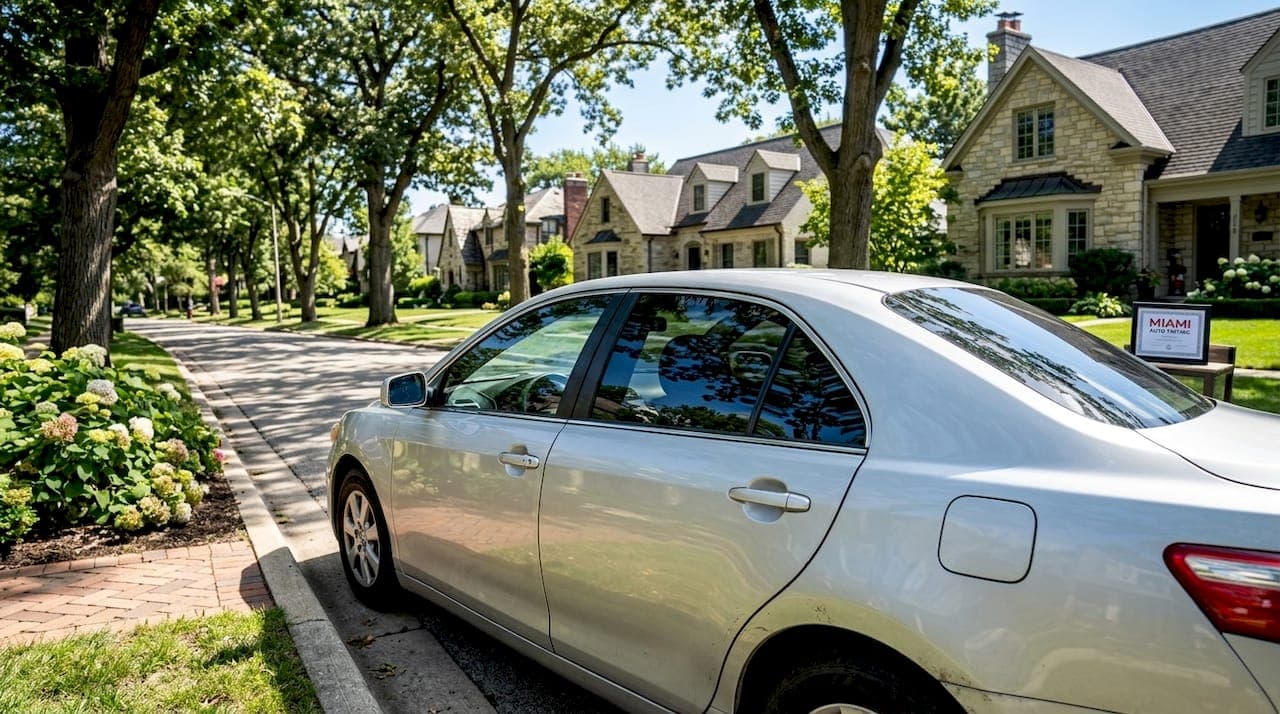
Tinting films are specialized window films applied to vehicle glass to reduce heat, block UV radiation, improve privacy, and enhance a car's appearance. The most common examples of tinting films include dyed, metalized, carbon, ceramic, hybrid, and dual reflective films, each built with different materials and engineered for different performance levels. Choosing the wrong type means paying for features you don't need or missing the protection your car actually requires. This guide breaks down every major film type, compares real performance numbers, and tells you exactly what to look for before you buy.
1. Dyed window tint film
Dyed film is the entry-level option in the tinting film types category. It works by absorbing solar energy through a layer of dye applied between an adhesive layer and a protective coating. The result is a dark, color-rich appearance that improves privacy and reduces glare at a low cost.
The trade-off is durability. Dyed films fade over time, shifting from black to purple as the dye breaks down under UV exposure. Heat rejection is modest compared to ceramic or carbon options, making dyed film a poor fit for hot climates like South Florida. It works best for drivers prioritizing aesthetics and privacy on a tight budget.
2. Metalized window tint film
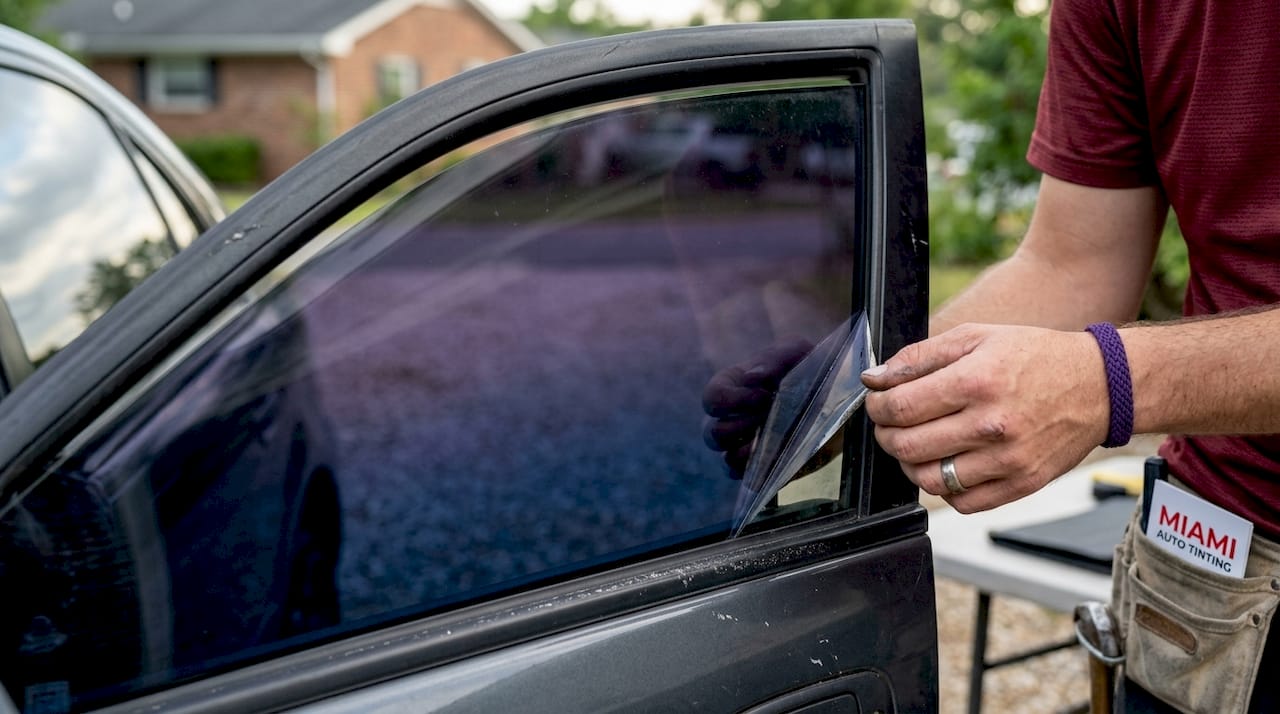
Metalized film embeds tiny metallic particles into the film layers to reflect solar energy away from the glass. This construction gives it stronger heat rejection than dyed film and adds a slight mirror-like sheen to the exterior. It also reinforces the glass, adding a layer of shatter resistance.
The downside is signal interference. The metal content can disrupt GPS, cell phone reception, and satellite radio signals inside the vehicle. For drivers who rely on navigation apps or hands-free calling, this is a real problem. Metalized films are durable and don't fade, but the electronics issue has pushed many buyers toward carbon and ceramic alternatives.
3. Carbon window tint film
Carbon film replaces metal particles with carbon particles, which eliminates the signal interference problem entirely. The finish is a flat, matte black that many car owners find more visually appealing than the reflective look of metalized film. Carbon film also resists fading far better than dyed options.
Heat rejection performance sits solidly in the mid-range. Carbon film blocks a meaningful portion of infrared radiation, keeping cabin temperatures lower than dyed film without reaching the performance ceiling of ceramic. For drivers who want a clean aesthetic, no signal issues, and reliable heat control without a premium price, carbon film is one of the most balanced tinting film types available.
4. Ceramic window tint film
Ceramic film uses nano-ceramic particles that are non-conductive and non-metallic, which means zero interference with GPS, satellite radio, or mobile signals. 3M Ceramic IR automotive tint provides up to 95% infrared heat rejection without affecting any electronic signals inside the vehicle. That number represents the top end of what automotive window film can deliver.
Ceramic films provide strong heat control and UV protection without signal interference or fading over time, even in lighter shades. This makes ceramic the dominant choice in the premium segment. Southmiamitint installs 3M Ceramic IR and Iviron Kollmax ceramic tint precisely because these films deliver consistent, measurable results in Miami's intense sun.
Pro Tip: Don't judge ceramic film by its shade. A lighter ceramic film can outperform a darker dyed film on heat rejection because the technology works across the full solar spectrum, not just by blocking visible light.
5. Hybrid window tint film
Hybrid film combines a dyed layer with a thin metalized layer, balancing the strengths of both while reducing their individual weaknesses. The result is better heat rejection than pure dyed film, less signal interference than fully metalized film, and a more neutral appearance than either extreme.
Hybrid films occupy a practical middle ground for drivers who want improved performance over basic dyed film but aren't ready to invest in ceramic. The metallic content is low enough that signal disruption is minimal in most vehicles. Think of hybrid film as the step-up option before committing to carbon or ceramic.
6. Dual reflective window tint film
Dual reflective films create privacy by reflecting external light during daytime without significantly darkening interior visibility. The exterior surface carries a reflective layer that bounces heat and light away, while the interior surface is treated to reduce the mirror effect that passengers would otherwise see from inside.
This design solves a real problem with standard reflective films. A film like Silver 15 provides maximum heat rejection but creates a mirror effect inside the car that many drivers find distracting. Dual reflective films give you the heat performance of a reflective exterior without that visual compromise on the inside.
7. Reflective window tint film
Reflective film is the most aggressive heat-rejection option in the non-ceramic category. It works by bouncing solar energy off the glass surface before it can enter the cabin. The trade-off is appearance: reflective films look like mirrors from the outside, which some owners love and others find too aggressive.
Signal interference is a concern here as well, since most reflective films use metallic construction. Reflective film suits drivers in extreme heat environments who prioritize performance over aesthetics and don't mind the bold exterior look. For Miami drivers, the heat performance is real, but ceramic films now match or exceed it without the visual and electronics drawbacks.
8. How performance metrics separate tint films
Understanding Total Solar Energy Rejected (TSER), Visible Light Transmission (VLT), and Solar Heat Gain Coefficient (SHGC) is the only way to make an honest tint film comparison. A film with 70% TSER rejects 70% of incoming solar energy across UV, visible, and infrared light. That single number tells you more about real-world heat reduction than any marketing claim.
VLT measures how much visible light passes through the film. Lower VLT means a darker tint. The key insight is that shade and heat rejection are not the same thing. A dark dyed film can have low VLT and still deliver weak TSER. Concord Window Film's ComforTech Ceramic 15 demonstrates this clearly: it achieves 75% TSER with 15% VLT, proving that ceramic technology delivers heat control independent of how dark the film appears.
Pro Tip: Always ask for the TSER and VLT data sheet before committing to a film. Verify that TSER and VLT data come from the same glass and film system under standardized testing. Numbers tested on different glass types are not directly comparable.
| Film type | Typical TSER | Typical VLT | Signal interference |
|---|---|---|---|
| Dyed | 30–45% | 5–50% | None |
| Metalized | 45–60% | 5–35% | Yes |
| Carbon | 50–65% | 5–50% | None |
| Ceramic | 60–80%+ | 15–70% | None |
| Dual reflective | 55–70% | 15–40% | Minimal |
9. How to choose the right tint film for your car
Choosing the right film starts with your climate. Drivers in Miami or Phoenix need films with high TSER because solar intensity is relentless. Drivers in cooler climates have more flexibility and can prioritize aesthetics or privacy over raw heat rejection. Selecting tint films based on climate and performance metrics is the most reliable approach.
State tint laws set minimum VLT levels for each window position. Florida law requires 28% VLT or higher on front side windows. Going darker than the legal limit creates real legal risk, regardless of how good the film performs. Always confirm local regulations before selecting a shade.
Key decision points when choosing a film:
- Climate: High heat regions demand ceramic or high-TSER carbon films.
- Electronics: Avoid metalized or reflective films if you rely on GPS or satellite radio.
- Budget: Dyed and hybrid films cost less upfront; ceramic costs more but lasts longer without fading.
- Legal compliance: Confirm VLT minimums for your state before choosing a shade.
- Aesthetics: Carbon and ceramic offer clean, non-reflective finishes; reflective films make a bolder statement.
For a detailed breakdown of ceramic vs. dyed performance, the differences in longevity and heat control are significant enough to justify the price gap in most cases.
10. Premium and specialized tint film examples
The premium tier of automotive tinting films includes products like 3M Ceramic IR and 3M Crystalline, both of which push the boundaries of what window film can do. 3M Ceramic IR uses nano-ceramic particles that reject infrared heat without any metallic content, keeping all electronic systems fully functional. Ceramic films dominate the premium automotive tint segment because of consistent heat resistance, UV protection, and zero signal interference.
3M Crystalline is worth noting separately. It uses a multi-layer optical film technology that stacks hundreds of microscopic layers to reject heat while maintaining very high visible light transmission. This makes it the film of choice for drivers who want maximum heat rejection with a nearly clear appearance, useful for windshields and front windows where dark tints are restricted by law.
Infrared rejection claims deserve scrutiny. Infrared-blocking claims that cite only a narrow IR band can be misleading. True heat rejection should be evaluated across the full solar spectrum using TSER, not just the infrared portion. A film marketed as "99% IR rejection" may still underperform a ceramic film with a strong TSER rating if the IR measurement covers only a fraction of the solar spectrum. TSER is the best single metric for real-world heat reduction because it covers the complete solar energy range.
Key takeaways
The best tinting film for your car is determined by TSER and VLT together, not by shade or a single infrared rejection claim.
| Point | Details |
|---|---|
| Ceramic leads on performance | Ceramic films deliver the highest TSER and UV protection with no signal interference. |
| TSER beats shade as a metric | A lighter ceramic film can outperform a darker dyed film on actual heat rejection. |
| Metalized films risk signal loss | GPS and cell reception can degrade with metallic film constructions. |
| Legal VLT limits matter | Florida requires 28% VLT or higher on front side windows; check local laws first. |
| Carbon is the best mid-range option | Carbon film balances heat rejection, aesthetics, and price without signal issues. |
What I've learned after years of tinting cars in Miami
After working with hundreds of vehicles in South Florida, the single biggest mistake I see car owners make is choosing a film based on how dark it looks. Darkness is a visual preference, not a performance indicator. I've seen 35% VLT dyed films that barely reduce cabin heat and 50% VLT ceramic films that transform the driving experience on a summer afternoon in Miami.
The second mistake is trusting infrared rejection percentages without context. A brand can claim 99% IR rejection and measure it against a narrow slice of the infrared spectrum that represents a fraction of total solar energy. That number sounds impressive and means very little in practice. TSER versus IRR is a real distinction, and installers who can't explain it are selling you marketing language instead of performance.
I also tell every customer to think about their electronics before choosing a film. If you use Android Auto, Apple CarPlay, or a dashcam with GPS, a metalized film will create friction with those systems. Ceramic is the cleaner solution, and the price difference over the life of the film is smaller than most people expect.
My honest recommendation: ask any installer for the full technical data sheet on the film they're proposing. If they can't produce it or can't explain TSER, find someone who can. The film going on your car will be there for years. It deserves more than a sales pitch.
— Jose
Get ceramic tint installed at your door in Miami
Southmiamitint brings professional ceramic window tinting directly to your location anywhere in Miami-Dade. No shop visits, no waiting rooms. The films Southmiamitint installs include 3M Ceramic IR and Iviron Kollmax ceramic tint, both of which deliver high TSER ratings, full UV protection, and zero interference with your vehicle's electronics. Every installation comes with a warranty and is performed by experienced technicians who know Miami's heat and Florida's tint laws. Explore ceramic window tint Miami service options and book your mobile appointment today. For the full lineup of 3M film options, visit the 3M tint Miami page.
FAQ
What are the main examples of tinting films for cars?
The main examples are dyed, metalized, carbon, ceramic, hybrid, and dual reflective films. Each uses different materials and delivers different levels of heat rejection, UV protection, and signal compatibility.
Which tinting film rejects the most heat?
Ceramic film delivers the highest heat rejection, with products like 3M Ceramic IR achieving up to 95% infrared rejection and strong TSER ratings across the full solar spectrum.
Does darker tint mean better heat rejection?
No. Shade (VLT) measures how much visible light passes through, not how much heat is blocked. A lighter ceramic film can reject more total solar energy than a darker dyed film.
Will tinting film interfere with my GPS or phone signal?
Metalized and reflective films can disrupt GPS, satellite radio, and cell signals. Carbon and ceramic films contain no metal and cause no signal interference.
How do I know if a tint film is legal in Florida?
Florida law requires front side windows to allow at least 28% visible light transmission. Always confirm the VLT rating of your chosen film before installation and check how to choose the right tint to stay compliant.