
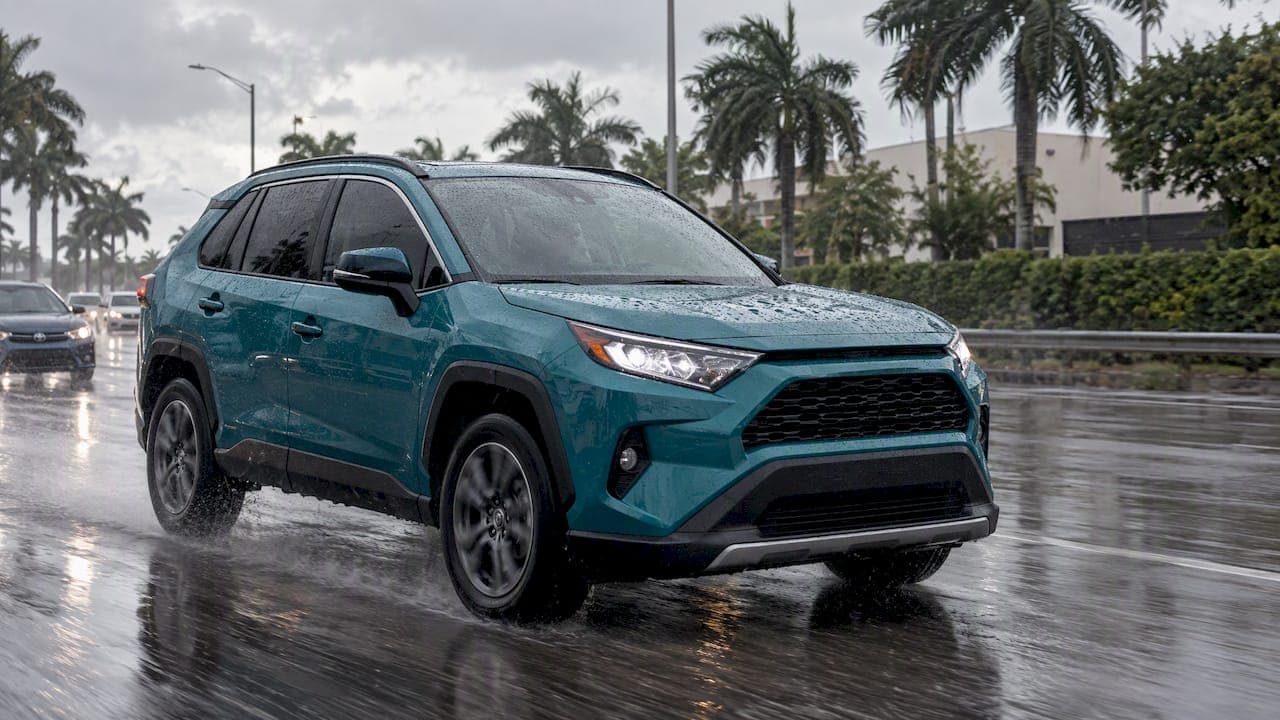
Yes, you can get your car tinted during Miami's rainy season. Rain does not ruin a professional install, and the wet months are when the sun and heat make tint most useful. What changes is the curing period: humid, overcast days can make the film take longer to clear up, so a few simple habits in the first week matter. Below you will find when the rainy season runs, what rain does to fresh film, how to care for it, and what Florida law allows.
TL;DR
- Miami's rainy season officially runs from May 15 to October 15, and it still has plenty of hot, sunny hours that make tint worthwhile.
- Rain after an install is not a disaster. Wet, cold weather slows curing, and early haze fades with time and heat.
- Keep the windows up and do not clean them for at least 3 days. Full curing takes about a week to 10 days.
- Florida requires at least 28% light transmittance on front side windows and at least 15% on the rear window of a standard car.
- Mobile tinting lets us come to you, so you can have the car worked on in a garage or carport instead of an open lot.
Table of Contents
- When Miami's rainy season runs
- Can you tint a car in the rain?
- What happens if it rains after your tint is installed?
- How long does tint take to cure in Miami weather?
- Aftercare checklist for the first week
- Why the rainy season is a good time to tint
- Choosing a film for Miami's wet, hot months
- Florida tint law: what stays legal, rain or shine
- Our perspective
- Book a mobile tint in Miami-Dade
- Tips for scheduling your tint around the weather
- FAQ
- Sources
When Miami's rainy season runs
The National Weather Service defines the South Florida rainy season as May 15 through October 15. That five-month window brings nearly 70% of the region's average yearly rainfall, according to the same agency.
The rain does not fall all day. The wet season is known for near-daily showers and thunderstorms, and where they land depends on sea and lake breezes, so one neighborhood can get soaked while another stays dry. Anyone who has driven from Kendall to Homestead in July has seen this.
By month, June is historically the rainiest in Miami, averaging 10.5 inches of precipitation in NOAA data for 1991 to 2020. August has the highest frequency, with an average 62.5% chance of rain on any given day.

For tint, the practical meaning is simple. Mornings are often clear. Storms tend to build later in the day. And the same weeks bring strong sun, heat and humidity that you feel the moment you sit in a parked car.
Can you tint a car in the rain?
The film goes on the inside of the glass, so rain on the outside is not the main problem. The real concerns are different:
- Dust and moisture in the work area. A clean, covered space gives the installer the best conditions. A garage, carport or covered parking spot is ideal.
- Water getting into the cabin. Doors open and close during an install, and wind-driven rain can put drops on interior glass.
- Cure time afterward. This is the one that actually affects you, and we cover it next.
A careful installer reads the weather and picks the spot. That is one reason a mobile service is a good fit in Miami. You tell us where the car will be, and a covered location keeps the job clean and dry.
If you want more on this topic, our own article Tinting in Rain: What Happens to Your Windows in Miami goes through it in detail.
What happens if it rains after your tint is installed?
Short answer: nothing bad, as long as the install was done properly and you leave the windows alone.
Window film is applied with a liquid solution, and that moisture needs time to work its way out from between the film and the glass. During this period you may notice small water pockets, a hazy look or a slightly cloudy finish. This is normal and part of curing.
Film maker Gila explains that dry, sunny weather speeds up curing, while wet, cold weather prolongs it. It also says haze or cloudiness during curing goes away with time and heat. In a Miami summer, "cold" is rarely the issue. The slowdown you may see comes from days of heavy cloud and constant humidity.
What you may see in the first days
| What you notice | Why it happens | What to do |
|---|---|---|
| Slight haze or cloudiness | Moisture still leaving the film | Wait. It clears with time and heat |
| Tiny water pockets | Installation solution still drying | Do not press or poke them |
| Film looks slightly different at night vs. day | Curing is not finished | Check again after a week or so |
| Drops on the outside of glass | Normal rain | Let it dry, do not wipe the inside |
If something still looks off after the full curing period, contact the shop that installed it. Do not try to fix it yourself.
How long does tint take to cure in Miami weather?
Plan on roughly a week to 10 days. Gila's guidance says the film fully cures over the next week to 10 days, with the speed depending on the weather. Expect the shorter end in a run of hot, sunny afternoons and the longer end during a stretch of gray, stormy days.
This is a general film-maker guide, and individual films can vary. Your installer's aftercare instructions for the specific film on your car come first.
Aftercare checklist for the first week
These steps cover the period when rain and humidity matter most.
- Keep the windows up. Gila instructs drivers not to roll the windows down during curing, because wet or cold conditions can extend the curing period. Rolling them down too soon can also catch the film edge.
- Wait at least 3 days before cleaning. The same source says to wait at least 3 days after installation before you clean the windows.
- Park smart. If you can, park in a garage or shaded covered spot overnight. Heat helps film dry, but a car that sits in a flooded driveway is not the goal.
- Do not touch the haze or bubbles. Pressing small water pockets can push the film out of place.
- Skip abrasive tools and harsh cleaners later on. Use a soft microfiber cloth and a cleaner your installer approves.
For care well beyond the first week, these tint aftercare tips cover how to protect new film for years. And if your windows tend to fog in wet weather, here is a guide to preventing fog on car windows that explains how to prep the glass.
A note on humidity and fogging
Miami's humid air makes windows fog from the inside, especially when you start the car after a downpour. Run the A/C with the defrost setting on and use a clean, dry microfiber cloth only after the curing window has passed. Wiping fresh film too early is how scratches and lifted edges start.

Our humidity guide for Miami drivers explains more about how moisture behaves in the cabin.
Why the rainy season is a good time to tint
It can feel backward to book tint when it keeps raining. But the same months that bring thunderstorms also bring the longest days of strong sun. A few reasons to book now rather than waiting for the dry season:
- Heat is at its peak. A parked car in Miami in July or August gets hot quickly. Ceramic and carbon films are designed to reduce heat and UV coming through the glass.
- Glare after storms. Wet roads reflect low sun and can make the drive home harsh. Tint cuts glare and adds privacy.
- Scheduling is easier than people think. Many drivers assume shops close up when it rains. Asking about availability costs nothing.
- Curing gets help from the sun. Between storms, strong sun supplies the heat that helps film dry and clear.
Our pieces on how Miami weather affects your car's window tinting needs and why Miami's climate makes window tinting a must-have go deeper on the heat side.
Choosing a film for Miami's wet, hot months
Film type matters more than the calendar. We install four main options on cars, SUVs and trucks:
- 3M Ceramic IR. A ceramic film designed to cut heat and UV without a heavy dark look.
- 3M Crystalline. A film built for a lighter, clear-looking finish with heat control.
- 3M Color Stable. A film designed to hold its color over time, so it resists the purple shift cheap dyed film can show.
- Iviron KoolMax ceramic. A ceramic film we also offer for heat rejection and UV protection.
We also install carbon tint, which gives a matte, dark look and adds heat and UV protection. You can see the 3M range on our 3M window tinting page, and our guide on how to choose the best tinting for Miami's climate walks through picking a film.
A low-quality film or a poor install is what shows its weakness in wet weather: edges lift, moisture sneaks in, and bubbles appear. A quality film applied with clean, precise cuts is built to avoid that. We use computer-cut patterns, so the film fits the glass edge to edge.
Florida tint law: what stays legal, rain or shine
Weather has no effect on the legal limits. Before choosing a shade, know the numbers. For a standard passenger car under Florida law:
| Window | Minimum light transmittance | Source |
|---|---|---|
| Front side windows | 28% | Fla. Stat. 316.2953 |
| Rear window | 15% | Fla. Stat. 316.2954 |
| Rear window, multipurpose passenger vehicles | 6% | Fla. Stat. 316.2954 |
The statute also limits visible-light reflectance of sunscreening material on windows behind the driver to 35%. That is why mirror-like films are not an option.
Light transmittance is the share of visible light that passes through the glass and film together. A higher number means a lighter tint. If you are unsure which shade fits your vehicle type, ask us before you book, and we will explain what works for your car.
If you have medical needs that call for darker film, speak with your doctor and check the current Florida rules for exemptions before you buy.
Our perspective
We have tinted cars across Miami-Dade for more than 25 years, and the question we hear every June is the same: "Should I wait until the rain stops?" Our answer is no.
Rain is part of life here from mid-May to mid-October. If every driver waited for a perfect week, nobody would be tinted during the months when the heat is hardest on the car. What counts is the film, the cut and the place where the work is done.
That is why we offer mobile tinting. We come to your home, office or garage, and we can work in a covered spot. We use premium films, including genuine 3M, and our computer-cut patterns are designed for a clean fit. Your job is the easy part: keep the windows up for the first days and let the film cure.
Ask us for a quote, tell us where the car will be parked, and we will plan around it.
Jose
Book a mobile tint in Miami-Dade
We install tint at your location in Miami, Kendall, Homestead, Cutler Bay, Pinecrest and the surrounding areas. Published starting prices:
- 2 front windows: from $150
- Windshield tint: from $150
- Full car + windshield: from $500

Final pricing depends on your vehicle and the film you choose. Get a quote on our main page, or look at our mobile car window tinting service to see how it works. If you also want to see what a job costs, our mobile window tinting prices page is the place to start. We also tint homes and businesses, and we remove old tint when it is time to replace it.
Tips for scheduling your tint around the weather
- Check the forecast, then choose a covered location. A garage or carport beats an open driveway.
- Book a morning slot when possible. Storms tend to form later in the day.
- Plan your first week. If you can, avoid long trips with the windows down and avoid car washes that involve hand-drying the inside glass.
- Keep a towel in the car. Use it for the doors and seals only, not the inside of the freshly tinted glass.
- Tell us your concerns when you book. If a storm is forecast, we can talk through timing with you.
If you are also getting ready for the hottest months, read how to prepare your car for the Miami summer.
FAQ
What is the rainy season in Miami?
The National Weather Service defines it as May 15 to October 15. During those months, the area gets nearly 70% of its yearly rainfall, mostly as afternoon showers and thunderstorms rather than all-day rain.
What happens if it rains after I get my windows tinted?
In most cases, nothing harmful. Wet weather can prolong curing, and you may see some haze for a few days. It fades with time and heat. Keep the windows up and do not clean them for at least 3 days.
How long does it take for window tint to cure?
The film fully cures over about a week to 10 days. Sunny, dry days speed it up and wet, cold days slow it down. Follow your installer's instructions for your specific film.
What is the darkest legal tint in Miami?
Florida law, which applies in Miami, requires at least 28% light transmittance on front side windows. The rear window needs at least 15%, and multipurpose passenger vehicles may use film with at least 6%.
What is Florida's rainiest month?
In Miami, June is historically the rainiest month, averaging 10.5 inches based on NOAA data from 1991 to 2020. August has the most frequent rain, with a 62.5% average daily chance.
Sources
- National Weather Service Miami: Rainy Season 2023
- National Weather Service Miami: Rainy Season Outlook 2025
- Miami Average Rainfall by Month
- Automotive Frequently Asked Questions, Gila Window Film
- Florida Statutes 316.2953
- Florida Statutes 316.2954
- Tint Aftercare: How to Protect New Window Film
- Anti-fog prep for car windows