
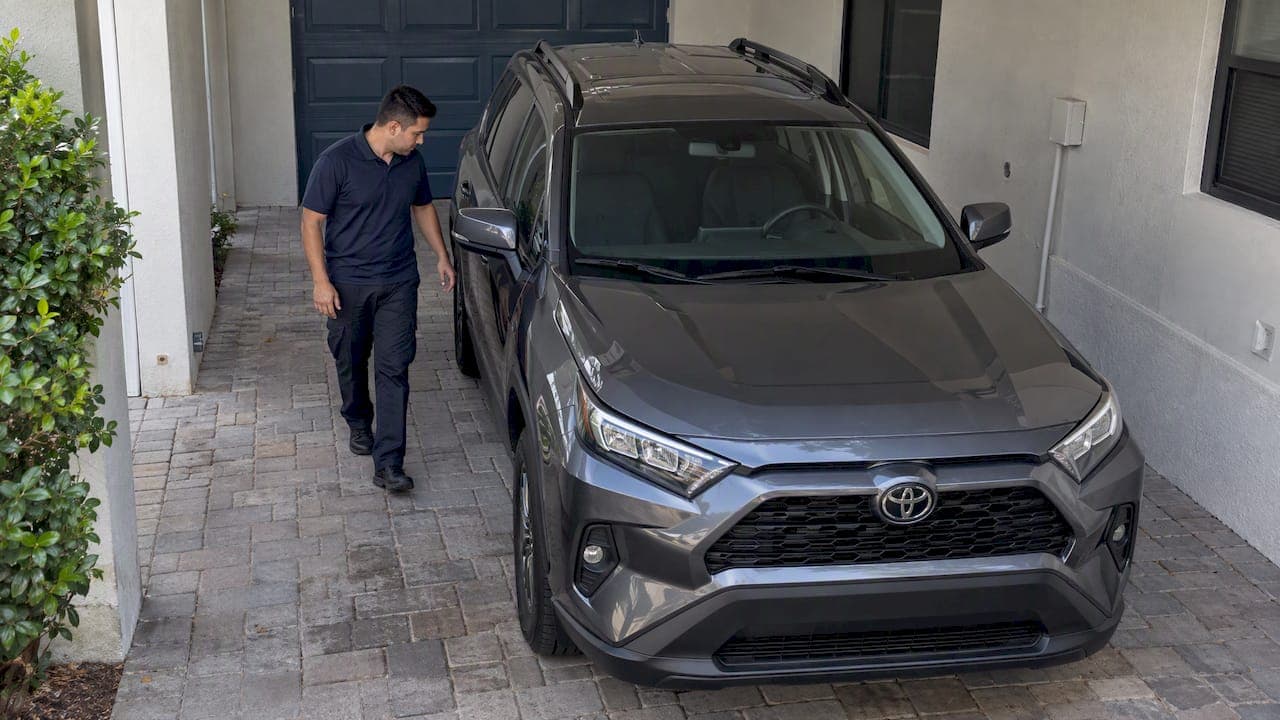
For a successful mobile tint installation, park on a clean, level, sheltered or shaded surface with at least 3 to 4 feet of clearance on each side so the installer can safely access every window. You'll also want clear access to the doors and hatch, calm weather, and ideally a nearby outlet or good lighting. The checklist below covers the details, and we're always happy to talk through tricky spots ahead of time.
TL;DR:
- Leave roughly 3 to 4 feet of clearance on each accessible side, with extra headroom for doors and rear hatches to open fully.
- Choose a clean, level, sheltered spot; wind, rain, and dust can disrupt film handling or adhesion, so seek cover or reschedule in severe weather.
- Clear loose belongings from the dash, seats, door pockets, and rear window ledge; remove suction mounted accessories and ensure every door and hatch opens fully.
- Most jobs take 45 minutes to a couple of hours, so reserve the parking space for the full appointment and keep it clear.
- For gated communities, restricted parking, or tight access, share entry details and photos with the installer before arrival to avoid delays.
Table of Contents
- Recommended Work Area and Environmental Conditions
- Space, Clearance, and Vehicle Positioning Rules
- Access, Utilities, and Weather Considerations
- Vehicle Prep Actions That Affect Parking and Access
- Common Obstacles and Practical Solutions
- Customer Checklist to Prepare the Parking Spot
- Installer Perspective: Why Parking and Site Prep Matter
- How We Handle Tight Parking and Unusual Setups
- FAQ
- Sources
Recommended Work Area and Environmental Conditions
A mobile tint install works best in conditions close to a shop environment: clean, dust-free, and well lit. 3M's installation guidelines call for a dust-free, well-lit work area and specific site-prep steps to avoid contamination, since even small airborne particles can create blemishes trapped under the film. Garages and carports come closest to those conditions, but a clean, swept driveway works fine for most jobs.
Temperature and humidity matter too. Film adhesives perform best in moderate, dry conditions, so very hot, humid, or windy days can slow the process or affect how the film sets. We can still work outdoors in most weather, but extreme conditions may call for a shaded spot or a short delay.
If you don't have a garage, these options help:
- A carport or covered patio keeps dust and direct sun off the glass.
- A portable canopy creates a controlled space in an open driveway.
- Sweeping the area beforehand cuts down on loose dirt and debris.
- Parking away from trees or sprinklers avoids pollen and water spray.
Pro Tip: If your only parking option is a busy street, ask a neighbor about a quieter driveway for the day. It usually cuts install time.
Space, Clearance, and Vehicle Positioning Rules
Installers need room to move around the vehicle without bumping tools or films against the body. A gap of roughly 3 to 4 feet on each accessible side is the practical minimum, and more room is better for larger vehicles like trucks or SUVs with wide doors.
Headroom counts too. Tall vehicles and hatchbacks need enough vertical clearance for doors and liftgates to open fully without hitting a garage ceiling or low carport beam.
A level surface keeps the vehicle stable and makes window alignment easier. Before the installer starts:
- Set the parking brake and leave the vehicle in park or in gear.
- Avoid steep driveways where doors could swing shut unexpectedly.
- Position the vehicle so the most difficult access point, often the rear hatch or windshield, faces open space rather than a wall or fence.
A little planning here saves real time once the installer arrives.
Access, Utilities, and Weather Considerations
Power and lighting aren't always required, but they help. Many mobile crews bring portable lighting and work independently of household power, though an available outlet is a nice backup for longer jobs or darker garages.
Weather is the bigger factor. Wind kicks up dust and makes film handling harder, while rain can introduce moisture that affects adhesion. If conditions look rough:
- A covered garage or carport lets the install proceed as scheduled.
- A canopy setup can shield the work area from light rain or sun.
- Rescheduling is sometimes the simplest fix for heavy wind or storms.
Street parking, metered spots, and gated communities need a little extra coordination. If you're in a gated or condo lot, let us know ahead of time so we can arrange access, and check whether a temporary parking permit applies to your location before the appointment.
Vehicle Prep Actions That Affect Parking and Access
A few simple steps the night before or morning of your appointment make the install smoother and protect your vehicle's interior, including removing loose items from areas like the dashboard, door pockets, and rear window ledge. 2. Clear personal belongings from seats near the windows being tinted. 3. Take off suction-mounted accessories like phone holders, dash cams, or temporary parking tags. 4. Make sure all doors, including the trunk or hatch, can open fully without obstruction.
Avery's automotive installation bulletin recommends protecting interior trim and upholstery with plastic sheeting or towels during the process, and it specifically warns against using scrapers near rear demister wires, since those heating elements can be damaged by the wrong tool.
Occasionally, a vehicle's door trim or molding needs light adjustment for full access. When that's the case, your installer will need a bit more clearance around that door than the usual 3 to 4 feet.

Pro Tip: Snap a few photos of your parking area the day before. It helps your installer plan tools and timing in advance.
Common Obstacles and Practical Solutions
Every property is different, and some setups need a quick workaround:
- Steep or narrow driveways: a nearby flat spot on the street or a neighbor's driveway often solves the clearance problem.
- Gated communities: let your installer know in advance so access codes or visitor passes are ready.
- Restricted hours in condo or HOA lots: confirm whether a time window or temporary permit applies.
- Covered public parking: a good fallback when home parking doesn't offer enough shelter or room.
- Low-clearance garages: measure ceiling height first if you're installing on a taller SUV or truck.
Letting your installer know about gates, permission requirements, or tight access before the appointment, rather than at arrival, keeps your scheduled time block intact. For unusual setups, building in extra time, or rescheduling for a clearer day, is often the simplest solution.
Customer Checklist to Prepare the Parking Spot
A little prep the day of your appointment keeps things moving smoothly:
- Clear a 3 to 4 foot perimeter around the vehicle on all accessible sides.
- Remove personal items from the dash, seats, and door pockets.
- Unlock gates or share access codes if you're in a gated property.
- Reserve the time block so the spot stays open for your appointment.
- Check the weather forecast and plan for shelter if rain or wind is expected.
- Confirm the exact parking spot and a contact number with your installer.
Most mobile tint jobs take between 45 minutes and a couple of hours depending on vehicle size and film type, so reserve your space accordingly. If your parking situation is tight or unusual, sending a few photos ahead of time helps your installer arrive prepared.
Installer Perspective: Why Parking and Site Prep Matter
Poor parking conditions are the most common reason a mobile install runs long. Dust, uneven ground, or boxed-in doors slow every step and raise the risk of contamination under the film. We've adjusted on the spot plenty of times, bringing a canopy for a sunny driveway or repositioning a vehicle for better hatch access.
Most edge cases, tight gates, odd driveway angles, HOA rules, get solved with a quick text or a couple of photos before we arrive. A few minutes of communication upfront almost always means a faster, cleaner job on-site.
— Jose
How We Handle Tight Parking and Unusual Setups
We've worked in enough driveways, garages, and condo lots across Miami-Dade to know that no two parking situations look the same, and we build our process around that. Our installers bring portable lighting and setup gear so a standard driveway or carport works just as well as a dedicated bay.
Here's what we bring to make almost any parking situation workable:
- A mobile canopy for sun or light rain protection when a garage isn't available.
- Portable lighting for garages, shaded driveways, or early morning appointments.
- Installers experienced with tight driveways, gated communities, and condo lots.
- Premium window tint films that offer heat rejection and UV protection.
If your parking setup is unusual, such as a steep driveway, a gated lot, or a tight street spot, send us a photo and a gate code or access note when you book. Browse our mobile window tinting options or head to our booking page to schedule a time that works for your space.
FAQ
Do I need a permit to have a mobile tint installer park at my home?
Most residential driveways don't require a permit for a short mobile service visit. If you live in a gated community, condo complex, or an area with metered or restricted street parking, check with your HOA or local parking authority beforehand, and a windshield permit placement guide can help if you already use a hang tag or decal that needs repositioning.
How much clearance does a mobile tint installer need around my car?
Plan for roughly 3 to 4 feet of open space on each side of the vehicle so the installer can open doors and move around safely. Taller vehicles or ones with a rear hatch may need extra vertical clearance as well.
Can a mobile tint job happen in the rain or wind?
Light rain or wind can sometimes be managed with a canopy or a covered garage, but heavier conditions usually call for rescheduling to protect the film and the install quality. A rain-day windshield checklist offers useful prep questions if weather is a concern for your appointment.
What should I remove from my vehicle before the installer arrives?
Clear loose items from the dash, door pockets, and rear window ledge, and remove any suction-mounted accessories or temporary tags. Protecting your dashboard and seats beforehand also speeds up the install itself.
How long does a mobile tint appointment usually take?
Most jobs run somewhere between 45 minutes and a couple of hours depending on the vehicle and film type. Reserving that block of time in your driveway or parking spot keeps the appointment on schedule.
Sources
- 3M™ Safety & Security Window Films — Installation Guidelines (Technical Bulletin, Revision C, January 2025)
- IB 7.1 - Automotive Window Film Installation (Avery Dennison)