
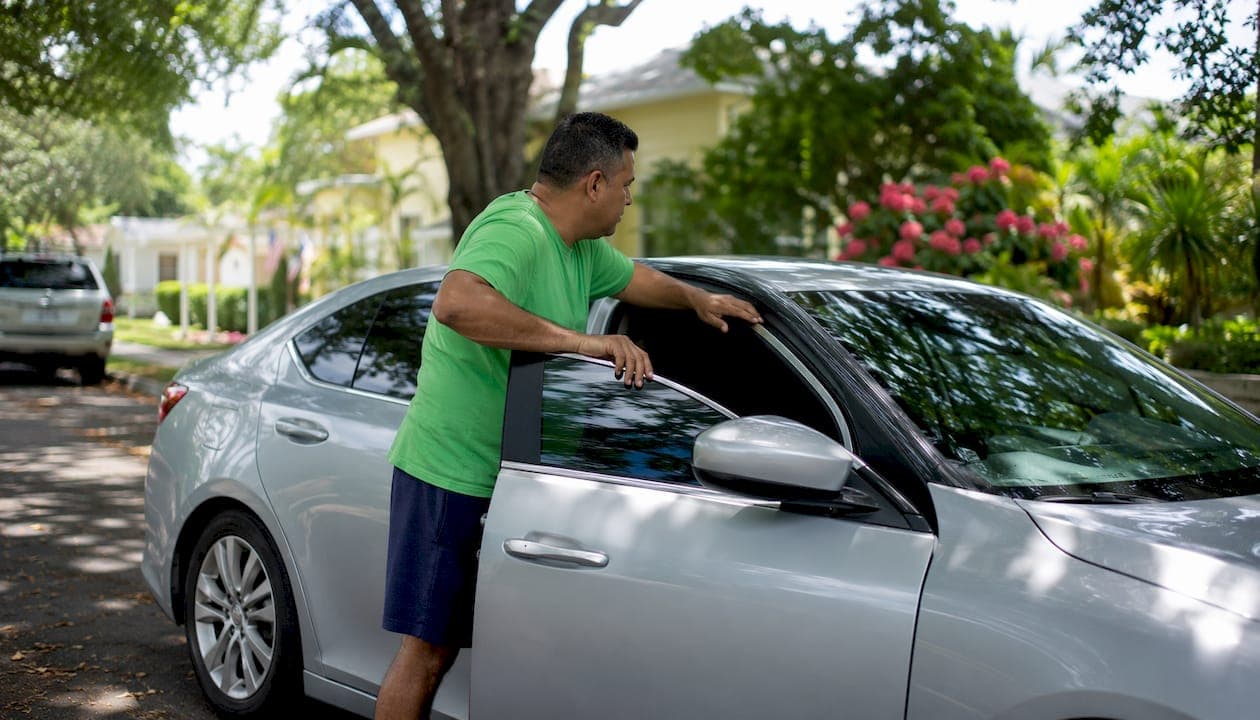
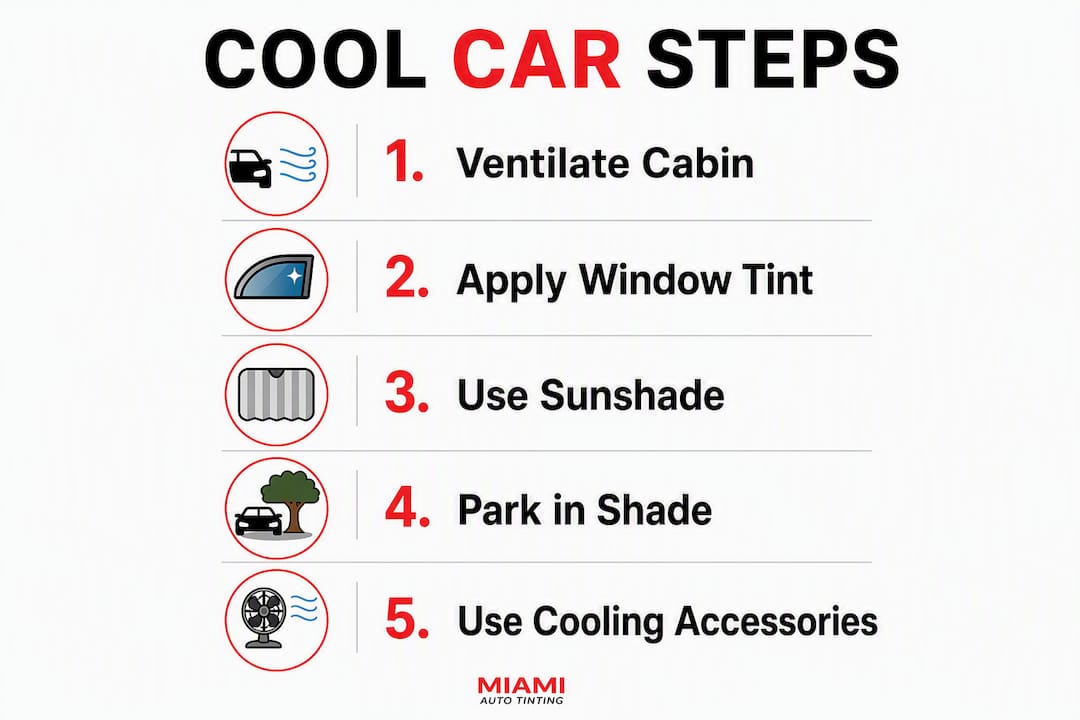
Open the passenger window, then rapidly open and close the driver's door several times to flush hot air out of the cabin. Start the engine, set the A/C to fresh air with windows cracked for one minute, then close up and switch to recirculate for fastest cooling. Place a reflective sunshade on the windshield every time you park. Those three steps handle the immediate problem. The long-term fix is professional ceramic window tinting, installed at your location by a certified mobile technician.
Why urgency matters: a parked car rises roughly 40°F in an hour, and about 80% of that rise happens in the first 30 minutes. A proper reflective sunshade can lower cabin air temperature by 18–20°F and drop dashboard temps by 46–51°F, according to the Florida Solar Energy Center. Act before you get in, not after.
Quick actions that work right now:
- Door-pump flush: open one window, rapidly open and close the opposite door 5–6 times to push hot air out before you start the engine.
- A/C sequence: fresh-air mode, cold setting, windows cracked for 60 seconds, then close and switch to recirculate.
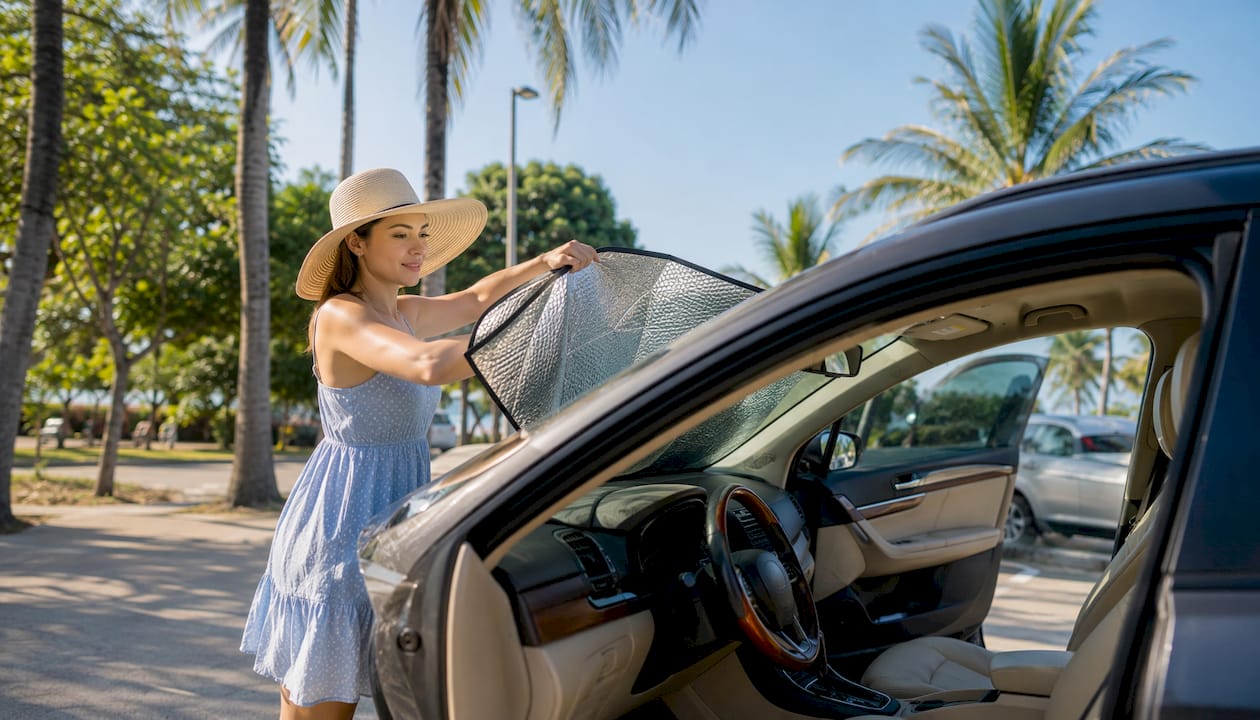
- Reflective sunshade: place it every time you park, even for short stops. Covering side and rear windows adds more protection.
- Park smart: shade from a building or covered garage cuts heat buildup more than any accessory.
One caution: even after cabin air cools quickly, seats and the dashboard retain heat. Give surfaces a minute before settling in, especially with leather.
Table of Contents
- How to keep your window tint working at full strength
- What are the real drawbacks of window tinting?
- Aftermarket accessories that actually reduce interior heat
- How Miami-Dade weather makes car heat a year-round problem
- What Miami-Dade drivers say about mobile ceramic tinting
- Southmiamitint brings professional ceramic tinting to your driveway
- Key Takeaways
How to keep your window tint working at full strength
Ceramic tint loses effectiveness faster when it's cleaned wrong. Avoid ammonia-based cleaners entirely; they degrade the film's adhesive and reduce IR rejection over time. Use a soft microfiber cloth with a mild, ammonia-free cleaner. After a fresh install, observe the manufacturer's cure period — typically several days — before rolling windows down or cleaning the glass. Keep your warranty card, film brand name, and installer certificate together; you'll need them if a warranty claim comes up.
What are the real drawbacks of window tinting?
Higher IR rejection films can slightly affect nighttime visibility depending on the visible light transmission (VLT) level your installer selects. Florida law sets minimum VLT limits by window position, so your installer must match the film to those legal thresholds. Dyed films fade faster than ceramic options, gradually losing heat rejection without looking obviously worn. Ask your installer for the spec sheet showing TSER, IR rejection percentage, and VLT before committing to a film. That one step prevents most buyer's remorse.
Aftermarket accessories that actually reduce interior heat
Window tint handles the biggest share of solar heat gain, but a few accessories fill the gaps. A reflective windshield sunshade is the highest-impact add-on for a parked car. Light-colored fabric seat covers prevent leather and vinyl from storing heat, making re-entry far more comfortable. A steering wheel cover does the same for the one surface you touch immediately. For broader vehicle heat protection, a partial exterior car cover over the roof and windshield outperforms interior shades in direct-sun testing. Metal seatbelt buckles get dangerously hot too; a small towel over them costs nothing.
How Miami-Dade weather makes car heat a year-round problem
Miami-Dade sits at roughly 25°N latitude with high humidity and intense solar radiation for most of the year. Unlike northern climates where car heat is a summer-only concern, South Florida drivers deal with cabin temperatures exceeding comfortable levels from March through November and often beyond. High humidity slows the A/C's ability to reach comfort quickly, which means the initial cabin temperature matters more here than in drier climates. Ceramic films outperform basic dyed films in this environment because they reject infrared radiation without relying on darkness or heavy tint, preserving visibility while cutting solar load. The combination of year-round sun intensity and humidity makes professional ceramic tinting a practical necessity in Miami-Dade, not just a comfort upgrade.
What Miami-Dade drivers say about mobile ceramic tinting
Drivers across Miami-Dade consistently report two things after a professional ceramic tint install: the cabin is noticeably cooler when they return to a parked car, and the A/C reaches comfort faster on the drive. Mobile installs get high marks specifically for convenience — no drop-off, no waiting room, no arranging a ride. Customers who upgrade from basic dyed film to 3M Ceramic IR or Iviron KoolMax ceramic tint frequently note the difference in heat rejection is immediate and visible. Reviews also highlight that a certified mobile installer who shows up on time, preps the glass properly, and walks through the warranty at handoff builds far more trust than a quick shop install with no documentation.
Southmiamitint brings professional ceramic tinting to your driveway
Skip the shop wait. Southmiamitint installs premium ceramic window tint at your home, office, or anywhere in Miami-Dade County. The films on offer are 3M Ceramic IR and 3M Color Stable — both engineered for strong IR rejection and long-term color stability — plus Iviron KoolMax ceramic tint as a high-performance alternative. All three deliver meaningful heat reduction, UV protection, and minimal visibility impact.
The mobile process is straightforward: a technician arrives, inspects the glass, cleans and preps every surface, cuts the film precisely, and applies it on-site. You get a walkthrough of the warranty and care instructions before the technician leaves. Ceramic mobile tint starts at $249, with pricing varying by vehicle size, number of windows, and film choice. Before booking, ask for the TSER and IR rejection specs for the film you're considering, confirm the installer's certification, and request before-and-after photos. Get a quote today and have cooler drives starting this week.
Key Takeaways
Professional ceramic window tinting is the most effective long-term way to reduce car interior heat in Miami-Dade, with immediate tactics like the door-pump flush and a reflective sunshade handling the short-term problem.
| Point | Details |
|---|---|
| Act in the first 30 minutes | Roughly 80% of the cabin heat rise happens in the first 30 minutes, so preemptive steps matter most. |
| Sunshade impact | A reflective sunshade can lower cabin air temp by 18–20°F and cut dashboard temps by 46–51°F. |
| Tint maintenance | Use ammonia-free cleaners and observe the cure period to preserve IR rejection and warranty coverage. |
| Film selection | Ask for TSER and IR rejection specs; ceramic films outperform dyed films in Miami's year-round solar load. |
| Southmiamitint mobile install | Ceramic tint from $249, installed at your location in Miami-Dade using 3M Ceramic IR, 3M Color Stable, or Iviron KoolMax. |