
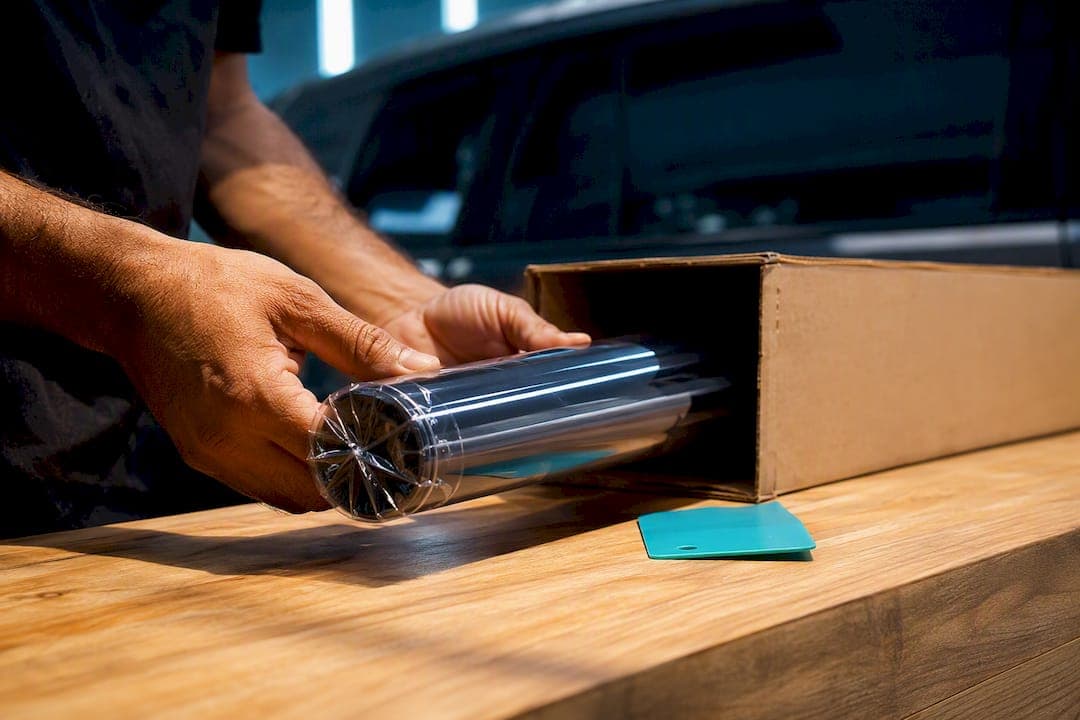
If your tint has no visible lot code on the box, or your installer can't produce the roll it came from, you likely have fake 3M tint. The fastest fix takes two minutes: ask to see the box or roll and enter the 10-digit secure code into 3M's Safe Guard validation tool. A green result confirms authenticity; anything else means it's time to dig deeper.
TL;DR:
- Authentic 3M tint can be verified quickly by entering its secure 10-digit code into 3M's official Safe Guard tool, with a green result confirming authenticity.
- Visual signs of counterfeits include haze, patchy bubbles, purpling, adhesive residue, and inconsistent shading across windows, especially shortly after installation.
- Genuine 3M packaging features clear lot and series branding, while counterfeit products often arrive in generic, poorly printed boxes or rolls without proper codes.
- Reputable installers always display the roll and box before installing, record the lot number on the invoice, and specify the exact product series to protect your warranty.
- Buyers should request IRR, UV blockage, and VLT measurements, and avoid trusting solely dark tint to judge performance, as lighter ceramic films can outperform darker dyed options.
Table of Contents
- What Fake 3M Tint Looks Like Before and After Installation
- Testing Tint Performance Without Special Equipment
- Using 3M Safe Guard and Verify to Confirm Authenticity
- What to Do If You Suspect Counterfeit Film
- Buying Habits That Keep You Away From Counterfeit Film
- What Years Of Installations Teach You About Fake Film
- The Real Lesson Buyers Miss About Fake Tint
- Book Verified 3M Installation With Southmiamitint
- Verify and Report Counterfeit Film Directly
- Sources
What Fake 3M Tint Looks Like Before and After Installation
Counterfeit film rarely looks perfect, even fresh off the roll. The most common giveaways show up in the film itself, not just the paperwork behind it.
Watch for these visual defects during the quote and right after installation:
- Haze or cloudiness that doesn't clear up after the first few days of curing
- Bubbles that appear in patches rather than the thin, even water bubbles expected during normal curing
- Purpling or fading, a telltale sign of cheap dye-based film breaking down under UV exposure
- Adhesive residue visible at the edges or bleeding through the film surface
- Inconsistent shade from panel to panel, especially between the front doors and rear windows
Packaging tells its own story. Genuine 3M film ships in boxes and on rolls with clean, consistent printing, a visible lot code, and clear series branding like Crystalline or Ceramic IR. Counterfeit product often arrives in generic packaging, with smudged or missing print, no roll branding at all, or a box that doesn't match the film supposedly inside it. Counterfeit films also tend to show early bubbling, poor UV and IR performance, and no valid manufacturer warranty behind them, which is exactly why the packaging details matter so much.
Installer behavior matters just as much as the film. A shop that hesitates to show you the roll before installing, hands you a vague one-line invoice that just says "window tint," or pressures you to sign and pay before you've seen any packaging is raising a real flag. A legitimate 3M installer has nothing to hide about where the film comes from.
That said, not every imperfection means you've been sold fake 3M tint. Some minor edge lifting in the first 48 hours, light haze during the curing window, or small bubbles that flatten out over a week are normal parts of the installation process. The difference is timing and pattern: normal curing artifacts fade and resolve; counterfeit defects tend to persist or worsen.
Pro Tip: Take photos of the roll, the box, and the installed film on day one. If problems show up later, you'll have a timestamped record that makes both warranty claims and counterfeit reports much easier to support.
Testing Tint Performance Without Special Equipment
You don't need a lab to catch obvious problems, but you do need to know what you're actually testing. Try these checks before assuming everything is fine:
- Look at evenness first. Stand back from the vehicle and check whether the visible light coming through each window looks the same shade. Uneven tone across panels from the same roll is unusual for genuine film.
- Feel the heat difference. Place your hand near a tinted window and an untinted one on a sunny day. A real ceramic film should feel noticeably cooler to the touch than the same spot without tint.
- Ask for actual numbers. Request IRR (infrared rejection), UV blockage, and VLT (visible light transmission) readings from your installer. These are objective, measurable figures, not guesses.
Here's the part most buyers get wrong: a darker film is not automatically a better-performing one. VLT and heat rejection are two different measurements, and a lighter ceramic film can outperform a much darker dyed film on heat blocking. If your installer only talks about how dark the tint looks and never mentions IRR or UV numbers, that's worth questioning.
When your at-home checks raise doubts, or your film underperforms what the product series claims, ask for a professional meter reading or, in a dispute, a lab test. That data becomes your strongest evidence if you need to file a counterfeit report later.
Using 3M Safe Guard and Verify to Confirm Authenticity
Every genuine roll and box carries two identifiers: a 10-digit secure code and a 6-digit lot code, usually printed on the bottom of the box or along the edge of the roll itself. These aren't marketing stickers. They're the backbone of 3M's authentication system.
Here's how the check works:
- Locate the secure code on the box or roll
- Enter it into 3M's Safe Guard authentication tool
- A green result confirms the product is genuine 3M film
- A yellow or red result signals a problem. Treat it as an immediate warning sign
3M also offers a Safe Guard mobile app that runs the same code check from your phone, which is useful if you're standing in a driveway watching an installer unload a roll.
If a code is missing, smudged beyond reading, or flagged as suspect, that's not a minor paperwork issue. It usually means the film wasn't sourced through an authorized channel, and it puts any warranty claim at risk. Authenticated product backs up 3M's tested performance claims for IR rejection, UV blocking, and durability. Fake film has none of that testing behind it, no matter how convincing the box looks.
What to Do If You Suspect Counterfeit Film
Move fast and document everything before you confront anyone. Evidence collected in the first few days is far more useful than a memory of what happened weeks later.
- Photograph the evidence. Get clear shots of the box, the roll (including the code area), any visible film defects, and your full invoice.
- Record installer details. Business name, technician name, phone number, and the date of installation all matter later.
- Contact the installer first. Request a replacement or refund and give them a chance to make it right.
- Run the Safe Guard check. If you haven't already, enter the codes and save a screenshot of the result.
- Report to 3M directly. Use 3M's counterfeit reporting form if the installer won't cooperate or the codes fail verification.
- Escalate if needed. A credit card dispute, your state consumer protection office, or a Better Business Bureau complaint are all valid next steps when a shop refuses to resolve the issue.
When 3M investigates a report, expect them to ask for your photos, the lot code, and your invoice. Keep the physical packaging until the matter is closed. Industry watchdogs have flagged a rise in counterfeit film and price gouging tied to fraudulent sellers, so a clear paper trail protects you if the case takes time to resolve.
Buying Habits That Keep You Away From Counterfeit Film
Prevention beats detection every time. A little diligence before you book saves you the entire headache of a counterfeit dispute later.
- Buy through authorized dealers or insist on seeing the roll and box before installation begins
- Request an itemized invoice that names the exact product series, such as 3M Crystalline, 3M Ceramic IR, or 3M Color Stable, not a generic line item
- Get the lot number in writing on your invoice or warranty paperwork
- Question prices that seem too low. Extreme discounts on premium branded film are one of the clearest signs of a bait-and-switch, where a shop quotes 3M pricing but installs unbranded substitute film
Before you book, ask the shop three direct questions: Can you show me the roll before you install it? Will you write the lot number on my invoice? Does this come with 3M's manufacturer warranty, and can I see that paperwork? A shop with nothing to hide will answer all three without hesitation.
Pro Tip: Save your invoice and warranty paperwork in the same place you keep your vehicle registration. If you ever need to file a warranty claim, having the series name and lot number ready cuts the process down from weeks to days.
What Years Of Installations Teach You About Fake Film
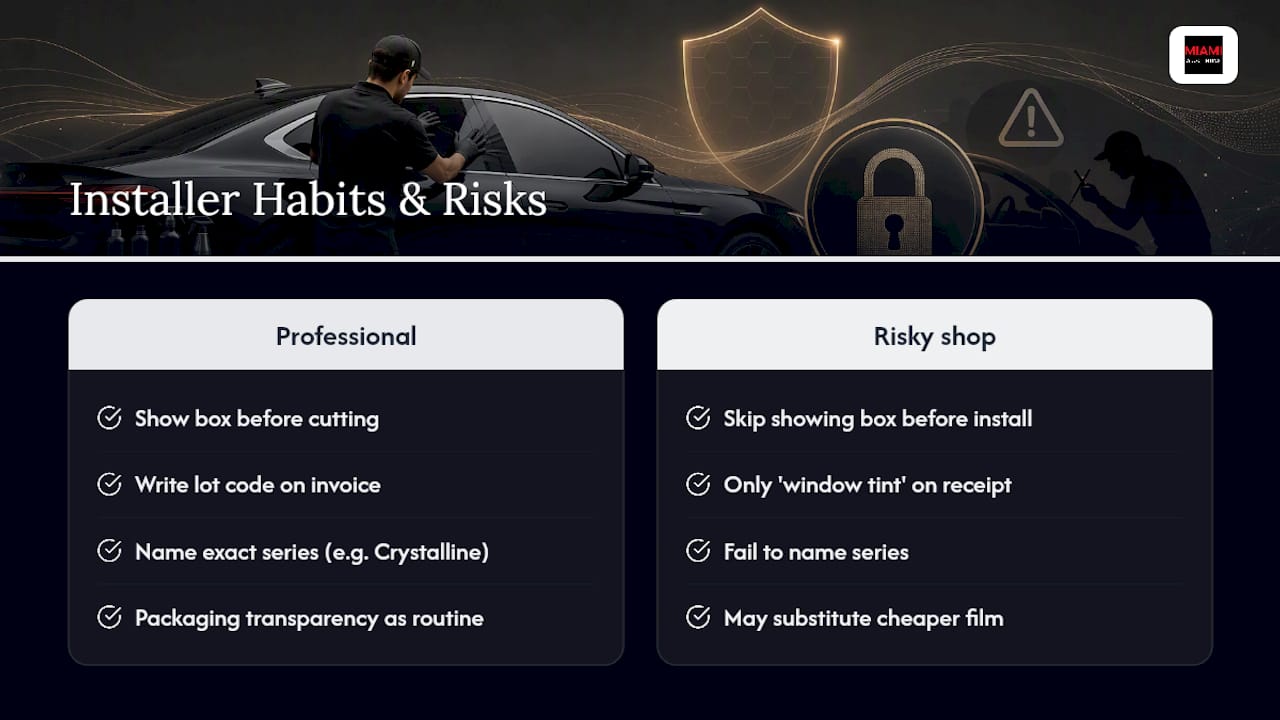
Every reliable installer I've watched work follows the same habits without being asked. They show you the box before they cut a single piece of film. They write the lot code on your invoice, not just "window tint" on a receipt. They name the exact series, whether that's Crystalline or Ceramic IR, because that name is what protects your warranty later.
Most counterfeit problems trace back to one failure point: a buyer never saw the packaging before installation started. Shops that skip that step, whether through carelessness or intent to substitute cheaper film, create the exact conditions where fake product slips through. A professional shop treats packaging transparency as a routine business practice, not a special request.
Southmiamitint's 3M Ceramic film work follows this same standard on every job in Miami-Dade County. That's not a claim unique to any one installer. It's simply what a shop confident in its sourcing does every time.
The Real Lesson Buyers Miss About Fake Tint
Most advice on this topic focuses on spotting bubbles and haze after the fact. That's useful, but it treats counterfeit tint as a detection problem when it's really a verification problem you can solve before installation ever starts.
The single highest-leverage habit isn't learning to identify purpling or adhesive failure weeks later. It's requiring the box, the roll, and the Safe Guard code check upfront, before any film touches your glass. Everything downstream, from warranty protection to easy reporting if something goes wrong, depends on that one step happening first.
Buyers who skip it aren't being careless. They're trusting a system that assumes every seller is honest about sourcing. That assumption is exactly what counterfeit sellers count on. Ask for the code check first, and the rest of this guide becomes a backup plan you'll likely never need.
— Jose
Book Verified 3M Installation With Southmiamitint
Some installers make sure to show you the box before cutting, record the lot number on your invoice, and name the exact series, such as 3M Crystalline, 3M Ceramic IR, or 3M Color Stable, in writing.
Some mobile tinting services allow you to watch the entire installation process from unboxing to final trim, providing documentation useful as warranty backup if needed, and also offer insights on interior ceramic coating that can complement ceramic tint protection. We also install Iviron KoolMax ceramic tint for buyers comparing ceramic options side by side, with the same paperwork standard on every job.
Ready to see current pricing for your vehicle? Check mobile ceramic tint pricing starting at $249 and book a verified installation at your location in Miami-Dade County.
Verify and Report Counterfeit Film Directly
Run the code check yourself through 3M's Safe Guard authentication tool, and file a report through 3M's counterfeit reporting process if results come back flagged. For a deeper look at film clarity and optical quality, see how tint clarity affects your view and film performance.
Sources
- 3M Safe Guard™ Product Authentication Process
- New warning from 3M: fraudulent activity, price gouging and counterfeit products
- 3M window tint film review — Crystalline, Color Stable, and FX