
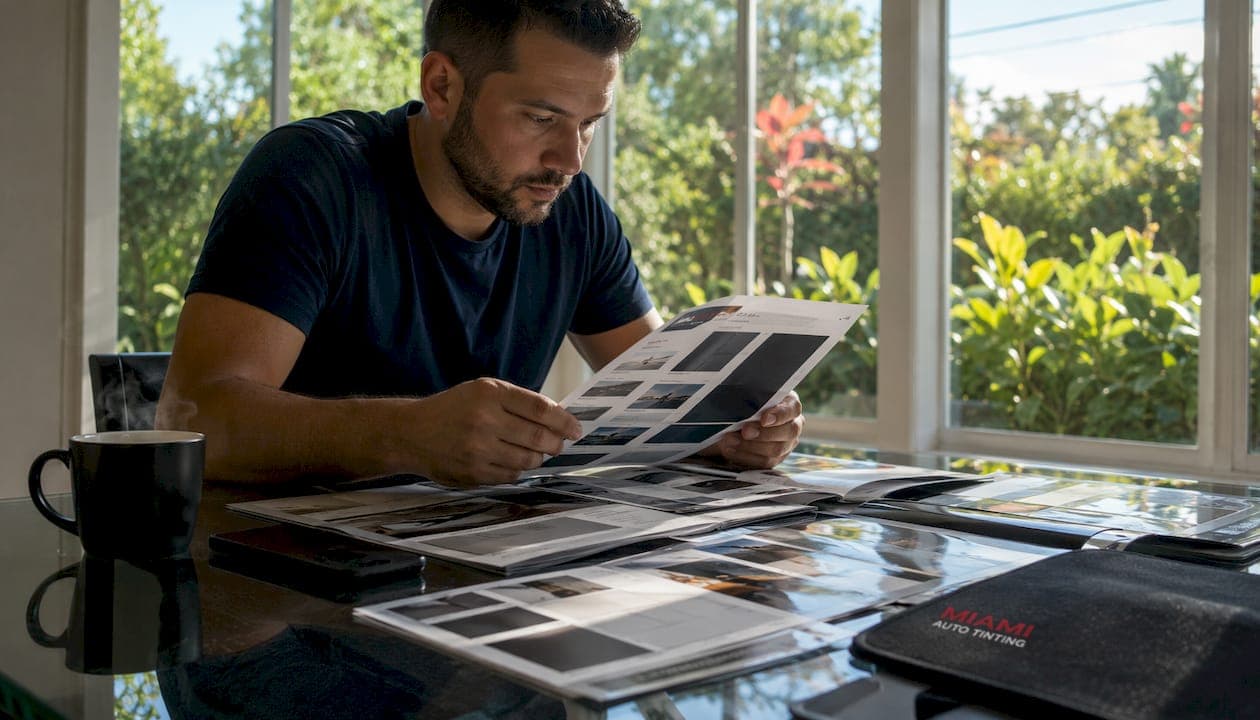
If you're looking for TintPower.com alternatives, the strongest options in the U.S. right now are 3M, Iviron Kollmax, and Southmiamitint, each offering advanced ceramic film technology, professional installation, and clear legal compliance support. TintPower sells window tint film and kits online, but many drivers and homeowners find they want either a higher-performance film, a professional mobile installer, or both. The table below gives you a fast side-by-side view.
| Provider | Film Type | Price/Value | Heat & UV Protection | Legal Compliance | Installation |
|---|---|---|---|---|---|
| TintPower | Dyed, carbon, basic ceramic | Budget-friendly | Moderate | Limited guidance | DIY kits |
| 3M | Nano-ceramic, Color Stable, IR | Mid to premium | Excellent | Strong | Professional |
| Iviron Kollmax | Nano-ceramic | Mid to premium | Excellent | Strong | Professional |
| Southmiamitint | 3M IR, 3M Color Stable, Iviron Kollmax | Competitive | Excellent | Yes, Miami-Dade compliant | Mobile professional |
Why consider an alternative?
- 3M and Iviron Kollmax films block infrared heat and UV rays at a level that basic dyed films cannot match.
- Professional installation eliminates the bubbling, peeling, and debris contamination common with DIY kits.
- Mobile services like Southmiamitint come to your location, removing the need to drop off your vehicle.
- Providers with local expertise know your state's VLT laws and help you stay compliant from day one.
Table of Contents
- What film types do TintPower alternatives actually use?
- What are the legal tint limits you need to know by state?
- How do you evaluate price and value beyond the sticker cost?
- Pros and cons of the top TintPower alternatives
- What does TintPower actually offer?
- What criteria should you use to choose a window tint provider?
- Red flags to avoid when selecting a tint service
- How long does window tinting take from order to completion?
- What do customer reviews say about TintPower and its alternatives?
- Professional installation vs. DIY tint kits: which is right for you?
- Southmiamitint brings premium mobile tinting directly to you
- Key Takeaways
What film types do TintPower alternatives actually use?
Film technology is where the biggest performance gap between providers shows up. Nano-ceramic film is the highest quality window tint available in the U.S., blocking infrared heat and UV rays without interfering with GPS, cell signals, or toll transponders. That last point matters more than most buyers realize until they install a metallic film and lose signal on the highway.
Here's how the main film types compare:
- Nano-ceramic: Blocks infrared heat and UV rays using non-conductive ceramic particles. No signal interference. Longest lifespan. Used by 3M IR and Iviron Kollmax.
- Carbon: Good heat rejection, no metal content, matte finish. More affordable than ceramic but slightly lower infrared blocking.
- Dyed: Lowest cost. Absorbs some heat but fades over time and offers minimal infrared protection. Common in budget kits.
- Metallic: Strong heat rejection but can block GPS, cell service, and keyless entry signals. Falling out of favor with professional installers.
A ceramic 35% film often outperforms a cheap dyed 20% film for heat comfort, which means shade percentage alone doesn't tell the whole story. The film technology matters as much as the darkness level when you're comparing products side by side.
Pro Tip: Even the best film underperforms if installed in a dusty environment. Dust and debris trapped during installation cause premature bubbling and failure regardless of the film's brand or price. Ask any provider whether they use a clean-room setup or a moisture-controlled mobile environment before you book.
What are the legal tint limits you need to know by state?
Window tint laws in the U.S. vary significantly by state, and picking the wrong darkness level can cost you. VLT, or visible light transmission, measures how much light passes through the glass. The lower the VLT percentage, the darker the tint.
A tint level around 35% VLT usually balances legal compliance and visibility better than darker options, which offers more privacy but carries higher legal risk and reduces night visibility. For most drivers, a moderately light tint on front windows and a darker tint on rear windows is a commonly recommended combination that balances legality and night driving safety.
Enforcement adds another layer of complexity. Fines for illegal tint can be substantial, sometimes reaching a few hundred dollars, and officers often issue warnings first unless the tint is severely dark. Rhode Island is one of the strictest states, where thousands of violations were issued in a three-year period for tint that didn't meet the state's 70% VLT minimum. On the other end, some states allow very dark tinting on rear windows.
Legal compliance tips when choosing a tint provider:
- Confirm the provider knows your specific state's VLT limits before installation.
- Ask whether they issue a certificate of compliance or window sticker after the job.
- Avoid any installer who can't tell you the exact VLT of the film they're using.
- Check Miami auto tinting regulations if you're in Florida, where front side windows must allow more than 28% VLT.
- Front windshield tinting is banned or heavily restricted in nearly every state, so skip any provider pushing that option.
How do you evaluate price and value beyond the sticker cost?
Price alone is a poor guide when comparing window tint providers. A $99 DIY kit looks cheap until the film peels at six months and you're paying again. The real cost of a tint job includes the film's lifespan, the installation quality, and what happens when something goes wrong.
Key factors that affect the total value of any tint service:
- Film type: Nano-ceramic costs more upfront but lasts significantly longer than dyed film and performs better in heat.
- Installation method: Mobile services charge for convenience but save you time and often deliver cleaner results in controlled environments.
- Warranty terms: A reputable installer backs their work with a written warranty covering bubbling, peeling, and color fade. No warranty is a red flag.
- Installer reputation: Check Google reviews and ask how long the business has been operating. Experienced installers make fewer mistakes.
- Customer service: A provider who answers questions about VLT percentages and state laws before you book is one who takes compliance seriously.
Low price often signals compromised quality or poor customer service. If a quote seems unusually low, ask specifically what film brand and series they're using. Vague answers like "ceramic blend" without a brand name are worth questioning.
Pros and cons of the top TintPower alternatives
| Provider | Film Type | Price/Value | Heat & UV Protection | Legal Compliance | Installation |
|---|---|---|---|---|---|
| 3M | Nano-ceramic, Color Stable, IR | Mid to premium | Excellent, blocks IR and UV | Widely supported | Professional shop |
| Iviron Kollmax | Nano-ceramic ceramic | Mid to premium | Excellent | Supported | Professional |
| Southmiamitint | 3M IR, 3M Color Stable, Iviron Kollmax | Competitive, mobile | Excellent | Miami-Dade compliant | Mobile, comes to you |
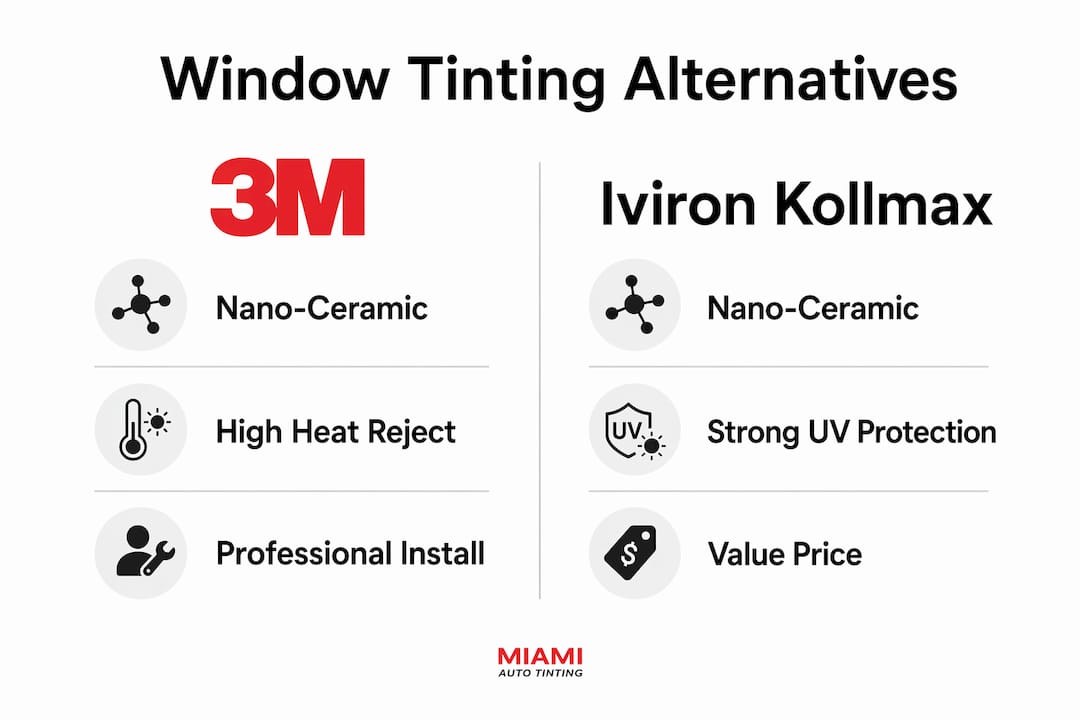
3M is one of the most recognized names in window film. Its IR and Color Stable lines use nano-ceramic technology that blocks infrared heat without signal interference. You'll find 3M-certified installers across the country, which makes it accessible no matter where you live. The main trade-off is cost: premium 3M film installed professionally sits at the higher end of the market.
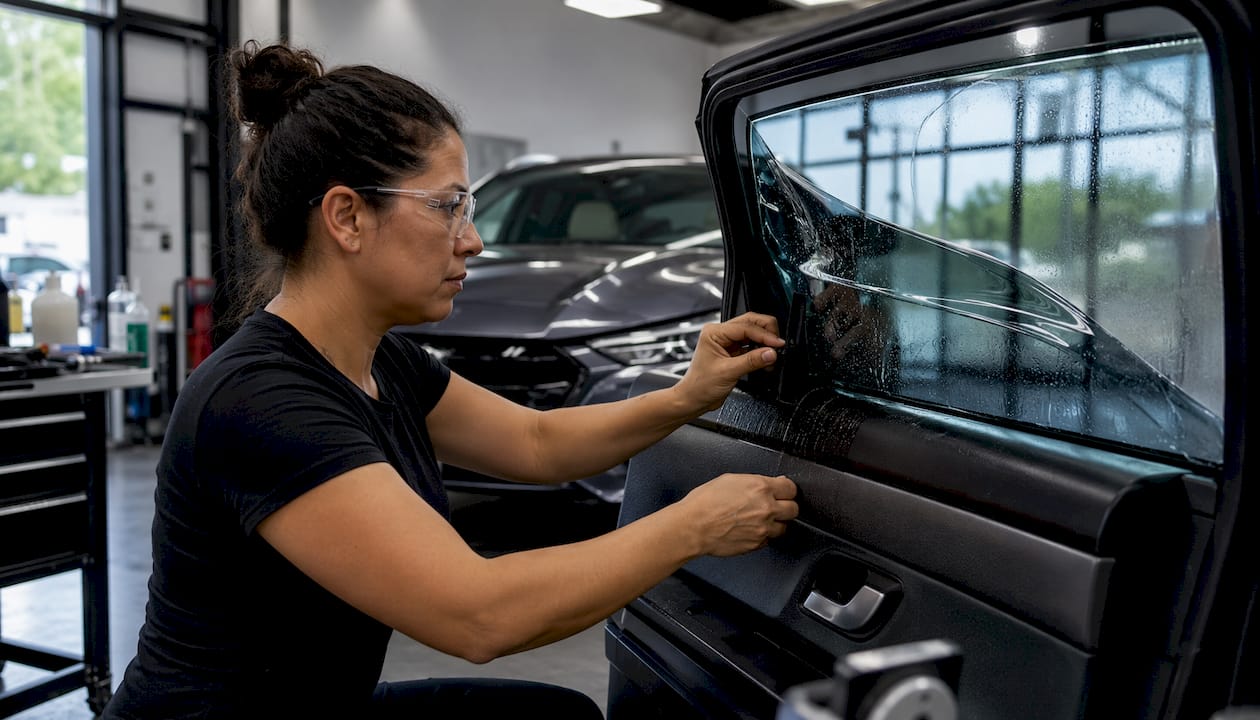
Iviron Kollmax ceramic film is a strong performer in the nano-ceramic category. It's widely recommended for heat rejection and UV blocking, and it holds up well in high-sun climates. Availability depends on finding a certified installer in your area, which can be a limiting factor in smaller markets.
Southmiamitint uses both 3M IR, 3M Color Stable, and Iviron Kollmax films, so you get the film quality of the top brands combined with a mobile service that comes to your home, office, or parking lot. For Miami-Dade customers, that combination of premium film and zero-hassle scheduling is hard to beat. You can also explore ceramic vs. carbon film comparisons to understand which technology fits your specific vehicle and climate.
What does TintPower actually offer?
TintPower.com operates primarily as an online retailer selling window tint film rolls and pre-cut kits for DIY installation. The site targets buyers who want to purchase film directly and handle installation themselves, which keeps the price point lower than professional services. Film options on the site span dyed, carbon, and entry-level ceramic categories.
The appeal is straightforward: you order online, the film ships to your door, and you install it at home. For someone with tinting experience and the right tools, that model works. For most buyers, though, the gap between a clean professional installation and a first-time DIY attempt is significant. TintPower does not offer installation services, compliance certificates, or post-installation warranties tied to professional labor.
What criteria should you use to choose a window tint provider?
Choosing the right provider comes down to more than price. These are the criteria worth checking before you commit:
- Film brand and series: Ask for the exact product name, not just "ceramic." Verified brands like 3M and Iviron Kollmax publish performance specs you can check.
- Installer experience: Years in business and volume of installs matter. An experienced installer handles curves, defrosters, and tight fits without leaving gaps or bubbles.
- Warranty coverage: A solid warranty covers bubbling, peeling, color shift, and delamination. Get it in writing.
- Legal knowledge: Your installer should know your state's VLT limits and tell you which film percentage keeps you compliant.
- Customer reviews: Look for consistent ratings across Google and Yelp. A pattern of complaints about peeling or poor communication is a reliable warning sign.
- Installation environment: Clean or moisture-controlled setups produce better results. Ask about the installer's process before booking.
For a broader look at providers in your region, TintFinder's installer directory lets you search by ZIP code and compare verified businesses with reviews.
Red flags to avoid when selecting a tint service
Some warning signs are easy to miss until after the job is done. Watch for these before you hand over your keys or your credit card:
- No written warranty: Any professional installer confident in their work offers one. No warranty means no accountability.
- Vague film descriptions: "High-quality ceramic" without a brand name is not a spec. Push for the exact product.
- Unusually low quotes: Prices well below market rate usually mean lower-grade film, rushed installation, or both.
- No compliance knowledge: If the installer can't tell you your state's legal VLT limit, they're not the right choice.
- No physical location or verifiable reviews: Online-only operations with no local presence and no reviews are high risk.
- Pressure to install on the windshield: Front windshield tinting is restricted or banned in nearly every state. An installer pushing it may not be operating within the law.
How long does window tinting take from order to completion?
The timeline depends on whether you're buying a DIY kit or booking a professional service.
For a DIY kit from an online retailer like TintPower, shipping typically takes 3–7 business days. Installation time varies widely based on your experience level. A full car can take a beginner 4–8 hours, and mistakes often require purchasing additional film.
For a professional installation, most shops and mobile services can schedule within 1–5 business days depending on demand. The installation itself takes 2–4 hours for a standard vehicle. Mobile services like Southmiamitint work around your schedule, so you're not waiting at a shop. After installation, most films need 3–5 days of cure time before you roll down your windows.
What do customer reviews say about TintPower and its alternatives?
Customer satisfaction for window tinting tends to split along two lines: film performance and installation experience. TintPower's online reviews reflect a DIY audience. Buyers who have prior tinting experience generally rate the film quality positively. First-time installers more often report difficulty with application, bubbling, and alignment, which points to the skill gap that DIY kits don't bridge.
Professional providers using 3M and Iviron Kollmax films consistently receive higher satisfaction scores, particularly for heat reduction and longevity. Customers who view tinting as a functional upgrade for comfort and UV protection, rather than purely a cosmetic change, report the highest satisfaction levels. Southmiamitint's mobile tinting service draws strong local reviews in Miami-Dade for convenience, with customers citing the no-drop-off model as a major differentiator.
For a broader search, window tinting directories that aggregate verified reviews by location give you a reliable picture of local installer reputation before you commit.
Professional installation vs. DIY tint kits: which is right for you?
DIY kits have one clear advantage: upfront cost. You pay for the film and nothing else. TintPower and similar online retailers make this route accessible, and for someone who has installed tint before, the savings are real.
The downsides are harder to ignore. Installation quality, including controlled environments, is often more important than brand for tint durability and performance. Dust trapped under the film during a garage install causes premature failure regardless of how good the film is. There's also no warranty on labor, no compliance certificate, and no professional to call if something goes wrong.
Professional installation costs more upfront but delivers a cleaner result, a written warranty, and the confidence that your VLT is legal in your state. Mobile services remove the last remaining friction point: you don't even need to drive anywhere. For tinting solutions suited to high-sun climates, a sunny climate tinting guide covers which film types hold up best under intense UV exposure year-round.
If you're comparing providers beyond this list, alternative provider reviews cover additional options with regional availability details worth checking.
Southmiamitint brings premium mobile tinting directly to you
If you want the film quality of 3M and Iviron Kollmax without the hassle of finding a shop, booking a drop-off, and waiting around, Southmiamitint is the direct alternative. The service covers cars, homes, and commercial properties across Miami-Dade, using 3M IR, 3M Color Stable, and Iviron Kollmax ceramic films. You get professional-grade heat rejection and UV protection installed at your location, on your schedule.
Starting at $249 for ceramic window tinting in Miami, Southmiamitint offers transparent pricing with no hidden fees. Every job includes compliance with Florida's VLT requirements, so you're not guessing about legality after the fact. For drivers who want to see the full range of 3M film options before booking, the site breaks down each series by heat rejection performance and shade level. Get a quote today and have your vehicle tinted without leaving your driveway.
Key Takeaways
Nano-ceramic film from verified brands like 3M and Iviron Kollmax, installed professionally in a controlled environment, delivers the best combination of heat rejection, UV protection, legal compliance, and long-term durability.
| Point | Details |
|---|---|
| Film technology matters most | Nano-ceramic outperforms dyed and carbon films for heat rejection, UV blocking, and signal clarity. |
| 35% VLT is the safer legal choice | 35% VLT is legal on front windows in most U.S. states, while 20% carries higher compliance risk and lower night visibility. |
| Fines reach up to $250 | Illegal tint enforcement is discretionary but fines can be substantial, with thousands of tickets issued annually in strict states. |
| Installation quality determines durability | Dust and debris during installation cause premature failure regardless of film brand or price. |
| Southmiamitint offers mobile ceramic tinting | Southmiamitint installs 3M IR, 3M Color Stable, and Iviron Kollmax films at your location across Miami-Dade, starting at $249. |