
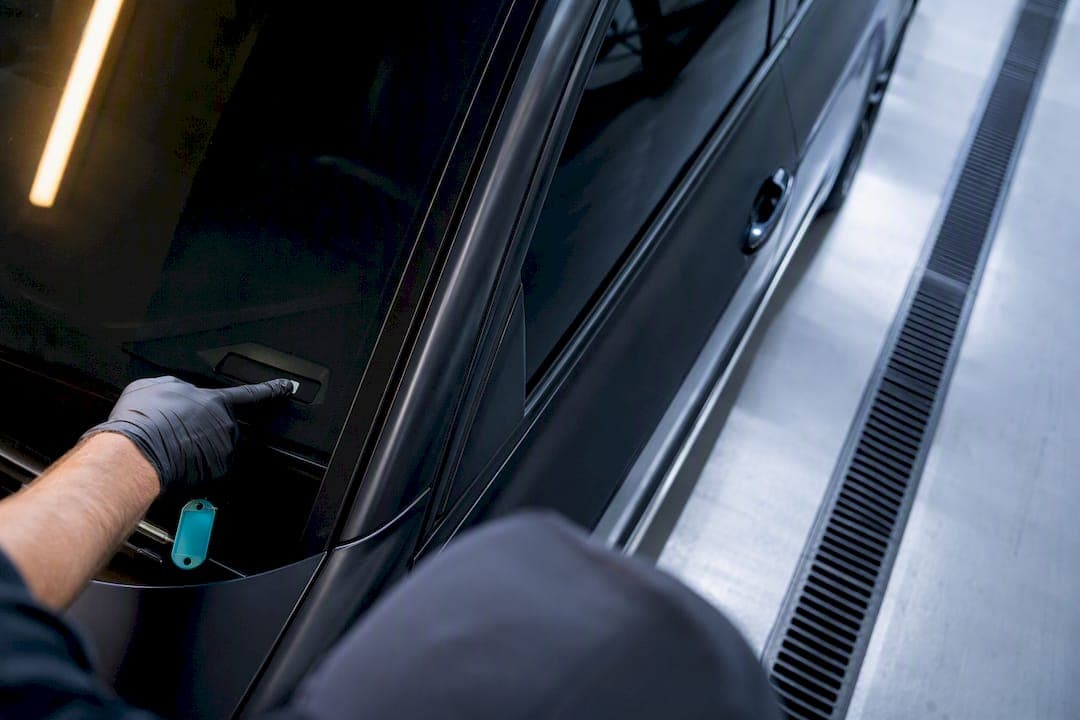
You can usually get tint for leased cars, but only with written permission from the lessor and tint that meets your state's legal limits. Skip either step and you risk a reconditioning charge at turn-in. Before you book an appointment, read your lease's alterations clause, check your state's Visible Light Transmission rules, and get written approval that names your VIN and the exact tint percentage.
TL;DR:
- Getting tint on a leased car requires written approval from the lessor that specifies the VIN and permitted VLT percentage; skipping this risks reconditioning fees.
- State laws on VLT limits may be stricter than the lessor's approval, so verifying local regulations before tinting is essential to avoid citations.
- Using premium ceramic film applied by an experienced installer with steam-based removal tools helps ensure clean removal at lease end without residue or damage.
- Documenting the exact film brand, VLT, and getting a signed receipt on install day provides critical proof at inspection, especially if the lessor's approval was verbal or unclear.
- Dealer-installed tint included in the lease agreement is generally easier to manage at turn-in, but aftermarket tint still requires proper documentation and compliance with legal limits.
Table of Contents
- Quick 5-Step Checklist Before You Tint a Leased Car
- How Leases Typically Treat Window Tint
- State Tint Laws Set the Legal Floor, Not Your Lessor
- Choosing Film and an Installer That Won't Cost You at Turn-In
- What Happens at Lease-End: Inspections, Removal, and Fees
- Dealer-Installed Tint Can Simplify the Whole Process
- A Mobile Installer's View on What Actually Trips Up Lessees
- When Tinting a Leased Car Actually Makes Sense
- Get Documented, Removable Tint Without the Turn-In Guesswork
- Sources
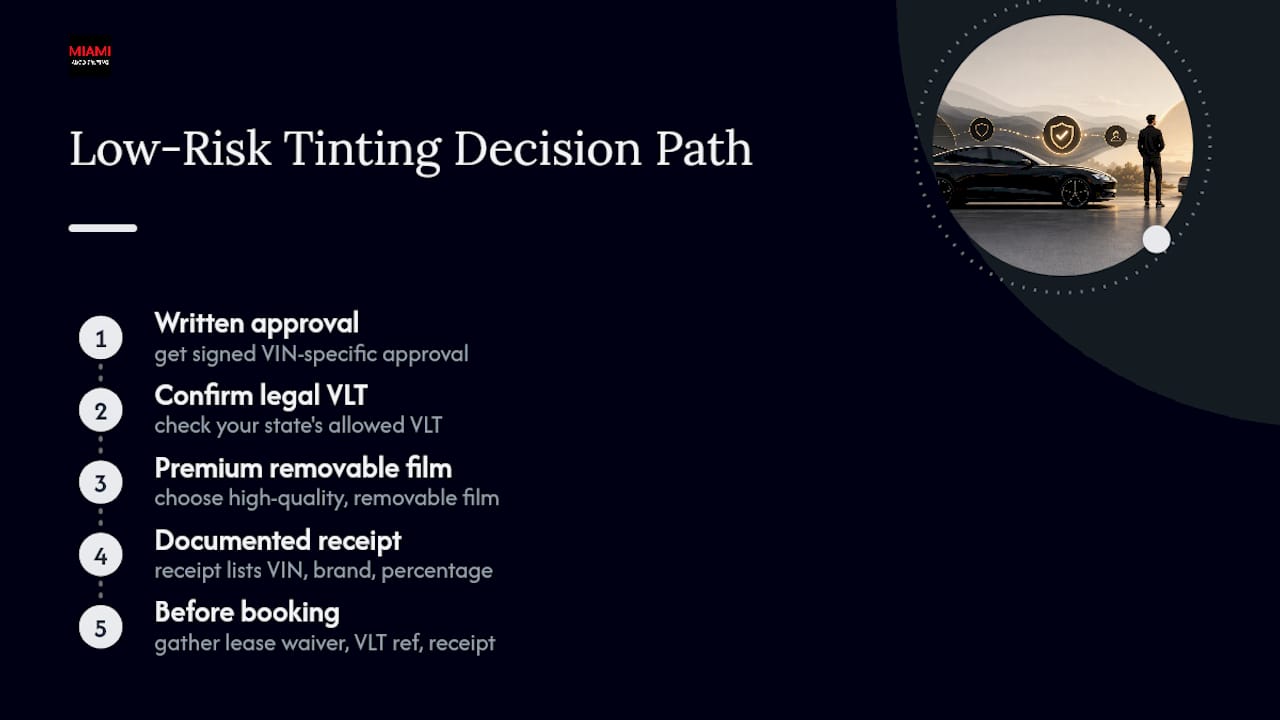
Quick 5-Step Checklist Before You Tint a Leased Car
Getting tint for leased cars right comes down to sequence. Do these steps out of order and you're gambling with your security deposit.
- Read your lease's alterations clause. Find the paragraph about modifications before you call anyone.
- Check your state's VLT limits for front, side, and rear windows.
- Get written approval from your lessor or dealership that lists your VIN and the permitted VLT percentage.
- Book a reputable installer and request the film brand, model, and VLT on your receipt.
- Plan your lease-end exit by documenting who's responsible for removal and scheduling professional removal in advance if needed.
Miss step three and even a legal, professionally installed tint job can turn into a dispute you can't win on paper.
How Leases Typically Treat Window Tint
Most lease contracts include language like "no additions, alterations, or modifications without prior written consent." Tinting almost always falls under that clause because it changes the vehicle's factory appearance, even though it's generally considered a reversible modification when done well. That reversibility matters. A lessor is far more tolerant of a change that comes off cleanly than one that leaves adhesive residue or glass damage behind.
A written waiver protects you, and it should include:
- The vehicle's VIN
- The exact VLT percentage approved
- Who pays for removal at lease-end
- The installer or dealership performing the work
Pro Tip: Email your lease provider instead of calling. A phone call gives you nothing to show an inspector; an email reply gives you a paper trail.
Verbal approval from a salesperson or account rep means nothing once you're standing at the inspection bay. Get it in writing or don't do it.
State Tint Laws Set the Legal Floor, Not Your Lessor
Visible Light Transmission, or VLT, measures how much light passes through your window glass. States set separate minimums for the windshield, front side windows, rear side windows, and back glass, and those numbers vary widely from state to state. A lessor's written approval doesn't override state law. If your state requires 35% VLT on front windows and your lessor mistakenly signs off on 20%, the statute is what gets enforced, not the letter.
Check your state DMV's website or its vehicle equipment statute page before booking anything. A few patterns to watch for:
- Many states require lighter VLT percentages on front side windows than on rear windows or the back glass.
- Some states ban mirrored or highly reflective tint outright, regardless of darkness.
- A handful of states restrict tint color, ruling out amber or red films even at legal VLT levels.
Confirming these numbers takes ten minutes and saves you from a citation that has nothing to do with your lease agreement at all.
Choosing Film and an Installer That Won't Cost You at Turn-In
Not all tint film behaves the same way when it's time to remove it, and that difference matters more for a leased car than an owned one.
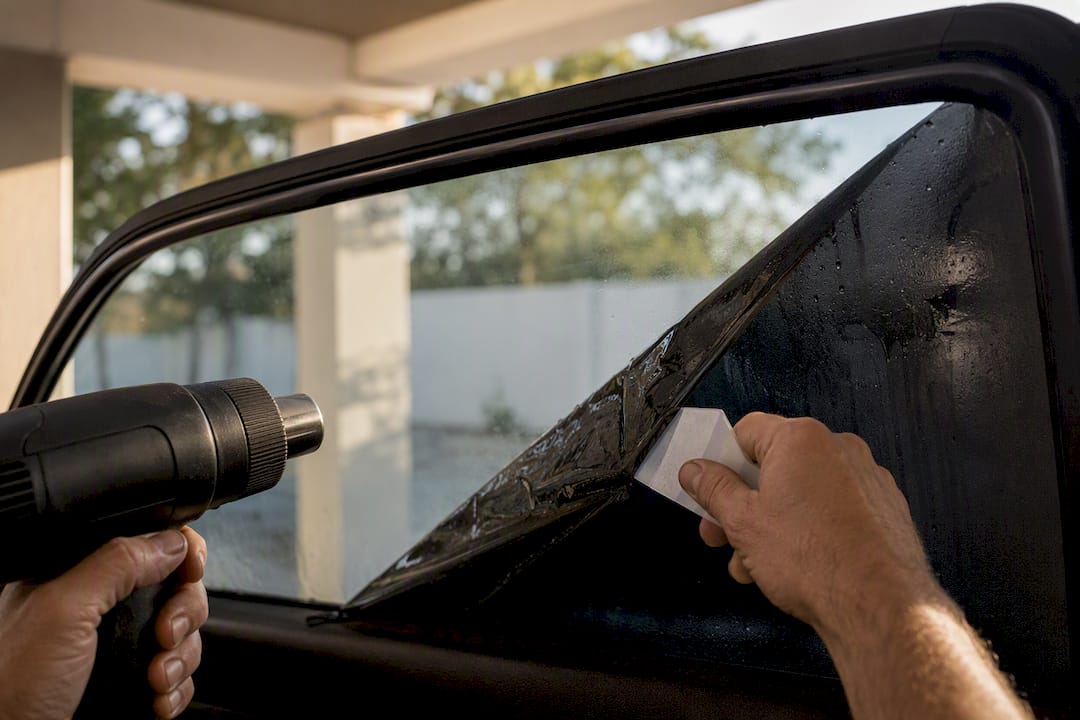
Dyed film is the cheapest option and the hardest to remove cleanly. Heat and age make the adhesive brittle, which often leaves ghosting or residue on the glass. Metallic film rejects heat well but can interfere with radio or GPS signals in some vehicles. Ceramic film costs more upfront, but premium ceramic tint is easier to remove without residue or glass damage, which is exactly what a lease inspector is looking to avoid flagging.
When you pick an installer, ask about their experience specifically with leased vehicles:
- Do they use steam-based removal equipment, not razor blades alone?
- Will they document the film brand and exact VLT on your receipt?
- Do they offer a removal service or removal warranty before lease-end?
Pro Tip: Never buy a DIY tint kit for a leased car. Amateur installs are the number one cause of bubbling and residue that trigger reconditioning fees.
Skip the DIY route entirely and choose a shop that's removed tint from leased vehicles before, not just installed it.
What Happens at Lease-End: Inspections, Removal, and Fees
Lease inspectors are trained to flag anything outside factory spec. Expect language like "unauthorized modification" or "excessive wear" on your inspection report if tint shows up without paperwork behind it.
If your lease requires tint removed before return and you're not certain the lessor will accept it as-is, removing it proactively before inspection is typically cheaper than waiting for the dealer to bill you for reconditioning. Schedule removal a week or two ahead of your scheduled turn-in date, not the morning of. Bring your written approval and your original installation receipt to the inspection. Paperwork showing the exact VLT and film brand is your strongest tool for disputing any charge that shows up anyway.
Dealer-Installed Tint Can Simplify the Whole Process
Some dealerships offer tint as an accessory option and roll the cost into your lease's capitalized cost, spreading it across your monthly payments instead of charging you upfront. That approach has a real advantage: because it's recorded directly in your lease paperwork, it typically isn't flagged as an unauthorized modification at turn-in.
If you go this route, ask the dealer to:
- Note the tint accessory explicitly in your contract documents
- Provide a receipt naming the film brand and VLT percentage
- Confirm in writing that removal isn't required at lease-end
Aftermarket tint with a solid written waiver is still a perfectly acceptable path if the dealer doesn't offer tint as an add-on, or if you'd rather choose your own installer and film.
A Mobile Installer's View on What Actually Trips Up Lessees
After installing tint on hundreds of vehicles across Miami-Dade, a pattern shows up constantly: lessees who get the film right and skip the paperwork are the ones who pay at turn-in. The film was never the problem. The missing receipt was.
A tight checklist keeps residue and disputes off your record:
- Confirm the exact film brand and VLT percentage in writing before installation starts.
- Choose an installer using steam-friendly adhesive removal, not blades.
- Ask whether pre-return removal is available as a scheduled service.
- Keep your on-site receipt from the day of install. It's your primary defense if an inspector questions the tint later.
Pro Tip: A mobile installer who tints your car in your driveway can hand you a signed receipt on the spot, the same day, with the film brand and VLT already listed. That single piece of paper is worth more at lease-end than any verbal reassurance you got months earlier.
— Jose
When Tinting a Leased Car Actually Makes Sense
Tinting a leased car makes sense when you've secured written approval, confirmed your state's legal VLT, chosen premium film, and kept a documented receipt. Those four things together turn a risky modification into a low-risk upgrade. Skip tinting if you can't get written approval, if your state's rules are unclear to you, or if the installer won't put the film brand and VLT in writing. Before you book, gather: your signed lease waiver, your state's VLT reference, and a receipt with VIN, film brand, and percentage listed.
Get Documented, Removable Tint Without the Turn-In Guesswork
A local mobile window tinting service installs ceramic tint at your home or office using premium films and provides a documented receipt listing the exact film and VLT. That paperwork is the same evidence your lessor will ask for at inspection, and you get it the day of install instead of chasing it down later.
Before booking, request your written approval from your lessor or dealership specifying your VIN and permitted VLT, then bring that approval to your appointment. Southmiamitint's team will match the film to your state's legal limits and hand you a receipt built for exactly this situation. Get a fast quote through the mobile tint pricing page or explore the ceramic tint installation options to see what fits your lease terms and your vehicle.
Sources
- Can I Tint a Leased Car? — AAutomotives
- Can you customize a leased car? | Chase
- Engineerskill
- Can you tint a leased car? — FlexiPPF