
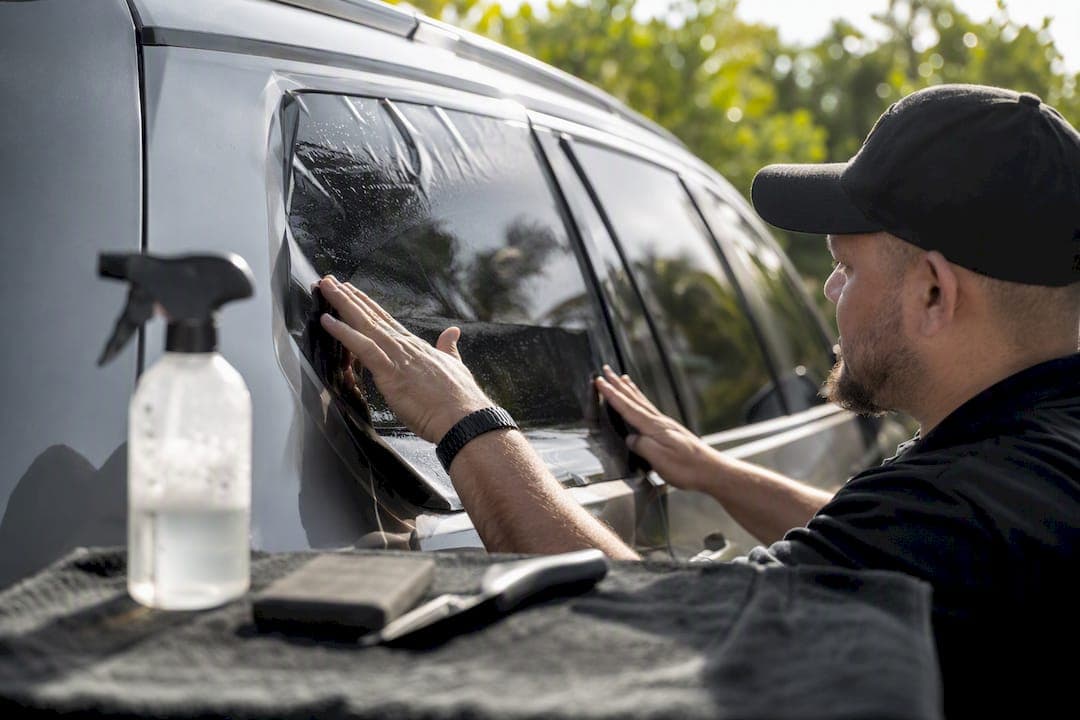
For most SUV owners, nano-ceramic film is the best overall choice. It blocks up to 99% of UV rays and rejects heat far better than dyed film, without the electronics interference risk that comes with older metallic tints. That combination of visibility, cooling, and privacy is why it's the default recommendation for large-cabin vehicles that spend hours parked in direct sun.
Here's the fast version before you dig into the details:
- Film type: Ceramic or nano-ceramic for heat rejection and long-term clarity
- Front shade: Check your state's minimum VLT first, then pick the darkest legal option
- Rear shade: SUVs often allow darker rear glass than sedans do
- Next step: Call a shop for a combined-VLT check on your factory glass plus film
Quick numbers to know: ceramic film's UV rejection can reach 99%, some states set front-window VLT minimums as high as 70%, and a mobile ceramic install from a shop like Southmiamitint gets you a warrantied, on-site upgrade without a shop visit.
Key Takeaways
Ceramic and nano-ceramic film outperform dyed and metallic options for SUVs on heat rejection, clarity, and signal compatibility, and choosing the right shade starts with your state's legal VLT limit rather than personal preference.
| Takeaway | Why it matters |
|---|---|
| Nano-ceramic is the top pick for most SUVs | Blocks up to 99% of UV rays with strong heat rejection and no signal interference |
| Front VLT limits vary widely by state | Some states require 70% VLT while others allow 20% |
| SUVs often get darker rear windows legally | Classified as multipurpose vehicles in most states |
| Ceramic full-tint pricing runs $450–$1,100 | Price scales with SUV size and film quality |
| Film needs 3–5 days to cure | Avoid rolling windows down early to protect the adhesive |
Table of Contents
- What Are the Main SUV Tinting Options?
- How Does VLT Affect Legal SUV Tinting?
- What Does SUV Window Tinting Typically Cost?
- Should You DIY Your SUV Tint or Hire a Pro?
- How Do You Choose the Right Tint for Your SUV?
- Southmiamitint's Mobile Ceramic Tint Option for SUVs
- Which SUV Tint Would I Actually Choose?
- Book a Mobile Ceramic Tint Install for Your SUV
- Where to Verify Tint Laws and Film Claims
- Frequently Asked Questions
- Sources
What Are the Main SUV Tinting Options?
Six film technologies show up on the market, and they perform very differently once you put them behind SUV glass that sits in the sun all day.
Ceramic and nano-ceramic sit at the top of the performance range. Ceramic film rejects up to 99% of UV rays and blocks high levels of infrared heat while staying optically clear, which matters on an SUV where the windshield-to-rear-hatch glass area is larger than a sedan's. Nano-ceramic uses smaller ceramic particles for even better clarity and heat performance, and it typically costs about 20% more than standard ceramic. Neither film contains metal, so you won't get radio or GPS interference.
Carbon film gives you a matte, non-reflective finish that a lot of SUV owners like on darker vehicles. It blocks UV well and delivers mid-tier heat rejection, sitting in price between dyed and ceramic. It won't fade the way dyed film does over a few years, but it doesn't match ceramic's infrared rejection.
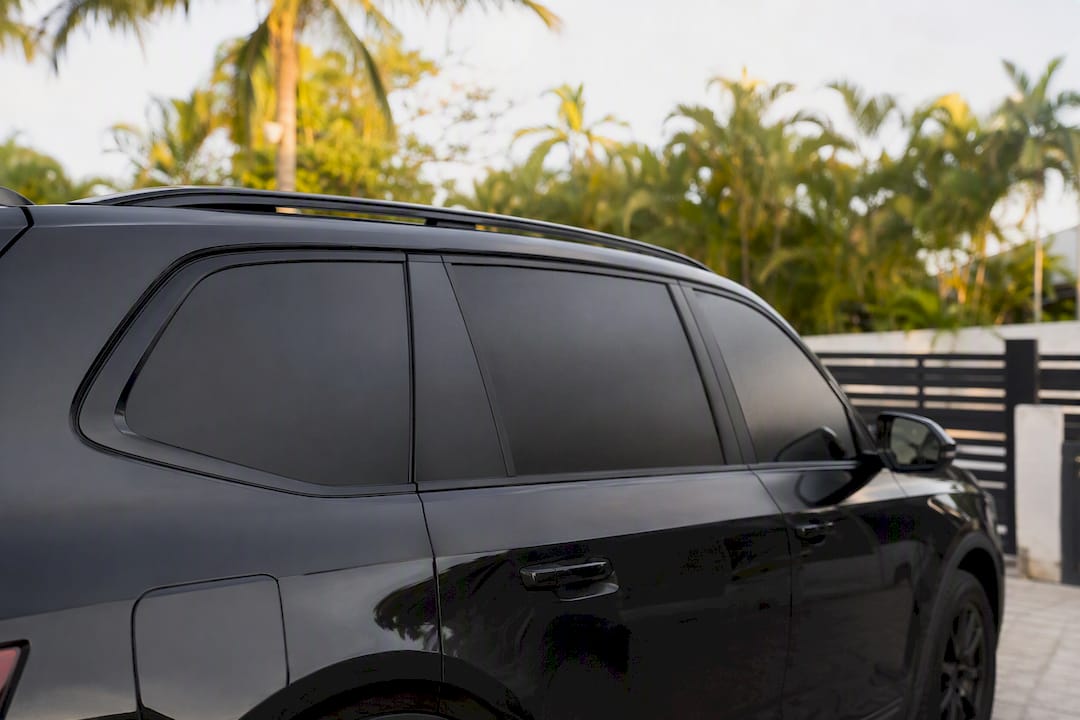
Metallic and hybrid films use tiny metal particles to reflect heat, which works, but that same metal layer can interfere with cell signal, GPS, and toll transponders. Hybrid films blend metal with dye to cut down on that reflective shine, but the interference risk doesn't fully disappear.
Dyed film is the budget entry point. It absorbs heat rather than reflecting it, so the cabin still warms up more than with ceramic, and the dye can fade to purple or brown after a few years of Florida sun. It's a reasonable choice for a short-term vehicle or a tight budget, less so for a family SUV you plan to keep.
Pro Tip: Pick the film technology first, then decide on shade. A lighter nano-ceramic film often beats a darker dyed film for both heat rejection and long-term clarity, so chasing a "blackout" percentage on cheap film can actually leave you hotter than a lighter, better-engineered option.
How Does VLT Affect Legal SUV Tinting?
Visible Light Transmission, or VLT, measures how much light passes through your window, factory glass and film combined. A a 35% VLT film on glass that already blocks some light gives you a lower combined VLT than the film's rating alone suggests, which is why installers measure the finished result rather than trusting the film's box.
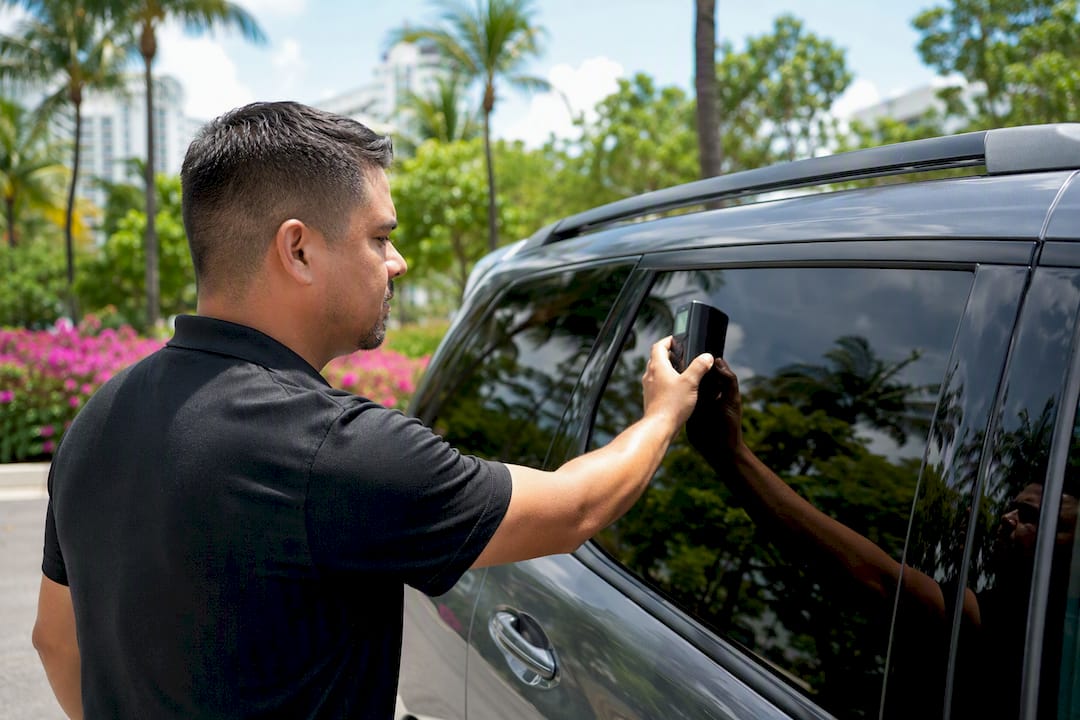
State rules vary more than most owners expect. Seven states plus D.C. require 70% VLT on front side windows, Connecticut requires 65% with a compliance sticker, and New Mexico permits as little as 20% up front. Vermont, New Hampshire, and New Jersey don't allow aftermarket tint on the windshield or front side windows at all.
SUVs get more flexibility on the back half of the vehicle. Because most states classify SUVs as multipurpose passenger vehicles, rear side windows and the rear windshield often have no minimum VLT, even while the front doors share the same limit as a sedan.
- Check your own state's DMV page for exact front, rear, and windshield limits
- Look for AS-1 line rules if you want any tint on the windshield itself
- Ask about medical exemption paperwork if you need a darker front shade for a documented condition
- If you regularly drive across state lines, use the strictest limit among those states as your working number
What Does SUV Window Tinting Typically Cost?
Full ceramic tint installs on SUVs run higher than sedans simply because there's more glass to cover, and pricing climbs further with vehicle size and panoramic roof glass.
| Vehicle size | Ceramic full-tint price range |
|---|---|
| Compact SUV | $450–$650 |
| Midsize SUV | $500–$750 |
| Full-size SUV | $600–$900 |
| Luxury full-size SUV | $700–$1,100 |
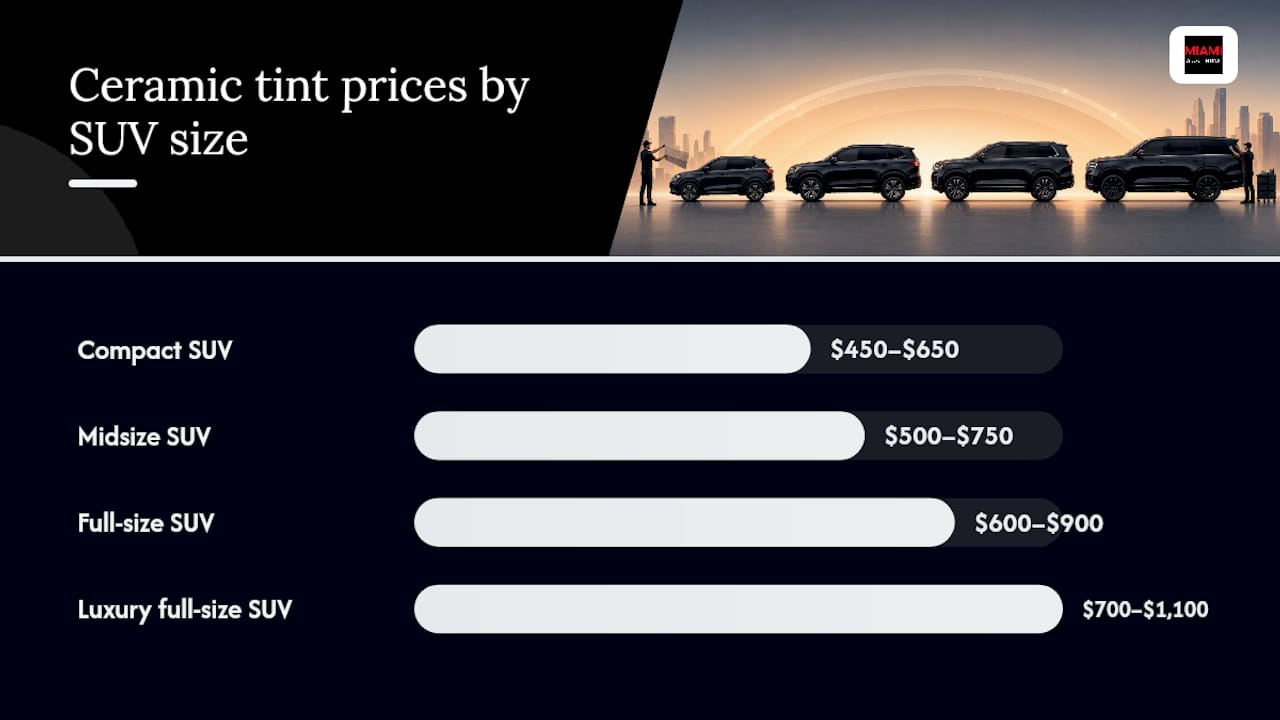
Those ranges cover the film and labor for a standard side-window and rear-hatch job. Add $150 to $300 for a panoramic roof or windshield strip, and $100 to $250 more if a shop has to strip old, failing film before applying new tint. Dyed film sits well below these numbers, but you're trading a lower price today for weaker heat rejection and a shorter useful life.
Pro Tip: Spending more upfront on ceramic usually costs you less over time. It resists fading, so you're not paying to redo the job in three years, and the extra heat rejection keeps a big SUV cabin noticeably more comfortable in summer.
Should You DIY Your SUV Tint or Hire a Pro?
A DIY kit makes sense for a small job on a budget, but SUV glass tests the limits of what a first-time installer can handle cleanly.
DIY makes sense when:
- You're working with a smaller window, not a full curved rear hatch
- You're comfortable with a pre-cut kit, such as Gila's Heat Shield Plus 20% VLT truck and SUV film, which the manufacturer rates at up to 44% heat rejection and over 99% UV blocking
- You accept there's no installation warranty if it goes wrong
Professional installation makes sense when:
- Your SUV has large, complex curved panels that punish an inexperienced installer with bubbling or lifted edges
- You want the combined VLT measured and documented, not guessed at
- You want old film removed cleanly before new film goes on
- You want a workmanship warranty backing the install, something DIY kits don't offer
Whichever route you take, give the film 3 to 5 days to cure before rolling the windows down, and stick to ammonia-free cleaners afterward. Ammonia breaks down the film's adhesive over time. A detailed comparison of DIY versus professional tinting walks through more of the common installation mistakes if you're still deciding.
How Do You Choose the Right Tint for Your SUV?
Work through these steps in order, and you'll land on a setup that's legal, comfortable, and durable.
- Name your main goal. Heat relief, privacy, or a style upgrade usually drives the decision differently.
- Check your state's VLT minimums for front, rear, and windshield glass before you fall in love with a shade.
- Choose the film technology first. Ceramic or nano-ceramic for heat and clarity, carbon for a matte look on a mid-range budget.
- Pick a front and rear shade pairing. A common daily-driver setup is 35% on the front side windows and 5 to 20% on the rear, balancing visibility with privacy.
- Confirm combined VLT with your installer, not just the film's stated percentage.
- Ask about warranty terms and curing instructions before you pay.
Ask yourself how often you drive at night, how many passengers ride in back, and whether you need to see clearly out the rear hatch when reversing a loaded cargo area. Those answers should push your rear shade lighter or darker.
- A shop that won't test combined VLT is a red flag
- No workmanship warranty on a professional install is a red flag
- No willingness to name the film brand they're using is a red flag
Southmiamitint's Mobile Ceramic Tint Option for SUVs
Southmiamitint installs mobile window tint for cars, SUVs, and trucks at your home or office across Miami-Dade County, using premium film including 3M Ceramic IR, 3M Crystalline, 3M Color Stable, and Iviron KoolMax ceramic.
Booking a mobile SUV install typically includes:
- An on-site glass measurement before any film is cut
- A combined-VLT check so your finished tint matches your state's legal limit
- A workmanship warranty on the installation itself
- A same-visit appointment, so your SUV never leaves your driveway
Which SUV Tint Would I Actually Choose?
That pairing keeps night driving visibility reasonable up front while giving the back seats and cargo area real privacy.
The one thing I'd flag: if you cross state lines often for work or road trips, don't build your setup around your home state's limit alone. Check the strictest state you regularly drive through, and use that number instead. It's a five-minute search that saves you a ticket later.
Book a Mobile Ceramic Tint Install for Your SUV
Southmiamitint is the mobile alternative to sitting in a shop waiting room. Instead of dropping your SUV off for a day, a technician comes to your home or office in Miami-Dade County and installs premium ceramic film on-site, usually finishing an SUV in about 3 to 5 hours.
Every mobile install includes a combined-VLT check against your state's legal limits and a workmanship warranty, so you're not stuck guessing whether the finished tint passes inspection. Southmiamitint carries 3M Ceramic IR, 3M Color Stable, and Iviron KoolMax ceramic film, all backed by manufacturer performance claims on UV and heat rejection. If you want to see current pricing for your SUV size before you book, the mobile tinting price guide breaks down cost by vehicle class. Get a quote and pick a time that works for your schedule.
Where to Verify Tint Laws and Film Claims
Confirm any figure in this guide before you buy, since state rules and manufacturer claims both change.
- Your state DMV's official tint law page for exact VLT limits
- Kelley Blue Book's window tinting guide for general film performance context
- LegalClarity's SUV tint law summary for multipurpose vehicle exemptions
- Gila's product page if you're comparing a DIY film option
Frequently Asked Questions
What's the best window tint percentage for an SUV? Most daily drivers do well with 35% VLT on the front side windows, paired with a darker rear shade between 5% and 20% where state law allows it. Check your DMV before committing, since front-window minimums range from 20% to 70% depending on the state.
Is nano-ceramic tint worth the extra cost for an SUV? Yes, for most owners.
Can I legally tint my SUV's rear windows darker than the front? In most states, yes. SUVs are frequently classified as multipurpose passenger vehicles, which often removes the VLT minimum on rear side and rear windshield glass while front doors still follow the same limit as a sedan.
How long does professional SUV tint installation take? A full SUV tint job typically takes 3 to 5 hours for a professional installer, depending on window count and whether a panoramic roof or old film removal is part of the job.
Does window tint interfere with SUV electronics or GPS? Ceramic and carbon films don't contain metal, so they don't interfere with radio, GPS, or toll transponders. Metallic and hybrid films can cause signal issues because of their metal content.
This article is general information, not a substitute for advice from a qualified lawyer. Consult a qualified legal professional about your own circumstances before acting on anything here.
Sources
- Car Window Tinting: 7 Things You Need to Know - Kelley Blue Book
- SUV Tint Laws: Limits, Exemptions, and Penalties - LegalClarity
- Truck & SUV Window Tinting — What You Need to Know