
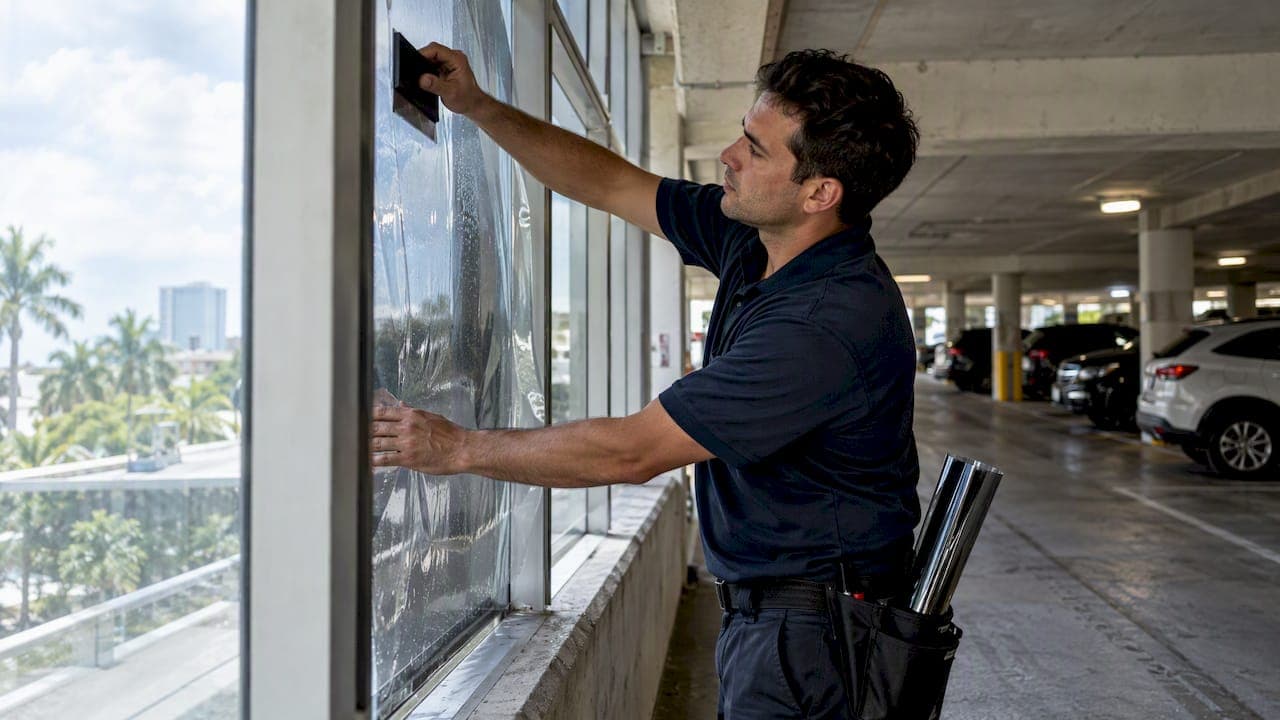
For most parking garages, the right approach is a solar-control film rated for heat and glare reduction, paired with safety or security film where fragment retention matters, and neither gets installed until a professional glass-compatibility survey clears the glazing. That survey protects against thermal stress cracking. Done right, you can expect lower heat buildup, less glare for drivers and pedestrians, and UV blocking up to 99% on premium film datasheets.
TL;DR:
- Require a written compatibility report identifying glass type and coatings before ordering, since certain annealed panes and insulated units can fail under added heat.
- Compare proposals using VLT, TSER, and SHGC figures, and avoid low VLT that dims ramps or stairwells; safety film should pass ANSI Z97.1 impact testing.
- Use solar control film on sun exposed perimeter glass, reserving safety film for vulnerable ground floor panes; specify attachment systems when fragment retention is required.
- Daylight redirecting film produced 39 to 43% lighting savings in deep office zones, but garage payback needs a geometry specific estimate rather than borrowed figures.
Table of Contents
- Why tinting parking garage glazing pays off
- What performance metrics should you ask for?
- Check glass compatibility before anyone touches the glazing
- Which film types fit which part of your garage?
- What does a professional installation actually involve?
- What drives cost and when does tinting pay for itself?
- How do you maintain tinted glazing once it's installed?
- A practical checklist from Jose
- How we handle commercial parking garage tinting projects
- FAQ
- Sources
Why tinting parking garage glazing pays off
Garages with glazed stairwells, lobbies, or perimeter walls absorb a lot of solar heat during the day, and that heat radiates into stairwells, elevator lobbies, and attendant booths long after the sun moves. Film with a strong total solar energy rejection (TSER) rating cuts that load, which reduces strain on any mechanical ventilation or cooling serving those spaces. Glare control matters just as much: reflected sunlight off windshields and polished concrete can blind drivers navigating ramps, and the right film reduces that without blacking out sightlines.
A few outcomes show up consistently once the right film is in place:
- Lower solar heat gain through glazed walls and stairwells, easing cooling demand.
- Reduced glare for drivers, pedestrians, and attendants near glass walls.
- Slower fading of painted surfaces, wayfinding signage, and vinyl graphics from UV exposure.
- Added fragment retention and surface protection where security or anti-graffiti films are specified.
What performance metrics should you ask for?
Three numbers drive every commercial film decision: visible light transmittance (VLT), total solar energy rejection (TSER), and solar heat gain coefficient (SHGC). VLT tells you how much daylight passes through, which matters for sightlines and safety in a garage where low light already raises risk. TSER measures the share of total solar energy the film keeps out, combining reflected, absorbed, and re-radiated heat. SHGC measures how much solar heat actually enters the space through the glass and film together, with a lower number meaning less heat gain.

Request proposals with specific figures, not vague labels like "premium" or "high performance." Avoid films with VLT so low that stairwells or ramps become dim enough to create blind spots, and avoid films with weak TSER ratings that barely move the needle on heat. For safety-rated applications, confirm the product has passed ANSI Z97.1 impact testing.
UV rejection is where premium films stand out: 3M Safety S70 blocks more than 99% of UV radiation, which matters for garages with painted finishes, vehicle interiors parked near glass, or adjacent retail displays that fade over time.
Check glass compatibility before anyone touches the glazing
Not every pane can take a field-applied film safely. Annealed glass, heat-strengthened glass, and tempered glass all respond differently to the added heat absorption a dark or reflective film introduces, and getting this wrong risks thermal stress cracking in the weeks or months after installation.
A proper pre-installation review covers:
- Identify the glass type in every zone: annealed, heat-strengthened, tempered, or insulated glass unit (IGU).
- Document edge conditions, shading patterns, and any low-e coatings already on the glass.
- Flag thick glass, tinted glass, or IGUs for a thermal-stress analysis before film selection.
- Confirm whether the glass manufacturer requires written authorization for field-applied film on that product.
- Record the findings in a signed compatibility report before ordering material.
Pilkington's technical bulletin on field-applied films warns that solar films applied to annealed glass or certain insulating units can raise thermal stress enough to cause failure, and recommends review by the film supplier or glass manufacturer before proceeding.
Pro Tip: Ask your installer for the compatibility report in writing before you approve a film order, not after the crew shows up with material.
Which film types fit which part of your garage?
Garages rarely need one film across every pane. Matching the film family to the zone keeps costs reasonable and performance where you need it.
- Solar-control ceramic or prestige-grade film works best on perimeter glazing and stairwell walls facing direct sun, with TSER and UV-rejection values listed in manufacturer spec sheets to compare proposals apples to apples.
- Safety and security film, typically 7 mil or thicker and ANSI-tested for impact resistance, suits ground-floor glass exposed to vandalism, break-in attempts, or vehicle impact risk.
- Daylight-redirecting or prismatic film fits deep interior zones where natural light could offset lighting costs, though performance depends heavily on sun angle and layout.
- Attachment systems, including IPA sealant or mechanical anchoring, should be specified alongside the film itself whenever fragment retention or forced-entry resistance is a requirement.
What does a professional installation actually involve?
A commercial tinting job runs on a predictable sequence once the compatibility report is approved. Skipping steps here is where warranty claims and premature failures start.
- Site survey and written glazing report confirming glass type, dimensions, and any manufacturer restrictions.
- Access preparation, including scaffolding, lifts, or scheduling around garage traffic patterns.
- Thorough glass cleaning to remove debris that would trap bubbles under the film.
- Computer-cut templating for precise fit on each pane.
- Film application, followed by edge finishing and attachment hardware where safety specs require it.
- A visual acceptance period and delivery of warranty paperwork, plus manufacturer authorization documents if the product requires an authorized dealer for installation.
Ask for all six deliverables in the contract, not just a verbal promise. A credible commercial installer treats the written report and warranty documentation as part of the job, not an afterthought.
What drives cost and when does tinting pay for itself?
Glazed square footage is the biggest cost driver, followed by film class, thickness, and whether the job needs scaffolding or exterior lift access. Safety-rated films with attachment hardware cost more per square foot than standard solar-control film, and that difference is worth it only where fragment retention is actually a requirement.
- Request a square-footage breakdown by zone so you can compare quotes on equal terms.
- Ask contractors for manufacturer-backed performance data rather than generic savings claims.
- Factor in local energy rates and how cooling load interacts with any lighting already running in the space.
- For daylight-redirecting film, request a geometry-specific estimate rather than a borrowed figure from an office building.
Daylight-redirecting film has shown real but context-dependent savings: modeled and testbed studies found 39 to 43% lighting energy savings in a 40-foot-deep perimeter zone, though that figure came from office settings and garages need their own geometry check before assuming similar payback.
How do you maintain tinted glazing once it's installed?
Premium commercial films typically carry warranties that cover delamination, bubbling, and color shift when the product is installed by an authorized dealer and maintained per manufacturer guidelines. Confirm what the warranty actually covers before signing off on the job.
- Clean tinted glass with a soft cloth and non-abrasive, ammonia-free cleaner on a regular schedule.
- Avoid pressure washing directly against film edges or attachment hardware.
- Watch for delamination, edge bubbling, or seal failures, which signal it's time for a warranty claim or replacement.
- Keep installation and warranty paperwork on file for the life of the film.
A practical checklist from Jose
If you manage a garage considering this project, confirm the glass type first. Nothing else matters until you know whether you're dealing with annealed, tempered, or heat-strengthened units, because that single fact determines which films are even an option. From there, schedule a site survey, request manufacturer datasheets for any film under consideration, and ask for a written installation QA plan before work begins. After years of commercial and mobile tinting work across Miami-Dade, the jobs that go smoothly are always the ones where compatibility got checked before material got ordered.
— Jose
How we handle commercial parking garage tinting projects
We install premium films including 3M Ceramic IR, 3M Color Stable, and Iviron KoolMax ceramic tint, and we bring that same mobile convenience to commercial and parking structure projects across Miami-Dade County.

When you request a quote from us, ask for three things: a glass-compatibility report specific to your garage's glazing, manufacturer datasheets for the film we recommend, and a clear warranty and timeline in writing. We handle that documentation as a standard part of commercial scoping, not an extra step.
- Mobile scheduling that works around your garage's traffic and operating hours.
- Access to 3M Window Tinting ceramic and crystalline lines for solar control.
- Computer-cut templating for a precise fit across varied pane sizes.
Ready to move forward? Request a commercial site survey and quote and we'll start with the glazing assessment your project needs.
FAQ
What film class is best for parking garage windows?
Most garages do best with a ceramic or prestige-grade solar-control film for heat and glare, with safety or security film added on ground-floor or high-risk glazing. The right mix depends on your glass type and exposure, which is why a compatibility survey comes before film selection.
Can any glass be tinted with film?
No. Annealed, tempered, and heat-strengthened glass respond differently to added heat absorption, and some insulated units risk thermal stress failure with certain films. Pilkington's technical bulletin recommends supplier review before applying film to annealed or specific IGU glass.
How much UV protection does commercial film provide?
Premium commercial films such as 3M Safety S70 block more than 99% of UV radiation, which helps slow fading of signage, paint, and nearby finishes. Exact UV rejection varies by product line, so confirm the figure on the specific datasheet before ordering.
Does daylight-redirecting film actually reduce lighting costs in a garage?
Studies in deep office perimeter zones found lighting energy savings in the range of 39 to 43% with daylight-redirecting film, but that figure reflects office geometry, not garage layouts. Ask your installer for a site-specific estimate based on your garage's orientation and ceiling height before counting on similar savings.
What should I ask a commercial tinting contractor before hiring them?
Ask for a written glass-compatibility report, manufacturer datasheets for the exact film proposed, and documentation of warranty terms and installation authorization. A contractor who can't provide these upfront is not ready for a commercial glazing project.
Sources
- 3M Safety & Security Window Film Safety S70 technical data sheet
- Pilkington technical bulletin: Field-applied plastic films and coatings on vision glass
- Daylight performance of a microstructured prismatic window film in deep open plan offices (McNeil et al.)
- 3M Prestige series technical/specification summary
- 3M Scotchshield / Safety & Security technical overview and installation guidance