
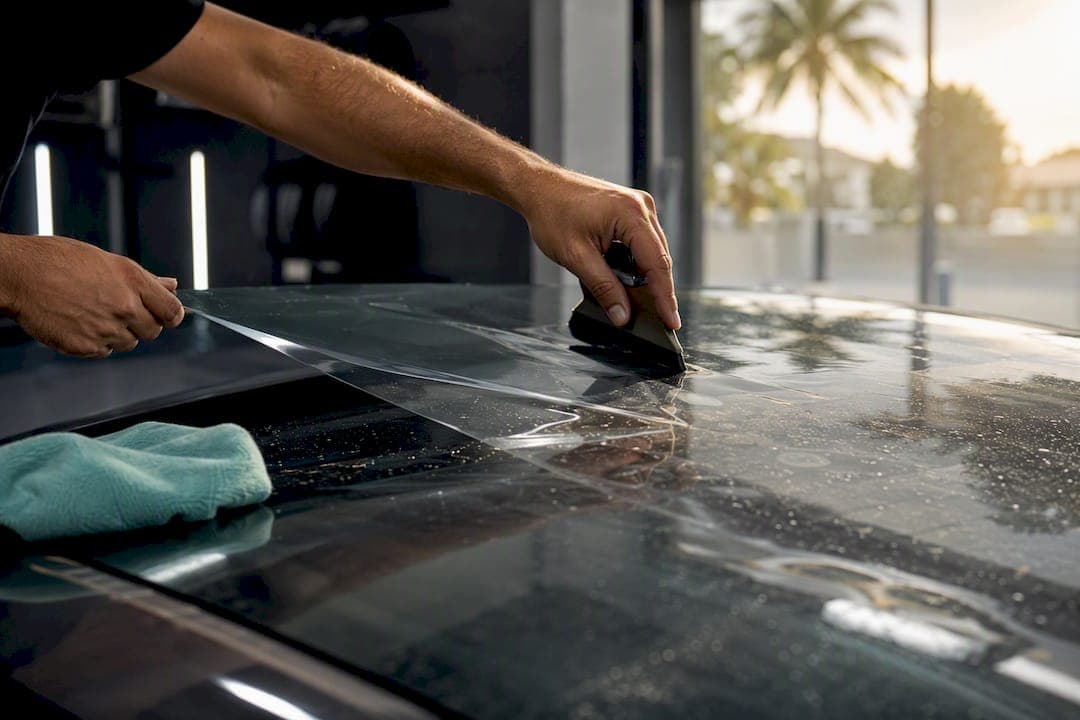
Yes, you can tint most panoramic roofs, and premium ceramic film delivers the strongest combination of heat rejection and UV protection without sacrificing much visibility. Tinting overhead glass is common practice, and when a skilled installer uses the right film, the payoff shows up fast in cabin temperature and glare. The real risk isn't the tint itself. It's picking the wrong film or a rushed installer, which is where warranty problems and cracked edges usually start.
TL;DR:
- Ceramic film is the best choice for panoramic roofs, providing the highest infrared rejection, long-term durability, and optical clarity.
- Confirm whether your roof glass is tempered or laminated, as it influences heat tolerance and warranty considerations during installation.
- Proper professional installation is critical because improper trimming or surface prep can cause bubbling, cracking, or edge lifting, especially on double-curved glass.
- Tinting the roof at around 20% VLT offers a good balance between heat rejection, glare reduction, and nighttime visibility.
- OEM sunshades are a risk-free alternative that effectively reduces heat and glare without affecting warranty coverage.
Table of Contents
- Can You Tint a Panoramic Roof? How It's Done and When to Choose It
- Benefits: Heat, UV, Glare, and Interior Protection
- The Downsides: Visibility, Warranty, and Installation Risk
- Which Tint Types Work Best on Panoramic Roofs
- Choosing the Right Tint Percentage for Your Roof
- OEM Sunshades and Other Alternatives to Tint
- Why a Professional Installer Matters on Panoramic Glass
- What Most Buying Guides Get Wrong About Roof Tint
- Ready to Tint Your Panoramic Roof the Right Way
- Sources
Can You Tint a Panoramic Roof? How It's Done and When to Choose It
Most panoramic roofs accept aftermarket film without any issue, but you should still check your owner's manual or ask your dealer whether the glass is tempered or laminated before booking an install. That distinction changes how a film reacts to heat, and some manufacturers note it directly in their service documentation.
Roof glass behaves differently than a side window. Because it faces the sun at a much steeper angle for most of the day, it absorbs more solar energy per square foot than a windshield or door glass ever will. That higher solar load is exactly why installers like Garage 717 treat panoramic roofs as their own category rather than an afterthought tacked onto a full vehicle tint job.
Installers typically work from the inside when trim panels allow easy access, using heat to shape film around the double curves common on panoramic glass. When interior access is limited, some shops fit exterior TPU-style films instead, applying them directly to the outer surface of the glass.
Before you commit to a shade or film family, run through a short checklist:
- Confirm whether your roof glass is tempered or laminated, since that affects heat tolerance during installation.
- Check your vehicle's service manual for any manufacturer notes on aftermarket film.
- Ask your installer how many panoramic roof jobs they've completed, not just side windows.
- Ask which film line they recommend specifically for roof glass, not a generic all-around tint.
Benefits: Heat, UV, Glare, and Interior Protection
Heat rejection is the number one reason owners tint a panoramic roof. Overhead glass sits closer to your head and shoulders than any other window in the car, so even a modest reduction in solar heat gain translates into a noticeably cooler cabin, especially on the drive back to a car that's been parked in direct sun all day.
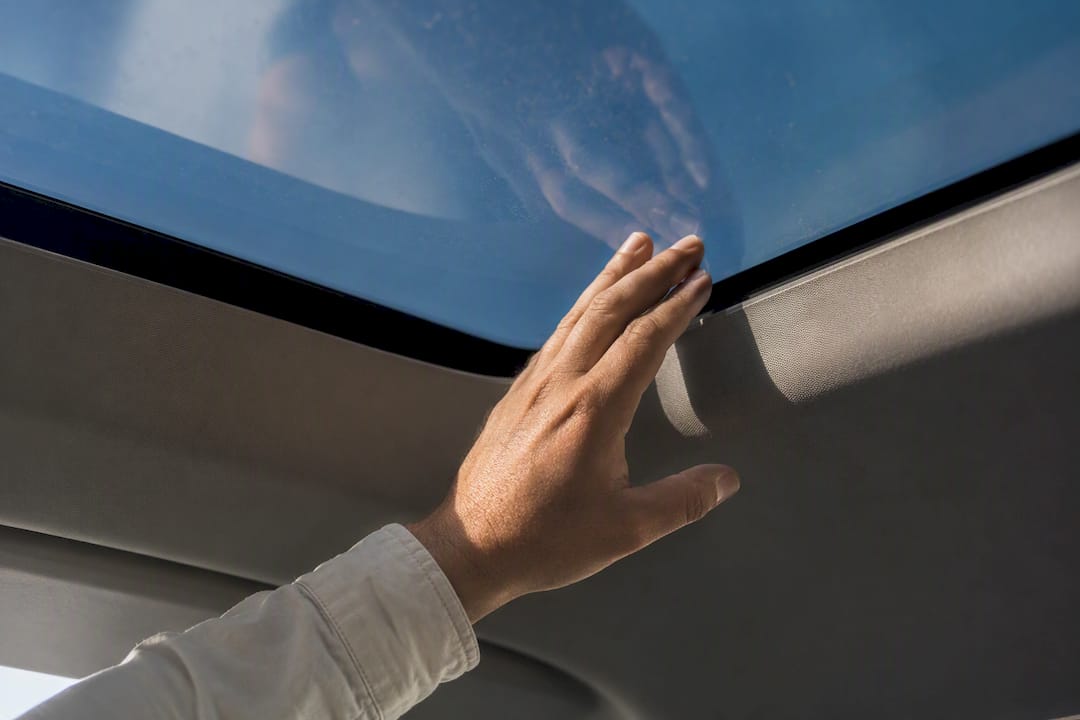
Pro Tip: If your roof gets hot enough to feel through a t-shirt while parked, that's a strong sign your current glass has little to no heat-rejecting coating, and roof tint will make a real difference.
UV protection matters just as much, even though it's less obvious day to day. Glass without a UV-blocking layer still allows meaningful UVA transmission, and medical research on solar radiation exposure has documented health risks from prolonged UVA exposure through glass.
Beyond heat and UV, tinting a panoramic roof brings a few other advantages worth weighing together:
- Reduced glare when the sun sits directly overhead, particularly useful for tall SUVs and trucks with large panoramic panels.
- Better privacy for rear-seat passengers, especially in vehicles where the roof panel extends over the second row.
- A cleaner, more finished appearance that many owners prefer over bare factory glass.
- Less visible interior wear over time thanks to reduced UV and heat exposure on trim.
The Downsides: Visibility, Warranty, and Installation Risk
The biggest trade-off with any dark tint is nighttime visibility, so be sure to read these night driving tips to stay safe after dark on UK roads. Lower VLT numbers mean darker glass, and darker glass overhead can make it harder to spot traffic lights, overpasses, or signage in low light, particularly on roof panels with a rear passenger view. This matters more for a panoramic roof than a rear window, since some drivers use the glass for situational awareness at night.
Warranty implications deserve a real conversation with your dealer, not a guess. Some manufacturers flag aftermarket film on roof glass in their service documentation, and installer guidance consistently recommends confirming whether your roof is tempered or laminated glass before any work begins, since that affects both heat tolerance and how a dealer might view a warranty claim later.
Thermal stress is a real, if uncommon, risk on certain roof glass types. Watch for these warning signs during and after installation:
- Visible bubbling or cloudiness appearing within the first few days.
- Edge lifting near the trim line, often a sign of poor surface prep.
- Any stress cracks radiating from the glass edge, which should prompt an immediate call to your installer.
- Uneven color or a hazy patch where the film wasn't heat-formed correctly for the curve.
Most of these problems trace back to installer error rather than the film itself. Rushed trimming on double-curved glass, skipped cleaning steps, and using a film not designed for roof-level heat exposure account for the majority of complaints in owner forums.
Which Tint Types Work Best on Panoramic Roofs
Not every film performs the same way on overhead glass, and the differences matter more here than on a side window. Because panoramic glass faces the sun almost directly for hours at a time, the film family you choose has an outsized effect on comfort.
Ceramic film is the standout choice for roof glass. It delivers the highest infrared rejection of the mainstream film types, stays optically clear even in darker shades, and holds up over years of direct sun exposure without fading or turning purple. Installer guides that specialize in overhead glass, including Garage 717's roof tinting breakdown, point to ceramic as the default recommendation precisely because of that near-perpendicular sun exposure.
Carbon and dyed films are more budget-friendly but fall short on a panoramic roof. Carbon offers decent heat rejection but nowhere near ceramic's infrared performance, and dyed film provides almost no meaningful heat rejection at all, just cosmetic darkening. Given how much solar load a roof panel absorbs, that gap in performance shows up quickly in cabin temperature.
Exterior TPU-style films are a newer option built specifically for roof panels. CovrGard PANO is marketed as reducing total solar energy by around 50%, with over 90% infrared rejection and 99% UV protection, while cutting visible light transmission by roughly a third. This category applies to the outside of the glass rather than the inside, which makes it a strong pick when interior trim access is limited or when you want maximum heat rejection without going extremely dark.
Here's how the trade-offs generally shake out:
- Ceramic film: best balance of clarity, heat rejection, and longevity for interior application.
- Carbon film: moderate heat rejection at a lower price point, but noticeably behind ceramic.
- Dyed film: cosmetic only, minimal heat rejection, not recommended for roof glass.
- Exterior TPU film: highest total solar energy rejection, applied outside the glass, ideal when interior access is restricted.
Choosing the Right Tint Percentage for Your Roof
VLT, or visible light transmission, tells you what percentage of light passes through the glass. Lower numbers mean darker glass, more privacy, and stronger heat rejection, but also reduced visibility at night.
Here's how the most common choices play out in real driving conditions:
- Around 5% VLT gives you maximum privacy and the darkest look, but night visibility through the roof panel drops significantly. Best suited for owners who rarely rely on the roof glass for outside sightlines after dark.
- Around 20% VLT hits a strong middle ground: solid heat rejection with usable night vision, making it the most popular choice among panoramic roof owners.
- Around 35% VLT offers a more balanced result, noticeably better visibility while still cutting a meaningful amount of glare and heat.
- Lighter options above 35% preserve most of the sky view, appealing to owners who tint mainly for UV protection rather than darkness.
A common strategy is going darker on the rear roof panel while keeping the front section lighter, which preserves forward visibility while still cutting heat over the back seats. For cost and timing, panoramic-only installs on vehicles like the Tesla Model Y or Model 3 have run around $450 as a standalone add-on in typical installer pricing, with most jobs completed in a few hours depending on the roof's size and curvature.
OEM Sunshades and Other Alternatives to Tint
Tint isn't the only way to manage heat and glare on a panoramic roof. Several automakers sell purpose-built sunshades as accessories, and they're worth considering if you'd rather not alter the glass at all.
Volvo offers a vehicle-specific panoramic roof sunshade that clips into place between the glass and roof panel, cutting glare and interior heating without any permanent change to the vehicle. Ford sells a similar accessory for the Mustang Mach-E, designed to lower cabin temperature and shield interior materials from UV exposure.
A few points worth weighing:
- OEM sunshades carry zero warranty risk since they don't touch the glass itself.
- Retractable and clip-in shades are the lowest-risk option if you're unsure about committing to permanent film.
- Pairing a lighter roof tint with a removable sunshade gives you flexibility. Keep the glass clear most of the time, add shade only when parked in direct sun.
Why a Professional Installer Matters on Panoramic Glass
Panoramic roofs punish sloppy installation faster than any other window on the car. The compound curves, tight trim lines, and higher heat exposure mean a shop with real roof-specific experience produces a cleaner, longer-lasting result than a generalist who mostly handles side windows.
Some installers offer 3M Ceramic IR, 3M Color Stable, and Iviron KoolMax ceramic films with mobile service, bringing professional equipment and trim experience to your driveway similar to a shop location. Before booking anyone for a panoramic roof job, run through this quick checklist:
- Ask specifically about panoramic or sunroof experience, not just general tint volume.
- Confirm which film lines they carry and whether ceramic is available for roof glass.
- Ask about warranty coverage on the film itself, separate from any vehicle manufacturer warranty questions.
- Check whether they offer mobile installation, which avoids dropping the vehicle off and waiting.
What Most Buying Guides Get Wrong About Roof Tint
Most advice treats panoramic roof tint as an extension of a full-car tint job, picking one film and one shade for everything. That's backwards. The roof faces a completely different solar angle than your side windows, and treating it as an afterthought is how owners end up with a film that looks fine on paper but underperforms overhead.
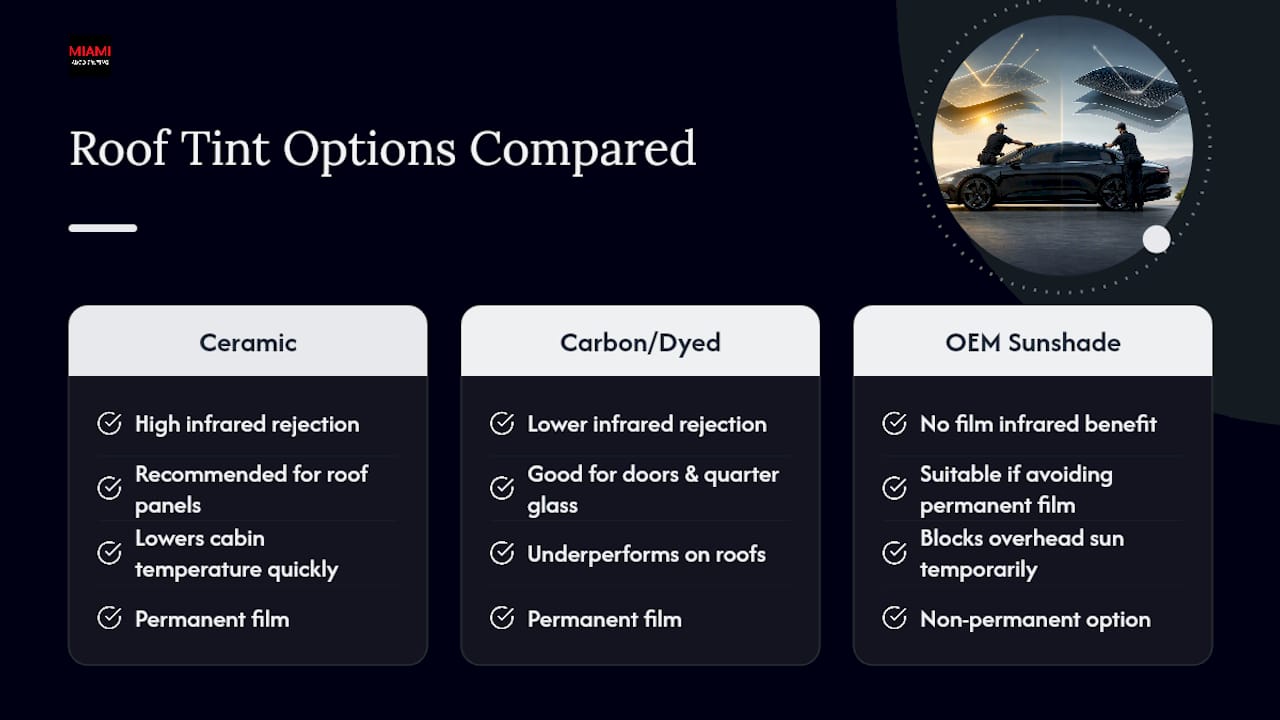
The trade-off that actually deserves your attention isn't tint versus no tint. It's ceramic versus everything else. Carbon and dyed films are fine for doors and quarter glass, but on a roof panel absorbing direct overhead sun for hours, the infrared rejection gap between ceramic and cheaper films shows up in cabin temperature within the first few weeks of ownership.
I'd also push back on the idea that darker is always better. And if you're not ready to commit to permanent film at all, an OEM sunshade is a perfectly legitimate answer, not a consolation prize.
— Jose
Ready to Tint Your Panoramic Roof the Right Way
Professional installers can bring roof-specific expertise directly to your driveway, installing 3M Ceramic IR, 3M Color Stable, and Iviron KoolMax ceramic films with a team that treats panoramic glass as its own job, not an afterthought.
Mobile tinting services that specialize in curved roof glass sometimes let you skip the drop-off entirely by coming to your home or office, helping you choose the right VLT for your driving habits, and installing while you go about your day. If heat rejection and UV protection are your top priorities, the 3M Ceramic Film page breaks down what that film line delivers on roof-specific applications. For a straightforward look at pricing before you book, check the ceramic tint packages starting from $249 and get a quote for your specific vehicle and roof size.
Sources
- PubMed: study on solar radiation and UVA exposure
- Volvo parts: Panoramic roof sunshade (2026 EX30)
- Garage 717: Sunroof & panoramic roof tinting guide
- LionHeart Detailing: Can you tint sunroofs and panoramic roofs?