
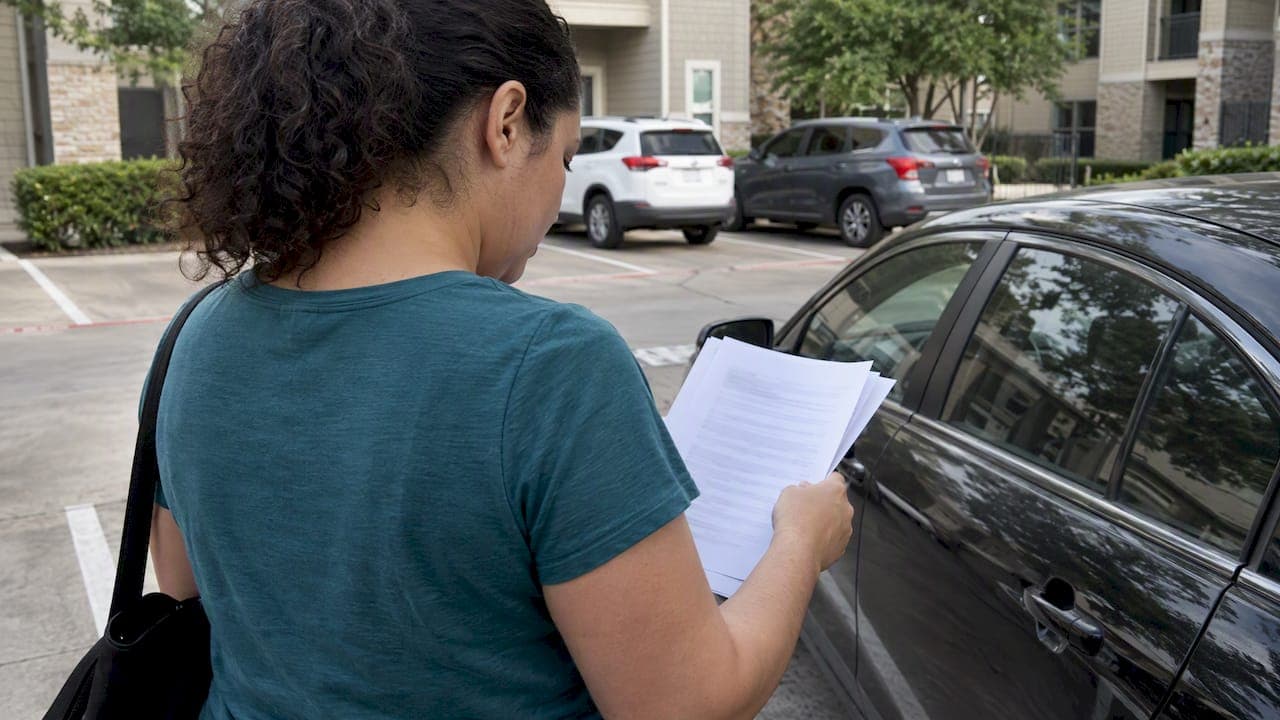
Yes, you can get mobile tinting done at your apartment, and most residents do it without any issue. Your immediate next step is to check your lease or HOA rules and confirm your state's VLT limits, then book a mobile installer to come to your parking spot. A professional mobile tinting crew can usually quote and schedule the same day.
TL;DR:
- Check lease or HOA rules for contractor access and parking activity, and request approval with the appointment time, work details, and insurance documentation.
- For outdoor parking, prioritize ceramic film’s heat and UV rejection over darkness; nonmetalized 3M Ceramic IR also avoids GPS, radio, and mobile signal interference.
- Two front windows typically take under an hour, while a full car with windshield can take several hours; shade and a stable spot help installation.
- Prices start at $150 for two front windows or a windshield, while a full car plus windshield with ceramic starts at $500; removal costs extra.
- Confirm state VLT limits before booking; federal rules set a 70% baseline for visibility glazing, and installers may face penalties for making it noncompliant.
Table of Contents
- Getting Approval From Your Lease or HOA Before You Book
- What to Expect When the Installer Arrives at Your Parking Spot
- Choosing the Right Film for Apartment Parking: Ceramic, Carbon, and 3M Options
- What Mobile Tinting at Your Apartment Actually Costs
- Federal Rules and State Laws You Should Confirm Before Installing
- Why Hire a Mobile Pro: Our Service Model and What to Ask For
- Keeping Your Tint in Good Shape After the Install
- An Installer's Take on Apartment Tint Jobs
- Book a Mobile Install With South Miami Tint at Your Apartment
- FAQ
- Sources
Getting Approval From Your Lease or HOA Before You Book
Most leases focus on structural changes to the unit, not work done on your own vehicle in a parking spot, so tinting rarely triggers a violation. Still, some HOAs regulate contractor access or parking lot activity, so a quick read of your lease's "alterations" or "guest services" clause saves you a headache later.
- Look for language about "outside contractors," "vehicle maintenance," or "commercial activity" in common areas.
- Email your property manager a short, specific request: the date, approximate time, and that the work is non-permanent and removable.
- Ask whether they want proof of insurance or a brief description of the installer's process.
- Request a reserved spot or visitor space if your assigned spot is tight or uncovered.
Garage or interior work is usually an easy approval since nothing about the building's exterior changes. Anything involving signage, decals, or visible modifications gets more scrutiny, so keep the request framed around your car, not the property.
Pro Tip: Send management a one-page installer fact sheet with insurance and removal policy attached. It answers their questions before they ask.
What to Expect When the Installer Arrives at Your Parking Spot
A two-front-window job typically takes under an hour, while a full car with windshield can run several hours, especially if old tint needs to come off first or your vehicle has curved rear glass. Budget extra time if you're having old film removed, since adhesive residue adds steps.
Your parking spot needs to be flat, stable, and ideally shaded or covered. Direct sun affects film application, so a garage spot or a shaded corner of the lot works best. Installers rarely need outlets since most bring battery-powered equipment.
- Clear the interior near the windows and remove valuables from the dash and seats.
- Be present or leave the vehicle unlocked so the installer can access the cabin.
- The installer measures each window and cuts film to size using computer-guided patterns.
- Glass gets cleaned and prepped before the film is applied, trimmed, and smoothed.
- A final inspection checks for bubbles, edges, and overall fit before you sign off.
Choosing the Right Film for Apartment Parking: Ceramic, Carbon, and 3M Options
Not all tint film performs the same way, and for apartment residents who park outdoors most of the day, heat rejection and UV protection usually matter more than how dark the glass looks. Three numbers worth asking about: total solar energy rejection, UV block percentage, and VLT.
- UV block: High-performance films can block nearly all harmful UV rays (https://www.skincancer.org/skin-cancer-prevention/sun-protection/uv-window-film/), which matters if your car sits in direct sun all day.
- Heat rejection: Ceramic films reject a large share of solar energy without making the cabin feel like a cave.
- Privacy vs. clarity: A darker film adds privacy, while a lighter, spectrally selective film keeps a near-clear look from inside while still cutting heat.
- No interference: Non-metalized films like 3M Ceramic IR won't disrupt GPS, radio, or mobile signal.
Statistic Callout: High-performance films can reject a large share of total solar energy (https://www.skincancer.org/skin-cancer-prevention/sun-protection/uv-window-film/), which keeps your cabin noticeably cooler after sitting in a parking lot all afternoon.
We recommend 3M Ceramic IR or 3M Crystalline for apartment residents who want heat and UV protection without a heavy exterior darkness that might draw management's attention.
Pro Tip: If your spot gets afternoon sun, prioritize TSER over VLT. A lighter film with strong solar rejection beats a dark film with weak heat performance.
What Mobile Tinting at Your Apartment Actually Costs
Price depends on a handful of factors: film type, vehicle size, how many windows you're tinting, whether the windshield is included, and whether old tint has to come off first. Mobile convenience is usually built into the quote rather than billed separately.
- Entry-level packages like two front windows typically run from $150.
- Windshield tint alone starts from $150 as well.
- A full car plus windshield with premium ceramic film runs from $500.
- National ranges for comparable jobs span $150 to $800 depending on film grade and vehicle size.
Old-tint removal adds time and cost since it often involves peeling adhesive and cleaning the glass before new film goes on, so ask for that as a separate line item. A quote dramatically lower than everything else usually means a thinner film or no warranty, so compare what's actually included before you book.
Federal Rules and State Laws You Should Confirm Before Installing
NHTSA Standard No. 205 requires at least 70% visible light transmittance for glazing considered necessary for driving visibility at the time a vehicle is first sold. That standard mainly governs manufacturers and dealers, but it also affects installers and repair businesses, since federal rules prohibit "rendering inoperative" compliant glazing.
NHTSA has clarified that manufacturers, dealers, and repair businesses may face penalties if an installation causes glazing to fall below the required VLT threshold, even after a vehicle leaves the factory.
A separate NHTSA interpretation reiterates that this baseline applies across vehicle classes, though individual states set their own front and rear window limits once a vehicle is on the road. Always verify your state's VLT rules before scheduling, and ask your installer these questions:
- Do you know the VLT limit for my state and my vehicle type?
- Will you provide documentation or a compliance sticker if my state requires one?
- Who's liable if the installed film doesn't meet local law?
Why Hire a Mobile Pro: Our Service Model and What to Ask For
Hiring a mobile installer means skipping the shop trip entirely. Mobile tinting services often include premium ceramic films, computer-cut patterns sized to your vehicle, and same-day quoting so you're not waiting around for a callback.
- Ask any installer for proof of insurance before they start work in your lot.
- Confirm what warranty covers, including bubbling, peeling, or discoloration.
- Request before-and-after photos as part of the service record.
- Ask how they handle cleanup and whether removal is available if you move or sell the car.
For apartment-specific jobs, a good mobile crew keeps a compact footprint, brings their own lighting and tools, and works directly with whatever parking arrangement your property allows. That's the difference between a smooth appointment and a scheduling headache with your property manager.
Keeping Your Tint in Good Shape After the Install
Fresh tint needs a short curing period, often several days, during which you should avoid rolling down the windows or pressing on the film. Apartment parking adds a few wrinkles worth knowing about. If your spot sits in direct sun with no shade, the curing process may take a little longer since heat and humidity affect how the adhesive sets.
Watch for small bubbles in the first week. A few tiny bubbles during curing are normal and usually flatten out on their own. Bubbles that persist past a week or that show up months later usually point to an installation or adhesive issue worth calling your installer about under warranty.
Parking next to sprinklers, dripping air conditioning units, or shared wash stations can leave mineral deposits on new film, so a gentle rinse with a non-ammonia cleaner keeps the surface clear. Avoid automatic car washes with stiff brushes for the first month.
If your complex has narrow spots or shared walls, be mindful of door dings near freshly tinted windows, since a cracked window seal can let moisture behind the film. Most reputable installs include a workmanship warranty, so keep your receipt and any paperwork from the appointment in case you need a touch-up or repair down the line.

An Installer's Take on Apartment Tint Jobs
The biggest obstacle isn't the tint, it's parking logistics. A quick call to management before scheduling, plus a flexible time window, resolves most delays. Booking early morning or midday on a weekday tends to mean less competition for shared spots and fewer surprises.
— Jose
Book a Mobile Install With South Miami Tint at Your Apartment
Booking starts with a quick quote, either by phone or through our online form, where you tell us your vehicle type and which package you want, from two front windows to a full car plus windshield.
Every job includes your choice of film, a mobile arrival at your apartment, computer-cut measurements for a precise fit, and warranty coverage on the install. If you want ceramic specifically, our ceramic tint page outlines that option starting at a published rate.
Before you lock in a time, double-check your lease or HOA rules and your state's VLT limits so the appointment goes smoothly from the moment we pull into your lot.
- Request your quote online or by phone with your vehicle details.
- Pick your film: ceramic, carbon, or a 3M option.
- Confirm your parking spot and preferred time window.
- We arrive, install on-site, and walk you through aftercare.
FAQ
What percent is factory tint on an SUV?
Factory-tinted rear glass on SUVs typically has lower VLT than front windows, which usually meet the federal 70% VLT baseline for glazing considered necessary for driving visibility. Check your specific state's rules before adding aftermarket film on top of factory tint.
Is it hard to see out of 35% tint at night?
Choosing a high-clarity ceramic film helps minimize glare and visibility loss compared to cheaper dyed films.
Is privacy glass better than tint?
Privacy glass is tinted during manufacturing and can't be adjusted, while aftermarket film lets you choose the exact level of darkness and performance you want. Aftermarket ceramic film also typically offers stronger UV and heat rejection than standard factory privacy glass.
Is it okay to tint windows on a leased vehicle?
Tinting a leased vehicle is generally fine as long as the film meets your state's legal VLT limits, since lease agreements usually focus on vehicle condition at return rather than tint itself. Professional, non-permanent film can be removed before the lease ends if your leasing company requires it.