

Window tinting for fleet vehicles is the process of applying a thin polyester film to vehicle glass to control visible light transmission, block UV radiation, and reduce interior heat. Explaining window tint for fleets goes beyond picking a shade. It covers legal compliance, film technology, installation logistics, and the direct impact on driver comfort and vehicle resale value. Whether you manage five delivery vans or fifty service trucks, the right tint strategy protects your assets, supports your drivers, and presents a consistent brand image on every road your vehicles travel.
What is VLT and how does it affect fleet tint choices?
Visible Light Transmission, or VLT, is the percentage of light that passes through the combined window film and glass. A lower VLT number means a darker tint. A higher VLT number means a lighter, more transparent film.
Here is how common VLT levels break down for fleet use:
- 70% VLT: Near clear. Required for commercial truck front windows under federal standards. Barely noticeable but still blocks some UV.
- 35% VLT: A popular middle ground for fleet side windows. Reduces glare and heat without making the cabin feel closed off.
- 20% VLT: Common on fleet pickup trucks and SUVs for rear windows. Strong heat rejection and cargo privacy.
- 5% VLT (limo tint): Maximum darkness. Suitable only for rear cargo windows where no legal restriction applies.
The federal VLT minimum for commercial truck front windows is 70%. That standard exists to protect driver sightlines, and violating it creates real legal exposure for your business.
| Window Position | Typical Fleet VLT | Key Consideration |
|---|---|---|
| Front windshield | 70%+ (AS-1 line) | Federal and state rules apply |
| Front side windows | 70% (commercial trucks) | State laws vary for other vehicles |
| Rear side windows | 20%–35% | Fewer restrictions in most states |
| Rear cargo glass | 5%–20% | Often unrestricted for cargo vans |
Pro Tip: Always confirm your state's specific VLT rules before ordering film. A fleet manager in Florida faces different limits than one operating in California or New York.
VLT directly affects glare reduction and driver visibility. A 35% film cuts enough light to reduce eye strain on long routes without creating a visibility problem at night. Choosing the wrong VLT for the wrong window is the most common compliance mistake fleet managers make.
What are the benefits of window tinting for fleets?
The benefits of window tint for fleets extend well past aesthetics. Ceramic window film reduces interior cabin temperatures by 15–25°F and blocks up to 99% of UV rays. That combination prevents dashboard cracking, seat splitting, and fading, which are the interior damage patterns that accelerate depreciation on high-mileage vehicles.
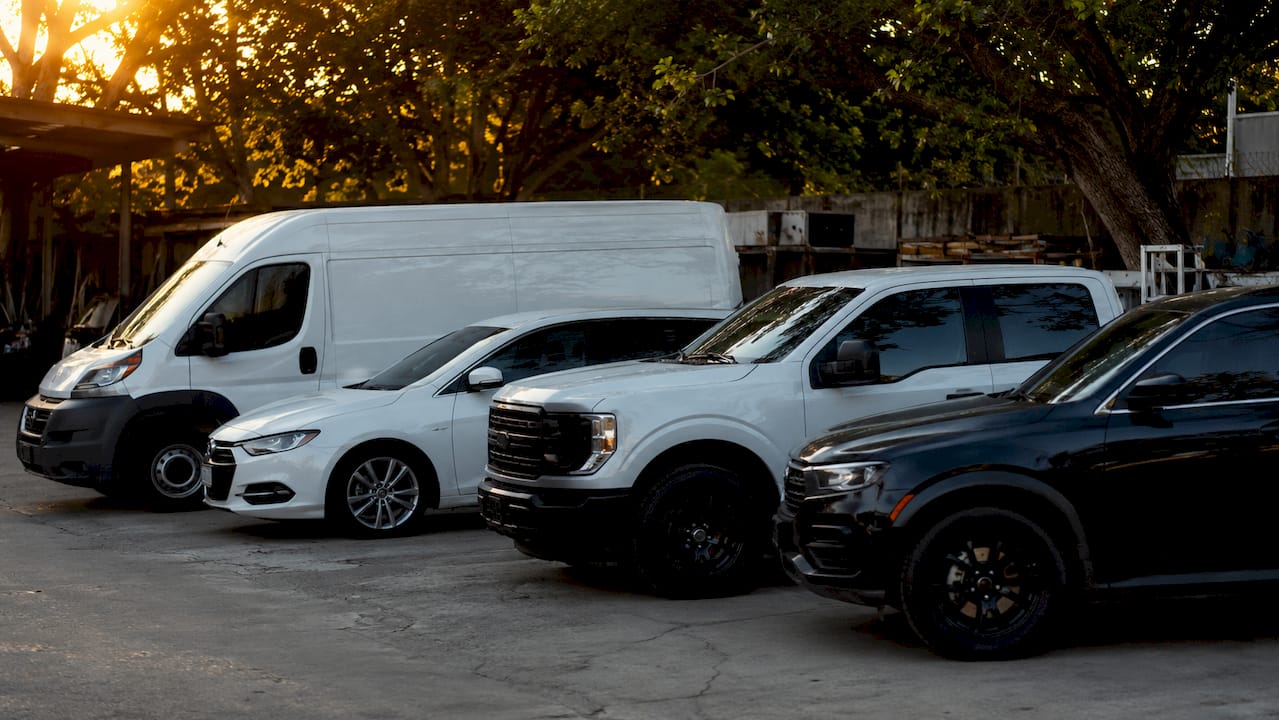
Consider what that means at scale. A fleet of 20 vehicles with untreated glass accumulates interior wear that shows up at resale. Untreated glass accelerates depreciation, while ceramic film preserves interiors and aligns resale value more closely with mileage than with condition damage. For fleet managers who cycle vehicles every three to five years, that difference adds up.
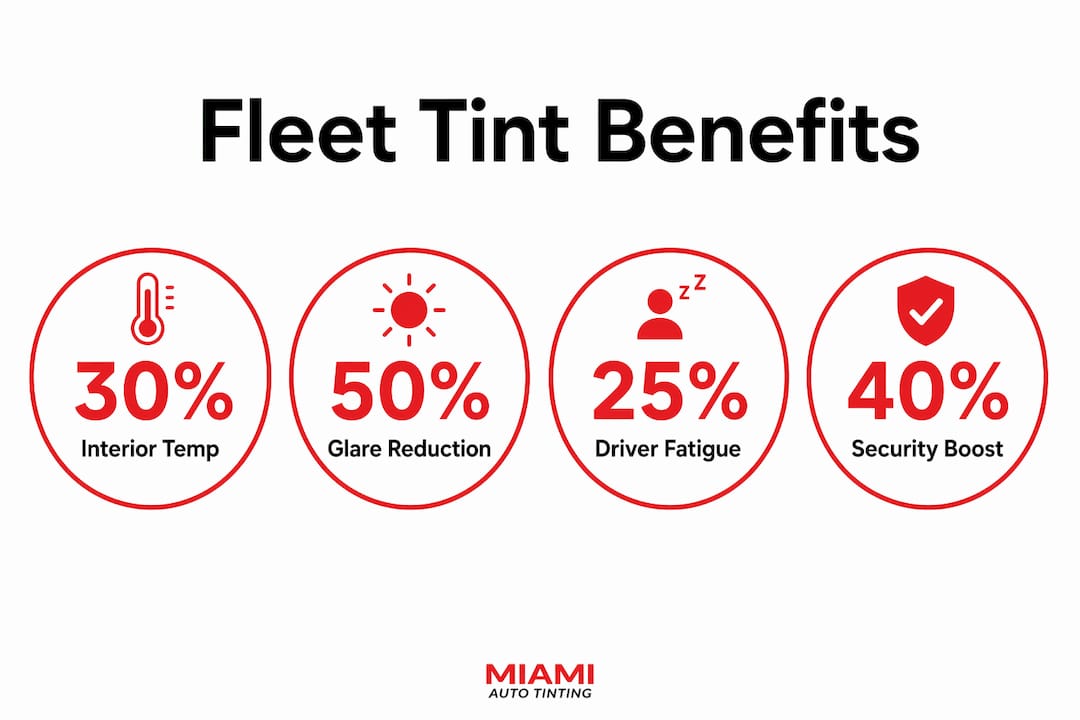
Driver well-being is another direct benefit. Tinted fleets show less driver fatigue and improved retention in competitive labor markets. Drivers who spend eight hours a day in a hot, glare-heavy cab feel the difference. Reducing that discomfort is a practical retention tool, not a luxury.
Security is a factor that often gets overlooked. Darker rear and cargo window tint hides equipment and packages from view. Visible cargo is an invitation for smash-and-grab theft. A 20% film on cargo van rear glass costs far less than one stolen tool kit or laptop.
Finally, uniform tinting across your fleet creates a professional appearance. Uneven tinting or bubbling damages brand perception. When your vehicles show up at a client's location, the condition of those vehicles communicates something about your business. Consistent, clean tint reinforces that message positively.
How does the window tint installation process work for fleets?
Fleet tint installation follows a structured process designed to minimize vehicle downtime. Professional installation typically includes a 30–60 minute consultation, 2–4 hours of installation per vehicle, and a 24–48 hour curing period before windows can be rolled down.
Here is how a well-managed fleet rollout looks step by step:
- Consultation: Assess fleet size, vehicle types, window counts, and VLT requirements. This is where you confirm compliance needs and select film type.
- Scheduling: Divide the fleet into batches. Tinting five vehicles at a time keeps the rest operational.
- Film application: Each vehicle takes 2–4 hours depending on window count and glass complexity. Vans with more glass panels take longer than standard sedans.
- Curing period: Film needs 24–48 hours to fully bond to the glass. Rolling down windows before curing causes peeling and bubbling.
- Quality inspection: Each vehicle should be checked for air pockets, edge lifting, and color consistency before returning to service.
Pro Tip: Schedule tinting at the end of a shift so vehicles cure overnight and return to service the next morning. You lose zero operational hours.
Phased installation scheduling is the standard best practice for fleets. Tinting the entire fleet in one block creates a gap in your operational capacity. Batching vehicles by route priority or shift schedule keeps revenue flowing throughout the process.
Mobile tinting services add another layer of flexibility. Southmiamitint offers mobile installation across Miami-Dade, which means your vehicles do not need to leave their depot. A technician comes to your location, works through your scheduled batch, and your drivers return to their vehicles the next morning with no lost time.
What factors influence the cost of window tinting for fleets?
Fleet window tinting cost depends on four main variables: film type, vehicle count, vehicle size, and installation complexity. Understanding each one helps you build an accurate budget and avoid surprises.
Volume discounts begin at 3–5 vehicles and scale down the per-vehicle cost as fleet size grows. A single vehicle might cost more per unit than the same film applied to a fleet of 20. That pricing structure rewards fleet managers who commit to a full rollout rather than tinting vehicles one at a time.
Film type is the biggest cost driver. Ceramic film carries a higher upfront cost than dyed or metallic film, but it outperforms both on heat rejection and longevity. Ceramic films are non-metallic and do not interfere with GPS, ELD devices, or toll transponders. For fleets that depend on telematics, that compatibility is not optional. Metallic films can degrade signal strength, which creates operational problems that cost far more than the price difference between film types.
Vehicle size and window count affect labor time directly. A cargo van with eight windows takes longer to tint than a pickup truck with four. Larger glass panels require more precise cutting and application. Any quote that does not account for vehicle type is incomplete.
Here is a simplified cost framework for fleet managers:
- Small fleet (3–5 vehicles): Volume pricing begins. Per-vehicle cost drops compared to single-vehicle rates.
- Mid-size fleet (10–20 vehicles): Significant per-unit savings. Phased scheduling becomes critical.
- Large fleet (20+ vehicles): Negotiate a flat per-vehicle rate with a dedicated installation schedule.
Always request an itemized quote that covers film brand, VLT level, warranty terms, and labor per vehicle type. A transparent quote protects you from rework costs if the wrong film gets installed on a regulated window.
What legal considerations should fleet managers know about tinting?
Legal compliance is the non-negotiable foundation of any fleet tinting program. The 70% VLT federal minimum for commercial truck front windows is the baseline, but state laws add another layer of complexity that varies significantly by location.
Key legal points every fleet manager needs to confirm:
- Front side windows: Most states set a minimum VLT for front side windows. Commercial vehicles often face stricter limits than passenger cars.
- Rear windows: Regulations are generally more relaxed. Many states allow darker tint on rear passenger windows.
- Cargo van rear glass: Cargo vans can tint rear windows very dark without violating laws in most states. Front windows still require strict compliance.
- Windshields: Tint is typically restricted to the top AS-1 line strip. Full windshield tinting is illegal in nearly every state.
- Reflectivity limits: Some states also regulate how reflective a tint can be, not just how dark.
Non-compliance consequences include fines, mandatory removal and reinstallation, vehicle impoundment in serious cases, and potential insurance complications after an accident. The cost of getting it wrong is always higher than the cost of getting it right the first time.
Pro Tip: If your fleet crosses state lines regularly, tint to the strictest applicable standard across all operating states. That single decision eliminates compliance risk for the entire fleet.
Professional installers who specialize in fleet work know these regulations and apply the correct film to the correct window position. That expertise is part of what you pay for when you choose a qualified provider over a budget shop.
Key takeaways
Fleet window tinting is a compliance-driven, operationally practical investment that protects vehicle interiors, supports driver retention, and reinforces brand consistency across every vehicle in your fleet.
| Point | Details |
|---|---|
| VLT determines compliance | The 70% federal minimum for commercial truck front windows is the legal baseline; confirm state rules for all other windows. |
| Ceramic film is the right choice for fleets | Non-metallic ceramic film rejects heat, blocks UV, and preserves GPS and telematics signal integrity. |
| Phased installation protects revenue | Tinting vehicles in batches keeps the fleet operational and avoids downtime gaps during rollout. |
| Volume pricing rewards full fleet commitment | Discounts start at 3–5 vehicles; committing to a full rollout lowers per-vehicle cost significantly. |
| Consistent quality protects brand image | Uneven or bubbled tint across vehicles damages the professional appearance your fleet projects to clients. |
What I've learned from tinting fleets in Miami
Fleet managers often come to me treating window tinting as a checkbox item. They want the cheapest compliant film, applied as fast as possible. I understand the instinct. You are managing costs across dozens of vehicles, and every line item gets scrutinized.
Here is what I have seen play out differently in practice. The fleets that invest in quality ceramic film and a structured installation schedule end up with vehicles that hold their interior condition far longer. Drivers notice the difference in cabin temperature within the first week. That comfort translates directly into fewer complaints and lower turnover, which is a real cost saving that never shows up on the tinting invoice.
The telematics issue is one I cannot stress enough. I have seen fleet managers choose metallic film to save money, then spend more troubleshooting GPS signal drops and ELD connectivity issues. Ceramic film costs more upfront. It costs nothing in signal interference.
Consistency matters more than most people realize. When a fleet of 15 vans shows up at a job site and 12 have clean, matching tint while 3 have peeling or mismatched film, that inconsistency tells a story about how the business operates. Clients notice. Prospects notice. Uniform, professional tint is part of your brand whether you think of it that way or not.
My honest advice: treat the tinting program the way you treat any other fleet maintenance program. Plan it, schedule it in phases, use the right materials, and work with a provider who understands fleet operational realities. The return on that approach is measurable in resale value, driver retention, and the professional image your vehicles project every day.
— Jose
How Southmiamitint handles fleet tinting in Miami-Dade
Southmiamitint provides mobile ceramic window tinting for fleets across Miami-Dade, with no need to bring vehicles to a shop. Our ceramic fleet tinting service starts at $249 per vehicle, with volume pricing for fleets of 3 or more. We install 3M IR, 3M Color Stable, and Iviron Kollmax ceramic films, all backed by a lifetime warranty on every vehicle. Scheduling is built around your operational needs, so your fleet stays on the road while we work through your batch.
If you want to review mobile tinting pricing before committing, our pricing page breaks down costs by vehicle type and film option. Fleet managers can also explore 3M ceramic IR film details to understand exactly what goes on your vehicles before making a decision.
FAQ
What VLT percentage is required for commercial fleet trucks?
The federal standard sets a 70% VLT minimum for front windows on commercial trucks. State laws govern other window positions and vary by location.
Does ceramic tint interfere with fleet GPS or ELD devices?
No. Ceramic films are non-metallic and do not interfere with GPS, ELD devices, or toll transponders. Metallic films can degrade signal strength and should be avoided on fleet vehicles.
How long does fleet tint installation take per vehicle?
Professional installation takes 2–4 hours per vehicle, followed by a 24–48 hour curing period. Scheduling vehicles at shift end allows them to cure overnight and return to service the next morning.
When do fleet volume discounts apply?
Volume pricing typically starts at 3–5 vehicles and scales down the per-unit cost as fleet size increases. Committing to a full fleet rollout rather than tinting vehicles individually produces the best per-vehicle rate.
Can cargo van rear windows be fully tinted?
Yes. Cargo van rear windows are often exempt from VLT restrictions, allowing very dark tint for privacy and cargo security. Front windows must still comply with applicable state and federal regulations.