
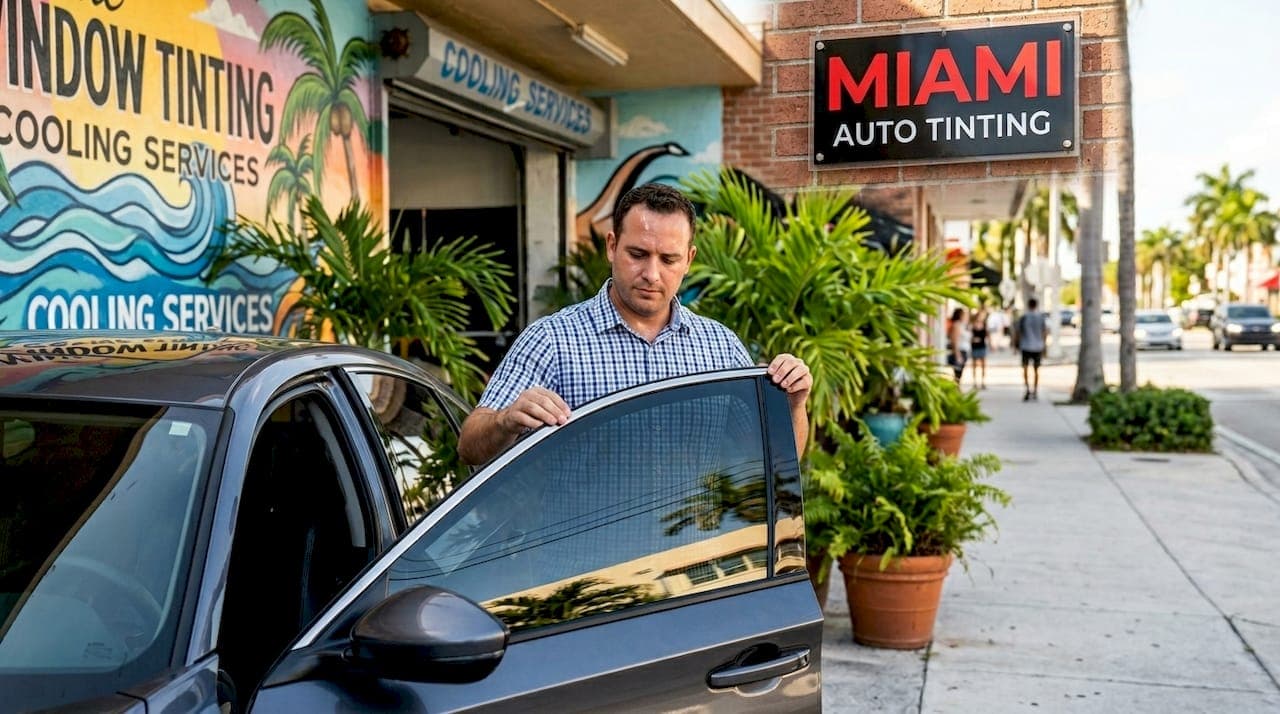
Most Miami drivers assume darker tint means better protection. It's one of the most common and costly misconceptions when it comes to defining window tint grades. The reality is more nuanced and more useful. Different grades serve different purposes, carry different legal weights, and perform very differently under the South Florida sun. Before you choose a film or walk into a shop, understanding exactly what those percentages mean, how they interact with your factory glass, and what Florida law actually allows will save you money, a traffic ticket, and possibly a lot of heat.
Table of Contents
- What are window tint grades and how do they differ?
- Understanding Miami-Dade County's legal window tint limits
- Comparing window tint grades: Benefits and practical differences
- Practical tips for selecting and installing window tint in Miami-Dade
- Rethinking window tint choices beyond darkness: What most Miami drivers miss
- Get the best ceramic window tint installed in Miami
- Frequently asked questions
Key Takeaways
| Point | Details |
|---|---|
| Understanding VLT | Window tint grades are defined by Visible Light Transmission percentages indicating how much light passes through. |
| Miami tint laws | Miami-Dade requires front side windows to have at least 28% VLT and rear windows as high as 15% or 6% for SUVs. |
| Ceramic tint benefits | Ceramic tints provide superior heat and UV protection while complying with legal darkness limits. |
| Installation compliance | Always verify combined VLT after installation, request compliance certification, and keep documentation. |
| Balanced tint choice | Choosing tint involves balancing privacy, protection, legality, and driving safety, not just darkness. |
What are window tint grades and how do they differ?
Window tint grades are defined by a single measurement: Visible Light Transmission, or VLT. This is the number you'll see attached to every tint film on the market, and it's the core of defining automotive tint grades correctly. VLT is the percentage of visible light in the 380 to 780 nanometer wavelength range that passes through a glazing assembly, meaning the glass and the film together.
Here's where most people get confused. The percentage printed on a film's packaging reflects the film alone. Your factory glass already blocks light. So if your car's factory glass lets through 80% of light and you apply a 35% VLT film, the combined VLT is closer to 28%, not 35%. This gap matters a lot for legal compliance and for choosing the right tint for your specific vehicle.
Here's how window tint levels break down in practice:
- 5% VLT ("limo tint"): Almost no light passes through. You cannot see into the vehicle at all, day or night.
- 15% VLT: Very dark. Common on rear windows for privacy. Legal for certain window positions in Florida.
- 20% VLT: Dark, still limited outward visibility at night. Popular for a blacked-out look.
- 28% VLT: The legal minimum for Florida front side windows on sedans. Provides noticeable shade with reasonable visibility.
- 35% VLT: A common middle ground. Visible darkening without significantly affecting night driving.
- 50% VLT: Light tint. Often used on windshields (in the non-restricted zone). Reduces glare and UV without heavy darkening.
- 70% VLT: Nearly clear. Mainly used for UV and heat rejection without visual change.
Understanding window tint ratings this way makes it clear that darkness and protection are separate qualities. A 70% VLT ceramic film can block more heat than a 20% dyed film. More on that shortly.
Understanding Miami-Dade County's legal window tint limits
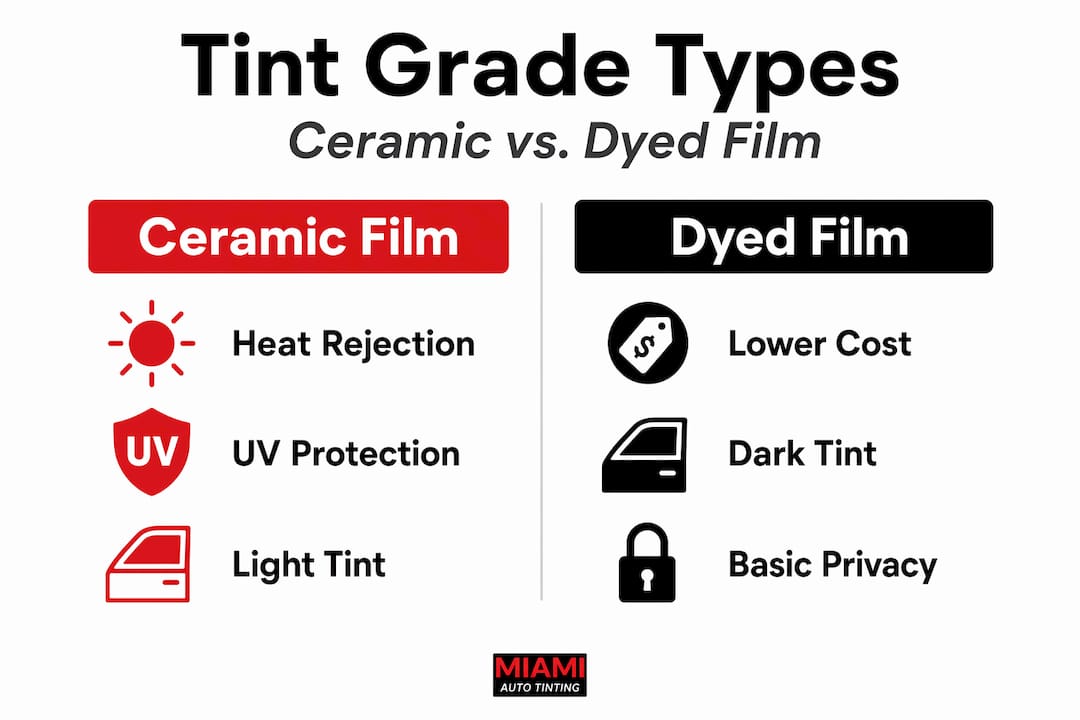
Florida sets statewide tint laws that apply in Miami-Dade. There are no additional county-specific rules, but enforcement in South Florida is active, and officers carry handheld meters to test VLT on the spot. Getting this wrong is not a minor issue; it can mean an equipment citation that requires you to remove the tint before your next inspection.
Here are the legal minimums for Miami tint regulations:
| Window position | Sedans (min. VLT) | SUVs and vans (min. VLT) |
|---|---|---|
| Windshield | Non-reflective tint on top 6 inches only | Non-reflective tint on top 6 inches only |
| Front side windows | 28% | 28% |
| Rear side windows | 15% | 6% |
| Rear window | 15% | 6% |
Florida law also caps reflectivity. Both front and rear side windows must allow 28% VLT minimum on sedans and keep reflectivity below 25%. Per Florida's 2026 tint rules, front side windows must allow at least 28% VLT, rear side windows at least 15%, with a 25% maximum reflectivity on both front and back side windows.
A few additional points Miami drivers often miss:
- Red, amber, and blue tints are prohibited under Florida law, regardless of their VLT rating.
- Factory dark glass counts toward your combined VLT. A popular mistake is installing a 20% film on rear windows of a sedan thinking it's legal because the car "already looks dark."
- Dual side mirrors are required if your rear window is tinted below the visibility threshold.
- Medical exemptions exist, but require documentation in the vehicle at all times.
Pro Tip: When you get tint installed, ask for the final combined VLT reading, not just the film specification. A reputable shop will measure this for you and document it.
Understanding Miami auto tint laws before installation is genuinely the best way to avoid spending money on a film you'll legally have to remove.
Comparing window tint grades: Benefits and practical differences
The grade you choose affects four things: privacy, heat rejection, UV protection, and nighttime visibility. None of these scale uniformly with darkness. That's the insight that changes how you evaluate your options.
Here's how the most common window tint percentages compare across the qualities that matter most in Miami:
| VLT grade | Privacy level | Heat rejection | Night visibility | Best use case |
|---|---|---|---|---|
| 5% | Maximum | Moderate (if dyed) | Very poor | Rear windows (SUV/van) |
| 15% | High | Moderate to good | Limited | Rear side windows (sedans, legal minimum) |
| 28% | Moderate | Good (with ceramic) | Reasonable | Front side windows (legal minimum, sedans) |
| 35% | Light to moderate | Good | Good | All windows, balanced look |
| 50% | Minimal | High (with ceramic) | Excellent | Windshield top strip, front side |
| 70% | Nearly none | Very high (ceramic) | Excellent | Full UV/heat protection without appearance change |
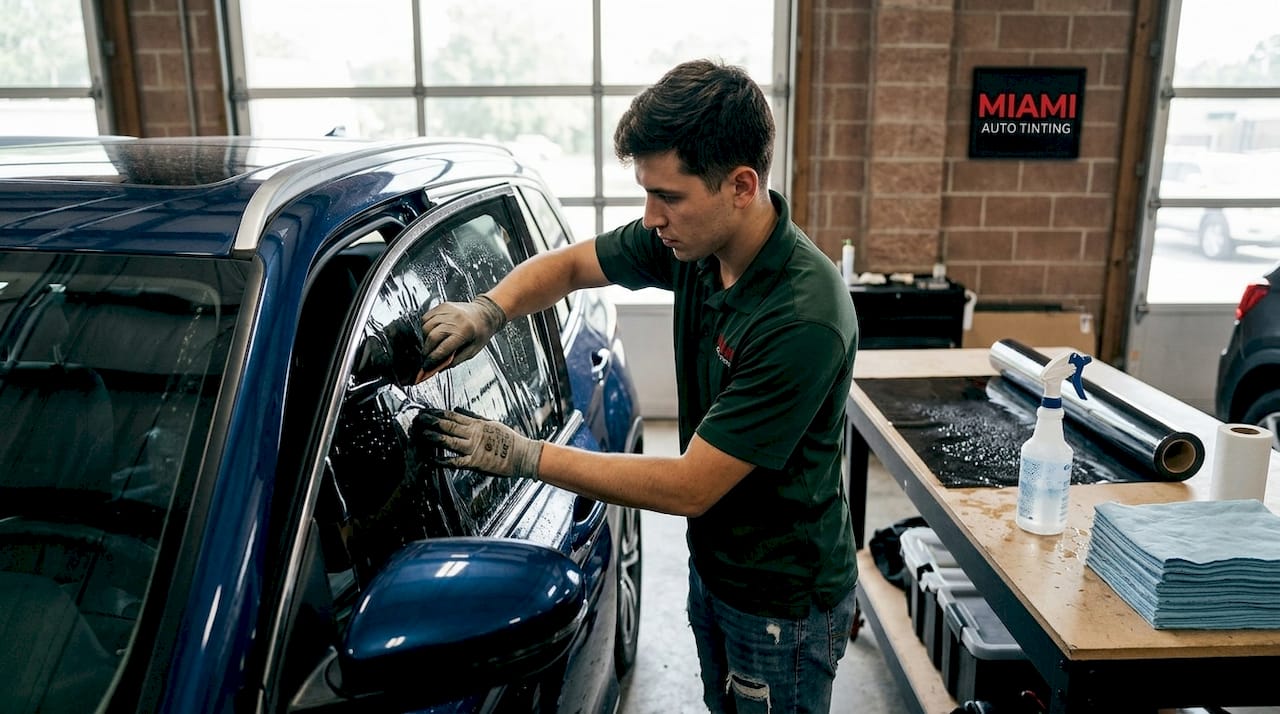
The difference in heat rejection between film types at the same VLT is striking. Ceramic films provide 50 to 70% total solar energy rejection (TSER), compared to dyed or carbon films that often land in the 30 to 45% TSER range. In Miami, where your car parked in the sun can reach interior temperatures above 130°F, that gap is the difference between a car you can get into and one you need to air out for five minutes.
Here's a useful way to think about the decision:
- Determine your legal window positions first. Front side windows max out at 28% VLT for sedans. That's your constraint. Work from there.
- Decide what problem you're solving. Privacy? Choose darker grades where legally allowed. Heat and UV? Go ceramic at any legal grade.
- Factor in night driving. If you drive frequently at night, grades below 28% on front windows will noticeably reduce visibility.
- Match film type to exposure. Windows facing direct afternoon sun in Miami, especially south and west-facing, benefit most from high-TSER ceramic films.
- Account for factory glass darkness. Comparing tint options without knowing your starting glass VLT leads to miscalculated installations.
Pro Tip: For Miami specifically, a 35% ceramic film on front windows often outperforms a 20% dyed film on heat protection while keeping you legal and maintaining clear night visibility. The best tint for Miami is almost never the darkest one.
Practical tips for selecting and installing window tint in Miami-Dade
You've picked a grade and a film type. Here's what you need to know to make sure the installation goes cleanly and keeps you out of trouble.
- Get the combined VLT measured. Film VLT ratings are for the film alone. Your installer should use a light meter to confirm the final combined reading on your actual glass before you leave.
- Request documentation. Ask for a certificate of compliance from the installer. Some Florida shops provide a window tint certificate you keep in the vehicle; this can help in enforcement situations.
- Avoid illegal tint colors. Red, amber, and blue are prohibited in Florida. Stick to neutral gray, charcoal, and bronze tones.
- Check reflectivity. Mirrored or highly reflective films look sleek but may push past Florida's 25% reflectivity cap. Ask specifically about reflectivity ratings, not just VLT.
- Confirm dual mirror requirements. If you tint your rear window below full visibility, Florida requires side mirrors on both sides of the vehicle.
For expert window tint tips specific to Miami, the consistent recommendation is ceramic film, particularly for front windows and windshield strips, because the UV and infrared rejection are meaningfully higher than any dyed or metalized alternative at the same VLT grade.
Installers recommend confirming compliance at installation, requesting documentation and certificates, and retaining proof to avoid legal issues if stopped. This is basic protection that costs nothing extra and takes about two minutes to set up.
Pro Tip: Miami's UV index regularly hits 11 or above, the highest rating on the UV scale. A high-quality ceramic tint, even at a relatively light 35% or 50% VLT, blocks up to 99% of UV radiation. That protects your skin on daily commutes and prevents your interior from fading or cracking. Read more about tinting tips for Miami heat before your next installation.
Rethinking window tint choices beyond darkness: What most Miami drivers miss
Here's the uncomfortable truth about how most people shop for tint. They look at the darkest legal option, choose it, and assume they've maximized protection. They haven't.
Darkness is a proxy for protection, and it's a weak one. VLT standards vary by state, meaning legal tint levels differ widely and affect safety and comfort in ways drivers don't always anticipate. The real variable is film technology, not shade level.
A 35% ceramic film will keep your car dramatically cooler than a 20% dyed film. It blocks more infrared radiation (the actual heat-carrying wavelength), protects more effectively against UV, and doesn't fade or turn purple after 18 months in Florida sun the way cheap dyed films do. The darker film looks like more protection. The ceramic film delivers it.
There's also a safety angle here that most people skip past. Driving at night or in rain with heavily tinted front windows reduces your reaction time. It's not dramatic on a clear Miami night, but in a sudden storm on I-95, those percentages matter. Staying at or above 28% VLT on front side windows isn't just a legal checkbox. It's a genuine visibility baseline.
The ultimate tint guide framework we'd recommend: choose the lightest grade that meets your privacy needs on front windows, invest in the best film technology (ceramic, specifically), and go darker only on rear and side windows where it's legally available and where visibility is less critical. You'll get more heat rejection, more UV protection, a longer-lasting film, and a car that stays cooler even on a summer day when it's been parked since noon.
The drivers who understand tint grades well almost always end up with a lighter, more technologically advanced film than the drivers who don't. That's not a coincidence.
Get the best ceramic window tint installed in Miami
Choosing the right tint grade is straightforward once you know what you're looking at. The harder part is finding an installer who measures correctly, uses quality materials, and documents everything so you're covered if you're ever stopped.
We offer mobile ceramic window tinting across Miami-Dade, using 3M IR, 3M Color Stable, and Iviron Kollmax ceramic films. We come to your location, measure your factory glass, and confirm the combined VLT before we're done. Every install includes documentation. If you want ceramic window tint in Miami without the hassle of a shop visit, that's exactly what we do. Browse our 3M ceramic film options or check our current tint pricing to see what fits your vehicle and budget.
Frequently asked questions
What does VLT mean in window tinting?
VLT stands for Visible Light Transmission and measures the percentage of visible light allowed through the combined window and film assembly. Per industry standards, VLT covers the 380 to 780 nanometer wavelength range of the visible light spectrum.
What are the legal window tint limits for front side windows in Miami-Dade?
The legal minimum for front side windows in Miami-Dade is 28% VLT. Florida requires 28% minimum VLT on front side windows for all passenger sedans statewide.
Can I install tint darker than legal limits to get better heat protection?
No. Illegal tint leads to fines and mandatory removal. More importantly, it's unnecessary. Ceramic films provide high heat rejection while staying within legal VLT minimums, outperforming darker dyed films on actual thermal protection.
How does factory glass affect the actual VLT of window tint installed?
Factory glass typically blocks 15 to 20% of visible light before any film is applied, which means the combined VLT after tint installation will be lower than the film's rated VLT. Always confirm the combined measurement before leaving the shop.