
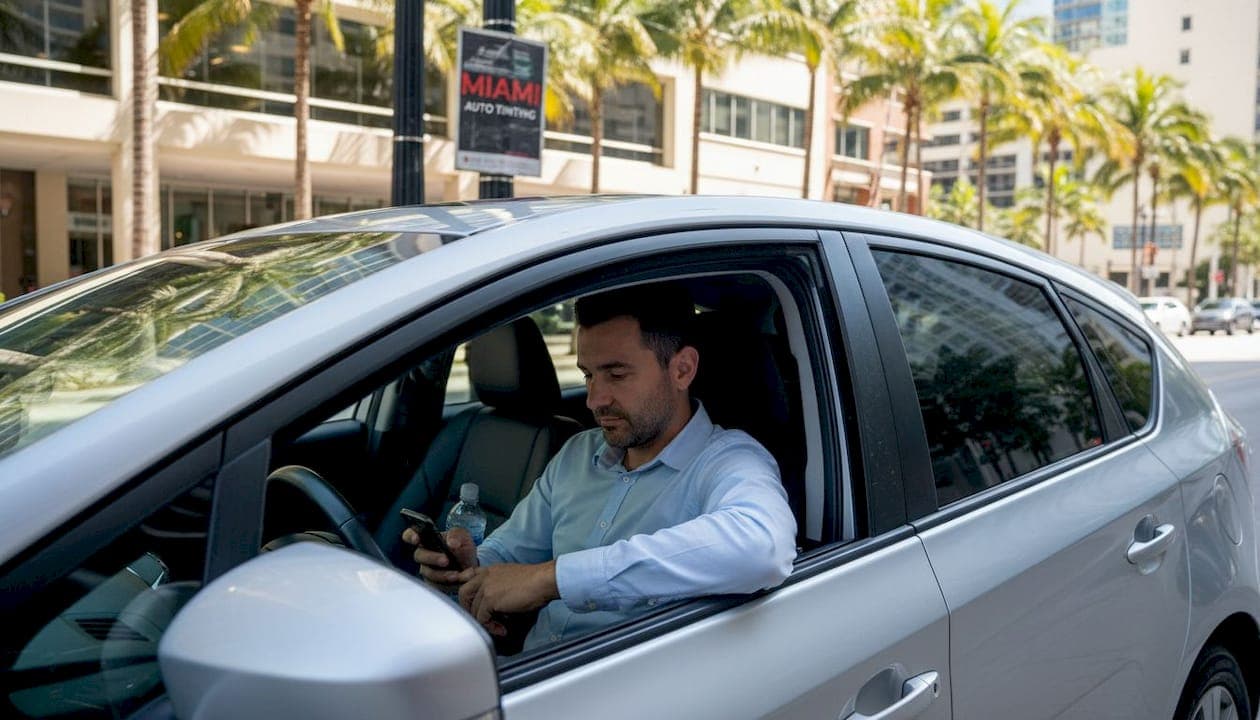
Owning a hybrid in Miami-Dade County sounds like a perfect equation on paper. You get better fuel economy, lower emissions, and a quieter ride. But Miami's relentless sun rewrites that equation every summer. When cabin temperatures routinely spike past 140°F inside a parked car, your hybrid's air conditioning kicks into high gear the moment you start moving, pulling energy directly from the traction battery. EV window tinting is increasingly recommended as a practical way to reduce HVAC demand and protect the energy efficiency you bought your hybrid for in the first place. This guide walks you through exactly how to choose the right film for your vehicle, your budget, and your Miami lifestyle.
Table of Contents
- How to evaluate tinting options for hybrid cars
- Top window tint types for hybrid vehicles
- Window tint options head-to-head: Miami hybrid car edition
- Situational picks: Which tint is best for your hybrid in Miami?
- Why window tinting is efficient comfort, not just style, for Miami's hybrids
- Get the ultimate window tinting solution for your hybrid in Miami
- Frequently asked questions
Key Takeaways
| Point | Details |
|---|---|
| Ceramic tints outperform | Nano-ceramic and ceramic tints deliver the best heat and UV rejection for Miami hybrid owners. |
| Efficiency, not miracles | Window tinting cuts AC energy waste but does not boost hybrid range like a battery upgrade. |
| Legal compliance is key | Always check Florida’s tint laws before installation to avoid fines and ensure safety. |
| Fit tint to your needs | Your priority—be it savings, comfort, tech, or style—determines the smartest tint choice. |
How to evaluate tinting options for hybrid cars
Now that you know why window tinting matters for hybrids, let's break down what makes a tint effective in Miami's demanding climate.
The single most important number to look for is total solar energy rejection, often abbreviated as TSER. This measures how much of the sun's combined heat energy (visible light, ultraviolet rays, and near-infrared radiation) a film blocks before it enters your cabin. For a hybrid driver in Miami, a higher TSER means your air conditioning starts from a cooler baseline, which means it runs for shorter periods and draws less power from your battery.
Here's a quick checklist of the criteria that matter most when evaluating tints for a Miami hybrid:
- Heat rejection rate (TSER of 50% or higher is a strong benchmark for ceramic films)
- UV rejection (look for 99% UV block to protect both passengers and your interior)
- Visible light transmission (VLT) compliance with Florida law (more on that below)
- Infrared rejection performance, which is the primary driver of the "cooler cabin" feeling
- Signal transparency (some metallic films interfere with GPS, toll transponders, and Bluetooth)
- Warranty length and whether the film is backed by a reputable manufacturer
Florida law sets specific VLT minimums you cannot legally fall below. For sedans, the front side windows must allow at least 28% of light through, and the back side and rear windows can go darker. For SUVs and vans, front side windows still require 28% VLT, but the rear is more flexible. Getting ticketed for illegal tint is an unnecessary expense, so always confirm the exact VLT of any film before installation.
Ceramic window tint benefits go well beyond comfort. Ceramic films use non-metallic, non-conductive nano-ceramic particles to absorb and reject heat. They won't interfere with your hybrid's sensors, Bluetooth, or satellite navigation systems. That's a meaningful advantage if your car relies on connected navigation for efficiency routing.
Pro Tip: Ask your tint installer for the manufacturer's data sheet showing both TSER and infrared rejection percentages. Marketing language like "high performance" means nothing without the actual numbers behind it.
Window tinting in Miami's climate isn't a luxury upgrade. It's a practical tool that directly affects how hard your hybrid's cooling systems work every single day you drive in South Florida.
Top window tint types for hybrid vehicles
With your criteria set, let's explore which tint types rise above the rest for Miami's hybrid owners.
Ceramic and nano-ceramic tints sit at the top of the performance ladder. These films use microscopic ceramic particles layered into the film to block infrared radiation without relying on metal. The result is exceptional heat rejection, excellent UV blocking, and zero signal interference. For hybrid drivers who depend on GPS, Bluetooth connectivity, or wireless charging pads, ceramic film is the obvious first choice. Ceramic/nano-ceramic tint as a heat and UV reduction approach is widely recognized as the most effective option available in 2026.
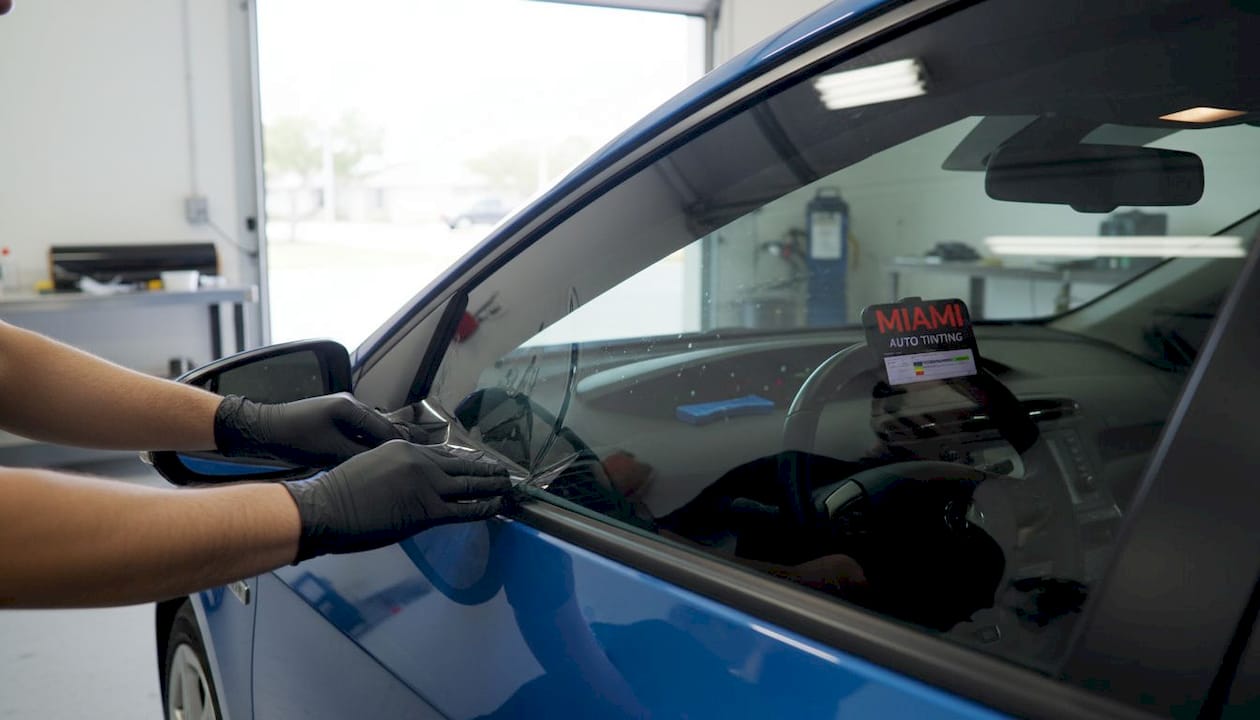
Metalized tints use tiny metallic particles embedded in the film to reflect solar energy away from the glass. They offer solid heat rejection and good durability. The downside? Metal conducts and reflects radio frequencies. Some drivers notice interference with their car's GPS signal, Bluetooth connection, and in some cases, toll transponders like SunPass. In a hybrid that relies on sensor arrays and connectivity features, this is worth considering seriously before choosing a metalized film.
Dyed tints absorb solar energy rather than reflecting or blocking it. They're the most affordable entry point and they do provide some privacy and glare reduction. However, dyed films absorb heat into the glass itself, which then radiates back into the cabin. For a Miami hybrid owner trying to reduce AC load, a dyed film is the weakest option in terms of actual energy efficiency. It fades faster in intense UV exposure as well.
Carbon tints sit between dyed and ceramic in terms of performance. They reject a reasonable amount of infrared radiation without metal particles, so there's no signal interference concern. They hold their color well over time and offer a matte finish that many drivers prefer aesthetically. For budget-conscious hybrid owners who can't stretch to full ceramic, carbon film is a solid middle-ground choice.
"The difference between a premium ceramic film and a basic dyed film in Miami isn't just comfort. It's the cumulative daily tax on your hybrid battery that you pay every summer, every drive, every red light you sit through in the Florida sun."
Miami drivers favor ceramic window tints for good reason. The combination of infrared blocking, no signal interference, and long-term color stability makes ceramic film an investment that keeps paying back, especially in a climate as extreme as South Florida's.
Pro Tip: If you're comparing ceramic films by brand, look specifically at the infrared rejection percentage at 940nm wavelength. This is the part of the solar spectrum that makes you feel the most direct heat, and it's where the best ceramic films truly separate themselves from mid-tier options.
Window tint options head-to-head: Miami hybrid car edition
Having defined and described your options, here's a side-by-side comparison to make choosing simple.
| Tint type | Heat rejection | UV rejection | Signal safe | Style options | Cost range | Best for |
|---|---|---|---|---|---|---|
| Ceramic / nano-ceramic | Excellent | 99%+ | Yes | Wide | $$$ | Daily drivers, efficiency-focused |
| Carbon | Good | 99%+ | Yes | Matte finish | $$ | Budget-conscious, style-focused |
| Metalized | Good | 95%+ | No | Reflective look | $$ | Heat rejection without top price |
| Dyed | Fair | 90%+ | Yes | Limited | $ | Privacy on a tight budget |
The standout finding from real-world hybrid testing is that ceramic tints can lower cabin temperatures by up to 30°F and reduce strain on battery thermal management systems. That's not a marginal gain. A 30-degree reduction means your AC compressor reaches its target temperature much faster after you enter the vehicle, shortening the duration of peak energy draw from your traction battery.
Here's what each tint type does best at a glance:
- Ceramic: Maximum heat and UV rejection with zero electronic interference. Best total package for Miami hybrids.
- Carbon: A practical step up from dyed film. Good infrared rejection, stable color, no signal issues.
- Metalized: Strong heat reflection, but check your hybrid's connectivity features before committing.
- Dyed: Affordable privacy and modest glare reduction. Not the right pick if efficiency is your priority.
Miami's climate makes window tinting essential for any vehicle, but for hybrids it moves from a nice-to-have into the category of genuinely smart ownership decisions.
Situational picks: Which tint is best for your hybrid in Miami?
Let's personalize your choice. Match the right tint to your specific needs as a Miami hybrid owner.
-
The daily commuter on I-95 or the Palmetto. You're in stop-and-go traffic for 45 minutes or more each way. Your hybrid battery cycles through repeated AC startup demands every single day. Ceramic film is your best investment. The reduced cabin heat means your system reaches comfort faster and stays there with less energy output over thousands of commuting hours per year.
-
The tech-forward hybrid owner. You rely on your car's connected navigation, wireless phone charging, and Bluetooth audio every day. A metalized tint's potential for signal interference is a real concern for you. Ceramic or carbon film keeps all your technology running without compromise.
-
The family hauler. You're driving kids to school in Coral Gables or Doral, running errands in the midday heat, and the rear passenger cabin needs to stay cool for everyone in the car, not just the driver. Consider full vehicle ceramic tinting, including rear and rear side windows at a darker VLT, to dramatically reduce heat load on passengers in back seats.
-
The value-seeker. Your budget is limited but you still want meaningful heat reduction. Carbon film gives you a real upgrade over factory glass and basic dyed films without the full price of ceramic. You'll sacrifice some infrared rejection but gain significantly over doing nothing.
-
The privacy-focused driver. If your primary concern is security and aesthetics with heat reduction as a secondary benefit, a high-quality dyed or carbon film at the darkest legally allowed VLT in Florida achieves this without a large investment.
Window tinting protects your interior as well, preventing the dashboard fading, cracked leather, and UV-damaged upholstery that are especially common in Miami vehicles parked outdoors year-round. That's a secondary benefit that adds up to real money saved on interior restoration.
The core principle for hybrid owners is simple: tinting reduces energy waste rather than adding performance. It works by removing the source of heat load, not by making your AC system more powerful. That's a subtle but important distinction. You're reducing the problem, not just managing it.
Pro Tip: When in doubt, prioritize infrared rejection over VLT darkness. A lighter, high-performance ceramic film will keep your hybrid cooler than a dark, low-quality film every single time.
Why window tinting is efficient comfort, not just style, for Miami's hybrids
Here's a perspective that often gets lost in the excitement surrounding window tinting upgrades.
A lot of the marketing around window tinting for EVs and hybrids leans heavily on dramatic range improvement claims. You'll see numbers that suggest tinting will add significant miles to your range. Our honest take after working with Miami hybrid owners is this: the real value is not a dramatic range extension. It's consistent, daily comfort with a measurably lighter AC workload over the life of your vehicle.
Think about what that actually means in practice. Miami's summer heat pushes cabin temperatures past 140°F in a parked car. When you sit down, your hybrid's HVAC system goes to full blast for several minutes, drawing maximum power from the traction battery before easing off. With a quality ceramic film installed, you might enter a vehicle that's 30°F cooler. Your AC reaches comfort in half the time. Over 250 driving days per year, that compounds into meaningful battery relief and reduced wear on your HVAC components.
Tinting is an energy-waste reducer, not a performance upgrade. That framing matters because it sets the right expectations. You won't feel like your car suddenly has a larger battery. You will notice that your cabin is more comfortable on every drive, that you're not blasting your AC for the first five minutes, and that your system runs more quietly and efficiently on a typical South Florida afternoon.
This is why we recommend educated decisions over impulse upgrades. A driver who understands exactly what tinting does will be more satisfied than one who expects to double their range. The real win is the combination of daily comfort, interior preservation, and reduced HVAC stress that adds up quietly over years of ownership. For more window tinting insights tailored to Miami drivers, our blog covers everything from specific film comparisons to post-installation care.
Get the ultimate window tinting solution for your hybrid in Miami
With these facts in mind, here's how you can equip your hybrid for both comfort and daily savings.
At South Miami Tint, we specialize in mobile window tinting that comes directly to your home, office, or anywhere in Miami-Dade County. We install 3M IR, 3M Color Stable, and Iviron Kollmax ceramic films, each selected specifically for Miami's extreme heat profile. Our ceramic tinting packages are priced transparently with no hidden fees, and our mobile window tint service means you don't lose a half day dropping your car at a shop. We bring professional installation to you, complete with manufacturer warranties and Florida-compliant VLT options for every vehicle type. Ready to protect your hybrid and reduce your AC load starting with your next drive? Get a fast quote and we'll have your hybrid tinted on your schedule.
Frequently asked questions
How much can window tinting lower cabin temperatures in hybrids?
Ceramic window tints can reduce cabin temperatures by up to 30°F, which directly eases stress on your hybrid's air conditioning system and battery thermal management.
Does window tinting actually improve hybrid battery range?
Window tinting reduces AC energy waste rather than expanding battery capacity, so you should expect more consistent efficiency rather than a dramatic range increase.
What's the best window tint type for hybrids in Miami?
Ceramic or nano-ceramic tints deliver the best combination of heat and UV rejection without interfering with your hybrid's electronics, making them the top choice for South Florida drivers.
Are there Florida legal limits for hybrid window tinting?
Yes, Florida law requires front side windows to allow at least 28% visible light transmission, so always confirm your film's VLT rating before installation to stay street-legal.