
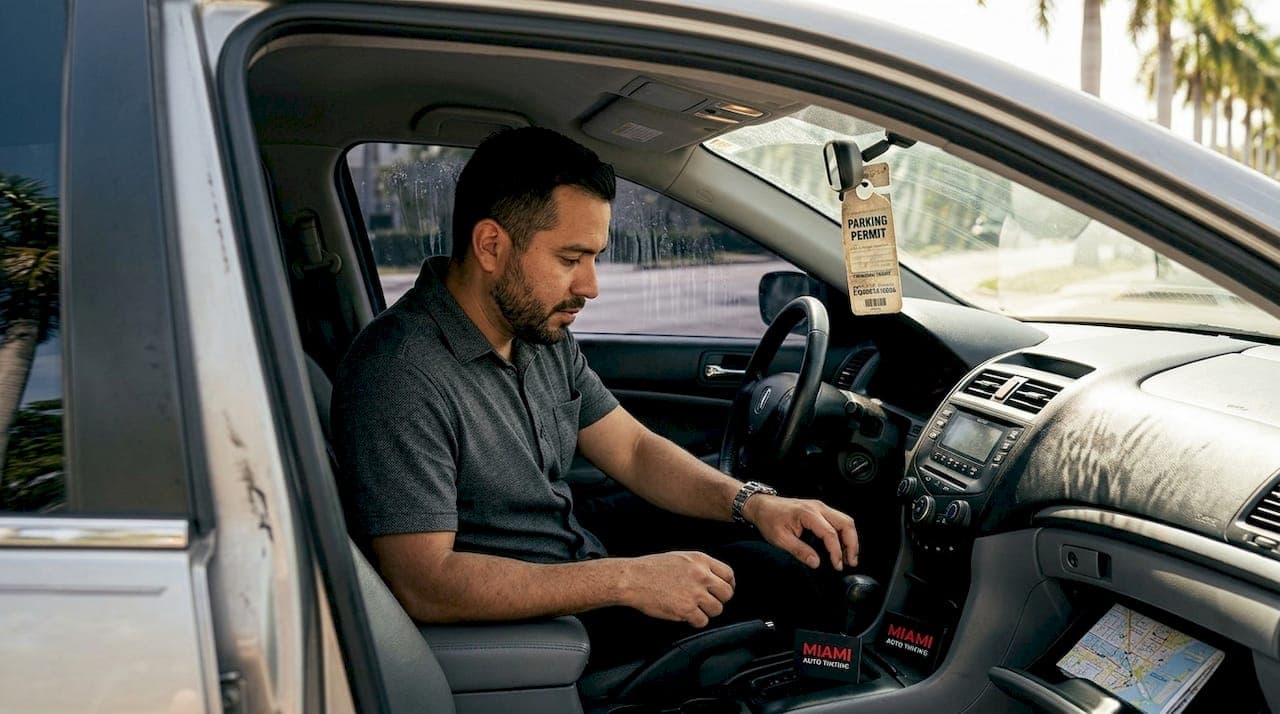
Miami-Dade is not a forgiving place for your car's interior. The combination of relentless UV radiation, extreme heat, and humidity that this region throws at vehicles year-round creates conditions that expose the real difference between professional window tinting and a roll of generic film bought online. Many car owners assume tinting is a simple weekend project, but that assumption gets expensive fast. This guide walks you through why professional installation matters specifically in Miami-Dade, what certified installers do differently, and how the right film choice can save you from repair bills, fines, and a ruined interior.
Table of Contents
- Why Miami's climate demands professional window tinting
- Core benefits of professional window tinting for your car
- Common pitfalls of DIY window tinting in Miami
- How professionals ensure lasting results: Materials, skill, and safeguards
- Why trusting experts is better than learning the hard way
- Upgrade your vehicle's comfort and protection with Miami's expert tinting services
- Frequently asked questions
Key Takeaways
| Point | Details |
|---|---|
| Miami climate requires expertise | Professional window tinting uses materials tailored to Miami’s intense sun and humidity for better protection and durability. |
| DIY risks exceed savings | Improper tinting leads to glass cracking, warranty voids, and lower comfort in Miami’s climate. |
| Certified installers offer lasting value | IWFA-accredited professionals ensure compatibility, skillful installation, and warranty coverage for peace of mind. |
| You gain privacy, comfort and UV defense | Expert-installed films enhance privacy, reduce heat and UV rays, and protect your vehicle’s interior. |
| Smooth application avoids costly mistakes | Professional tinting prevents damage and maintains electronics performance compared to DIY solutions. |
Why Miami's climate demands professional window tinting
Miami-Dade sits at a solar intensity level that most of the continental United States never experiences. The city receives more UV exposure than nearly any other major metro in the country, and infrared (IR) radiation, the invisible heat energy that bakes your dashboard and seats, is similarly intense year-round. That is not a minor inconvenience. Over time, unfiltered UV and IR radiation fade upholstery, warp plastic trim panels, crack leather seats, and degrade the adhesives inside your car's electronics.
Humidity adds another layer of complexity. When temperatures swing rapidly between a scorching parking lot and an aggressively air-conditioned interior, the glass in your windows expands and contracts. A film that is not matched properly to Miami's climate-specific conditions will bubble, peel, or worse, create microscopic stress points that lead to thermal cracking. This is not theoretical. It happens regularly when car owners use generic DIY films that were designed for moderate climates.
Professionals who work in Miami-Dade understand these variables firsthand. They select films based on how they perform in real local conditions, not just manufacturer marketing specs.
"In Miami-Dade's intense sun and humidity, professionals select ceramic films for optimal UV and IR rejection without compromising electronics or visibility, avoiding the DIY pitfalls like thermal cracking that result from mismatched films."
Here is what sets Miami apart and why expertise matters so much here:
- Solar intensity: Miami-Dade receives high-UV index readings for more days per year than northern cities, accelerating interior degradation significantly.
- Humidity and condensation: Moisture can infiltrate poorly installed film edges, causing delamination within months.
- Thermal cycling: Rapid heating and cooling stresses the film-to-glass bond far more than in cooler, drier climates.
- Electronics sensitivity: Modern vehicles have defroster grids, antenna lines, and sensors embedded in glass. A wrong film can interfere with all of them.
- Legal limits: Florida has specific tint percentage laws. Non-compliant installs can result in citations and mandatory removal.
As IWFA accreditation standards confirm, ceramic films are selected by professionals precisely because they deliver optimal UV and IR rejection while keeping your car's electronics functioning safely. That kind of product knowledge does not come with a YouTube tutorial.
Core benefits of professional window tinting for your car
Understanding what you actually gain from professional installation makes the decision straightforward. The difference is not just quality of film. It is the full package: product knowledge, legal compliance, warranty protection, and long-term durability.
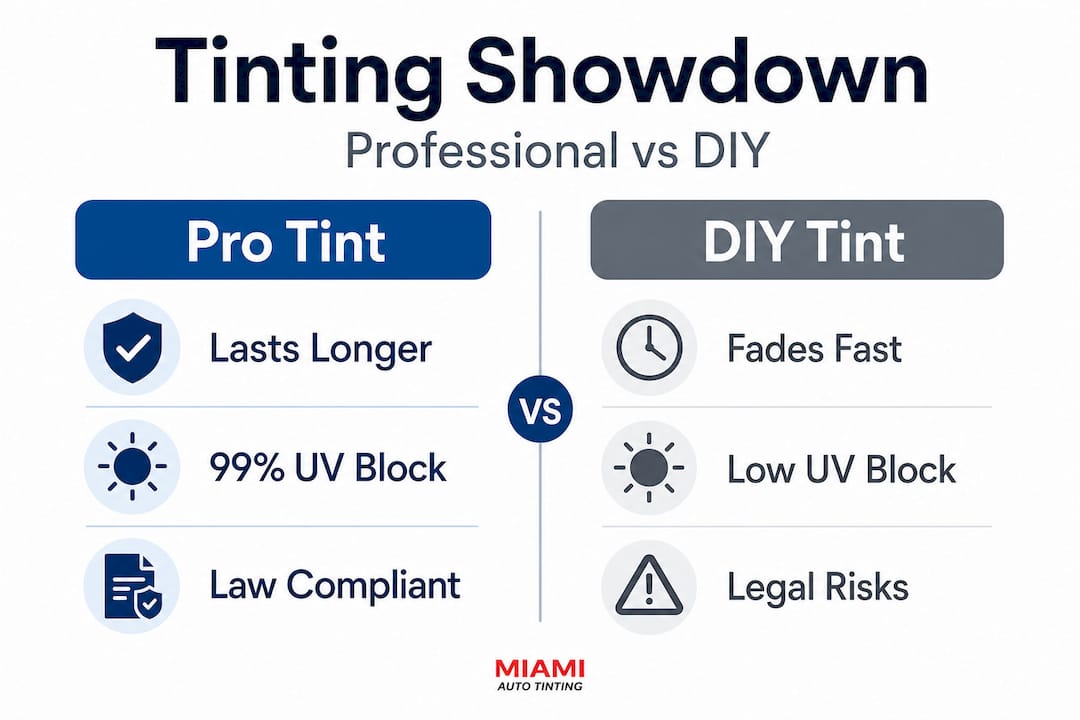
Here is how professional and DIY tinting compare across the factors that matter most to Miami car owners:
| Feature | Professional tinting | DIY tinting |
|---|---|---|
| UV protection | Up to 99% UV rejection with ceramic film | Varies widely, often 50-70% or less |
| IR heat rejection | High-performance IR blocking for cabin comfort | Minimal, generic films rarely specify IR rates |
| Privacy control | Precision film matched to legal VLT limits | Risk of illegal percentages and citations |
| Warranty coverage | Installer and manufacturer warranty included | No warranty, void on many vehicles |
| Film durability | 10 to 15 years with proper installation | 2 to 5 years average before peeling or fading |
| Electronics safety | Film selected to avoid interference | High risk of GPS, defrost, and antenna issues |
| Glass protection | Installers verify compatibility first | Thermal cracking is a known risk |
The real-world benefits for Miami drivers go well beyond comfort. A properly installed ceramic film blocks the UV rays responsible for skin damage, which matters when you spend significant time behind the wheel. Florida's high melanoma rates are partly attributed to cumulative sun exposure inside vehicles. Car window tinting for UV protection is not just about keeping your interior cool. It is a genuine health consideration.
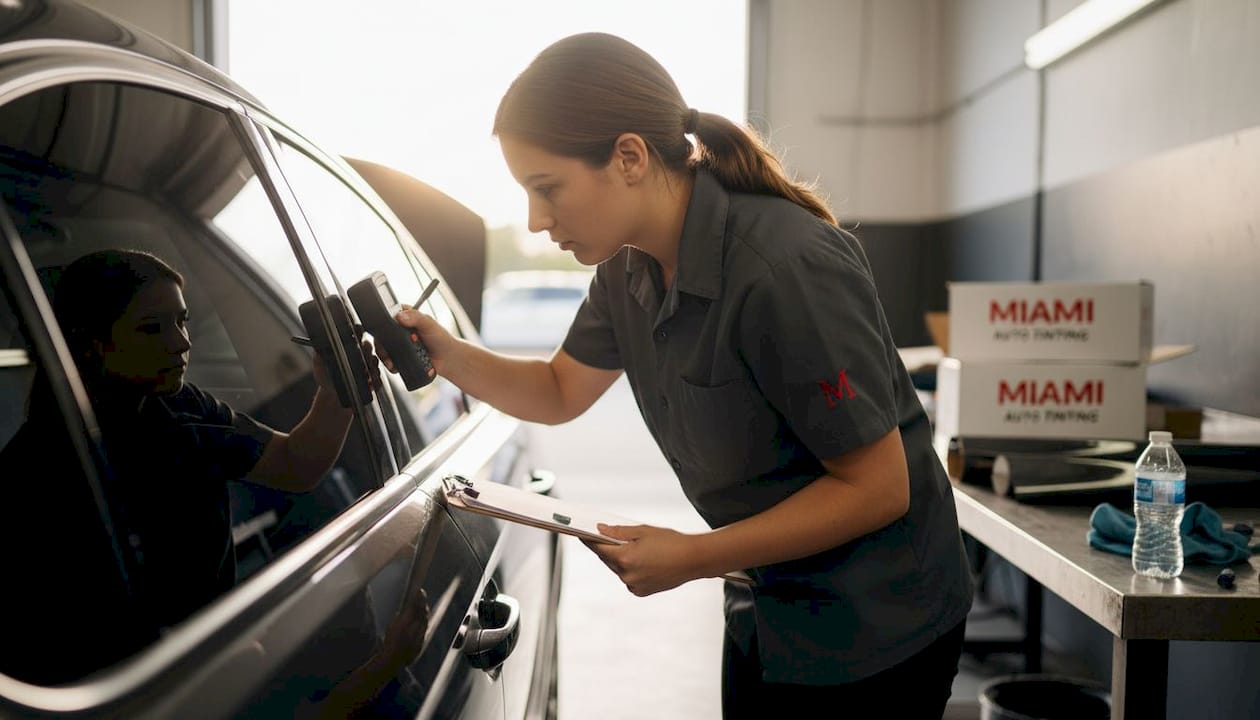
Professionals also handle the legal dimension that DIY attempts often ignore. Florida law requires specific visible light transmission (VLT) percentages on different windows. Front side windows must allow more than 28% of light through. Rear windows and the back windshield have more flexibility. A certified installer knows these numbers and installs accordingly, keeping you compliant and ticket-free.
Pro Tip: Always ask whether your installer is IWFA-accredited. IWFA accreditation ensures the installer understands glass compatibility, preventing the kind of thermal cracking that can void both your window warranty and your vehicle warranty. It is a fast, reliable way to screen out low-quality shops.
There are 5 essential reasons to tint professionally in this climate, and nearly all of them come down to the same core truth: generic solutions fail under extreme conditions.
Common pitfalls of DIY window tinting in Miami
Even skilled DIYers run into serious problems when attempting window tinting in Miami-Dade. The climate here is simply too demanding for trial-and-error installation. Understanding the specific mistakes helps you see why the cost of professional service is always the smarter math.
The top 5 DIY tinting mistakes Miami car owners make:
-
Choosing the wrong film type. Generic dyed films are not designed for Miami's solar intensity. They fade quickly, often within one to two years, and offer minimal IR protection. Miami's climate demands ceramic or IR-blocking films, not the bargain rolls sold at auto parts stores.
-
Applying illegal tint percentages. Many DIY kits come in shades that are too dark for Florida's front side window requirements. Getting pulled over with non-compliant tint means a citation and the cost of removal and reinstallation.
-
Improper surface preparation and installation. Bubbles, dust contamination, and edge lifting are common in DIY installs. Once film sets incorrectly, removing it cleanly without damaging the glass or defroster lines is a professional-level job.
-
Voiding vehicle warranties. Several automakers specify that improperly installed window films can void portions of the factory warranty, particularly those related to glass and climate control systems. Cheap installations void warranties and damage vehicle glass, creating problems that far exceed the original cost of the film.
-
Thermal cracking from mismatched films. This is the most severe consequence. When a film traps and concentrates heat unevenly on the glass surface, the expansion stress can crack tempered or laminated glass. In Miami's summer heat, this happens faster than most people expect.
Pro Tip: Never use generic tint film in Miami, even for a temporary fix. The summer heat preparation your car needs requires ceramic or IR-blocking film. Anything less is a short-term solution with long-term consequences.
Industry data suggests that over 70% of warranty-related issues in Miami-Dade are linked to improper tint installations. The pattern is consistent: a car owner saves a couple hundred dollars upfront, then spends significantly more dealing with cracked glass, failed electronics, or warranty disputes.
How professionals ensure lasting results: Materials, skill, and safeguards
Let's look at what actually happens during a quality professional installation, because understanding the process reinforces why expertise matters.
| Checklist item | What professionals do |
|---|---|
| Film selection | Match ceramic or IR film to vehicle glass type and local climate conditions |
| Certifications | IWFA-accredited training and ongoing education on new materials |
| Glass compatibility | Inspect defroster grids, embedded antennas, and sensor locations before installation |
| Legal compliance | Confirm VLT percentages meet Florida law for each window position |
| Surface preparation | Thorough cleaning and contamination removal before film application |
| Warranty coverage | Provide installer warranty alongside manufacturer film warranty |
| Post-install inspection | Check adhesion, edges, and electronic functionality after curing |
Miami-based professional installers work with premium materials like 3M IR film, 3M Color Stable, and Iviron Kollmax ceramic tint. These are not interchangeable products. Each is engineered for specific performance goals, and the right choice depends on your vehicle's glass configuration, your privacy preferences, and your heat rejection priorities. A professional assesses all of those factors before cutting a single piece of film.
IWFA accreditation is the clearest indicator that an installer understands glass compatibility and can reduce the risk of cracks, voided warranties, and electronics interference. It is the industry's standard for competence and accountability.
When you are ready to choose the best window tint for your car, these are the questions to ask your installer before booking:
- What film brands and product lines do you offer?
- Are you IWFA-certified or accredited?
- How do you handle glass compatibility checks before installation?
- What warranty do you provide on both materials and labor?
- Do you have experience with my specific vehicle make and model?
- Can you confirm the VLT percentage meets Florida law for each window?
If an installer hesitates or cannot answer these questions clearly, that is a signal to keep looking. The complete guide to car window tinting in Miami outlines these standards in full detail.
Why trusting experts is better than learning the hard way
We have seen this story play out hundreds of times across Miami-Dade. A car owner decides to save money by going DIY or choosing the cheapest shop they can find on a quick search. Six months later, they are back dealing with bubbling film, a cracked rear window, or a citation from a traffic stop. The money they saved is long gone, and the repair bill has far exceeded what professional installation would have cost.
Here is the part most articles skip: even experienced DIYers with legitimate skill in other areas regularly fail at Miami window tinting. It is not about hand coordination or patience. It is about knowing which specific film performs under this city's solar and humidity conditions. That knowledge is local and hard-won. What works in Chicago or Los Angeles genuinely does not work here.
Selecting the right tint shade is not simply an aesthetic decision. It is a performance decision. The shade affects heat rejection, glare reduction, legal compliance, and your ability to see clearly at night. A professional walks you through those trade-offs based on your actual driving habits and vehicle. A generic DIY kit gives you a one-size-fits-all product that fits nothing particularly well.
Expert installers prevent glass cracking and electronics issues by matching tints to the specific thermal and UV demands of Miami conditions. That is not a sales pitch. It is what competent professionals trained for this climate actually do every day.
Our honest take: the real cost of window tinting is not the installation price. It is the total cost of the decision over five years. Professional ceramic tint on a Miami vehicle, done right the first time, protects your interior, keeps you legal, maintains your warranty, and requires zero follow-up. The alternative frequently costs more when you account for replacements, repairs, and citations.
Upgrade your vehicle's comfort and protection with Miami's expert tinting services
If everything in this guide has convinced you that professional tinting is the right move, the next step is connecting with certified specialists who know Miami-Dade's conditions intimately.
South Miami Tint offers IWFA-aligned installation using premium films including ceramic window tint engineered for this climate's specific UV and IR demands. We use 3M ceramic film and Iviron Kollmax ceramic tint, materials chosen specifically because they perform in Miami's conditions without compromising your car's electronics, warranty, or legal standing. Our mobile service means we come to your home, office, or anywhere convenient in Miami-Dade, eliminating the hassle of dropping off your car at a shop. Check our mobile tinting prices and book a time that works for your schedule. Transparent pricing, professional results, and a warranty you can count on.
Frequently asked questions
How does professional window tinting help with Miami's UV damage?
Certified installers use specialized ceramic films that block UV and IR rays, protecting your interior and electronics far more effectively than standard or DIY films available at retail stores.
Is DIY tinting worth the risk for Miami car owners?
DIY tinting in Miami frequently causes thermal cracking and warranty issues because generic films are not designed for the region's intense solar exposure and rapid thermal cycling.
What certifications should I look for in a Miami window tint installer?
IWFA accreditation is the most reliable indicator of competence, as it ensures glass compatibility knowledge and protects your vehicle warranty during the installation process.
Will tinting affect my car's electronics?
Professional-grade ceramic films are specifically selected to avoid interference with GPS, defrost grids, and embedded antennas, delivering UV and IR rejection without compromising any onboard systems.
How do I ensure my tint meets Miami's legal requirements?
Certified installers know Florida's VLT requirements for each window position and guarantee full compliance during installation, keeping you protected from citations and mandatory film removal.