
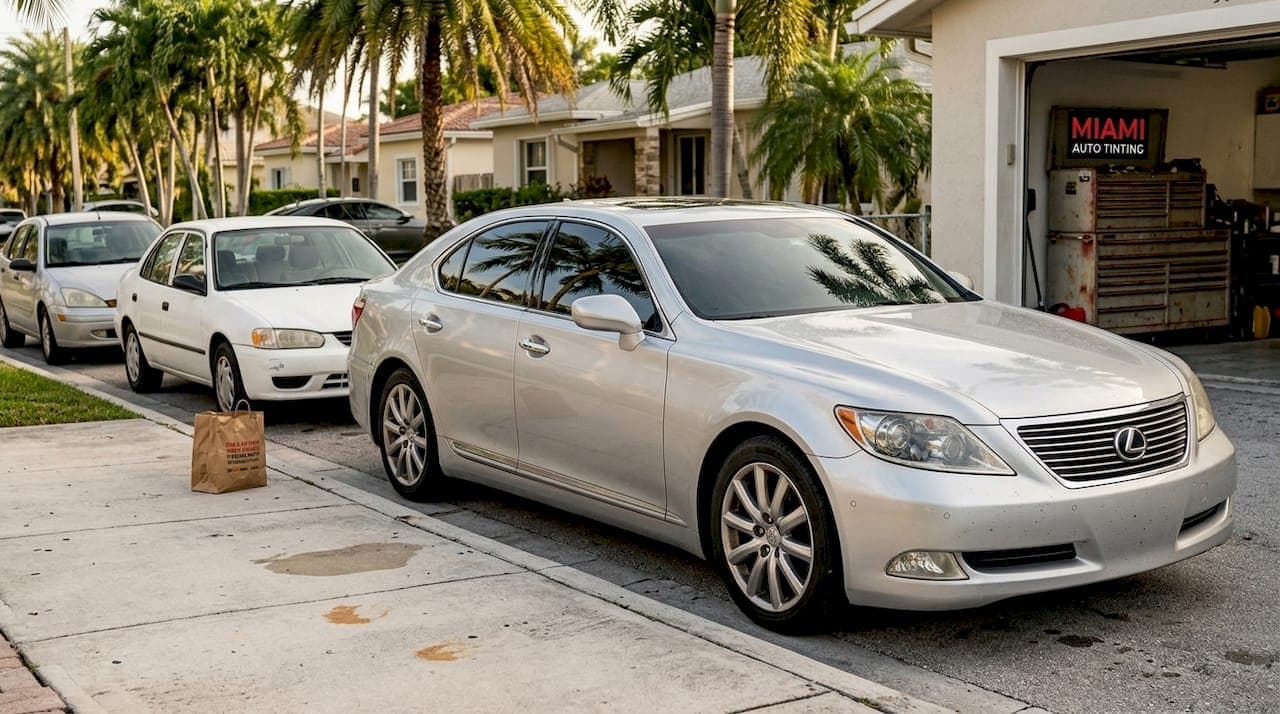
Most car owners assume all window tints do roughly the same job. Slap a dark film on the glass, block some sun, and you're done. That assumption costs Miami drivers real money every year. The truth is that the gap between a bargain-bin film and a premium ceramic or nano-ceramic tint is enormous, and Miami's brutal combination of year-round UV radiation, 90-plus-degree heat, and intense humidity widens that gap even further. 3M Crystalline performance data shows that advanced films can reject significant solar energy even at high visible light transmission levels, meaning your car stays cooler without looking like a tank.
Table of Contents
- What makes premium window tint different?
- Key benefits of premium tint for Miami drivers
- Comparing premium vs. standard window tints
- How to choose and maximize your investment
- The overlooked truth: cheap tint costs Miami more in the long run
- Protect your car and comfort with Miami's premium window tinting
- Frequently asked questions
Key Takeaways
| Point | Details |
|---|---|
| Superior heat protection | Premium tint delivers real temperature reduction for Miami drivers. |
| Healthier and safer ride | Top films block over 99% of UV rays, protecting skin and car interiors. |
| Better long-term value | Investing in premium film saves money by reducing replacements and interior damage. |
| No compromise on clarity | High-tech tints remain clear and signal-friendly, unlike cheap metallic films. |
What makes premium window tint different?
Premium window tints are not just darker versions of cheap films. They are engineered products built with fundamentally different materials and tested under strict laboratory conditions before they ever reach a car window.
Standard films typically rely on basic dyed polyester. They absorb heat rather than reflect or reject it, which means the film itself heats up and radiates warmth back into your cabin. Premium films use technologies like ceramic nanoparticles, multi-layer metallic stacks, or infrared-blocking nano-ceramic composites to redirect solar energy rather than soak it up. The result is a film that stays cooler, lasts longer, and performs more reliably under sustained UV exposure.
Key technical differences worth knowing:
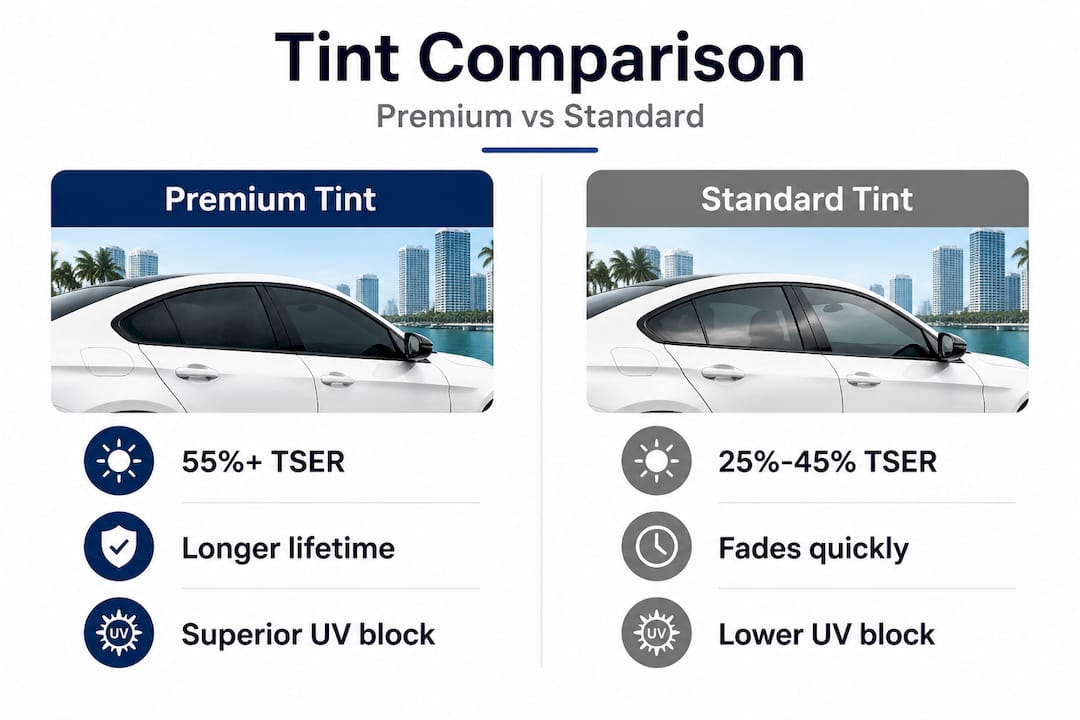
- Total Solar Energy Rejected (TSER): The percentage of total solar energy a film blocks. A higher TSER means a cooler cabin. Premium ceramic films routinely achieve 60% or higher TSER even at relatively light shades.
- Visible Light Transmission (VLT): The percentage of visible light allowed through. Premium films maintain high clarity at low VLT, and high TSER even at high VLT, which is rare in cheap products.
- UV rejection rate: Quality matters here. Films from brands like 3M and Iviron Kollmax block over 99% of UV-A and UV-B rays. Budget films often claim UV protection but provide far less consistent coverage.
- Infrared (IR) rejection: IR radiation is invisible heat energy. High-IR-rejection films can feel dramatically cooler even at the same VLT as a standard film.
The 3M window tint advantages also include manufacturer-backed certifications, meaning you are not just trusting a sales pitch. You are trusting lab-verified data. Similarly, the benefits of ceramic window tint go far beyond aesthetics, covering heat rejection, signal clarity, and long-term durability.
| Feature | Premium ceramic film | Standard dyed film |
|---|---|---|
| TSER rating | 55% to 70%+ | 25% to 45% |
| UV rejection | 99%+ | 50% to 80% |
| IR rejection | High | Minimal |
| Signal interference | None | Possible (metallic films) |
| Lifespan | 10 to 15+ years | 3 to 5 years |
| Warranty | Lifetime (manufacturer) | Limited or none |
Certifications and third-party testing separate legitimate premium products from marketing fluff. When a film carries a manufacturer's data sheet with documented TSER and VLT numbers, you can hold it accountable. Without that documentation, you are guessing.
Key benefits of premium tint for Miami drivers
Miami is not just sunny. It sits at approximately 25 degrees north latitude, receives over 3,000 hours of sunshine annually, and sustains high humidity that magnifies how heat feels inside a vehicle. A car parked in the Miami sun for just 20 minutes can reach interior temperatures above 130 degrees Fahrenheit. Standard tints chip away at that problem. Premium tints genuinely solve it.
Here is what Miami drivers gain by upgrading to a quality product:
- Measurable heat reduction: FLIR-tested temperature drops confirm that high-TSER films lower cabin temperatures by as much as 30 to 60 degrees Fahrenheit compared to untinted glass. That is the difference between a car you dread entering and one that is immediately comfortable.
- Skin and eye protection: UV radiation is the leading cause of skin damage and cataracts. Films that block 99%+ of UV rays give you real dermatological protection on every commute, every errand, every road trip.
- Interior preservation: Your dashboard, steering wheel, leather seats, and trim panels all degrade under UV and infrared exposure. Protecting your interior is one of the most financially underrated reasons to tint, since interior restoration or replacement can cost thousands.
- Glare elimination: Miami's low-angle morning and evening sun is genuinely dangerous. Reducing glare by 90% or more cuts driver fatigue and reaction time, which is a real safety benefit on Miami's crowded expressways.
- Privacy and security: Darker shades make valuables inside your car less visible, reducing the risk of smash-and-grab theft. You also gain visual privacy without sacrificing your outward visibility in daylight.
- No signal interference: Unlike older metallic tints, ceramic films do not block cell signals, GPS, or toll transponders. This matters in a city where you depend on navigation and SunPass every single day.
The Miami window tint benefits extend even further when you factor in how long the car looks new. Faded, cracked interiors age a vehicle fast and drag down resale value. Premium tinting protects that investment quietly and consistently.
"I didn't realize how much heat my standard film was letting through until I switched to a ceramic film. Sitting in traffic on the 836 used to be brutal. Now the A/C actually catches up." — A common experience shared by Miami drivers who upgrade from dyed to ceramic tint.
Pro Tip: Ask your installer specifically for the TSER rating of the film being applied. A reputable shop will have documentation. If they can't provide a data sheet, that's a red flag worth acting on.
For a deeper look at what UV rays actually do to your skin behind the wheel, check out the UV protection details on how tinting addresses a genuine health risk most drivers overlook.
| Benefit | Premium tint result | Standard tint result |
|---|---|---|
| Cabin heat reduction | 30 to 60°F cooler | 5 to 15°F cooler |
| UV protection | 99%+ blocked | 50 to 80% blocked |
| Interior fade protection | Excellent | Moderate |
| Glare reduction | 85 to 95% | 30 to 60% |
| Signal interference | Zero | Possible |
Comparing premium vs. standard window tints
It is easy to justify saving money upfront. A $99 tint job versus a $350 installation feels like a clear financial win at the point of purchase. What that calculation misses is the total cost over time, factored against Miami's specific climate stress.
Here is how the numbers actually play out for Miami drivers:
- Replacement frequency: Standard dyed films in Miami's climate typically start bubbling, fading, and peeling within 2 to 4 years. A premium ceramic film installed correctly often lasts 10 to 15 years. Two to three cheap replacements will cost more than one premium installation.
- Interior damage costs: When a standard film fails to block IR and UV effectively, your dashboard and upholstery absorb that energy. Dashboard cracking, leather fading, and trim warping can cost $500 to $3,000 to repair or replace. Premium tint prevents this.
- Warranty protection: Standard films from unlicensed installers carry no meaningful warranty. Premium films from certified dealers carry manufacturer-backed lifetime warranties. If the film fails, you don't pay again.
- Fuel savings: A cooler cabin means your air conditioner runs less aggressively. In Miami, where the A/C runs almost year-round, even a modest reduction in compressor load translates to real fuel savings over thousands of miles.
- Legal compliance: Florida tint law requires a minimum of 28% VLT on front side windows and 15% on rear side and back windows for non-multi-purpose vehicles. Cheap tints often fade to non-compliant darkness or arrive mislabeled. Premium films are precision-manufactured to stated VLT values, keeping you legally covered.
The ceramic tint popularity among Miami drivers is not a trend. It reflects genuine, repeated experience with the cost-of-ownership math adding up in favor of the premium option.
A conservative estimate: over a 10-year period, two cheap tint jobs plus one dashboard replacement can run $1,500 to $2,500. A single premium ceramic installation runs $350 to $600 and covers the same decade with a warranty.
Stat to remember: FLIR thermal testing confirms that premium nano-ceramic films can reduce surface temperatures on car glass by 30°F or more compared to unfilmed glass, validating the comfort and protection gap between tiers.
How to choose and maximize your investment
Knowing that premium tint is worth it is the first step. Knowing how to buy it correctly is what locks in that value for the long haul.
Follow this process to make a smart, lasting investment:
- Choose a certified installer: Manufacturers like 3M and Iviron only extend their warranties through authorized dealers. An uncertified shop using premium film still voids your manufacturer protection. Always verify certification before booking.
- Request the film data sheet: Before any film goes on your windows, ask for the TSER, VLT, UV rejection, and IR rejection numbers in writing. This is standard practice with reputable installers and gives you documented performance expectations.
- Verify Florida legal compliance: Florida statute 316.2954 governs automotive tint. Front side windows must allow 28% VLT or more. Rear side and back windows allow 15% or more. Ask your installer to confirm the final installed VLT, not just the film specification, since glass itself absorbs some light.
- Ask about heat performance specific to Miami: Data-verified local performance is the standard you want, not just a general promise. Ask installers if they have real-world temperature results or FLIR data for Miami conditions.
- Understand proper care: Use only non-ammonia window cleaners on tinted glass. Ammonia breaks down the film's adhesive layer over time, causing premature peeling. A microfiber cloth and ammonia-free cleaner are all you need.
- Allow proper cure time: After installation, the film adhesive needs 3 to 7 days to fully cure. Avoid rolling windows down during this period. Rushing it causes peeling at the edges.
Pro Tip: In Miami's heat, ceramic tints cure faster than in cooler climates, but the window-rolling rule still applies. Give it the full week.
There are five compelling reasons why tinting is essential in Miami's climate, and each one ties directly to film quality. The better the film, the more completely those reasons are addressed.
The overlooked truth: cheap tint costs Miami more in the long run
Here is something most tint shops won't tell you upfront: Miami is one of the harshest environments for window film on the planet. The combination of UV index, daily heat cycling, humidity, and salt air from the coast accelerates degradation of cheap films at a rate that surprises even drivers who have lived here their whole lives.
We have seen standard films bubble and turn purple within 18 months of installation on vehicles parked outdoors in Hialeah, Kendall, and Miami Gardens. The driver paid $120. Then they paid $120 again two years later. By the third replacement, they finally invested in ceramic and wished they had done it first.
There is also a legal angle people underestimate. Cheap dyed films fade inconsistently. A film installed at 35% VLT can fade to 22% VLT within three years, putting you below Florida's legal limit without you even realizing it. A traffic stop for window tint in Miami can cost you a citation and a mandatory removal fee.
The tinting necessity in Miami is not about aesthetics. It is about the verified, measurable performance that premium ceramic films deliver through real TSER numbers and FLIR-confirmed temperature drops. Dark glass is not heat rejection. A film engineered to redirect infrared energy is.
Think of premium window tinting the same way you think about quality tires or a good battery. You do not notice it working until you compare life with it versus without it. But once you feel the difference between a car with 70% TSER ceramic film and one with a faded standard tint, the value is impossible to argue with.
Protect your car and comfort with Miami's premium window tinting
We specialize in bringing that protection directly to you, anywhere in Miami-Dade County, with no disruption to your schedule.
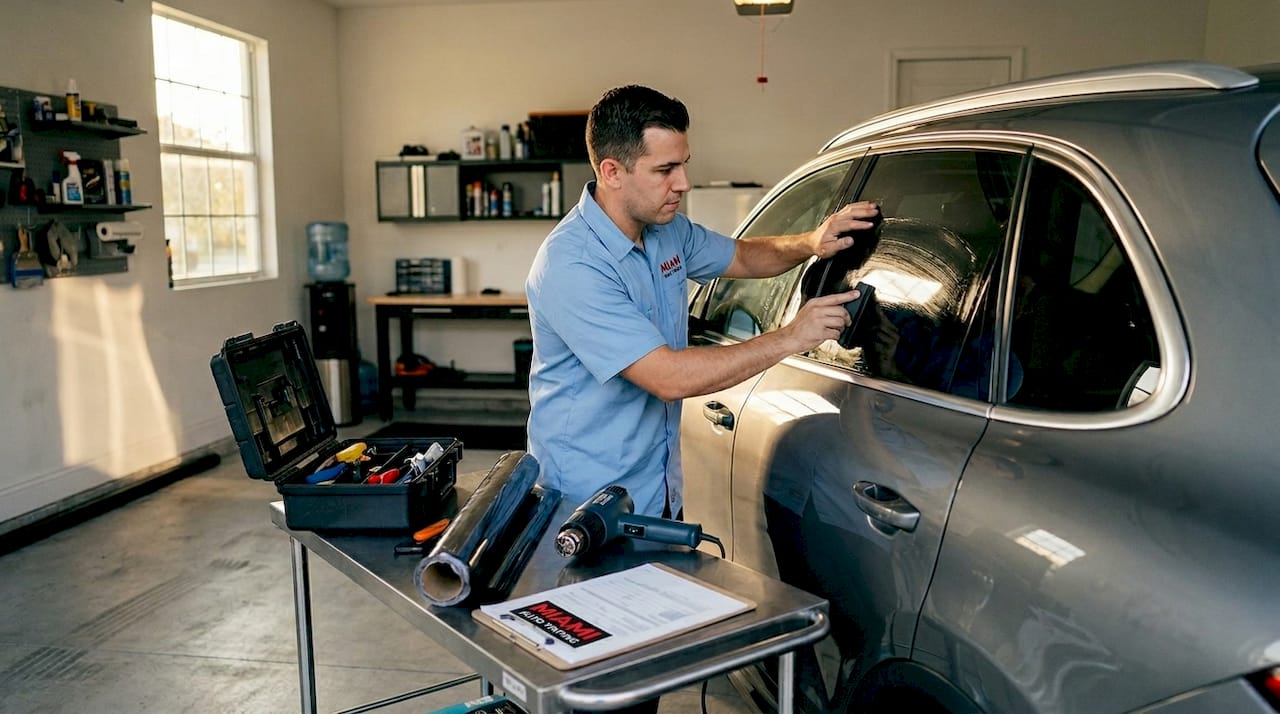
Our ceramic tint installation service uses 3M IR, 3M Color Stable, and Iviron Kollmax ceramic films, all of which carry documented TSER ratings and manufacturer-backed warranties. We come to your home, office, or wherever your car is parked. No shop wait, no rental car, no wasted afternoon. Our 3M ceramic tint options cover every shade and performance level you need for Florida compliance and genuine heat rejection. Whether you want a nearly clear high-performance film or a darker privacy shade, we match the film to your goals. Check mobile tint pricing to see transparent package options for cars, trucks, and SUVs across Miami-Dade.
Frequently asked questions
Does premium window tint really keep my car cooler in Miami?
Yes. 3M Crystalline performance data combined with FLIR thermal imaging confirms measurable temperature drops inside Miami vehicles equipped with high-TSER ceramic films, not just marginally cooler but significantly more comfortable from the moment you get in.
What is TSER and why does it matter for Miami cars?
TSER stands for Total Solar Energy Rejected, which measures how much of the sun's combined visible, infrared, and UV energy a film blocks. In Miami, where solar intensity is extreme year-round, a higher TSER directly translates to a cooler cabin, less A/C strain, and better fuel efficiency.
Is premium tint worth the higher price?
For Miami's climate specifically, yes. When you factor in reduced replacement frequency, interior damage prevention, warranty coverage, and documented thermal performance, premium tint consistently delivers lower total cost and better protection over a 10-plus-year window.
Does window tint affect cell phone or GPS signals?
Premium ceramic tints, including 3M IR and Iviron Kollmax films, contain no metallic layers and do not interfere with GPS, cell signals, Bluetooth, or electronic toll transponders. Only older metallic films posed that problem, and those are not what quality installers use today.