
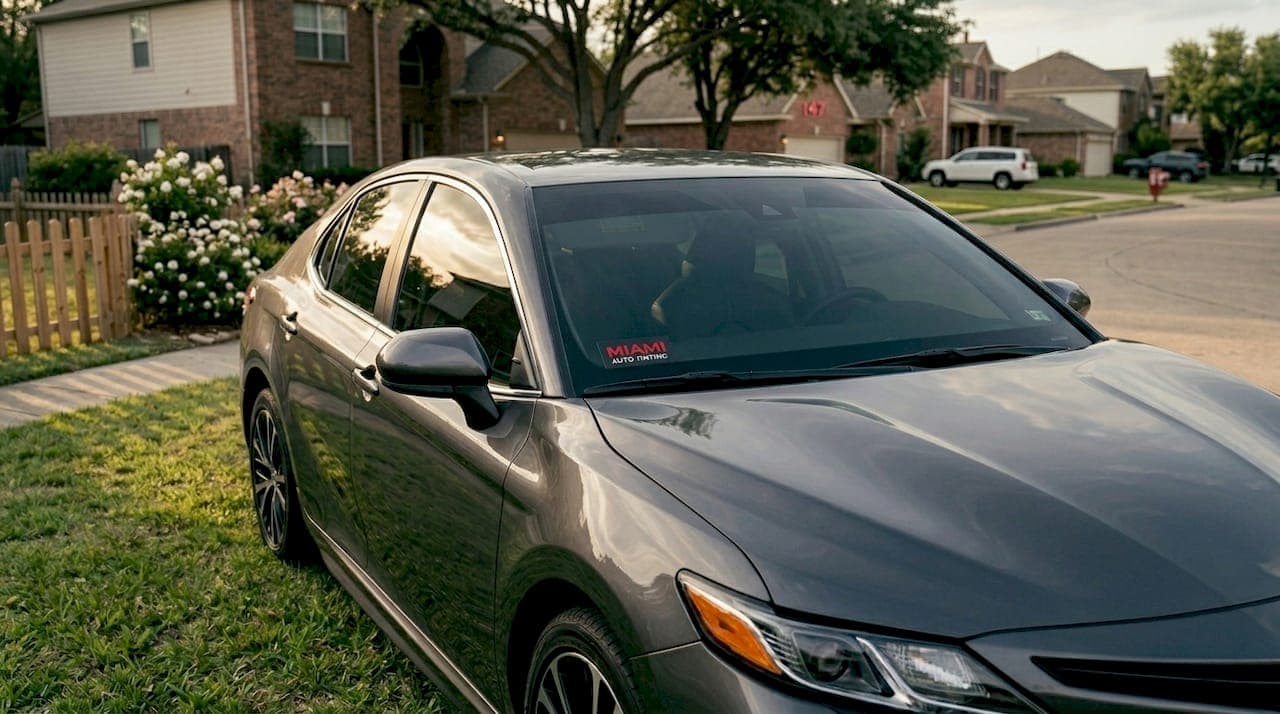
Window tint shades are polyester-based films applied directly to vehicle glass that reduce outside visibility, block ultraviolet radiation, and lower interior heat. For urban car owners and renters in Miami and other high-sun cities, the reasons to consider window tint shades go well beyond looks. The right film delivers measurable protection for your skin, your car's interior, and your fuel budget. Visible Light Transmission (VLT) determines how dark or light a tint shade appears, and understanding it is the first step toward choosing a film that works legally and practically for your daily drive.
Why consider window tint shades for privacy and glare reduction
Urban driving puts you in close proximity to pedestrians, cyclists, and stopped traffic every few minutes. Privacy films allow occupants to feel more secure in high foot-traffic areas, limiting outside visibility while maintaining a clear sightline from inside the vehicle. That asymmetry is the core appeal: you see out, others cannot easily see in.
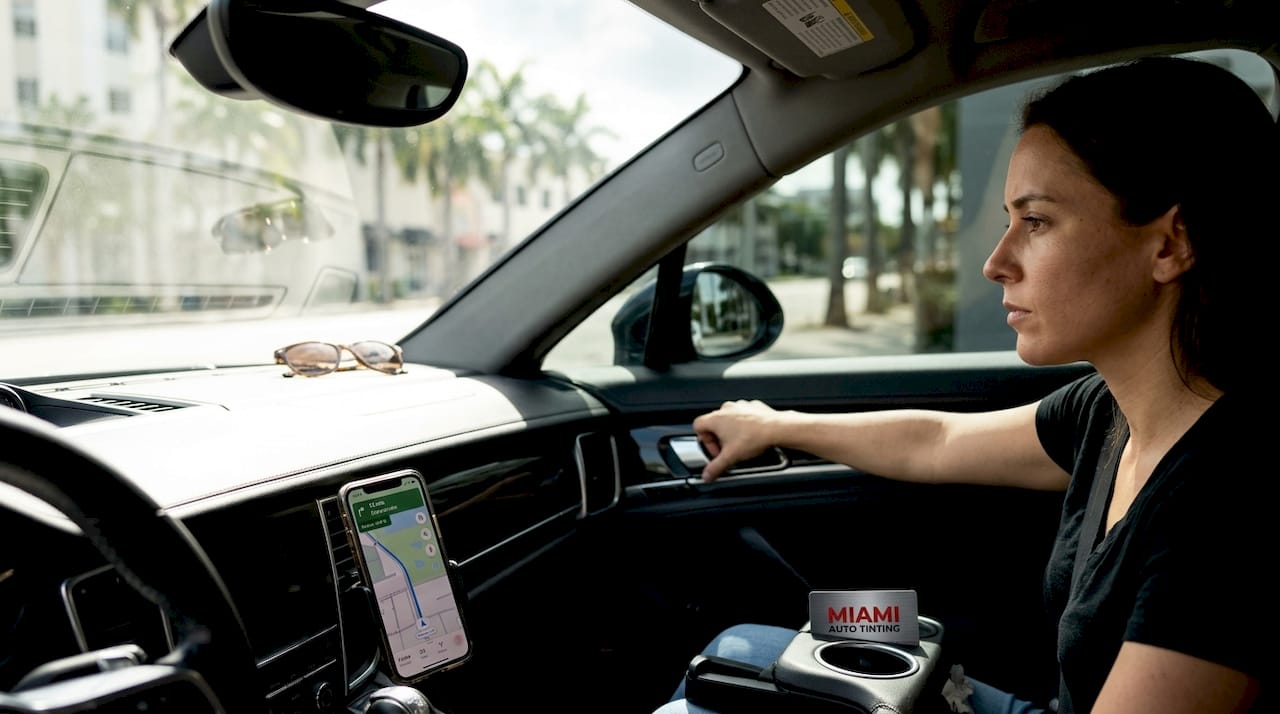
Glare is a separate but equally serious problem. Sunlight reflecting off glass towers, wet pavement, and oncoming headlights at dusk creates dangerous visual fatigue on urban routes. Tint film absorbs and scatters that incoming light before it reaches your eyes, reducing eye strain on long commutes.
The key benefits of tinting for privacy and glare control include:
- Reduced cabin visibility from sidewalks and adjacent vehicles, protecting personal belongings and passenger comfort
- Glare suppression from direct sunlight and reflected light off buildings and wet roads
- Improved comfort during stop-and-go traffic when sun angles are low and direct
- Reduced headlight glare from oncoming vehicles during evening drives
Balancing darkness with visibility matters. Urban drivers prefer balanced VLT tints because overly dark films reduce night visibility and increase risk in low-light conditions. A film that works perfectly at noon can become a liability at 9 p.m. on an unlit street.
Pro Tip: If you drive frequently at night, consider a 35% to 50% VLT film for the front side windows. You get meaningful daytime privacy without sacrificing the visibility you need after dark.
What role does UV protection play for drivers and vehicle interiors?
Ultraviolet radiation does not stop at your car window without help. Standard factory glass blocks most UVB rays but allows a significant portion of UVA rays through, and UVA is the type most associated with skin aging and interior material damage. Quality tint films address this gap directly.
Window tint can block up to 99% of harmful UV rays, protecting both passengers and the vehicle's interior surfaces from long-term damage. That level of protection is comparable to applying a high-SPF sunscreen to every window in your car, every single day you drive.
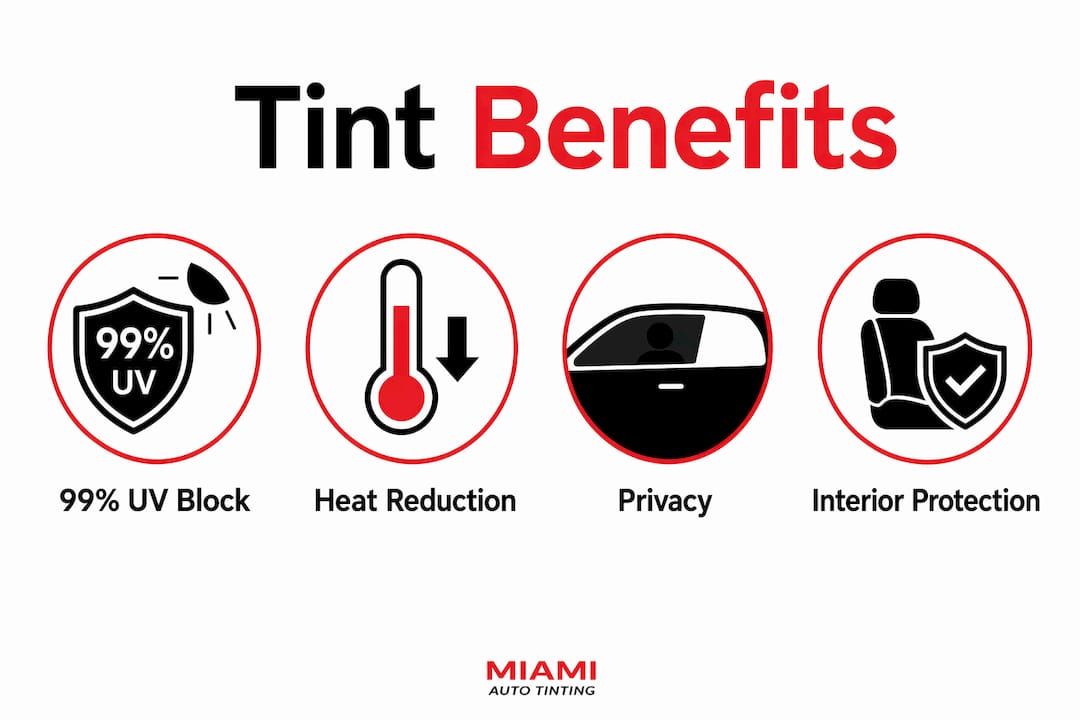
The interior preservation benefit is just as significant. Dashboards, leather seats, and door panels degrade faster under sustained UV exposure. Cracking, fading, and warping are the visible results, and they reduce resale value in ways that are difficult to reverse.
| Interior component | UV damage without tint | Protection with quality film |
|---|---|---|
| Leather upholstery | Fading, cracking within 2 to 4 years | Color and texture preserved significantly longer |
| Dashboard plastics | Warping and surface oxidation | Reduced heat and UV load slows degradation |
| Fabric seats | Color bleaching and fiber weakening | UV block prevents photochemical breakdown |
| Electronic displays | Glare-related wear and heat stress | Lower ambient heat reduces thermal cycling |
Long-term cost savings follow naturally from this protection. Reupholstering a leather interior or replacing a warped dashboard costs far more than a professional tint installation. The math favors tinting early, before damage accumulates.
Pro Tip: Ask your installer specifically about the UV rejection rating of the film, not just the VLT percentage. A light 70% VLT film with a high UV block rating can protect your interior without making your windows look dark.
How does window tinting reduce heat buildup and fuel efficiency?
Heat management is where tinting delivers its most tangible daily benefit for Miami drivers. The sun in South Florida is not a seasonal inconvenience. It is a year-round load on your vehicle's cooling system, and your air conditioner pays the price every time you park in direct sunlight.
Tint film reduces heat entering the vehicle, lowering air conditioning usage and potentially improving fuel efficiency in warm urban environments. Less AC demand means less engine load, which translates to measurable fuel savings over a full driving season.
The thermal benefits extend beyond fuel economy:
- Lower cabin temperature when you return to a parked car, reducing the time and fuel spent cooling down before driving
- Reduced strain on the AC compressor, which extends the component's service life
- Protection for in-cabin electronics including navigation screens, phone mounts, and infotainment systems that degrade faster under sustained heat
- More consistent interior temperatures during stop-and-go traffic when the AC cycles on and off repeatedly
Ceramic tint films perform especially well on this dimension. Ceramic window tinting offers high heat rejection and UV protection while maintaining visibility and avoiding interference with vehicle electronics, making it the preferred choice for drivers with advanced infotainment systems or GPS-dependent vehicles. Southmiamitint installs Iviron Kollmax ceramic tint and 3M IR film specifically for this reason. Both deliver heat rejection performance that dyed or metalized films cannot match.
What legal considerations and VLT factors should urban drivers understand?
VLT is the single most important number in window tinting law. VLT measures how much visible light passes through the combined assembly of factory glass plus applied film. A 20% VLT tint lets only 20% of light through, producing a noticeably dark window. A 70% VLT film is nearly clear.
The legal complication most drivers miss is this: installed tint legality depends on the combined glass and film assembly, not just the film's rated VLT. Factory glass already absorbs some light on its own. When you add a film rated at 35% VLT to factory glass that transmits 85% of light, the combined result falls below 35%. That gap can push you below your state's legal limit even when the film label says otherwise.
| Tint level | VLT % | Typical use case | Legal status (varies by state) |
|---|---|---|---|
| Very light | 70% | Minimal privacy, UV block only | Legal in nearly all states |
| Medium | 35 to 50% | Balanced privacy and visibility | Legal for rear windows in most states |
| Dark | 20% | Strong privacy, significant heat block | Often restricted on front side windows |
| Limo dark | 5% | Maximum privacy | Illegal on most windows in most states |
Florida law sets specific limits for each window position. Front side windows must allow more light through than rear side windows or the rear glass. Proper measurement of installed tint requires a tint meter reading through the combined glass and film assembly, which is exactly how law enforcement measures compliance during a traffic stop.
Pro Tip: Before choosing a film, ask your installer to measure your factory glass VLT first. That baseline number determines which film percentage keeps you legal after installation.
How to choose the right window tint shade for your vehicle
Choosing a tint shade is not just a legal exercise. It is a decision that shapes how your car looks, how comfortable it feels, and how well it holds its value. The right starting point is identifying your primary goal: privacy, UV protection, heat management, or a balance of all three.
Different VLT levels produce visually distinct results. A 50% film gives a subtle, factory-tinted appearance that reads as clean and understated. A 20% film produces a noticeably dark look that reads as sporty or aggressive. Limo-dark 5% films are visually dramatic but legally restricted on most windows in most states.
Car color and body style affect how tint reads visually. Dark vehicles with 20% tint look cohesive and intentional. The same shade on a white or silver car creates a stronger contrast that draws attention. If resale value matters to you, moderate shades in the 35% to 50% range tend to appeal to the widest range of future buyers.
For drivers who want maximum performance without a dark appearance, ceramic tint is the answer. You can read more about the benefits of ceramic window tint to understand why it outperforms dyed and metalized films on heat rejection and UV blocking at the same VLT level. Ceramic films also avoid the signal interference issues that metalized films create with GPS, Bluetooth, and cellular connections. For a side-by-side look at your options, the window tint comparison guide from Southmiamitint covers the full range of film types available for Miami vehicles.
Key takeaways
Window tint shades deliver the most value when you match the film's VLT, material type, and UV rejection rating to your specific driving environment and legal requirements.
| Point | Details |
|---|---|
| UV protection is the top health benefit | Quality films block up to 99% of UV rays, protecting skin and interior surfaces daily. |
| VLT determines legality and appearance | Combined glass plus film VLT is what law enforcement measures, not the film rating alone. |
| Ceramic tint leads on heat rejection | Ceramic films reject more heat than dyed or metalized options at the same VLT level. |
| Interior preservation saves money | Blocking UV and heat prevents fading, cracking, and warping that reduce resale value. |
| Night visibility requires a balanced shade | Moderate VLT shades of 35% to 50% protect privacy without compromising low-light driving safety. |
What I've learned after years of tinting cars in Miami
I have installed tint on hundreds of vehicles across Miami-Dade, and the pattern I see most often is this: drivers underestimate the heat benefit and overestimate how dark they need to go. They come in asking for 20% all around because they want privacy. After we talk through the night driving trade-offs and the legal limits for front windows, most of them land on 35% front and 20% rear. That combination gives them the privacy they wanted without the visibility problems they did not anticipate.
The UV protection angle is the one that surprises people most. Nobody thinks about their dashboard cracking when they are shopping for tint. But after I show them a before-and-after of a five-year-old untinted interior versus a tinted one, the conversation changes. The tinted car looks like it just came off the lot. The other one looks like it spent five years in the sun. Because it did.
My honest recommendation for urban drivers in South Florida is to invest in ceramic film and do it once. Cheap dyed films fade, bubble, and lose their heat rejection within two to three years. Ceramic films from 3M IR or Iviron Kollmax hold their performance for the life of the vehicle. The upfront cost is higher. The long-term math is not even close.
One thing I tell every customer: get your factory glass measured before you pick a film. I have seen drivers come in with a film they bought online rated at 35%, thinking it would be legal, only to find out their factory glass already absorbs enough light to push the combined VLT below Florida's front window limit. That is an avoidable problem. A two-minute measurement before installation saves a traffic stop later.
— Jose
Get professional ceramic tinting for your Miami vehicle
Southmiamitint specializes in mobile ceramic window tinting for cars across Miami-Dade, using 3M IR, 3M Color Stable, and Iviron Kollmax ceramic films. Every installation is done at your location, so you do not lose time driving to a shop and waiting.
If you are ready to protect your interior, reduce heat, and improve privacy with a film that holds up in South Florida's climate, explore the ceramic tinting options Southmiamitint offers starting at $249. For drivers comparing film types and pricing, the mobile tinting prices page breaks down costs by vehicle type and film grade. Professional installation matters. The right film, measured correctly and applied without bubbles or lifting, is what separates a tint job that lasts from one that needs to be redone in two years.
FAQ
What does VLT mean in window tinting?
VLT stands for Visible Light Transmission, the percentage of visible light that passes through the combined glass and film assembly. A lower VLT percentage means a darker tint.
Is window tint worth it for urban drivers?
Window tinting advantages for urban drivers include UV protection, heat reduction, privacy, and interior preservation. The return on investment is strongest in high-sun climates like Miami where heat and UV exposure are year-round.
What VLT percentage is legal in Florida?
Florida law requires front side windows to allow more than 28% VLT and rear side windows more than 15% VLT. Always measure the combined glass and film VLT, not just the film rating, to confirm compliance.
Does ceramic tint really perform better than standard film?
Ceramic tint rejects more heat and blocks UV rays at the same VLT level as dyed or metalized films, without interfering with GPS, Bluetooth, or cellular signals. It is the preferred option for vehicles with advanced electronics.
Can window tint protect my car's interior from fading?
Quality tint films block up to 99% of UV rays, which are the primary cause of fading, cracking, and color loss in upholstery, dashboards, and door panels. Tinting early prevents damage that is expensive to reverse.