
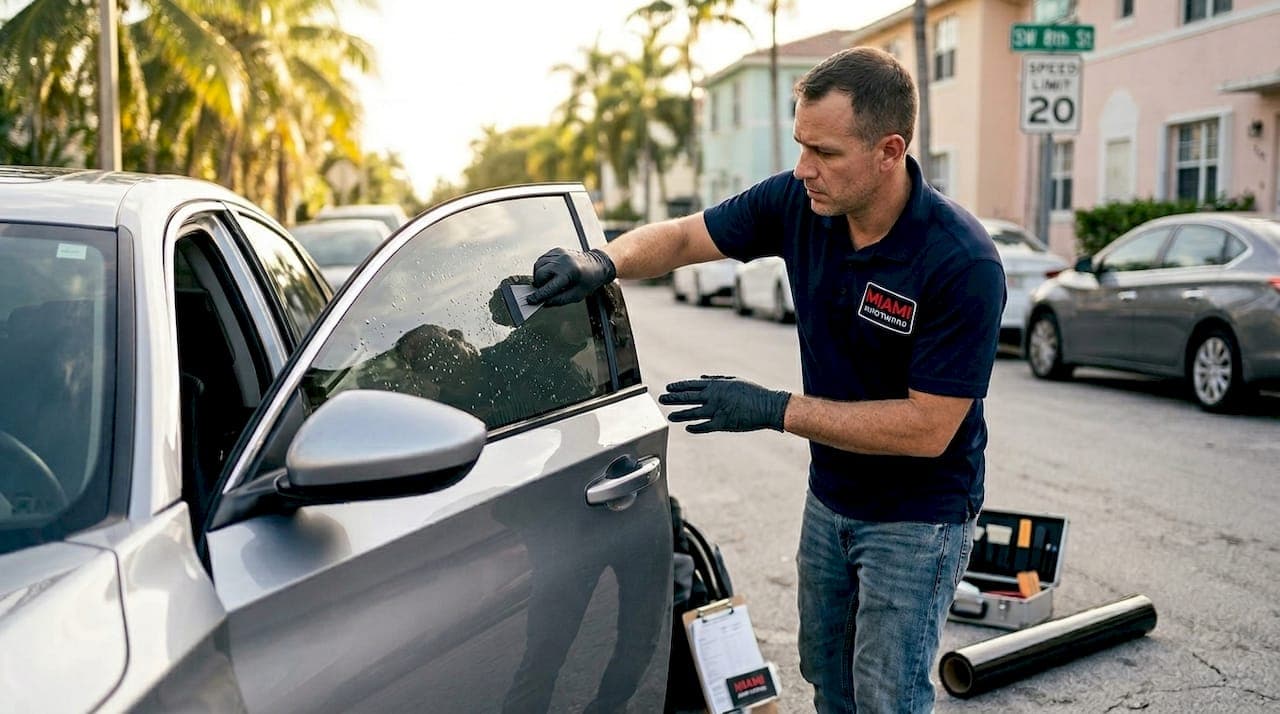
Miami-Dade's sun is relentless. Between the UV index regularly hitting 11 or higher, interior temperatures that can spike past 160°F when parked, and glare bouncing off every glass surface on the highway, window tinting isn't a luxury here. It's a practical necessity. But with so many films on the market and Florida's specific tint laws in play, choosing the wrong product can cost you money, fail at inspection, or leave you with a fogged-up film that peels by summer's end. This guide cuts through the confusion and gives you the clearest possible picture of every major tint type so you can make a smart, informed decision.
Table of Contents
- How to choose the right window tint in Miami
- Main types of window tint explained
- Head-to-head: Which tint performs best under Miami conditions?
- Choosing the right tint for your car, home, or business
- The real secret to picking the perfect window tint in Miami
- Get expert mobile window tinting in Miami
- Frequently asked questions
Key Takeaways
| Point | Details |
|---|---|
| Know local laws | Miami-Dade sets strict legal limits on tint darkness, colors, and reflectivity—you must check these before choosing. |
| Five main tint types | Every tint—dyed, metalized, carbon, ceramic, hybrid—suits different needs and budgets. |
| Ceramic offers top benefits | Ceramic tints excel for heat and UV rejection and rarely cause signal issues in Miami climates. |
| Avoid costly mistakes | Choosing the wrong tint can lead to heat buildup, legal trouble, or tech signal problems. |
| Professionals add value | Expert installers ensure a legal, lasting, and comfortable tint that fits your exact needs. |
How to choose the right window tint in Miami
Before you look at any specific film, you need to understand what actually matters in Miami-Dade. Not all climates demand the same things from a window tint. In Chicago, blocking cold drafts barely factors in. Here, you need serious heat rejection, maximum UV protection, and something that can survive salt air and humidity without fading in two years.
There are four key factors every Miami driver, homeowner, or business owner should weigh:
- Heat rejection — How much infrared heat does the film block? This directly affects how cool your car or room feels.
- UV protection — Quality films block up to 99% of UV rays, protecting skin and preventing interior fading.
- Signal compatibility — Some tint materials interfere with GPS, keyless entry, ADAS sensors, and toll transponders in modern vehicles.
- Legal compliance — Getting this wrong means citations, failed inspections, and peeling the whole thing off at your expense.
That last point is non-negotiable in Florida. Florida window tint law requires sedans to have a minimum of 28% VLT (visible light transmission) on front side windows and at least 15% VLT on rear side and rear windows. SUVs and vans get slightly different rules, with no restriction on rear windows and a 6% minimum on back side windows. The windshield may only be tinted above the AS-1 line. Front reflectivity must stay at or below 25%, rear at or below 35%. And red, amber, and blue tint colors are completely banned. It's worth comparing this against other Florida counties using a window tint law comparison if you drive across county lines.
Good to know: Florida does offer medical exemptions. If you or a passenger has a documented condition like lupus or severe photosensitivity, you may be able to legally run darker tint on front windows with proper documentation from a licensed physician. Check current local tint regulations before assuming your exemption covers everything.
With this legal and practical framework in place, you're ready to actually evaluate your options.
Main types of window tint explained
The tint market is broader than most people realize. According to AAA, the main tint categories include dyed, metalized, carbon, ceramic (including nano-ceramic and crystalline), and hybrid films. Each uses a different technology to reduce heat and block light, and each has a very different profile when it comes to Miami conditions.
Dyed window tint
- Uses layers of dye between adhesive and a protective coating
- Lowest price point, easy to find
- Absorbs heat rather than reflecting or blocking it, which can actually heat up the glass
- Fades relatively quickly in intense UV exposure
- Provides basic glare reduction and privacy
- Rarely the best choice in Miami unless budget is the only concern
Metalized window tint
- Uses tiny metallic particles embedded in the film
- Strong heat reflection and good durability
- Can interfere with GPS signals, toll transponders (SunPass), Bluetooth, and ADAS systems
- More reflective appearance, which some find too shiny
- Works better in older vehicles without modern electronics
- Not recommended for newer cars in Miami-Dade
Carbon window tint
- Uses carbon fiber layers without any metal content
- Excellent heat rejection, no signal interference
- Matte finish that looks sleek on most vehicles
- More durable than dyed, doesn't fade as quickly
- Mid-to-upper price range, but well worth it in this climate
- A strong choice for Miami drivers who want performance without breaking the bank
Ceramic and nano-ceramic window tint
- Uses ceramic particles that block heat through non-conductive technology
- Top-tier UV and infrared rejection without any signal interference
- Stays clear and doesn't affect visibility, even at legal VLT levels
- Most durable film type, resistant to fading, peeling, and discoloration
- Highest upfront cost, but the lowest long-term hassle
- Products like 3M IR and Iviron Kollmax fall into this category
Hybrid window tint
- Combines dye and metallic layers for a middle-ground option
- Better heat rejection than pure dyed, lower cost than full ceramic
- Some signal interference is possible, depending on metallic content
- A practical option if you want better-than-basic performance on a moderate budget
Pro Tip: If your car has a sunroof, rear defroster, or any ADAS camera mounted on the windshield, always tell your tint installer before they start. These features change which film works best and where it can be applied safely.
Here's a quick side-by-side comparison to visualize the differences:
| Tint type | Heat rejection | UV protection | Signal safe | Durability | Price range |
|---|---|---|---|---|---|
| Dyed | Low | Moderate | Yes | Low | $ |
| Metalized | Moderate | High | No | Moderate | $$ |
| Carbon | High | High | Yes | High | $$$ |
| Ceramic | Very High | Very High | Yes | Very High | $$$$ |
| Hybrid | Moderate-High | High | Partial | Moderate | $$ |
You can dig deeper into how these options stack up for your specific vehicle with a full compare window tint options guide built around Miami conditions.
Head-to-head: Which tint performs best under Miami conditions?
Raw specs only tell part of the story. What matters in Miami is real-world performance during a July afternoon when pavement temps hit 130°F and you've been parked at Dadeland for 45 minutes.
Here's how the major tint types actually compare on the factors that count most in South Florida:
| Factor | Dyed | Metalized | Carbon | Ceramic | Hybrid |
|---|---|---|---|---|---|
| Heat rejection | Poor | Moderate | Strong | Excellent | Good |
| UV blocking | Moderate | High | High | Up to 99% | High |
| Glare control | Basic | Good | Good | Excellent | Good |
| Interior fading protection | Fair | Good | Very Good | Best | Good |
| GPS/ADAS compatibility | Yes | No | Yes | Yes | Partial |
| Longevity in Miami climate | 2-3 yrs | 4-6 yrs | 6-8 yrs | 8-12+ yrs | 4-5 yrs |
| Legal compliance ease | Easy | Easy | Easy | Easy | Easy |
One number worth noting: hybrid tints can reject up to 60% of solar heat, which is a meaningful improvement over dyed film. But ceramic and nano-ceramic films push that figure even higher, often exceeding 80% infrared rejection depending on the specific product.
Carbon and ceramic are clearly the front-runners for Miami drivers. The case for ceramic vs carbon tints comes down to budget and long-term expectations. Carbon is an excellent middle-ground choice. Ceramic is the top performer when you want maximum comfort, minimum glare, and the longest possible lifespan.
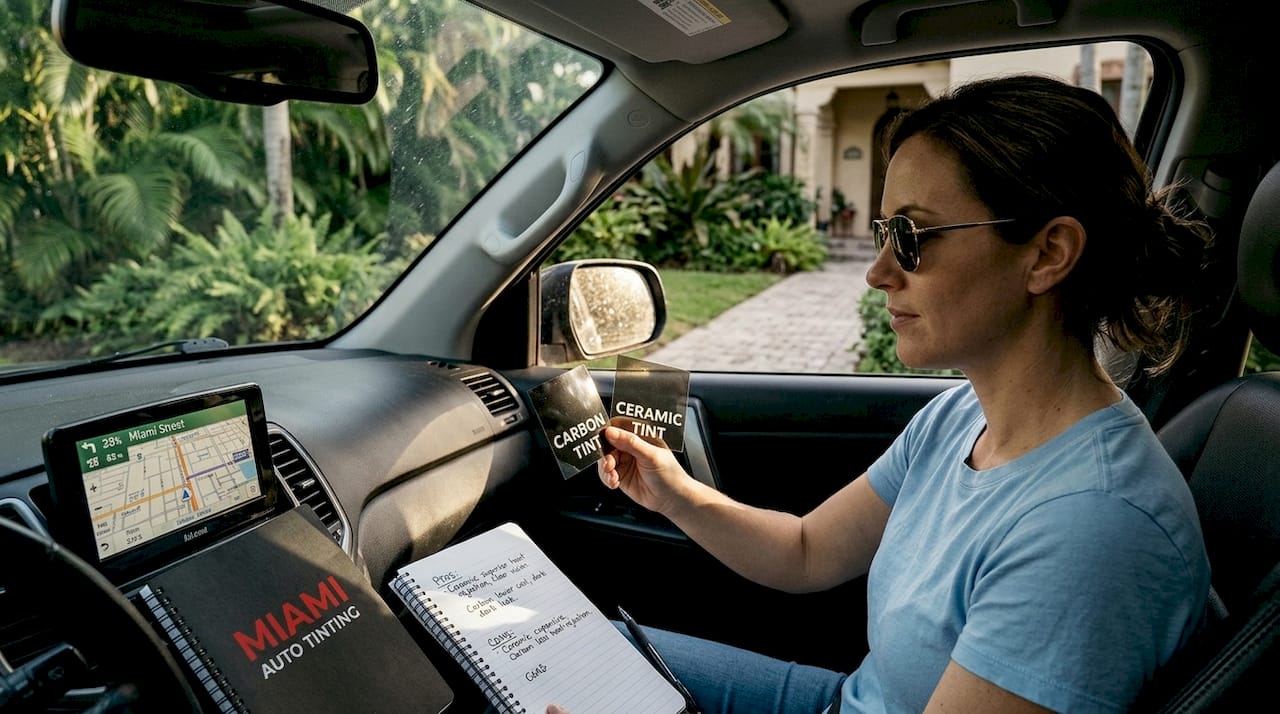
Pro Tip: Ask your installer specifically about total solar energy rejection (TSER), not just VLT. VLT measures how much light comes through. TSER measures how much total heat energy is blocked. In Miami, TSER is the more meaningful metric for comfort. The ceramic tint benefits page has a solid breakdown of what TSER means for daily driving in South Florida.
One critical point many car owners overlook: metalized tints in modern vehicles can affect toll transponders like SunPass, which is a real problem in Miami given the number of tolls on I-95, the Turnpike, and the Dolphin Expressway. Ceramic and carbon films don't have this issue at all.
Choosing the right tint for your car, home, or business
Now that you have the data, here's how to turn it into a decision you won't regret.
For vehicles:
- Newer car with GPS, ADAS, or connected features — Go ceramic. It's the only film that delivers high performance with zero interference. 3M IR and Iviron Kollmax ceramic films are specifically designed for this.
- Older car on a moderate budget — Carbon tint is the smart call. Great heat rejection, no electronics issues, and it'll last years in Miami weather.
- Tight budget, just need privacy — Hybrid or even quality dyed film can work short-term, but plan to upgrade in a few years as fading becomes visible.
- Medical exemption situation — Work with a professional installer who knows Florida exemption documentation. They can help you stay darker while staying legal.
For homes and businesses:
Residential and commercial window tinting in Miami follows different rules than automotive, but the same material principles apply. Ceramic films for windows (like 3M IR or Iviron Kollmax) provide substantial energy savings by reducing air conditioning load, which in Miami-Dade can translate to real monthly savings on electricity bills. Homeowners benefit from UV protection for furniture, flooring, and artwork. Businesses get the same plus improved employee comfort near glass-heavy facades.
Expert take: Avoid metalized window film for any space with smart home tech, automated blinds with wireless sensors, or security systems that rely on wireless signals. The interference risk is real and easy to avoid by simply choosing ceramic or carbon.
One of the most common mistakes we see in Miami-Dade is buyers choosing a film based on price alone, then discovering it fades or bubbles within 18 months. Ceramic films are worth the premium when you calculate the cost of removal, reapplication, and the discomfort of driving through Miami summers with failing tint. Miami drivers who switch to ceramic consistently report the biggest improvement in daily comfort compared to any other tint upgrade.
Skip red, amber, and blue tints entirely. They're banned under Florida law and will earn you a citation on the spot.
The real secret to picking the perfect window tint in Miami
Here's something we've seen play out dozens of times: a car owner spends three weeks reading forums, comparing specs on five different films, and agonizes over whether to go 35% or 20% VLT. Then they pick a mid-range metalized film because it was $60 cheaper, only to find out their SunPass stopped working reliably the week after installation.
Overthinking specs while underweighting real-world fit is the most common mistake in the tint buying process.
What actually matters in Miami is simpler than most people think. First, is the film legally compliant for your vehicle type? Second, does it reject enough infrared heat to make your car genuinely comfortable? Third, will it last more than a couple of South Florida summers without fading, peeling, or hazing? If you check all three boxes, you've made a good decision.
Ceramic films like 3M IR and Iviron Kollmax check all three. They're not cheap, but owners who go ceramic almost never come back looking to switch. The real advantages of ceramic tint become obvious after your first August afternoon where the steering wheel is actually touchable when you return to your car.
The other factor people consistently underrate is installer quality. The best film in the world, installed by someone cutting corners, will bubble and peel within a year in Miami humidity. A trusted local professional who knows Florida tint law, uses proper prep techniques, and stands behind their work is worth far more than saving $100 on the film itself.
Get expert mobile window tinting in Miami
Choosing the right film is step one. Getting it installed correctly by someone who knows Miami's laws, humidity conditions, and your specific vehicle is step two and it matters just as much.
We offer fully mobile window tinting across Miami-Dade for cars, homes, and businesses. Whether you're looking for ceramic tint installation at your driveway or want to explore the full lineup of 3M ceramic film Miami options, we come to you with professional-grade 3M IR, 3M Color Stable, and Iviron Kollmax films. No driving to a shop, no waiting around. Check our mobile tint service pricing and book the service that fits your schedule and your budget. Transparent pricing, legal compliance guaranteed, and results you'll notice on your very first drive.
Frequently asked questions
What is the legal limit for window tint in Miami-Dade County?
For sedans, front side windows must allow at least 28% VLT (visible light transmission), and rear side windows plus the rear window must allow at least 15% VLT; Florida law gives SUVs and vans different allowances, including no restriction on rear windows.
Does ceramic tint block more heat than other tint types?
Yes, ceramic tints deliver higher heat and UV rejection than dyed, metalized, and hybrid tints, with quality products like 3M IR often exceeding 80% infrared rejection; the tint performance difference is especially noticeable in Miami's intense summer sun.
Can window tints interfere with signals like GPS or toll transponders?
Metalized and some hybrid tints contain metallic particles that interfere with GPS and ADAS in modern vehicles; ceramic and carbon films use non-metallic technology and cause no signal issues, which matters greatly for SunPass users in Miami-Dade.
Are any tint colors illegal in Miami?
Yes, red, amber, and blue window tints are completely banned under Florida tint law, which applies throughout Miami-Dade County; stick to neutral shades like gray, charcoal, or bronze to stay compliant.
Do I need a professional for window tint installation?
Professional installation ensures your tint meets Miami-Dade legal requirements, is applied without bubbles or debris, and is backed by a warranty that DIY kits never provide.