
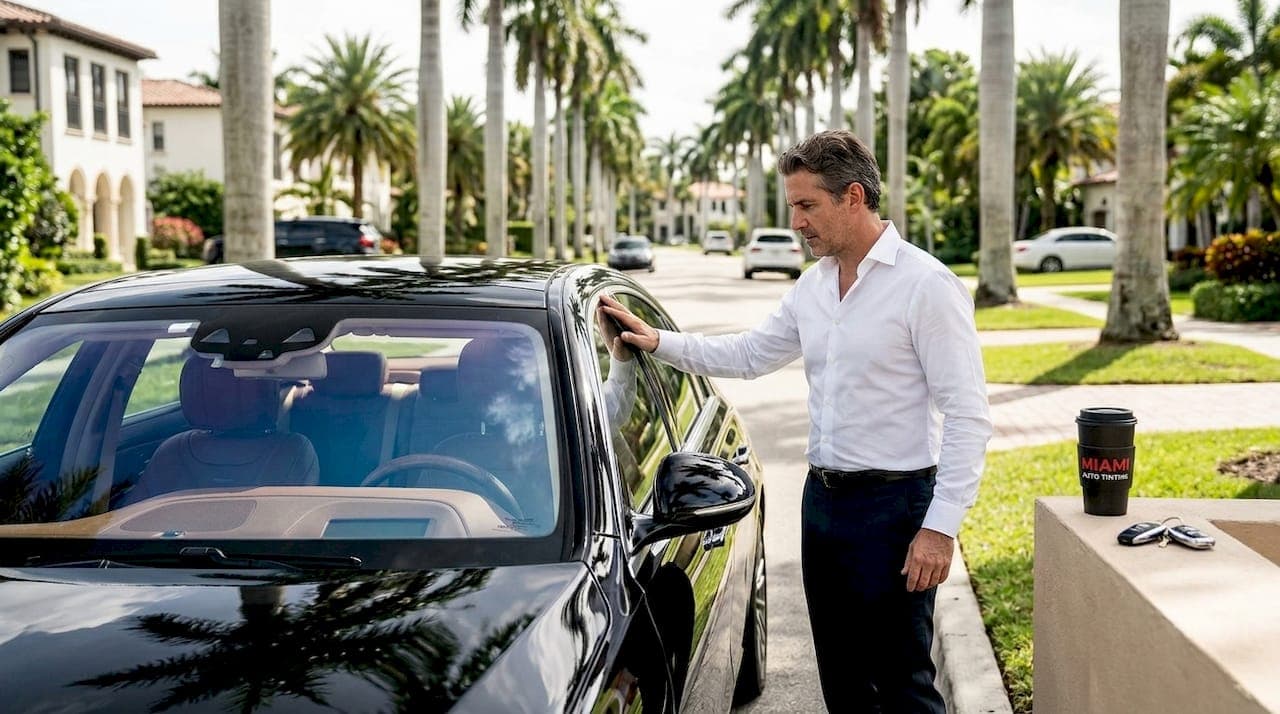
Miami's relentless sun isn't just uncomfortable. It's actively destroying your luxury vehicle's interior, fading hand-stitched leather, warping carbon fiber trim, and pushing cabin temperatures past 150°F while your car sits in a parking lot. Owners of Ferraris, Bentleys, and Porsche 911s in Miami-Dade can't afford to treat window tinting as an afterthought. The right film protects a significant financial investment and transforms the driving experience. This guide walks you through the top premium tinting solutions available, compares every major film type, and gives you the specific knowledge needed to make a confident, well-informed choice.
Table of Contents
- How to choose the best window tint for luxury vehicles
- Top tint types for luxury vehicles: Benefits and features
- Comparison guide: Which tint is right for your vehicle and lifestyle?
- What to expect from professional tint installation and care
- Our take: The best tint for Miami luxury vehicles isn't always the obvious choice
- Get expert luxury vehicle tinting in Miami—We come to you
- Frequently asked questions
Key Takeaways
| Point | Details |
|---|---|
| Ceramic tint advantages | Ceramic window tints deliver maximum UV and heat rejection, making them ideal for Miami luxury vehicles. |
| Legal compliance | Always check Miami-Dade tint laws before installation to avoid fines and ensure your vehicle stays street-legal. |
| Professional installation pays off | Expert installers protect your car’s value and ensure flawless, long-lasting tint results. |
| Choose for your lifestyle | Match the tint type to how you use your vehicle—daily driver needs differ from show cars or vintage exotics. |
How to choose the best window tint for luxury vehicles
Not all window tint is created equal, and that gap becomes especially obvious once you're talking about a $200,000 vehicle parked under South Florida's direct sun. Before you pick a shade or a brand, you need a clear framework for evaluating what matters most.
Key evaluation factors for luxury car owners:
- UV rejection: The best premium films block 99% of UV-A and UV-B rays, which is the primary cause of leather cracking and dashboard fading.
- Infrared (IR) heat rejection: UV blocking alone won't keep your cabin cool. You need a film that actively rejects infrared radiation, which is the real driver of cabin heat gain.
- Visible light transmission (VLT): This refers to how much light passes through the film. It determines darkness level and directly affects compliance with local laws.
- Film clarity: Low-quality films can distort visibility or turn purple over time. Premium films maintain optical clarity for years without color shifting.
- Aesthetics: Luxury vehicles demand a clean, uniform look. The film should enhance the car's lines, not create streaks, bubbles, or uneven shading.
- Warranty: Top-tier brands like 3M offer lifetime warranties on their premium film lines. A weak warranty usually signals a weaker product.
- Installer expertise: Even the best film will fail if applied incorrectly. For exotic vehicles, you need an installer experienced with curved glass, large panes, and complex window shapes.
Brand reputation matters more than most people realize. Established manufacturers like 3M and Iviron Kollmax invest heavily in film technology and quality control. Generic brands cut corners on adhesive chemistry and UV inhibitors, which means their films degrade faster in Miami's heat and humidity.
Understanding window tinting laws in Miami before any installation is critical. Florida law requires a minimum 28% VLT on the front side windows for passenger vehicles, while rear windows can be darker if the car has dual side mirrors. Some luxury SUVs and specialty vehicles have different requirements. Violating these rules risks tickets and the cost of removing a fresh installation.
Pro Tip: Always check your vehicle manufacturer's warranty documentation before tinting. Some high-end automakers include specific clauses about modifications that could affect warranty coverage. A reputable tint shop will help you navigate this and recommend compliant options.
Professional installation is non-negotiable for luxury vehicles. DIY kits can't replicate the precision that comes from experience, specialized tools, and climate-controlled workspaces. A single bubble or lifted edge on a Lamborghini window isn't just an eyesore. It also compromises the film's protective performance.
Top tint types for luxury vehicles: Benefits and features
Now that you know what to look for, let's explore the most popular tint types for high-end cars and what makes each one stand out in Miami's demanding climate.
Ceramic tint is widely considered the gold standard for luxury vehicles. It uses nano-ceramic particles embedded in the film to block heat and UV radiation without relying on metals or dyes. It doesn't interfere with GPS, Bluetooth, or radar detectors, which matters enormously in tech-loaded exotics. Films like 3M Crystalline and Iviron Kollmax offer exceptional clarity and heat rejection well above 50%. Ceramic tints for Miami provide superior heat and UV rejection that no other film type currently matches at the same clarity level.
Carbon tint uses carbon particles instead of metal to block heat. It offers a matte, dark appearance that many luxury car owners find visually striking. It doesn't fade over time, unlike dyed films, and provides solid UV protection. It's a popular choice for vehicle show cars and collectors who prioritize a bold visual aesthetic. Performance sits just below ceramic, but it costs less.
Dyed tint is the most affordable option and the least suitable for serious Miami heat management. It absorbs heat rather than rejecting it, which means the window glass itself gets very hot. It fades faster than other film types and offers minimal infrared rejection. For a luxury vehicle, dyed film is simply not worth the tradeoff.
Metallic tint uses small metallic particles to reflect heat and sunlight. It performs well on heat rejection but creates signal interference with electronic devices. In a modern Rolls-Royce or Aston Martin loaded with connectivity features, metallic tint can disrupt the driving experience it's supposed to enhance.
Pro Tip: For Miami's climate specifically, ceramic tint is the strongest performer. The benefits of ceramic tint extend beyond temperature control. They include reduced eye strain, better interior preservation, and a cleaner visual appearance that complements a luxury vehicle's styling.
| Film Type | UV Rejection | IR Heat Rejection | Signal Interference | Lifespan | Relative Cost |
|---|---|---|---|---|---|
| Ceramic | 99% | Up to 60%+ | None | Lifetime | High |
| Carbon | 99% | Up to 40% | None | 10+ years | Medium-High |
| Metallic | 99% | Up to 50% | Yes | 10+ years | Medium |
| Dyed | Up to 95% | Minimal | None | 5 years | Low |
For ceramic window tinting details specific to Miami-Dade vehicles, the performance data above makes the case clearly. Ceramic film is the only type that scores well in every category that matters for a high-value car in this climate.
Comparison guide: Which tint is right for your vehicle and lifestyle?
After exploring each option, let's compare them side by side so you can confidently select the perfect match for your car and the way you actually use it.
Your lifestyle matters as much as your vehicle's specs. A daily driver sitting in Brickell parking garages for eight hours needs different protection than a weekend show car that lives indoors most of the week. Here's how to think through the decision.
Steps for choosing the right tint for your car and usage:
- Define your primary goal. Is it heat reduction, UV protection, privacy, aesthetics, or all four? Rank them in order.
- Identify your driving pattern. Daily commuters in South Florida should prioritize IR heat rejection above all else. Weekend drivers can balance performance with aesthetics more freely.
- Check your vehicle type and legal requirements. Sedans, SUVs, and commercial vehicles have different VLT requirements in Florida.
- Set a realistic budget. Premium ceramic film for a full luxury vehicle starts at a higher price point, but the long-term value of protecting a $150,000+ interior justifies the investment.
- Choose a film brand with warranty support. 3M IR and Iviron Kollmax both offer manufacturer-backed warranties. Make sure your installer is an authorized dealer so the warranty is valid.
- Schedule a consultation before committing. A knowledgeable installer can recommend specific VLT percentages and film types based on your exact vehicle model and glass configuration.
"Professional-grade window tints protect vehicle interiors and preserve value, reducing UV-driven interior damage significantly over the vehicle's lifetime."
| Vehicle Type | Best Film Choice | Reason |
|---|---|---|
| Daily luxury sedan (Miami commuter) | Ceramic (3M IR / Iviron Kollmax) | Maximum heat and UV rejection, signal-safe |
| Weekend exotic/show car | Carbon | Bold matte look, strong UV protection, zero fade |
| Classic car collector | Carbon or light ceramic | Preserves vintage aesthetics, UV protection |
| Luxury SUV (family use) | Ceramic | Privacy, cabin temperature control, UV protection for passengers |
| High-tech electric vehicle | Ceramic only | Metal-based films disrupt ADAS sensors and connectivity |
Classic car collectors often choose carbon over ceramic, not because ceramic performs worse, but because the deeper, richer tonal quality of carbon film complements vintage body lines in a way that resonates with collectors and judges. It's a nuanced choice that goes beyond raw specs. This is exactly why a one-size-fits-all recommendation doesn't serve every luxury car owner the same way.
The interior preservation argument is hard to overstate. Sustained UV exposure degrades natural leather at a cellular level, breaks down adhesives in vintage interiors, and causes wood veneers to crack and split. For a concours-level vehicle, that kind of damage is irreversible and costly.
What to expect from professional tint installation and care
Having chosen your ideal tint, the next step is a flawless, compliant installation and ongoing care to keep your vehicle looking exceptional for years.
Why professional installation matters for exotics:
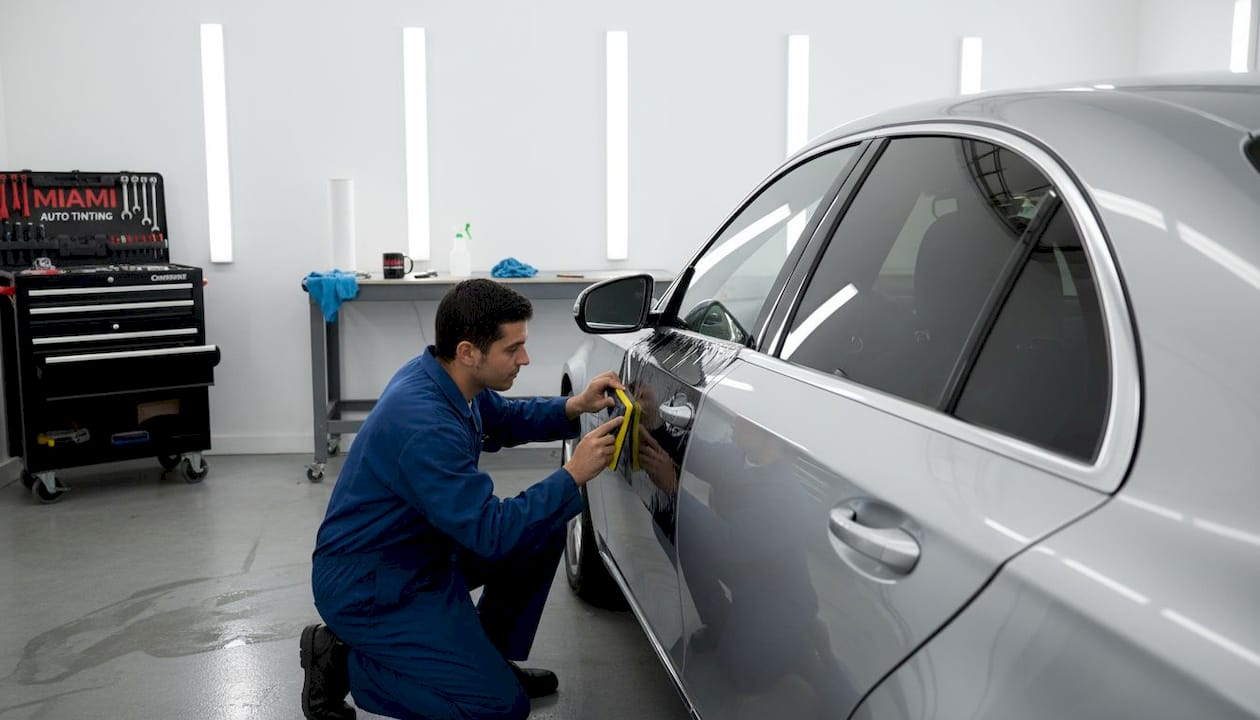
Exotic and luxury vehicles often feature curved rear windows, frameless doors, large panoramic sunroofs, and tightly contoured glass shapes. These features require precise template cutting, heat forming, and an installer who understands how film behaves on complex surfaces. A wrinkle on a standard sedan window is annoying. The same wrinkle on a McLaren 720S panoramic roof is a completely different problem. Professional tint services for luxury cars ensure compliance and optimal results, especially for vehicles with unique glass configurations.
Typical steps in a professional installation:
- Pre-installation inspection. The installer examines all glass surfaces for chips, cracks, or existing film that may affect adhesion.
- Surface preparation. Windows are cleaned thoroughly to remove contaminants, dust, and any factory residue that could cause air pockets.
- Film cutting and fitting. Premium shops use computer-aided cutting systems to create exact templates for each window on your specific vehicle model.
- Application. The film is applied using a slip solution that allows precise positioning before final adhesion. This is where experience separates average shops from elite installers.
- Squeegee and finish work. Air and excess moisture are pushed out carefully. On exotic vehicles, this step takes extra time to handle curved surfaces and edges correctly.
- Curing period. Most films require 3 to 7 days to fully cure, depending on Miami's humidity and whether the vehicle is stored indoors or outside.
Caring for your luxury vehicle's tint:
Good window tinting care tips start immediately after installation. Avoid rolling down windows for at least 3 days after application. Water beads you see between the glass and film during curing will disappear on their own.
For cleaning, use an ammonia-free glass cleaner and a soft microfiber cloth. Ammonia degrades the film's adhesive layer over time and causes premature peeling, especially on older films. Never use abrasive sponges or rough towels on tinted windows. Keep sharp objects away from the edges, as even small nicks can allow a peeling process to begin.
For detailed ongoing vehicle tinting tips, parking in shaded areas or a garage extends film life significantly in Miami's climate. The sun's cumulative effect on even the best film is real over a decade of exposure.
Pro Tip: Use only ammonia-free, tint-safe cleaning products on all tinted surfaces. Products like simple soap and water or dedicated tint-safe sprays keep the film clear and adhesive intact. Avoid newspaper and paper towels, which contain fibers that scratch film surfaces over time.
Our take: The best tint for Miami luxury vehicles isn't always the obvious choice
Here's our frank perspective after working on hundreds of luxury and exotic vehicles across Miami-Dade: the most expensive film isn't automatically the right film for every car.
We've seen owners of vintage Porsches and classic Ferraris choose ceramic over carbon because it tested better on a spec sheet, only to feel later that the look didn't match their vehicle's character. Meanwhile, daily drivers in Coral Gables who commute with kids in the back seat benefit enormously from ceramic's IR heat rejection in ways that carbon simply can't replicate.
The real lesson is that tinting a luxury vehicle is a personal decision that requires matching the film to the climate, the usage, and the car's identity. Miami's heat absolutely favors ceramic in most situations. That's why why Miami drivers love ceramic is a conversation we have constantly with new clients. But "most situations" isn't "all situations."
We've also seen owners choose tint based purely on cost savings, picking a lesser film for a $180,000 car to save a few hundred dollars. When that film turns purple or bubbles after two South Florida summers, the removal and reinstallation costs far exceed what premium film would have cost upfront. Your vehicle deserves film that lasts as long as your ownership does.
Get expert luxury vehicle tinting in Miami—We come to you
If you've made it this far, you're serious about protecting your vehicle the right way.
At South Miami Tint, we specialize in mobile luxury and exotic vehicle window tinting across all of Miami-Dade County. We bring premium 3M IR, 3M Color Stable, and Iviron Kollmax ceramic film directly to your home, office, or garage, so your vehicle never has to leave your sight. Every installation is backed by manufacturer warranties, performed by experienced installers who work on high-end vehicles daily. Get a tinting quote tailored to your exact vehicle and needs, explore our full range of 3M ceramic film options, or check the areas served in Miami to confirm we cover your neighborhood.
Frequently asked questions
What type of tint is best for Miami luxury vehicles?
Ceramic tint offers superior UV and heat rejection, making it the top choice for Miami's intense climate and for owners who want to protect a high-value interior without sacrificing visibility or signal performance.
Is window tinting for luxury cars legal in Miami-Dade County?
Yes, as long as you follow Florida's visible light transmission rules; legal requirements before installation include a minimum 28% VLT on front side windows for most passenger vehicles, with more flexibility for rear windows.
How do I care for my luxury vehicle's new tint?
Wait at least three to five days before rolling windows down or cleaning them, then use only ammonia-free, non-abrasive products; following proper care for tinted windows extends your film's life significantly in Miami's climate.
Does professional installation make a difference for exotic vehicles?
Absolutely. Expert installs for exotics ensure proper adhesion on complex glass shapes, full legal compliance, and a finished result that preserves the vehicle's appearance and value at the highest level.