
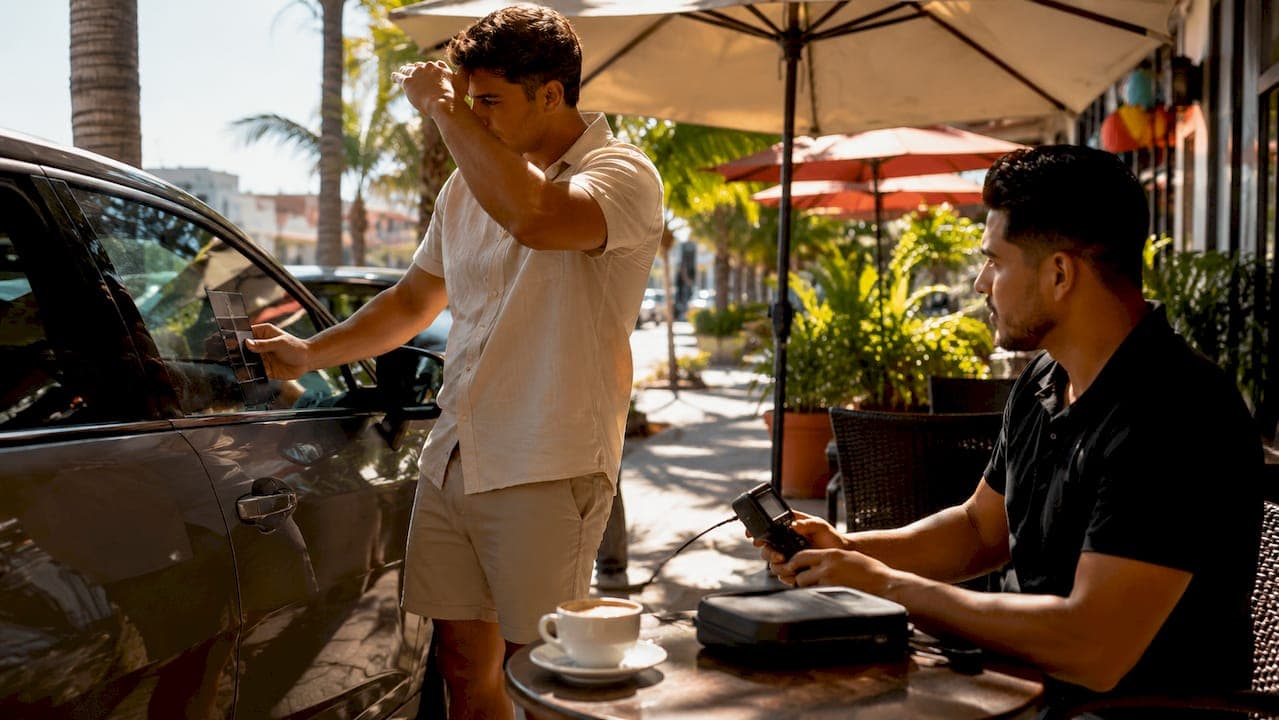
The tint shade comparison process is defined as evaluating Visible Light Transmission (VLT) percentages alongside film material technologies to select the right window tint for your vehicle. In Miami's intense heat and bright sunlight, choosing the wrong shade means sacrificing comfort, privacy, or legal compliance. Common shade percentages range from 5% (darkest) to 50% (lightest), with most Miami drivers landing between 20% and 35% for the best balance. Southmiamitint uses 3M IR, 3M Color Stable, and Iviron Kollmax ceramic films, each available in multiple VLT levels to match your specific needs.
What is the tint shade comparison process based on?
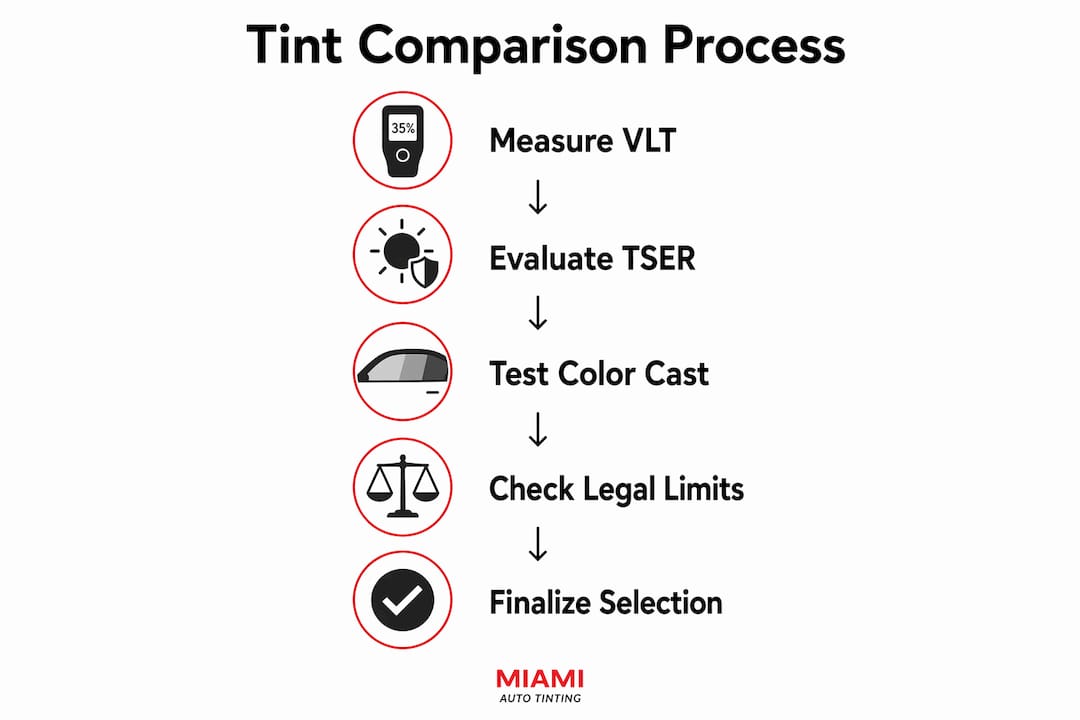
Visible Light Transmission is the percentage of visible light a tinted window allows through. A 5% VLT film blocks 95% of visible light. A 50% VLT film blocks only half. That single number is the foundation of every shade comparison method used by professional installers.
VLT affects how dark your windows look from outside and how well you see at night from inside. Lower VLT gives more privacy but reduces nighttime visibility. Higher VLT keeps things bright but offers less privacy. The right choice depends on how you use your car and where you park it.
Florida law sets specific VLT minimums for automotive tint. Front side windows must allow at least 28% VLT. Rear side windows and the rear windshield can go darker. To stay legally compliant, multiply your factory glass VLT by the film's VLT to calculate the combined total. Most factory glass sits around 70–80% VLT, so a 35% film on a 70% factory window produces roughly 24.5% combined VLT, which falls below the legal front window limit.
- 5% VLT: Maximum privacy, legal only on rear windows in Florida
- 15% VLT: Dark appearance, popular for rear windows and SUVs
- 20% VLT: Strong privacy with acceptable nighttime visibility
- 35% VLT: The most common choice for front windows in Florida
- 50% VLT: Light shade, often used on windshields with special films
Pro Tip: Bring your vehicle registration and check your factory glass VLT before your consultation. Some factory glass already has a light tint built in, which affects your legal shade options.
How do film materials change heat rejection beyond shade darkness?
Shade darkness and heat rejection are not the same thing. This is the most common misconception in tint and shade analysis. A dark 5% dyed film can let more heat into your car than a lighter 35% ceramic film. The material determines performance, not the color.
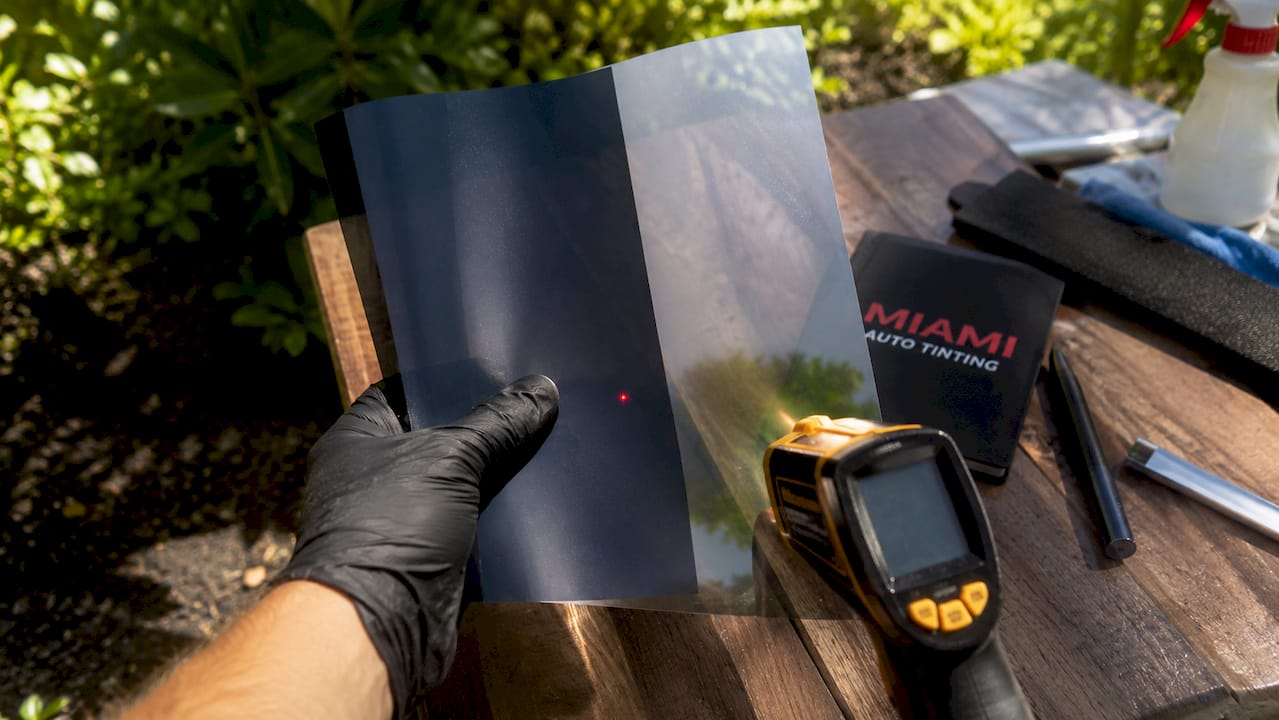
Dyed films absorb solar energy and re-radiate some of it as heat into the cabin. Metallic films reflect solar energy but can interfere with GPS, cell signals, and radio. Ceramic films use non-conductive ceramic particles to block infrared radiation without signal interference. Ceramic films block 80–95% of infrared heat even at lighter shades, which is why they outperform darker dyed films in real-world Miami conditions.
The metric that captures this difference is Total Solar Energy Rejected (TSER). TSER measures the percentage of total solar energy a film blocks, including infrared, ultraviolet, and visible light. A high TSER at a lighter VLT means you stay cooler without going darker. Ceramic tint is the recommended choice for Miami cars precisely because of this combination of high TSER and legal VLT compliance.
| Film type | Heat rejection method | Signal interference | Best use case |
|---|---|---|---|
| Dyed | Absorbs solar energy | None | Budget installs, mild climates |
| Metallic | Reflects solar energy | Yes | Moderate heat, no electronics concern |
| Ceramic | Blocks infrared radiation | None | High heat, electronics-sensitive vehicles |
Pro Tip: Ask your installer for the TSER rating of each film, not just the VLT. Two films at the same VLT can have very different TSER values, and in Miami that difference shows up immediately on a hot afternoon.
What does the standard shade comparison process look like in practice?
A professional shade comparison is not just holding up a tinted card to your window. It is a structured evaluation that accounts for your factory glass, your lighting conditions, and your personal priorities. Standard consultations run 30–60 minutes and include sample film demos under real lighting conditions.
Here is how a thorough comparison works:
- Measure factory glass VLT. The installer uses a light transmission meter on your existing glass. This baseline determines which film VLTs keep you legal on front windows.
- Select candidate films. Based on your VLT baseline and preferences, the installer pulls two or three sample films that match your privacy, heat rejection, and aesthetic goals.
- Apply samples to the glass. Sample films are held or temporarily applied against your actual car windows. This step matters because vehicle-specific testing accounts for your factory glass tint and interior color, both of which affect final appearance.
- Test under Miami outdoor sunlight. Walk outside with the samples applied. Assess how dark the windows look from the street and how well you see out from the driver's seat.
- Test under overcast conditions. Shade appearance shifts significantly between full sun and cloud cover. A shade that looks perfect in direct sun can look much darker on a cloudy day.
- Evaluate heat rejection by feel. Hold your hand near the glass with the sample applied and expose it to direct sunlight. The difference between a dyed film and a ceramic film is noticeable within seconds.
- Check privacy from outside at eye level, not just from a distance
- Assess the view from the driver's seat at night using a phone flashlight simulation
- Compare at least two VLT options side by side before deciding
- Confirm the final combined VLT calculation with your installer before signing off
How do color casts affect shade appearance in Miami sunlight?
Color cast is the tint of light that passes through a film, separate from its darkness. A 35% VLT film can appear neutral gray, slightly blue, or faintly greenish depending on the film's ceramic particle composition. Ceramic films can produce blue, charcoal, or greenish-brown casts that only become obvious after installation.
Miami's sunlight is particularly intense, and that intensity amplifies color cast. A film that looks neutral gray in a shop's fluorescent lighting can show a clear blue tint when parked on a white concrete surface under full sun. Testing films under real outdoor conditions is the only reliable way to catch this before committing to an install.
Color cast also affects how your car looks from outside. A blue cast on dark paint can look sharp and intentional. The same cast on silver or white paint can look washed out. Viewing the sample from outside the vehicle in direct sunlight gives you the most accurate preview of the final result.
- View sample films from outside the car at street level in full sun
- Check the cast from inside the car looking outward, not just from outside looking in
- Ask to see the film against a white or light-colored surface to reveal any color shift
- Compare the cast across two or three film options before deciding
Pro Tip: Inspect tint samples at the same time of day you typically drive. Miami's midday sun and late afternoon sun produce different light angles, and both can reveal color casts that morning shade hides.
For a deeper look at how film clarity interacts with shade choice, tint film clarity is worth reviewing before your consultation. Understanding how lighting conditions affect tint perception in vehicles can also sharpen your evaluation during the comparison process.
Key Takeaways
The most effective tint shade comparison process combines VLT measurement, TSER evaluation, and outdoor sample testing to balance legal compliance, heat rejection, and appearance.
| Point | Details |
|---|---|
| VLT is the baseline metric | Shade percentages from 5% to 50% determine darkness; Florida law requires at least 28% on front windows. |
| Material beats darkness for heat | Ceramic films block 80–95% of infrared heat even at lighter shades, outperforming darker dyed films. |
| Test outdoors, not just indoors | Miami sunlight reveals true shade appearance and color cast that shop lighting cannot replicate. |
| Calculate combined VLT | Multiply factory glass VLT by film VLT to confirm legal compliance before installation. |
| Color cast is a real variable | Ceramic films can show blue, charcoal, or greenish-brown hues; always check samples from inside and outside the vehicle. |
What I've learned after years of comparing tint shades in Miami
Most car owners walk into a tint consultation focused entirely on shade darkness. They want to know if 20% looks better than 35%. That is the wrong question to start with. The right question is: what do you actually need the tint to do?
Miami heat is not a minor inconvenience. It is a daily physical reality that affects how long your interior lasts, how much your AC works, and how comfortable your drive feels at 2:00 PM in july. A 50% ceramic film with a high TSER rating will keep your car cooler than a 15% dyed film. That fact surprises almost every car owner I talk to.
The other thing I see constantly is people skipping the outdoor test. They approve a shade under fluorescent shop lighting and then call back after installation because the color looks different on their car. Shade darkness is primarily cosmetic. Film material technology determines heat rejection. Those two facts together should drive every decision you make in the comparison process.
My honest recommendation: do not choose a shade based on what looks good on someone else's car. Your factory glass, your paint color, and your interior all change the final result. Test the actual samples on your actual vehicle in actual Miami sunlight. That 15 minutes outside during your consultation is the most valuable part of the entire process. Skipping it is the single most common reason for post-install regret.
— Jose
Southmiamitint's mobile shade comparison service in Miami
Southmiamitint brings the entire shade comparison and installation process to your location anywhere in Miami-Dade. No shop visit required.
The service includes a full VLT baseline measurement on your factory glass, sample demos of 3M IR, 3M Color Stable, and Iviron Kollmax ceramic films, and a side-by-side heat rejection test under real sunlight. You see the actual shade on your actual car before any film goes on permanently. Mobile ceramic tint installation starts at $249 and covers a full range of VLT options to match your privacy, legal, and comfort needs. Check current mobile tinting prices to find the right package for your vehicle.
FAQ
What VLT percentage is legal for front windows in Florida?
Florida law requires front side windows to have at least 28% VLT. Multiply your factory glass VLT by the film VLT to confirm your combined total stays at or above that threshold.
Does a darker tint always mean better heat rejection?
No. Ceramic films block 80–95% of infrared heat even at lighter shades like 35% or 50%, outperforming darker dyed films that absorb and re-radiate heat into the cabin.
Why does my tint look different outside than it did in the shop?
Indoor fluorescent lighting cannot replicate Miami's direct sunlight. Color cast and shade darkness both appear differently under intense outdoor light, which is why outdoor sample testing is a required step in any professional comparison.
What is TSER and why does it matter?
TSER stands for Total Solar Energy Rejected. It measures the percentage of all solar energy a film blocks, not just visible light. A high TSER at a lighter VLT means better heat protection without going darker.
How long does a professional tint shade consultation take?
A thorough consultation runs 30–60 minutes and includes factory glass VLT measurement, sample film demos, and outdoor testing under natural light to assess shade appearance and heat rejection accurately.