
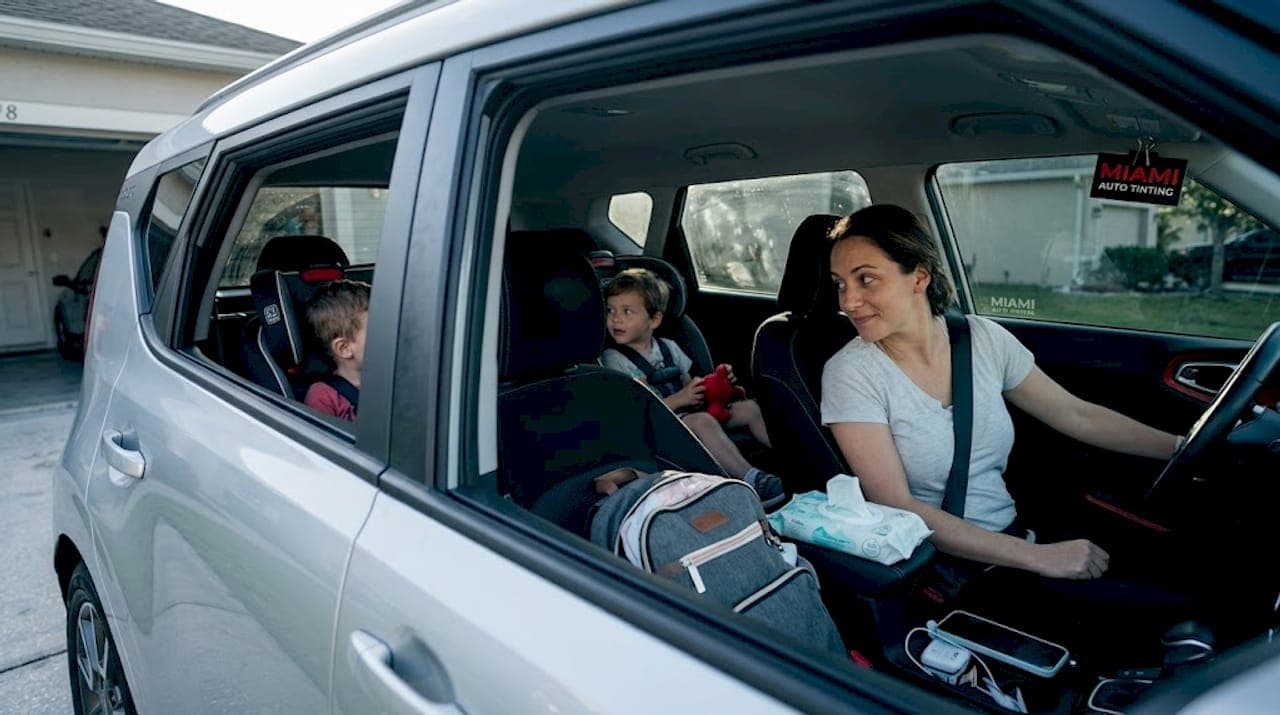
Miami-Dade's sun doesn't take a day off. Year-round, intense UV radiation pours through car windows and home glass, creating conditions that can seriously harm infants and young children. Research confirms that sunlight through windows risks infant dehydration, skin damage, and eye injury, even when your child appears to be safely indoors or in a shaded car seat. The challenge for Miami-Dade parents isn't just recognizing the danger. It's knowing which tint options actually deliver protection and which ones fall short. This guide walks you through the safest, most effective window tint solutions for your vehicle and your home.
Table of Contents
- What makes a window tint safe for children?
- Top child-safe tint solutions for vehicles
- Best window tint ideas for child-friendly homes
- Head-to-head: Comparing top tint options for families
- Our take: Why Miami parents shouldn't compromise on window tint safety
- Get expert window tinting to protect your family
- Frequently asked questions
Key Takeaways
| Point | Details |
|---|---|
| Miami sunlight risks | Kids face increased UV and heat danger from Florida sunshine indoors and in cars. |
| Top safety features | Ceramic and UV-blocking tints provide strong protection and comfort for children. |
| Legal compliance matters | Check local Miami-Dade regulations to ensure safe and legal tint choices for vehicles. |
| Professional installation is best | Well-installed commercial film beats store kits for durability and maximum safety. |
What makes a window tint safe for children?
With those risks clear, let's pinpoint the safety criteria you'll use to evaluate every tint option you encounter.
Not all window films are created equal, and when children are involved, the difference between a quality film and a cheap one matters far more than most parents realize. A tint that looks dark doesn't automatically block UV rays. A tint that feels cool to the touch doesn't guarantee heat rejection. Understanding what actually makes a film safe gives you a real framework for making the right call.
Here are the core characteristics to evaluate before committing to any tint:
- UV-blocking percentage: The best films block up to 99% of UV-A and UV-B rays. Look for films that specify UV rejection, not just visible light transmission (VLT). For children, anything below 95% UV rejection is worth questioning.
- Heat rejection rating: Total solar energy rejected (TSER) tells you how much heat the film stops. Higher TSER means a cooler interior, which directly reduces the risk of heat-related stress for infants and toddlers.
- Non-toxic materials: Films with solvent-based adhesives or dyes that off-gas volatile organic compounds (VOCs) are a concern in enclosed spaces. Ceramic and nano-ceramic films use inorganic compounds and are far safer for homes with babies.
- Shatter resistance: Safety films hold glass together on impact. For families with young children near large windows or sliding glass doors, this is a critical secondary benefit.
- Legal compliance: Florida law regulates how dark your vehicle tint can be. Front side windows must allow at least 28% of light through, and windshields can only have non-reflective tint above the AS-1 line. Going darker than the law allows can result in fines and, more importantly, reduced visibility that creates new safety risks.
The right tint for your vehicle balances legal compliance with maximum child protection. You don't have to sacrifice one for the other.
One often-overlooked point: infants and toddlers cannot regulate body temperature the way adults can. A car interior that feels warm to you can be genuinely dangerous for a six-month-old. Research on sunlight exposure through windows shows that even indirect or filtered sunlight through standard glass can trigger dehydration and skin damage in very young children. Standard factory glass blocks very little UV, which is why aftermarket films matter so much.
Pro Tip: When shopping for tint, always ask for the film's technical data sheet. It should list UV rejection percentage, TSER, and VLT separately. If a vendor can't provide this, that's a red flag.
Ceramic, nano-ceramic, and metalized films consistently outperform dyed films on every safety metric. They cost more upfront, but the protection gap is significant enough to justify the investment when your children's health is the priority. The car window tint benefits for Miami families go well beyond aesthetics.
Top child-safe tint solutions for vehicles
Now that you know what to look for, here's how leading vehicle tint options stack up for family safety.
Choosing the right automotive tint for a family vehicle means weighing protection, legality, and practicality. Miami-Dade parents have several strong options, each with distinct advantages depending on your vehicle type and your children's ages.
Ceramic window film is the gold standard for families. Films like 3M IR Series and Iviron Kollmax ceramic use nano-ceramic particles that block infrared heat and UV rays without metal layers that can interfere with GPS or phone signals. They stay color-stable over time, meaning they won't turn purple or bubble after a Miami summer. Top-quality ceramic films achieve up to 99% UV rejection, making them the strongest barrier between your child and the sun's most damaging rays.
3M Color Stable film is a step below ceramic in heat rejection but still delivers excellent UV protection and maintains its appearance for years. It's a practical middle-ground option for families who want reliable protection without the premium ceramic price tag.
Factory tint (the dark glass that comes standard on many SUVs and minivans) blocks some visible light but typically rejects very little UV radiation. It looks protective but often isn't. Pairing factory tint with an aftermarket UV-protective film dramatically improves real-world protection for children sitting in rear seats.
Removable shade films and static cling shades are popular for rear side windows. They're affordable and easy to install, but they don't seal to the glass, which means UV rays can still enter around the edges. They work as a supplement, not a replacement for proper film.
Here's a quick breakdown of vehicle tint options for families:
- Ceramic film (3M IR, Iviron Kollmax): Highest UV and heat rejection, signal-friendly, long-lasting. Best for families with infants.
- 3M Color Stable: Strong UV block, good durability, more affordable than ceramic. Great for older children and multipurpose vehicles.
- Factory tint plus UV film overlay: Combines existing glass with added protection. Cost-effective upgrade for newer vehicles.
- Removable static cling shades: Budget option for occasional use. Not a substitute for professional film.
When comparing tint options for your vehicle, always factor in where your children sit. Rear passengers, especially rear-facing infant seats, receive the most direct sun exposure on Miami roads.
Pro Tip: If your vehicle has rear-facing infant seats, prioritize the highest UV-rejecting film you can legally install on rear side windows. This is where your baby spends the most time in direct sun, and it's where standard glass offers the least protection.
Florida's tint laws also require that rear windows meet reflectivity limits. A professional installer who knows Miami-Dade regulations will keep you compliant while maximizing protection. Understanding UV protection from tinting is essential before making a final vehicle decision.
Best window tint ideas for child-friendly homes
Homes need tailored solutions too. Here are proven ideas for each room and risk level.
Vehicle tinting gets most of the attention, but Miami homes face the same UV and heat challenges. Large sliding glass doors, nursery windows, and play areas with south or west-facing exposure can funnel intense sun directly onto children throughout the day.
UV-filtering residential film works similarly to automotive ceramic film. Applied directly to glass, it blocks UV rays while maintaining visibility. For nurseries and play rooms, this is the most practical solution because it requires no hardware changes and doesn't alter the look of the room significantly.
Low-emissivity (Low-E) window film reduces heat transfer through glass. It's particularly effective in Miami's climate because it keeps rooms cooler without blocking natural light. Low-E film is ideal for living areas and play rooms where children spend long hours.
Decorative static cling film adds privacy and diffuses direct sunlight in spaces like bathrooms or ground-floor nurseries. It doesn't require adhesive, which makes it safe for homes with infants and easy to remove or reposition.
Safety and security film holds glass together if it breaks. For sliding glass doors and large windows near play areas, this adds a critical layer of protection against both UV exposure and accidental impact injuries.
Here's a comparison of home tint options to help you choose by room:
| Tint type | Best room | UV block % | Heat rejection | Non-toxic adhesive | Cost range |
|---|---|---|---|---|---|
| UV-filtering ceramic film | Nursery, play room | Up to 99% | High | Yes | $8-$15/sq ft |
| Low-E film | Living room, kitchen | 85-95% | Very high | Yes | $6-$12/sq ft |
| Decorative static cling | Bathroom, ground floor | 60-80% | Low | No adhesive | $2-$5/sq ft |
| Safety/security film | Sliding doors, large windows | 70-90% | Moderate | Yes | $7-$14/sq ft |
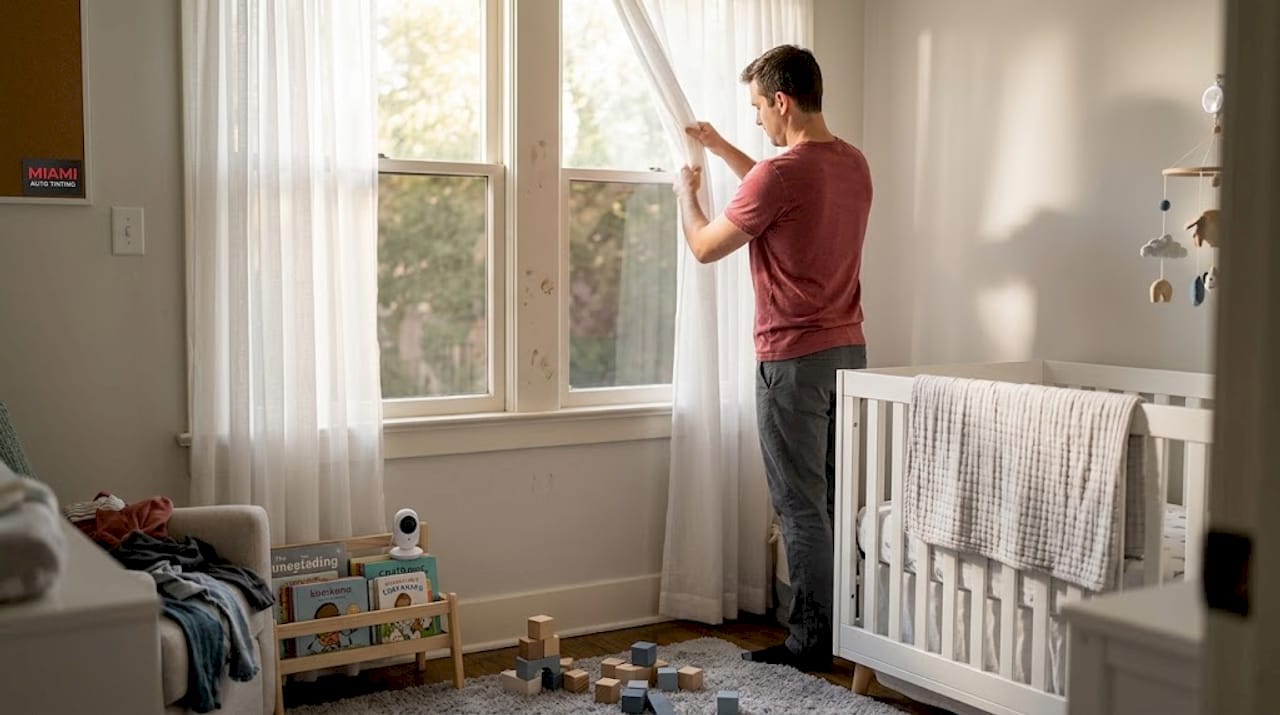
For nurseries specifically, the priority is non-toxic adhesive films with high UV rejection. Babies sleep for long hours near windows, and sunlight exposure through home windows can cause dehydration and skin damage even during nap time. A UV-filtering ceramic film on nursery windows is one of the most impactful child safety upgrades a Miami parent can make.
For play rooms, combine UV-filtering film with Low-E film on the most sun-exposed windows. This layered approach reduces both UV damage and heat buildup, keeping the room comfortable and safe during Miami's peak afternoon hours.
Head-to-head: Comparing top tint options for families
Confused by the options? This section puts them side by side so you can make a fast, confident decision.
| Feature | Ceramic film | 3M Color Stable | Low-E home film | Static cling |
|---|---|---|---|---|
| UV rejection | Up to 99% | Up to 99% | 85-95% | 60-80% |
| Heat rejection | Very high | High | Very high | Low |
| Durability | 10-15 years | 8-12 years | 10-15 years | 1-3 years |
| Signal interference | None | None | None | None |
| Non-toxic | Yes | Yes | Yes | Yes |
| Professional install needed | Yes | Yes | Recommended | No |
| Price range | $$$$ | $$$ | $$$ | $ |
Matching the right tint to your family's situation makes a real difference. Here are four common Miami family scenarios and the best tint match for each:
- Family with an infant (0-12 months): Ceramic film on all rear vehicle windows plus UV-filtering film on the nursery window. Infants are the most vulnerable to UV and heat, and these two upgrades cover their highest-exposure environments.
- Family with a toddler (1-3 years): 3M Color Stable on the vehicle combined with Low-E film on play room windows. Toddlers are mobile and spend time in more areas of the home, so broader coverage matters.
- Family with school-age children: 3M Color Stable or ceramic on the vehicle, safety film on sliding glass doors and large windows. Older children are more active near windows and glass doors, making shatter resistance a priority.
- Multipurpose family vehicle (SUV or minivan): Layer factory tint with ceramic overlay on rear windows, and use 3M Color Stable on front side windows for legal compliance and consistent protection throughout the cabin.
Professional installation is worth emphasizing here. As one industry expert put it:
"A film installed with bubbles, gaps, or improper adhesion loses a significant portion of its UV-blocking effectiveness. For child safety applications, professional installation isn't a luxury. It's part of the protection."
DIY kits rarely achieve the edge-to-edge seal that maximizes UV rejection. For families, the stakes are too high to accept a 70% job. Protecting your car interior is a secondary benefit, but child safety is the primary reason to insist on professional-grade installation.
Our take: Why Miami parents shouldn't compromise on window tint safety
Here's our candid perspective from years of working with local families.
We've installed tint for hundreds of Miami-Dade families, and the pattern we see most often surprises people: parents who invest in car seats, strollers, and organic baby products sometimes put off window tinting because it feels optional. It isn't. The sun in Miami doesn't care that your child is sitting in the shade of a car seat canopy or napping in a room with the blinds half-closed. UV rays scatter and penetrate in ways that aren't visible.
The other thing we've learned is that off-the-shelf kits from big-box stores rarely perform the way the packaging claims. They fade, peel, and lose UV-blocking capacity within a year or two. Families end up paying twice: once for the kit and once for the professional installation they needed from the start.
The real difference for Miami families isn't just comfort. It's the cumulative reduction in UV exposure over months and years of daily driving and time at home. Professional-grade ceramic and 3M films come with manufacturer warranties that guarantee performance. That's the kind of accountability a DIY kit can't offer. When your child's health is the baseline, the math is straightforward.
Get expert window tinting to protect your family
If you're ready to act, here's how our local experts make child-focused window tinting effortless.
We bring professional-grade ceramic window tint in Miami directly to your home or office, so you never have to load the kids into the car for an appointment. Our mobile car window tinting service covers all of Miami-Dade County, and we use only 3M IR, 3M Color Stable, and Iviron Kollmax ceramic films. These are the same films that meet the UV and heat rejection benchmarks this guide covers. We also handle residential installations for nurseries, play rooms, and sliding glass doors.
Get a free quote for your vehicle or home today. Our team knows Miami-Dade's tint laws, your family's safety needs, and the films that deliver on both. Explore our 3M ceramic film options and reach out to schedule at your convenience.
Frequently asked questions
How does window tinting protect children inside cars and homes?
Window tinting blocks harmful UV rays, reduces interior heat, and helps prevent dehydration and skin damage for kids exposed to sunlight through glass.
What type of tint is safest for homes with infants?
Ceramic or non-metallic UV-blocking films with non-toxic adhesives, including Low-E options, are the safest choice for nurseries and infant spaces, as confirmed by research on window sun exposure.
Is window tinting legal for all vehicle windows in Miami-Dade?
No. Florida law requires front side windows to allow at least 28% of light through, and windshield tint is restricted to the area above the AS-1 line. Always confirm local regulations before installation.
Can window tint installation help prevent fading of car seats and home furniture?
Yes. By reducing UV transmission through glass, quality window film prevents the UV-driven fading and material breakdown that affects car seats, upholstery, and home furniture over time.