
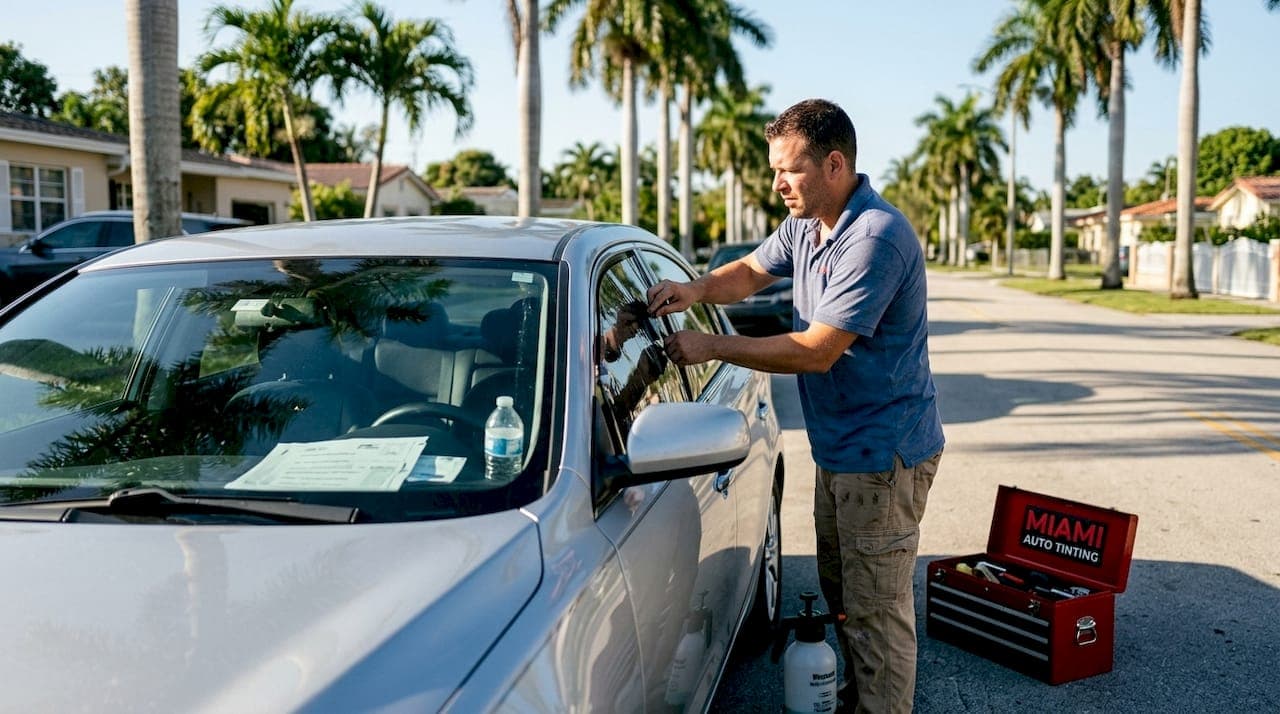
If you park outside in Miami-Dade, you already know the drill. The sun hits your car like a furnace, your steering wheel is untouchable by noon, and anybody walking past can see everything you own sitting on your seats. Window tinting solves all three problems, but figuring out what's legal, what's quality, and who to trust for mobile installation can feel like a maze. This article cuts through the noise and answers the real questions Miami car owners ask before they book a tinting appointment.
Table of Contents
- Florida window tint laws explained
- Mobile window tinting options in Miami-Dade
- Benefits of professional window tinting
- Common window tinting myths in Miami
- The Miami mobile tinting 'reality check': what most guides miss
- Get a quote from Miami's trusted mobile window tinting experts
- Frequently asked questions
Key Takeaways
| Point | Details |
|---|---|
| Florida tint laws matter | Knowing Miami-Dade legal limits keeps you safe from fines and ensures your vehicle looks sharp. |
| Pick trusted mobile installers | Top-reviewed services deliver fast, quality installation with premium films and reliable guarantees. |
| Professional application has perks | Expert tinting maximizes privacy, UV protection, and durability while avoiding common DIY mistakes. |
| Don’t believe common myths | Modern window tints won’t crack glass and maintain clarity for safe driving. |
| Weather affects mobile tinting | Miami’s climate can impact scheduling for mobile tint jobs, so flexibility pays off. |
Florida window tint laws explained
Let's clarify what the law actually requires when it comes to window tint in Miami-Dade.
Window tint laws in Florida are specific, and getting them wrong can cost you money and hassle. The law uses a measurement called VLT, which stands for Visible Light Transmission. VLT measures what percentage of visible light can pass through your window film and glass combined. A lower number means a darker tint.
Here is how Florida tint laws break down by vehicle type:
| Vehicle type | Front side windows | Back side windows | Rear window | Windshield |
|---|---|---|---|---|
| Sedans | 28% VLT minimum | 15% VLT minimum | 15% VLT minimum | Non-reflective strip above AS-1 line |
| SUVs, vans, trucks | 28% VLT minimum | 6% VLT minimum | 6% VLT minimum | Non-reflective strip above AS-1 line |
That distinction between sedans and SUVs matters a lot. If you drive an SUV or truck, you have significantly more flexibility on your rear windows and can go considerably darker without breaking any rules.
Reflectivity limits are another layer of the law that many car owners overlook:
- Front side windows: maximum 25% reflectivity
- Rear side windows: maximum 35% reflectivity
- No red, amber, or blue tint colors permitted on any window
The reflectivity rule exists because a highly mirror-like window creates glare for other drivers, which becomes a safety issue especially on Miami's sun-soaked roads. Stick to neutral or gray films and you will be fine on the color front.
Medical exemptions are worth knowing about if you or a frequent passenger has a medical condition that requires reduced sun exposure. Florida does allow darker tint than standard limits with a physician certificate on file. Conditions like lupus, photosensitivity disorders, and certain skin conditions commonly qualify. You need to carry documentation in the vehicle.
When it comes to consequences, violations in Florida typically result in fines ranging from $100 to $500 depending on the county and whether it is a repeat offense. Miami-Dade law enforcement does enforce tint rules, and you can be stopped specifically for tint that appears too dark. Beyond the fine, you may also be required to remove or replace the non-compliant film, which means paying twice for tinting.
Pro Tip: Before booking any tint job, confirm the VLT percentage the installer plans to apply on your front side windows. Anything below 28% on those windows in a sedan puts you outside legal limits in Florida, even if it looks great.
We cover service areas in Miami across Miami-Dade, so no matter what neighborhood you are in, staying legal is something we take seriously with every install.
Mobile window tinting options in Miami-Dade
With the laws set, your next step is finding services that match your needs and local standards.
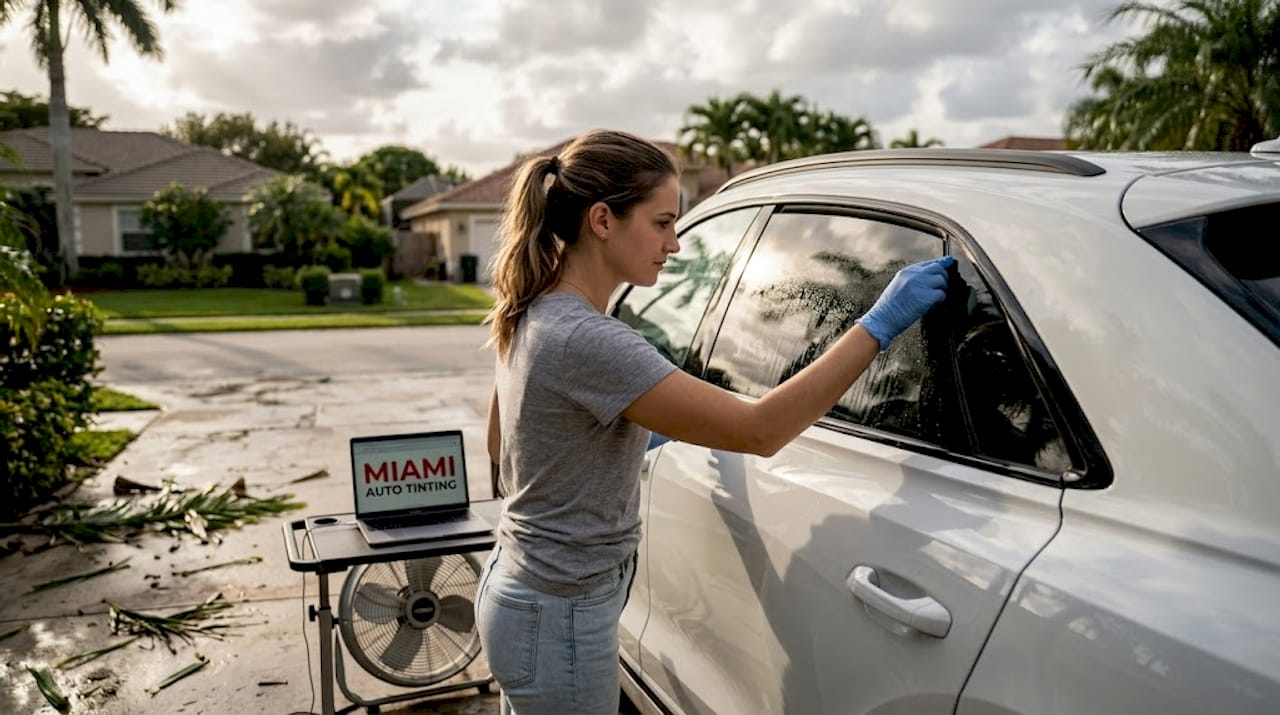
Mobile tinting has a real advantage over shop-based tinting: a technician comes to your home, office, or wherever your car is parked. No dropping off your car, no waiting in a shop lobby, no arranging rides. But not every mobile tinting provider delivers the same quality, and in a city like Miami, there are some extra factors to consider.
Weather is a real variable. Tint film needs to adhere properly, and humidity, rain, or dust can all affect how well it bonds during installation. Some providers avoid mobile jobs on rainy or very windy days because the environment can cause bubbling or contamination under the film. When you get a mobile tint quote, it is worth asking how the provider handles weather rescheduling policies.
Here is a comparison of what separates reliable mobile tinting providers from average ones:
| Feature | Reliable provider | Average provider |
|---|---|---|
| Film brand | 3M IR, 3M Color Stable, Iviron Kollmax Ceramic | Unknown or generic brand |
| Install software | Precision cut computer software | Hand-cut on vehicle |
| Install time | 1 to 2 hours | 2 to 4 hours or more |
| Warranty | Lifetime no-fade guarantee | Limited or no warranty |
| Reviews | 4.6 stars or higher with volume | Few reviews or mixed ratings |
Looking at mobile tinting reviews across Miami-Dade, top-rated providers like The World Auto Tinting hold a 5.0 rating across 725 reviews, while others like Reddy Services come in at 4.9 across 100 reviews. These numbers are significant because they reflect real-world consistency at scale, not just a few satisfied customers.
Precision cut software deserves a special mention. Instead of cutting the film freehand on your car door, a quality mobile provider uses computer software to pre-cut the film perfectly to your vehicle's exact window dimensions. This eliminates the risk of scratching window seals, reduces install time, and results in a much cleaner edge finish. If a provider does not use this method, ask why.
What to look for when choosing a mobile tinting service:
- Verified reviews on third-party platforms, not just their own website
- Clear statement of which film brand and product line they use
- Transparent pricing that specifies VLT percentage options
- Weather rescheduling policy included upfront
- Warranty documentation provided in writing after install
If you are in the Coral Gables area, Coral Gables mobile tint service brings the install directly to your address with the same quality standards applied throughout Miami-Dade.
Pro Tip: Always ask your mobile tinting provider to specify which film product line they are installing. A provider who uses 3M IR or ceramic film like Iviron Kollmax will give you measurably better heat rejection than a provider using entry-level polyester film, even if the tint looks identical from the outside.
Benefits of professional window tinting
Choosing the right installer matters, especially since professionally applied tint offers benefits you just can't get from DIY.
The gap between professional installation and a DIY kit from an auto parts store is wider than most people expect. Here is a breakdown of what professional tinting actually delivers for Miami car owners:
1. Longevity with a warranty that backs it up Premium films like 3M IR and Iviron Kollmax ceramic come with lifetime no-fade guarantees from authorized installers. This means the film will not turn purple, bubble, or peel under normal conditions for as long as you own the car. That is not something a $30 DIY kit will ever offer.
2. Superior UV and heat protection Ceramic tint blocks up to 99% of ultraviolet radiation. Beyond protecting your skin during drives, this protects your dashboard, leather seats, and interior trim from fading and cracking. In a Miami summer, interior temperatures can easily exceed 160 degrees Fahrenheit in a parked car. Quality film pushes those numbers down significantly, which is kinder on both you and your upholstery.
3. No bubbles, no peeling According to tinting myths debunked research and professional experience, bubbles and peeling are almost exclusively problems with improper installation or low-quality film. Professional installers use slip solutions, squeegees designed for the task, and pre-cut film to ensure the adhesive bonds evenly across the entire window surface with no air pockets.
4. Post-install care done right means lasting results Professional installation guidelines are clear: after getting your windows tinted, do not roll them down for 2 to 3 days. This curing period allows the adhesive to fully bond with the glass. Rolling a window down before the film has cured can cause it to peel from the edges. Your installer should tell you this clearly before they leave.
5. Privacy without sacrificing your outward visibility A properly installed dark tint gives people outside almost no visibility into your vehicle during daylight. From inside, however, your view out remains clear and largely unaffected. This is a design characteristic of quality window film and one of the most misunderstood aspects of tinting.
6. Glare reduction for safer driving Anyone who has driven the Palmetto or US-1 heading into the afternoon sun knows how brutal glare can be. Tinted windows reduce the intensity of direct and reflected sunlight, which reduces eye strain and improves your reaction time and focus while driving.
The combination of longevity, protection, aesthetics, and comfort makes professional installation a clear financial decision. You pay more upfront, but you get results that last and actually perform the way tint is supposed to.
Common window tinting myths in Miami
Before you commit, it is important to separate fact from fiction, especially around how tinting impacts your vehicle in Miami-Dade conditions.
Misinformation around window tinting is everywhere, and some of it genuinely stops people from making a smart upgrade. Here are the most persistent myths and what is actually true.
Myth: Window tinting will crack or damage your glass This is simply not accurate for modern vehicles. Contemporary window film is applied to the interior surface of your glass using a water-activated adhesive. It does not interact with the glass structure in any way that causes cracking. Older concerns about thermal stress cracking were linked to very old film types applied to older tempered glass. Modern ceramic and IR films are thermally stable and designed to work in high-heat environments exactly like South Florida's climate.
Myth: Dark tint means you can't see out clearly People assume that because a tinted window looks dark from outside, it must be hard to see through from inside. This is not how it works. Quality tint films are optically engineered to reduce incoming light while maintaining outward clarity. You can see how debunked Miami tint myths break down this distinction in detail, but the short version is: the contrast between bright exterior light and your darker interior is what creates the privacy effect, not reduced outward visibility.
Myth: Any tint that looks dark is illegal Legal compliance is about measured VLT percentage, not visual appearance. A 28% VLT film on your front side windows is perfectly legal in Florida and will look noticeably darker than factory glass. What matters is the measurement, not the look.
"Modern window tinting does not crack automotive glass, and properly tinted windows allow a clear view outward while maintaining privacy from outside. Most concerns about tinting are based on outdated information." — Home Window Tint Myths Debunked, 2026
Myth: DIY tinting saves money in the long run DIY kits are cheaper upfront. After accounting for the cost of mistakes, removal of poorly applied film, and the need for a professional redo, the actual total cost usually exceeds professional pricing. In Miami's heat and humidity, DIY film also tends to fail much faster than professionally installed premium film.
Myth: Tinting is just an aesthetic choice Tinting serves real functional purposes: UV blocking, heat reduction, glare control, and interior protection. The visual upgrade is a side benefit, not the primary reason to tint in Miami-Dade.
The Miami mobile tinting 'reality check': what most guides miss
Having busted some myths, let's get real about what actually matters for Miami-Dade mobile tinting.
After working in this market, the biggest wildcard is not what film to choose or even which laws apply. It is weather timing. Miami's afternoon storms between June and October are fast and unpredictable. A morning booking can turn into a rain delay by 2 PM. The best mobile providers plan their installs for morning slots and communicate clearly if conditions change.
The second thing veteran Miami car owners wish they had known sooner: price shopping on tinting almost always costs more later. A $99 tint job from a provider using off-brand film will look fine for six months. By month eighteen, you will see bubbling, purple discoloration, and edge peeling. You will then pay a real installer to remove the old film and redo the job properly. That process adds labor cost that you could have avoided.
When choosing a provider, ask specifically about real tinting costs upfront, including what film brand, VLT options, and warranty terms are included. A provider who answers these questions directly and specifically is almost always more trustworthy than one who gives vague answers. Legal compliance and quality are not opposites. You can have a stylish, dark-looking tint that is completely within Florida law, and the right installer will help you find that balance.
Get a quote from Miami's trusted mobile window tinting experts
If you are ready to protect your ride and upgrade its look, getting a quote from a trusted mobile provider is your next move.
We bring professional mobile tinting directly to your location across Miami-Dade, using only premium films including 3M IR, 3M Color Stable, and Iviron Kollmax ceramic tint. Every install uses precision cut software to ensure a perfect fit with no guesswork. Our team handles everything from explaining VLT options to providing written warranty documentation before we leave your driveway. Check out ceramic tint at your place or explore our full doorstep mobile tint options. Get started with affordable tint pricing that is clear, honest, and competitive.
Frequently asked questions
What is VLT and why does it matter for window tinting?
VLT stands for Visible Light Transmission, and it determines how much light passes through your window tint, directly affecting both legal compliance and your driving visibility. Florida law requires sedans to have at least 28% VLT on front side windows, making it a critical number to confirm before installation.
Are there medical exemptions for window tint laws in Florida?
Yes, medical exemptions are available with a physician certificate, allowing some drivers to legally use darker tint than the standard limits permit. You must carry the documentation in your vehicle when driving.
How long does mobile window tint installation take in Miami?
Professional mobile installers typically complete the job in 1 to 2 hours using precision cut software that pre-cuts film to exact window dimensions for efficiency and accuracy.
Is it true that window tinting can crack my car's glass?
No, modern window tinting will not crack automotive glass. This myth is based on outdated concerns about old film types and older glass, neither of which applies to contemporary vehicles.
Can I roll down my windows immediately after tinting?
You should wait 2 to 3 days before rolling down freshly tinted windows to allow the adhesive to fully cure and bond with the glass surface.