
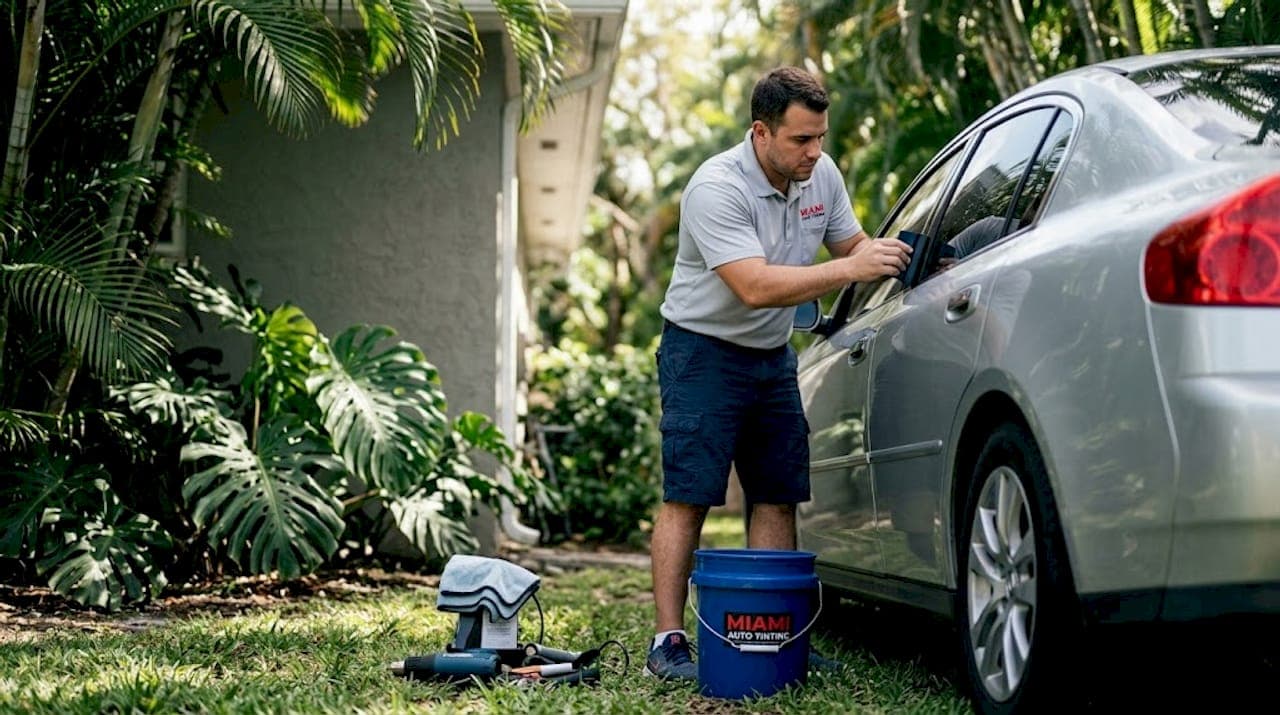
Window tinting in Miami is one of those expenses that seems straightforward until you're actually standing at the counter trying to make sense of wildly different quotes, confusing film options, and laws that can cost you hundreds if you get them wrong. Miami-Dade car owners often walk into a tint shop with a rough number in mind and walk out having spent far more than expected, or worse, discovering weeks later that their tint is illegal or already starting to peel. This guide cuts through that uncertainty by giving you a clear picture of what professional tinting actually costs in 2026, what drives those numbers, and how to protect your investment from the first day forward.
Table of Contents
- Understanding window tinting costs in Miami
- What influences your tinting budget: Factors to consider
- Budgeting for legal compliance: Florida tint laws in Miami-Dade
- Don't overlook aftercare: Avoid hidden re-tinting costs
- Step-by-step: How to set your Miami tinting budget
- A Miami expert's take: The budgeting mistake car owners keep making
- Get professional window tinting help in Miami
- Frequently asked questions
Key Takeaways
| Point | Details |
|---|---|
| Know the true price tiers | Window tinting in Miami typically ranges $160 to $650 depending on service and materials. |
| Check Florida’s legal limits | Budget for the correct VLT to avoid fines and expensive re-tinting later. |
| Plan for aftercare | Post-installation rules are key to avoiding repairs that cost hundreds more. |
| Shop smart, not just cheap | A slightly higher upfront cost can save a lot by ensuring warranty, compliance, and long-term performance. |
| Always ask for an itemized quote | Breakdown labor, material, and any extra shop fees before booking to avoid budget surprises. |
Understanding window tinting costs in Miami
Most Miami drivers are surprised to learn that window tinting prices vary by a factor of four or more depending on materials and where you go. The numbers aren't random. They reflect real differences in film quality, labor time, and what kind of warranty protection you're getting.
According to Ecostify's Miami 2026 estimates, Miami window tinting breaks down into three clear tiers:
| Tier | Total price range | Labor cost | Material cost |
|---|---|---|---|
| Budget | $160–$330 | $80–$150 | $90–$180 |
| Mid-range | $230–$550 | $120–$180 | $110–$370 |
| Premium | $550–$650 | $150–$210 | $400–$440 |
At the budget tier, you're usually getting a standard dyed film that blocks some light but offers limited heat rejection. It fades faster in Miami's relentless sun and rarely comes with a solid warranty. Mid-range films include carbon and basic ceramic options that perform meaningfully better in a city where your car can turn into an oven in under ten minutes. Premium tiers typically include top-shelf ceramic films like 3M IR, 3M Color Stable, or Iviron Kollmax ceramic, which are engineered to reject infrared heat while maintaining clarity and color stability over years of use.
Key factors that push your quote up or down:
- Vehicle size and window count. An SUV or minivan has more glass surface than a compact sedan. More glass means more film and more labor.
- Window shape and curves. Complex curves on rear windshields take more time to install cleanly.
- Your chosen film. Premium ceramic film costs significantly more per square foot than dyed film.
- Shop overhead. A dealership or high-traffic shop has higher costs, which they pass on to you.
- Mobile vs. in-shop service. Mobile tinting offers the convenience of coming to you, which affects how you should compare total value.
For a full breakdown of tinting tips for Miami weather conditions, the link covers useful context on why film quality matters so much in South Florida specifically.
What influences your tinting budget: Factors to consider
You know the average costs, but what makes your situation unique? Here's what can raise or lower your quote:
Car type and window configuration play a bigger role than most people expect. A two-door coupe might cost $230 all-in at a mid-range shop. A seven-passenger SUV with the same film could run $480 or more because you're covering six to eight windows instead of four.
Shop selection matters enormously. Dealerships can charge more than independent shops for the same service, so independent shops with strong reviews and a solid warranty often deliver better overall value. Read reviews carefully and specifically look for comments about how the tint holds up six months or a year after installation, not just the day it was done.
Film material is a long-term cost decision, not just a style choice. Standard dyed film may look great on day one but fades to a purple hue within a year of Miami sun exposure. Ceramic films like 3M IR and Iviron Kollmax maintain their color and performance for a decade or longer. When you're choosing the best tint for Miami, the upfront cost difference between dyed and ceramic can be $200 to $300. But replacing a dyed film every 18 months costs far more over five years than buying ceramic once.
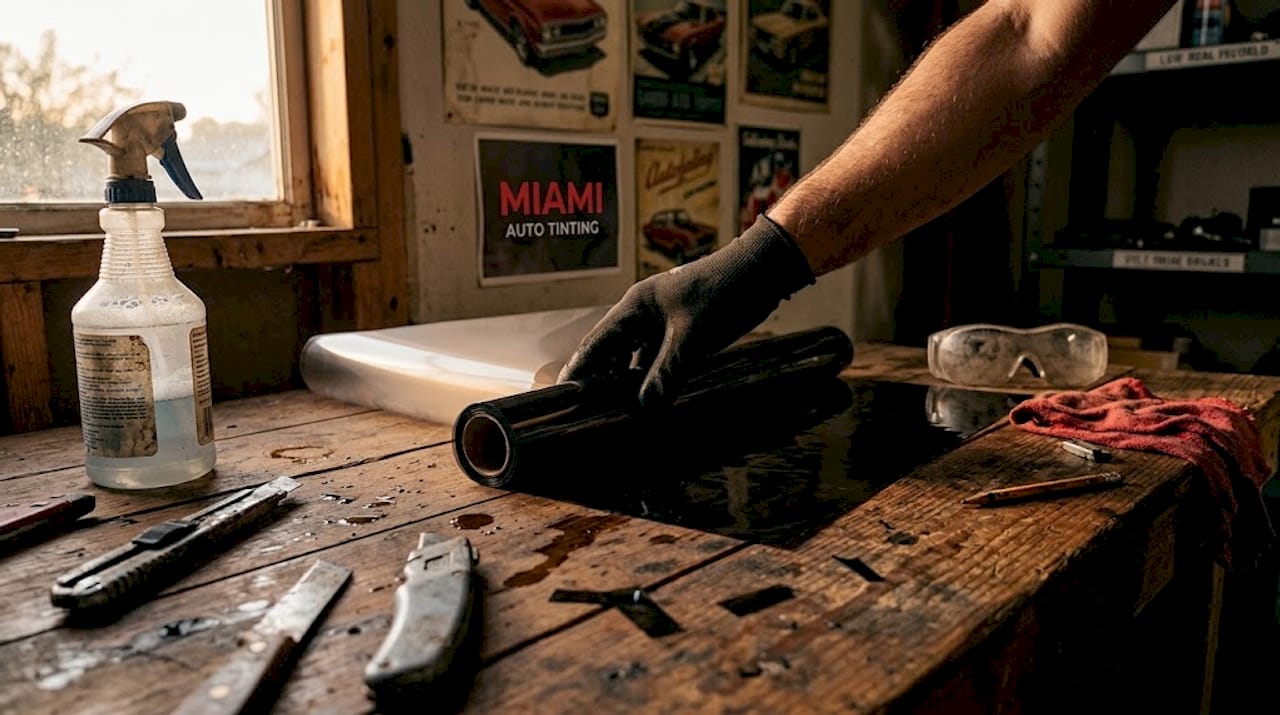
Mobile tinting service adds real convenience, especially for busy Miami schedules. The technician comes to your home, office, or wherever works for you. Price-wise, mobile services are often comparable to in-shop rates, though it's worth getting quotes from both. Understanding how Miami climate tint considerations affect your film choice will also help you ask smarter questions during the quoting process.
Questions to ask before you commit to any shop:
- What brand and model of film will you be using?
- Is the warranty manufacturer-backed or just the shop's promise?
- Do you guarantee legal compliance with Florida tint laws?
- Is there an additional charge for curved rear windshields?
- Do you offer mobile installation?
Pro Tip: Get at least three quotes for the same film type and vehicle, not just the cheapest option listed on a website. Ask each shop to specify the exact film by name so you're comparing identical products, not just price tags.
Budgeting for legal compliance: Florida tint laws in Miami-Dade
With your priorities and shop choices in mind, don't forget Miami-Dade's tint laws. Breaking them can wipe out any early savings faster than you think.
Florida law requires front side windows to allow at least 28% VLT (Visible Light Transmission), meaning 28% of outside light must pass through. Rear windows have different minimums depending on whether the vehicle is a sedan or SUV. Installing film that's too dark means paying to remove and redo it entirely.
| Window position | Minimum VLT (Florida law) | Common fine range |
|---|---|---|
| Front side windows | 28% VLT or more | $100–$200 per offense |
| Rear side windows | 15% VLT or more | $100–$200 per offense |
| Rear windshield | 15% VLT or more | $100–$200 per offense |
| Windshield (top strip) | Non-reflective tint only, above AS-1 line | $100–$200 per offense |
Important: If your tint fails a VLT inspection, you'll pay for removal plus a full new tint job. That's an added $200–$800 on top of your original cost. Legal compliance isn't optional. It's a budget item.
Points to factor into your compliance budget:
- Ask your shop to confirm in writing that the film they're using meets Florida's 28% front window minimum.
- Request a VLT reading certificate after installation. Some professional shops provide one automatically.
- Know that aftermarket reflective films are prohibited on front side windows in Florida regardless of VLT.
For a full rundown of exactly what's allowed in your county, the Miami window tint legal guide covers current requirements clearly.
Don't overlook aftercare: Avoid hidden re-tinting costs
You've picked your shop and checked the law. Now protect your investment with this critical piece: aftercare.
Most Miami car owners don't realize that what you do in the 72 to 120 hours after tinting can determine whether your film lasts one year or ten. Failure to wait during the cure period can cause peeling and bubbling, and re-tinting can cost anywhere from $200 to $800. That's essentially paying for your tint job twice.
Here's why it happens. After installation, the adhesive between the film and glass needs time to bond and cure. Rolling down your windows too soon breaks that bond at the edges, leaving gaps where bubbles and lifting begin. In Miami's heat and humidity, that process happens even faster than in other climates.
Aftercare steps to protect your tint:
- Do not roll your windows down for at least 3 to 5 days after installation.
- Avoid car washes (especially pressure washes) for the first two weeks.
- Do not use ammonia-based cleaners on tinted glass, ever.
- If you see small water bubbles right after installation, don't panic. They're normal and will dry out within a week in Miami's heat.
- If bubbles remain after 10 days, contact your installer immediately. That's a sign of poor adhesion or a film defect.
| Aftercare mistake | Likely damage | Estimated repair cost |
|---|---|---|
| Rolling windows down too soon | Edge lifting and peeling | $200–$500 |
| Pressure washing within two weeks | Film delamination | $300–$800 |
| Using ammonia cleaners | Discoloration and haze | $200–$600 |
| Parking in direct sun daily (no shade) | Accelerated fading | Film replacement over time |
Pro Tip: Schedule your tinting appointment on a Thursday or Friday so the 3 to 5 day curing window falls over the weekend. You're less likely to need to open windows during days you're not commuting.
Good heat prep tint advice also includes practical tips on parking strategies and cleaning routines that extend film life significantly.
Step-by-step: How to set your Miami tinting budget
Ready to commit? Here's how to confidently set a final budget for your car's tint upgrade:
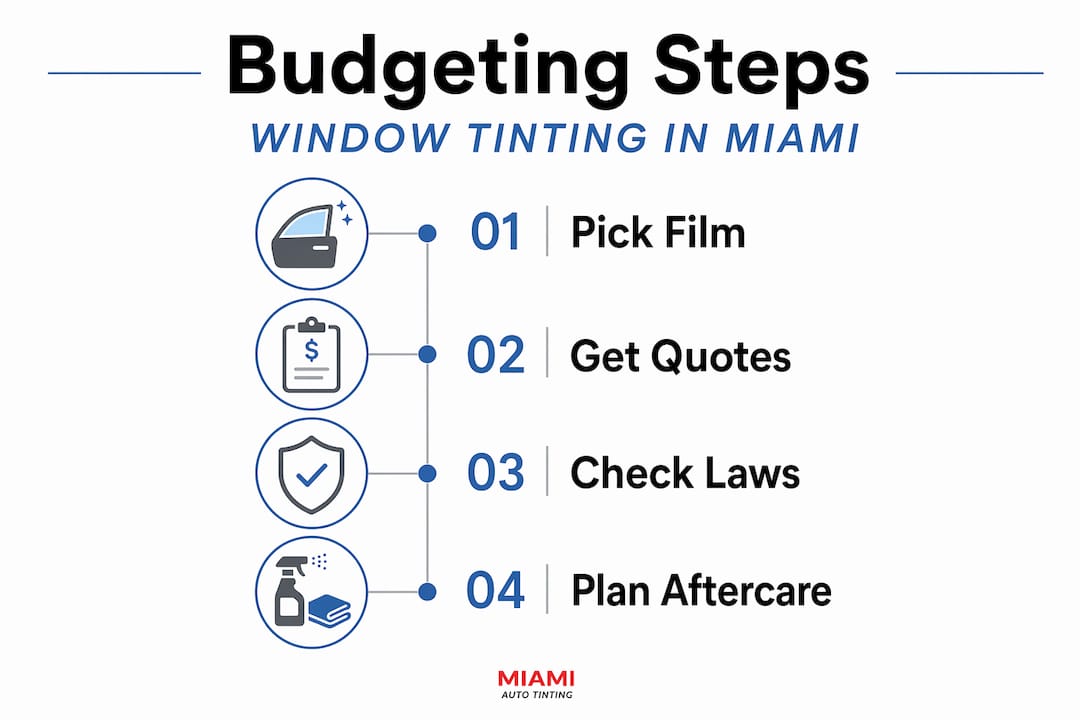
A solid budget accounts for more than just the installation quote. Miami tinting budgets should account for labor, material, legal compliance, and aftercare, not just the cheapest upfront price. Miss any one of those and you'll likely end up paying for it later.
Follow this checklist before you book:
- Identify your vehicle type. Sedan, SUV, coupe, or truck. Larger vehicles cost more. Know your starting point.
- Decide on film quality. Budget ceramic is better than premium dyed if long-term heat rejection matters to you in Miami.
- Confirm Florida VLT compliance. Ask every shop whether the tint they're recommending meets the 28% front window rule.
- Get at least three itemized quotes. Request a breakdown of labor versus materials so you're comparing apples to apples.
- Ask about warranty specifics. A lifetime warranty backed by the manufacturer (like 3M's warranty) is worth more than a shop's verbal promise.
- Budget for aftercare supplies. A quality microfiber cloth and ammonia-free glass cleaner cost under $20 and extend film life significantly.
- Add a 15% buffer. Curved windshields, hard-to-reach windows, or film upgrades at the last minute are common budget busters.
Check out Miami mobile tinting costs if you want a detailed look at how mobile service pricing compares to traditional in-shop options in your area.
Pro Tip: Ask shops whether they offer discounts for multiple vehicles, referrals, or military/first responder status. Many independent Miami shops run seasonal promotions that never get advertised online.
A Miami expert's take: The budgeting mistake car owners keep making
Now you've got the framework. Here's the inside perspective from professionals who've seen Miami's most common tinting regrets up close.
The single most repeated mistake is treating window tinting as a commodity purchase, meaning people shop for the lowest price the same way they'd shop for the cheapest gas. That mindset works fine when you're buying the same product at every location. But window tinting is not the same product at every location. The difference between a $180 budget tint and a $550 ceramic installation isn't just the film. It's the adhesive quality, the installer's skill level, the warranty backing, and most critically, how your car feels on the inside every single day for the next several years.
Here's a scenario we see regularly. A driver in Miami picks a $200 tint job at a quick shop, saves $300 compared to a ceramic option. Six months later, the film starts turning purple and lifting at the edges. They pay $350 for removal and a redo, now spending $550 total and losing months of comfort they didn't need to lose. The driver who bought the tinting essentials for Miami grade ceramic film upfront is still driving in comfort three years later without a second thought.
The hidden cost that catches people most off guard is the ticket-and-redo scenario. A car owner has dark limo tint installed by a shop that doesn't check VLT compliance. They get pulled over twice in three months, pay fines, and then pay to have the tint stripped and redone legally. Total damage? Over $700 in completely avoidable expenses.
Miami's climate is genuinely extreme by American standards. The UV index regularly hits 11 or higher. Interior temperatures in a parked car can exceed 160 degrees Fahrenheit. Cheap film simply wasn't engineered for those conditions. Investing in a quality film from a reputable installer with a real warranty isn't an upgrade. In Miami, it's the baseline.
Get professional window tinting help in Miami
With your budget set, working with the right Miami-Dade professionals ensures comfort, compliance, and long-term value for every dollar you spend.
At South Miami Tint, we offer mobile window tinting across Miami-Dade using 3M IR, 3M Color Stable, and Iviron Kollmax ceramic films, all of which are engineered for Florida's intense heat and UV conditions. Every installation is done to Florida legal standards, and we back our work with manufacturer-supported warranties.
Whether you want shop-quality results at your home or office, or you're specifically looking for Miami ceramic tinting that blocks infrared heat without sacrificing visibility, we make it easy to get exactly what you need. You can see Miami mobile tinting prices directly on our site, or explore our full lineup of Miami 3M tint options to find the right fit for your vehicle and budget. Request your quote today and get clarity on the real cost before you book.
Frequently asked questions
What's the cheapest legal window tint in Miami-Dade?
Legal budget tinting starts around $160–$330 depending on your vehicle and shop, but always verify it meets Florida's 28% VLT requirement for front side windows before committing to any price.
Is mobile window tinting more expensive in Miami?
Mobile tinting costs are often close to in-shop rates, with travel and setup sometimes adding a small fee. Always get quotes from both options to compare true value.
What happens if my tint is too dark for Miami-Dade law?
If your tint doesn't meet Florida's VLT minimums, you could face fines plus removal and re-tinting costs of $200–$800, making illegal tint one of the costliest mistakes to fix.
How can I keep my tint from peeling or bubbling after installation?
Follow your shop's aftercare instructions, especially the 3 to 5 day window-up rule after installation. Skipping this step breaks the adhesive bond and leads to peeling, bubbling, and expensive repairs.