
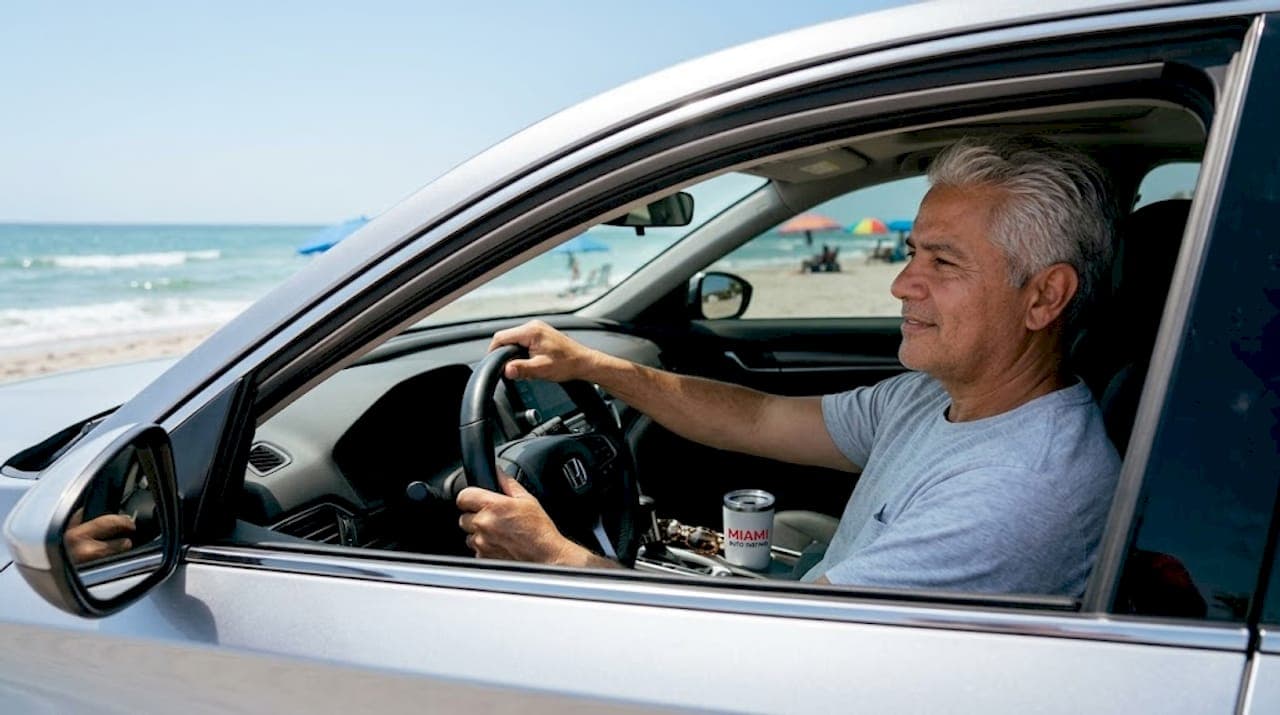
Most Miami drivers assume that going darker with window tint means solving their glare problem. It's an understandable assumption, but it's also one of the most common mistakes made at the tint shop. The truth is that film technology and legal VLT (visible light transmission) levels matter far more than raw darkness when it comes to actual comfort and safety. This guide breaks down how tinting really works to fight glare, what Miami-Dade laws require, and how to pick the right film so you're not squinting on the Palmetto or sweating through Brickell traffic.
Table of Contents
- Why glare is a problem for Miami drivers
- How tinted windows reduce glare: Technology explained
- Miami-Dade tinting laws: Glare reduction within legal limits
- Choosing the right tint for your Miami vehicle
- What most guides miss: Practical truths about window tint and glare
- Get professional glare reduction with Miami experts
- Frequently asked questions
Key Takeaways
| Point | Details |
|---|---|
| Glare reduction depends on film type | Ceramic and advanced films outperform simple dark tints for safe, comfortable driving in Miami. |
| Legal compliance is crucial | Staying within Miami-Dade's 28% VLT minimum is key to avoiding tickets while cutting glare. |
| Light, high-tech tints work best | Legal ceramic tints give optimal glare reduction and cabin comfort without night vision or enforcement tradeoffs. |
| Professional installation matters | Trusting experts ensures you get the right film, a flawless fit, and ongoing peace of mind. |
Why glare is a problem for Miami drivers
Miami sits at roughly 25 degrees north latitude, meaning the sun beats down at an intense angle for most of the year. Unlike northern cities where glare is a seasonal headache, Miami drivers deal with punishing sunlight every single day. Add the ocean, the Biscayne Bay, countless glass-faced towers, and endless stretches of pale concrete, and you have one of the most glare-saturated driving environments in the country.
Glare comes from three main sources in Miami:
- Direct solar glare from a low morning or late afternoon sun cutting straight through your windshield
- Reflected glare bouncing off wet roads, standing water after rain, and the bay
- Ambient glare radiating off white concrete barriers, chrome bumpers, and glass buildings lining US-1 and Brickell Avenue
Each of these creates real safety problems. Eye strain builds up over a commute, slowing your reaction time and making it harder to judge distances. Glare-induced squinting narrows your field of vision, meaning you can miss a cyclist or a merging car. For Miami commuters spending 30 to 90 minutes in traffic each day, these effects are cumulative and serious.
"Window tinting isn't just a comfort upgrade in Miami. It's a genuine safety tool when done right."
The car window tinting benefits for Miami drivers go far beyond aesthetics. Properly installed tint film dramatically cuts the light and heat entering your cabin, reducing both physical discomfort and visual stress. The 3M Crystalline series rejects up to 64% of total solar energy and 99% of infrared (IR) radiation, cooling your vehicle interior by up to 47°F compared to untinted glass. That level of performance changes your daily drive in ways that a cheap, dark film simply cannot.
With the stakes clear, it's vital to understand how tinting technology actually works to reduce glare.
How tinted windows reduce glare: Technology explained
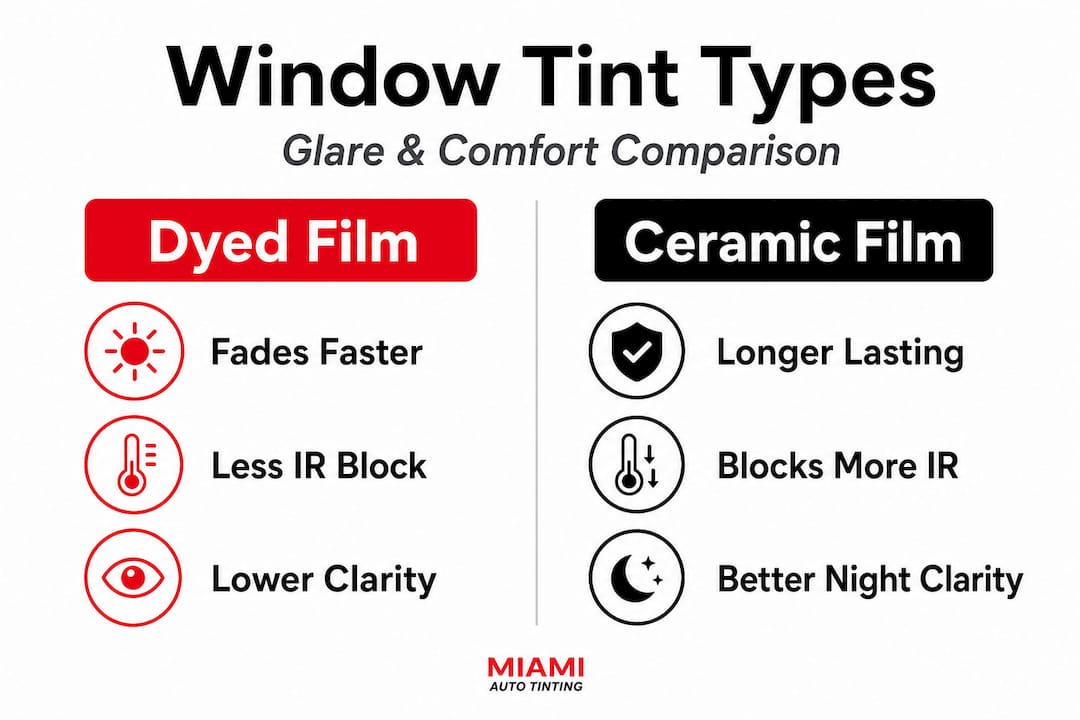
Here's what most people don't realize: the darkness of a film and its performance are two very different things. A cheap dyed film at 15% VLT will block more visible light than a ceramic film at 50% VLT, but the ceramic film will outperform it on every meaningful metric, including glare reduction, heat rejection, and long-term clarity.
Window tint films work by blocking three types of energy that come through your glass:
- Visible light (which your eyes perceive as brightness and glare)
- Infrared radiation (which you feel as heat)
- UV radiation (which damages skin and fades interiors)
Dyed films primarily block visible light by absorbing it. They fade over time, lose their effectiveness, and do almost nothing for IR heat. Metalized films add a reflective layer that handles IR better, but they can interfere with GPS signals and phone reception. Ceramic films, including the 3M Crystalline, Iviron Kollmax, and 3M IR lines we use, use nano-ceramic particles to block IR and UV without relying on heavy darkness or metallic layers.
Here's a side-by-side look at how different film types and VLT levels compare for Miami driving conditions:
| Film Type | VLT % | Glare Reduction | IR Heat Rejection | Night Clarity | Legal (Front Side) |
|---|---|---|---|---|---|
| Dyed film | 15% | High | Low | Poor | No |
| Dyed film | 35% | Moderate | Low | Fair | Yes |
| Metalized film | 35% | Moderate | Moderate | Fair | Yes |
| 3M Color Stable | 35% | Moderate-High | Moderate | Good | Yes |
| Ceramic (Iviron Kollmax) | 50% | High | Very High | Very Good | Yes |
| 3M Crystalline | 70% | High | Exceptional | Excellent | Yes |
The ceramic window tint benefits become obvious when you look at that table. A 3M Crystalline film at 70% VLT passes more visible light than a cheap dyed film at 35%, yet it delivers superior glare and heat performance because it's blocking IR and UV so aggressively. According to 3M's own data, lighter ceramic films outperform dark dyed options for both heat and glare balance, making them the smarter choice for Miami's conditions.
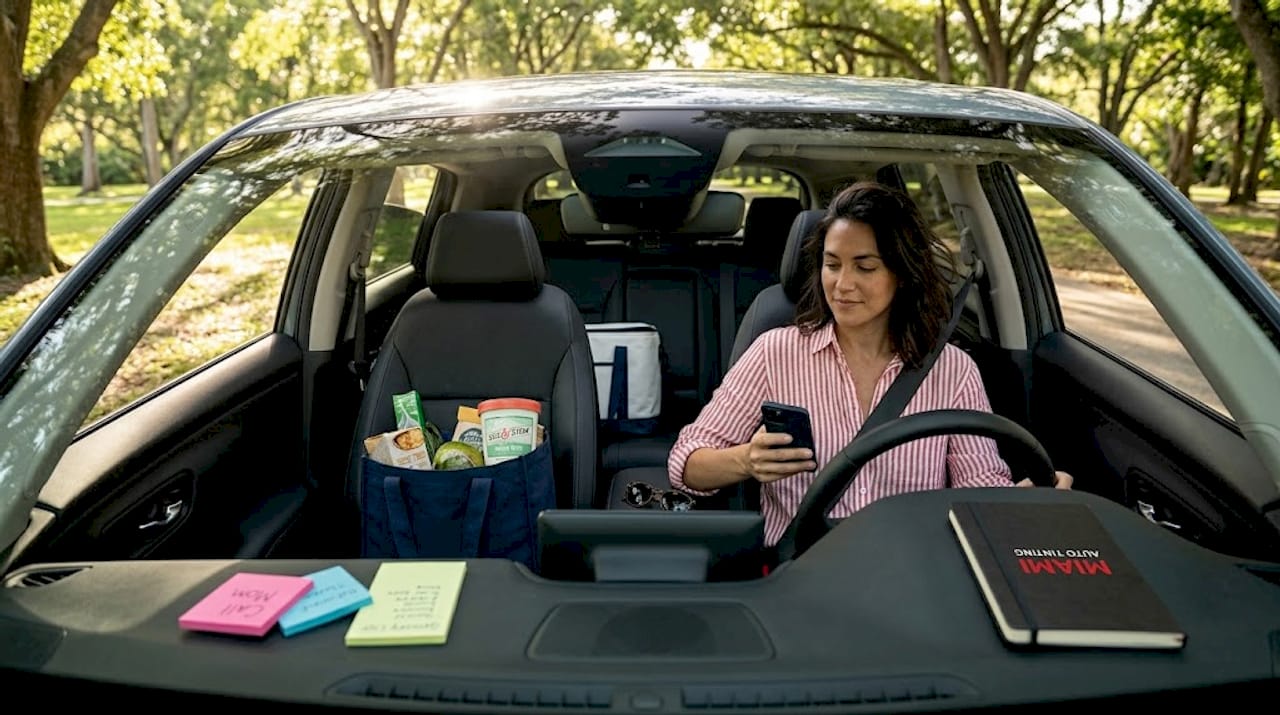
Pro Tip: If you're spending over an hour per day in Miami traffic, prioritize IR rejection over VLT darkness. A 70% ceramic film on your front windows will reduce eye strain and cabin temperature more effectively than a 20% dyed film, and you won't be driving blind at night.
With technical basics in view, Miami car owners need to consider the crucial legal context.
Miami-Dade tinting laws: Glare reduction within legal limits
Florida's window tinting laws are specific, and Miami-Dade enforcement takes them seriously. Getting pulled over for an illegal tint doesn't just cost you a fine. It signals to law enforcement that your vehicle may have other issues, and it can complicate your insurance situation.
Here's what Florida law requires for passenger vehicles:
- Front windshield: Non-reflective tint only above the AS-1 line (the manufacturer's line near the top)
- Front side windows: Must allow more than 28% of light in (28% VLT minimum)
- Rear side windows: Any darkness is allowed
- Rear window: Any darkness is allowed
Overly dark tints below 28% VLT on front side windows put you at real risk of fines and enforcement action in Miami-Dade. Officers use handheld tint meters during traffic stops and routine checkpoints, and they do use them regularly on the causeways and in Downtown Miami.
Here's a quick comparison of legal versus risky tint choices for glare reduction:
| Window | Legal VLT | Illegal VLT | Glare Reduction Option |
|---|---|---|---|
| Front side | 28% or higher | Below 28% | 50% or 70% ceramic |
| Rear side | Any | None | 20-35% ceramic |
| Rear window | Any | None | 20-35% ceramic |
| Windshield | Top strip only | Any coverage below AS-1 | Dealer strip |
Key things to keep in mind when choosing your tint:
- Get it measured by a professional who knows the legal thresholds before installation
- Avoid purely dark films for front windows since they create night glare and reduce your ability to see pedestrians and cyclists
- Ask for ceramic technology specifically, because it delivers legal compliance and superior comfort at the same time
- Consider your dashboard screens since overly dark tints can make it harder to read navigation and warning displays in indirect light
For a full breakdown of what Miami-Dade enforces and how, check out the Miami window tint regulations guide and the Miami tinting law basics overview. Both are essential reading before you book any installation.
Knowing the law, the next step is making an informed, practical choice for your needs.
Choosing the right tint for your Miami vehicle
Making the right tint decision isn't complicated once you know the variables. The goal is to match film technology and VLT level to how you actually drive in Miami, not just to how a tint looks in photos online.
Here's a straightforward process to guide your choice:
-
Identify your biggest problem. Is it morning glare on I-95 southbound? Afternoon heat on the 836? Reflected water glare near the bay? Knowing your primary issue narrows the film type and VLT that will actually help.
-
Set your legal ceiling. Front side windows need to stay at 28% VLT or higher. That's non-negotiable in Florida. Work with that constraint, not against it.
-
Choose ceramic over dyed or metalized. In Miami's climate, ceramic film is not a luxury upgrade. It's the practical choice. Films like the Iviron Kollmax ceramic and 3M IR series block massive amounts of IR heat while keeping VLT at a legal, safe level. Lighter ceramic films at 70% VLT outperform dark dyed films for both heat and glare balance, which is especially important for reading your touchscreen navigation in bright sunlight.
-
Think about your whole vehicle. You can run a darker ceramic on your rear side windows and rear glass where laws allow, giving your passengers more shade and privacy. Pair that with a high-performance lighter ceramic on the front, and you get the best of both worlds.
-
Plan for installation convenience. Miami traffic is brutal. Mobile tinting brings the service to your home, office, or condo parking garage, saving you the trip across town. This matters more than most buyers realize until they're trying to coordinate dropping a car off during a workday.
This is exactly why ceramic tint popularity in Miami has grown so consistently. It's not a trend. It's a rational response to Miami's specific driving environment.
Pro Tip: If you frequently use Apple CarPlay, Android Auto, or a built-in navigation screen, ask specifically about the Iviron Kollmax or 3M Crystalline films. Their clarity at higher VLT levels means your screen stays readable even in direct sun without washing out.
After laying out the options, it's worth reflecting on what most guides don't tell you about glare and tinting.
What most guides miss: Practical truths about window tint and glare
We've tinted hundreds of vehicles across Miami-Dade, from daily commuters on US-1 to weekend convertibles parked along South Beach. Here's what we've learned that most tinting guides won't say directly.
Going dark is not going smart. Drivers who push for the darkest legal tint on every window often end up with a vehicle that's harder to drive at night. Dark films reduce the light your eyes receive when it's already limited, creating a new glare problem from oncoming headlights against a dark interior background. This is especially risky in Miami's unlit side streets and expressway ramps where lighting is inconsistent.
The real breakthrough we see in our work is when a customer switches from a dark dyed film to a lighter ceramic. They're often skeptical at first because the film looks almost invisible on the glass. Then they drive home during the afternoon sun. The heat drop is immediate. The eye strain dissolves. Their dashboard screen snaps into focus. That's what ceramic tint technology actually delivers, and it happens at VLT levels that are fully legal on every window.
The other thing most guides skip is screen visibility. Miami drivers increasingly rely on large navigation screens, heads-up displays, and rear camera feeds. Heavy tinting on rear windows can interfere with backup camera image quality in certain lighting conditions. Ceramic films handle this better because they don't create the same color distortion or contrast reduction that dyed films do.
The bottom line from real-world Miami experience: lighter ceramic films outperform dark alternatives across every metric that actually matters for daily driving comfort and safety. Darker is a look. Ceramic is a performance decision.
Get professional glare reduction with Miami experts
If you're ready to stop squinting through every morning commute and actually enjoy driving in Miami's sunshine, professional ceramic window tinting is the practical next step.
At South Miami Tint, we bring the installation to you anywhere in Miami-Dade, whether you're at home in Kendall, parked at your Brickell office, or in Doral. We work exclusively with 3M IR, 3M Color Stable, and Iviron Kollmax ceramic films, so you're never getting a budget dyed film dressed up with a premium price tag. Every installation meets Florida's legal VLT requirements, and we'll guide you through the best combination of films for your specific vehicle and driving habits. Visit southmiamitint.com to schedule your mobile appointment today.
Frequently asked questions
Do darker tints always reduce glare more effectively?
Not always. Film technology and legal VLT matter more than darkness alone, since lighter ceramic films outperform dark dyed ones for both heat and glare balance.
What is the legal tint limit for front windows in Miami-Dade?
Front side windows must allow at least 28% of visible light through to meet Florida's legal requirements and avoid fines in Miami-Dade.
Is ceramic tint really better for reducing glare in Miami?
Yes. Ceramic films at higher VLT deliver superior glare reduction and heat rejection without sacrificing night clarity or pushing you outside legal limits.
Can window tint affect screen visibility inside my car?
The right ceramic tint actually improves screen readability by cutting harsh sunlight, since lighter ceramic films reduce glare without over-darkening the cabin or distorting display colors.