
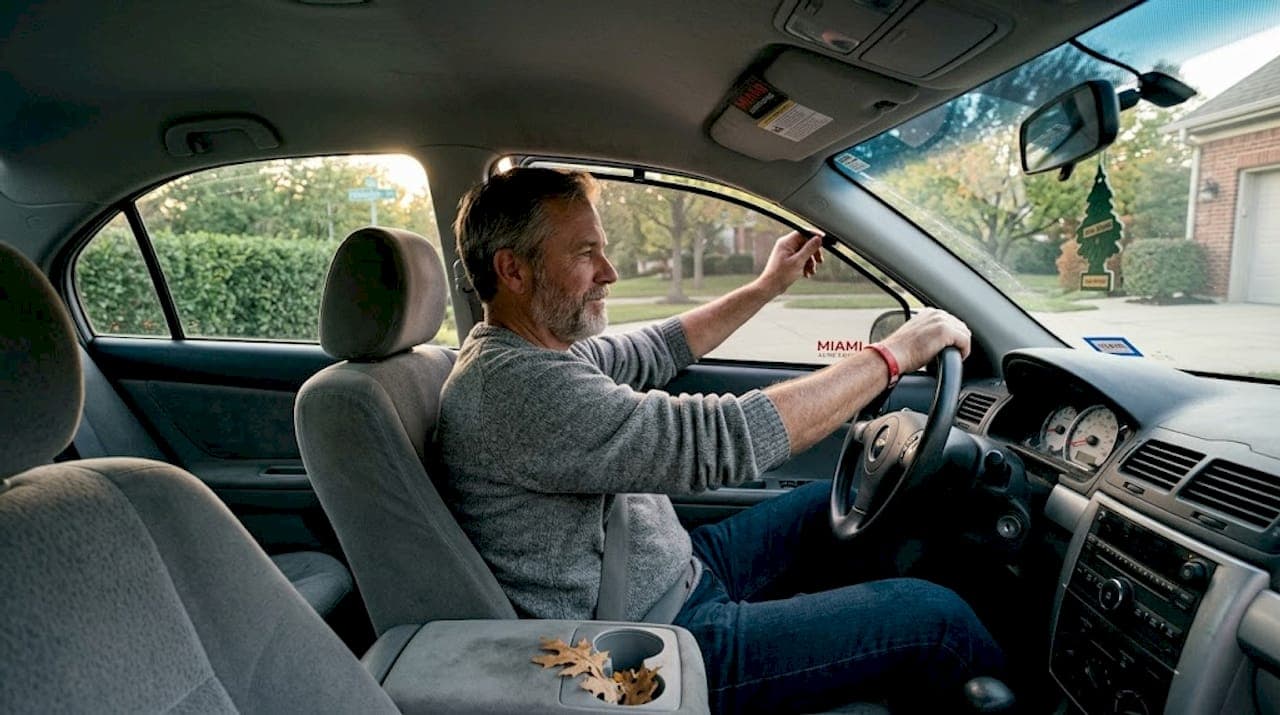
Living in Homestead means your car takes a beating from the sun every single day. UV rays, brutal heat, and interior fade are constant concerns for local drivers, which makes finding the right homestead car tint suggestions genuinely worth your time. The wrong film will bubble, fade, and fail within a couple of years in South Florida's climate. The right one keeps your cabin cool, protects your skin and upholstery, and stays looking sharp for a decade. This guide cuts through the noise so you can make a smart, informed choice.
Table of Contents
- Key takeaways
- 1. Key criteria for choosing effective car window tint in Homestead
- 2. Top car window tint types available for Homestead vehicles
- 3. Comparison table: how major tint types perform on key factors
- 4. Practical recommendations for Homestead drivers
- 5. DIY car window tint kits: what Homestead drivers should know
- My honest take on car tint selection in Homestead
- Get premium tinting from Southmiamitint in Homestead
- FAQ
Key takeaways
| Point | Details |
|---|---|
| Ceramic tint leads for heat | Ceramic films reject up to 99% of infrared and UV rays, making them the top performer in Homestead's sun. |
| VLT levels have legal limits | Florida law sets minimum VLT requirements per window location; front-side windows must typically allow 28% or more light through. |
| Aftercare protects your investment | Avoid washing windows or rolling them down for at least 3 to 5 days after installation to lock in proper adhesion. |
| DIY can cost less but carries risk | Budget kits run $30 to $150, but poor application leads to bubbling and legal compliance problems. |
| Professional installation matters most | A shop with a craftsmanship warranty and controlled environment drastically reduces failure rates and extends film life. |
1. Key criteria for choosing effective car window tint in Homestead
Homestead sits right at the edge of Everglades National Park and gets some of the most intense UV exposure in the continental United States. Before picking any film, you need to understand what actually separates a good tint choice from a costly mistake in this environment.
UV and infrared heat rejection are the two numbers that matter most. UV protection guards your skin and prevents interior fading. Infrared rejection is what actually makes your cabin feel cooler. Many cheap films advertise "UV block" while offering almost no heat reduction at all. Those two metrics are not the same thing, and confusing them is one of the most expensive mistakes Homestead drivers make.
Visible Light Transmission (VLT) is the percentage of light the film allows through. Florida law requires at least 28% VLT on front-side windows and 15% on rear windows. Going darker on the windshield (beyond the top AS1 line strip) is illegal without a medical exemption. Getting cited for illegal tint is annoying, but more importantly, it means you have to pay to re-tint the glass.
Other factors worth evaluating:
- Durability under UV exposure. Dyed films typically degrade in 5 to 8 years. Ceramic films routinely last over 10 years, which matters a lot when you factor in South Florida's daily sun load.
- Signal interference. Metalized films can block GPS, radio, and cell signals. This is a real issue if you use navigation daily.
- Installer quality. A film is only as good as its installation. Look for shops with manufacturer-backed warranties and written craftsmanship guarantees.
Pro Tip: Ask any installer for their "fail rate" on ceramic vs. dyed installs. A confident professional will give you a straight answer. A hesitant one is telling you something without saying it.
2. Top car window tint types available for Homestead vehicles
Not every film performs the same way, and the Homestead sun will expose any weakness fast. Here is a breakdown of every major film type you will encounter when shopping for homestead vehicle window film.
Dyed tint
Dyed film is the most affordable option and gives you decent privacy with a flat, non-reflective look. The film absorbs solar heat rather than rejecting it, which means that heat still radiates into the cabin over time. In Homestead's climate, dyed film fades noticeably within a few years, turning purple or patchy. It offers minimal infrared rejection compared to premium options.
Best for: drivers on a tight budget who prioritize privacy over long-term heat control.
Metalized tint
Metalized film weaves tiny metallic particles into the film to reflect heat away from the glass. It holds up better than dyed film and offers good durability. The downside is that metalized tints interfere with GPS, radio, and cellular signals, which earns them the nickname "signal blockers" among installers. The reflective, mirror-like appearance is also not everyone's preference.
Best for: drivers who want better heat rejection than dyed film at a mid-range cost and do not depend heavily on in-car electronics.
Carbon tint
Carbon film is where the value proposition gets interesting. It uses carbon particles instead of metal, so you get excellent heat rejection with zero signal interference. The finish is a matte charcoal look that ages well and does not fade the way dyed film does. For Homestead drivers who want a high-performing film without paying ceramic prices, carbon is a strong contender. Check out this ceramic vs. carbon comparison to see exactly how the two stack up on heat rejection and longevity.
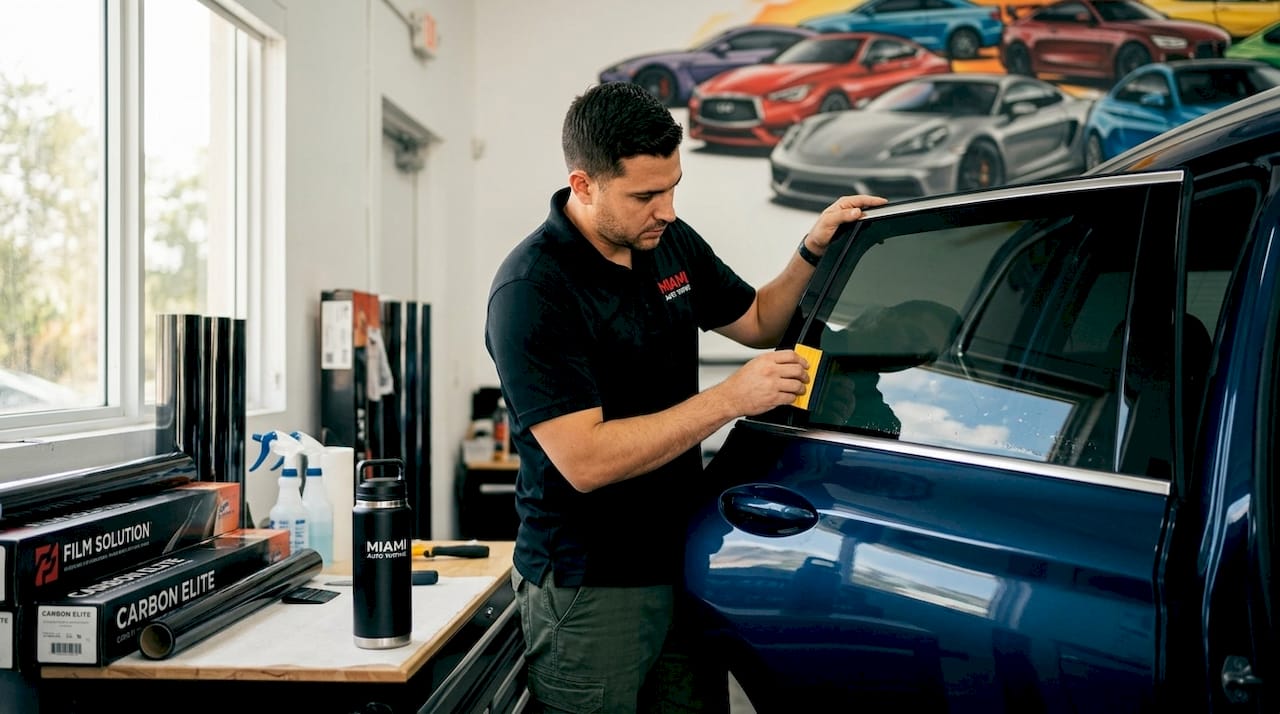
Best for: drivers who want quality heat rejection and a clean appearance at a moderate price.
Ceramic tint
Ceramic film is the top performer in every measurable category. It rejects up to 99% of infrared and UV rays while maintaining optical clarity. Unlike metalized films, ceramic provides superior heat rejection with no interference with GPS, cell phones, or radio signals. It also lasts the longest, which makes the higher upfront cost easier to justify when you live somewhere like Homestead where cheap film fails fast.
Southmiamitint installs 3M IR, 3M Color Stable, and Iviron Kollmax ceramic films, all of which fall into this top tier.
Best for: any Homestead driver who wants the best long-term protection, comfort, and legal compliance in one package.
Pro Tip: Ceramic tint is not just for luxury vehicles. A $249 ceramic install on a daily driver in South Florida will outperform a $90 dyed install within 18 months, both on comfort and resale appearance.
3. Comparison table: how major tint types perform on key factors
| Tint Type | Heat Rejection | UV Protection | Lifespan | Signal Safe | Cost Range | Best Use Case |
|---|---|---|---|---|---|---|
| Dyed | Low | Moderate | 3 to 5 years | Yes | $50 to $200 | Budget privacy |
| Metalized | Moderate to high | Good | 5 to 8 years | No | $100 to $350 | Heat + durability |
| Carbon | High | Excellent | 8 to 10 years | Yes | $150 to $450 | Value performance |
| Ceramic | Very high | 99% UV blocked | 10+ years | Yes | $250 to $700+ | Maximum protection |
Carbon and ceramic dominate on every meaningful performance metric. The trade-off is purely upfront cost. If you plan to keep your vehicle for more than three years in Homestead's sun, the math almost always favors spending more upfront on ceramic.
4. Practical recommendations for Homestead drivers
These car tinting recommendations are built around real scenarios, not theoretical ones. Homestead is not Phoenix. It is not coastal California. It has its own combination of intense UV, humidity, and heat that rewards specific choices.
Maximize heat rejection in daily drivers. Ceramic tint is the clearest call here. For South Florida best tinting choices, ceramic film on all side and rear windows delivers the most noticeable cabin temperature drop. Pairing it with a quality windshield strip extends that benefit even further.
Match VLT to window location. Experts recommend 70% VLT ceramic film for front-side windows in hot climates to stay legal while reducing heat meaningfully. Rear windows can go darker at 35% or even 20% VLT depending on your privacy preference and Florida law's allowances for rear glass.
Budget-conscious? Go carbon over dyed. If ceramic pricing is out of reach, carbon film is the smart middle ground. It will not fade, will not block your phone signal, and rejects far more heat than dyed film for a relatively modest price bump.
Additional considerations:
- Privacy vs. safety: too-dark tint compromises nighttime visibility. A 35% VLT on rear glass gives you privacy during daylight while keeping the car safe to drive after dark.
- Choose an installer with a written warranty. Professional installers with warranties protect you from peeling and bubbling that poor shops leave behind.
- Aftercare is non-negotiable. Avoid washing or rolling windows down for 3 to 5 days after installation. This protects the adhesive layer while it cures.
Pro Tip: Park in shade for at least 48 hours post-install. Direct sun exposure right after application can cause uneven adhesive curing, which creates bubbles that no amount of smoothing will fix later.
5. DIY car window tint kits: what Homestead drivers should know
DIY kits are tempting, and sometimes they make sense. Here is the honest breakdown before you commit.
- Cost savings are real but conditional. DIY kits cost $30 to $150 versus $200 to $600 for professional installation. That gap matters. But only if you get a clean result on the first try.
- Film quality varies widely. Most budget kits use dyed film. You can find carbon and ceramic DIY options, but they cost more and require significantly more skill to apply without creasing or bubbling.
- Preparation is everything. Clean the glass to an obsessive degree before applying. Any dust, water spot, or grease trapped under the film shows immediately and cannot be fixed without pulling the whole sheet and starting over.
- Pre-cut kits reduce errors. Pre-cut kits matched to your vehicle model eliminate the hardest part of the job: cutting the film accurately around curves and corners. If you go DIY, always choose pre-cut over roll film.
- Legal compliance is your responsibility. A shop that installs illegal tint gets the blame. When you DIY, you own the risk. Measure your VLT percentages before buying and verify against current Florida law.
- Ammonia-based cleaners will destroy your tint. After any installation, ammonia degrades tint adhesives, causing purple discoloration and peeling. Use dedicated tint-safe glass cleaner on every wash going forward.
- Know when to call a professional. Curved rear windows on sedans and SUVs require shrinking the film with a heat gun to conform to the glass. This is a skill that takes time to develop. A bad application on a rear window is expensive to redo and usually looks worse than no tint at all.
My honest take on car tint selection in Homestead
I have worked with drivers across Miami-Dade for years, and I see the same pattern repeat constantly. Someone goes cheap on tint, lives with a purple-hued, bubble-covered rear window for three summers, then pays twice to do it right. The sun in Homestead is not forgiving to film that was not built for it.
The biggest misconception I run into is that darker means cooler. It does not. A light 70% VLT ceramic film rejects far more heat than a dark 20% VLT dyed film. Darkness is about privacy. Heat rejection is about the film's technology. Conflating the two is how drivers end up with tint that looks aggressive but leaves them sweating at red lights.
My actual recommendation for most Homestead drivers is simple: spend the money on ceramic mobile tinting from an installer who will put the warranty in writing. Do it once. Do it right. The comfort difference in the first summer alone justifies the cost. And if you are curious about the legal angle, get specific with your installer about VLT percentages on each window before the job starts, not after.
— Jose
Get premium tinting from Southmiamitint in Homestead
If you are ready to stop guessing and get your vehicle properly protected, Southmiamitint brings professional-grade installation directly to your driveway.
Southmiamitint installs 3M IR, 3M Color Stable, and Iviron Kollmax ceramic films across Miami-Dade, including full mobile tinting in Homestead. There is no need to drop your car off or wait in a shop. The team comes to you, works in a controlled setup, and backs every install with a craftsmanship guarantee. For pricing that fits most budgets, check out mobile tinting prices or get a quote on ceramic tint starting at $249. Homestead drivers deserve film that actually performs under South Florida conditions, and that is exactly what Southmiamitint delivers.
FAQ
What is the best tint for Homestead's heat?
Ceramic tint is the top choice for Homestead drivers because it rejects up to 99% of infrared and UV rays without fading or interfering with electronics. It performs significantly better than dyed or metalized film in sustained high-sun climates.
What VLT percentage is legal in Florida for car windows?
Florida requires at least 28% VLT on front-side windows and allows 15% VLT on rear side and rear windows. Windshield tinting is restricted to a non-reflective strip above the AS1 line.
Is DIY car window tint worth it in South Florida?
DIY kits save money upfront but carry real risks including bubbling, peeling, and legal non-compliance. For flat glass, a careful DIYer can get decent results. For curved or rear windows, professional installation is the smarter call.
How long does car window tint last in Homestead?
Dyed film typically lasts 3 to 5 years under Homestead's intense sun. Carbon film holds up for 8 to 10 years. Ceramic film regularly lasts over a decade when properly installed and maintained.
How soon can I wash my car after tinting?
Wait at least 3 to 5 days before washing your windows or rolling them down after a tint installation. This allows the adhesive to cure fully and prevents bubbling or edge peeling.